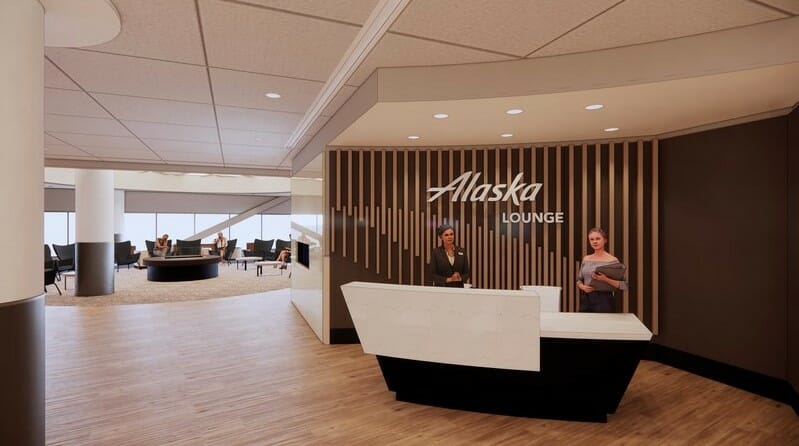
The Alaska Lounge sits in a sweet spot that frequent flyers tend to appreciate more the longer they fly the airline. It is not the most lavish lounge network in the sky, and it does not pretend to be. What it offers instead is a reliably calm, well-fed, well-caffeinated place to land between flights at the airports where Alaska Airlines actually flies, backed by a membership that travels surprisingly far thanks to a deep bench of partner lounges. With Alaska and Hawaiian now operating under the combined Atmos Rewards program, a few of the access rules and the branding have shifted, so it is worth having one current, plain-English reference rather than piecing things together from years-old news posts.
This guide pulls together everything in one place: what the Alaska Lounge and Alaska Lounge+ tiers actually are, where the lounges are, every realistic way to get inside, what each membership tier costs and includes, what you will find once you are through the door, and how to wring the most value out of the whole arrangement.
What the Alaska Lounge and Alaska Lounge+ Program Is
Alaska runs its own network of branded airport lounges, and membership comes in two flavors. The base tier, simply called Alaska Lounge, gets you into every Alaska Lounge location plus The Plumeria Lounge in Honolulu. The upgraded tier, Alaska Lounge+, layers on access to nearly 90 partner lounges around the world, which is where this membership starts to punch above its weight for travelers who connect through airports Alaska does not serve directly.
The distinction matters because the Alaska-operated footprint is concentrated on the West Coast and in Alaska itself. If your travel rarely strays from Seattle, Portland, Los Angeles, San Francisco, and Anchorage, the base membership covers you. If you regularly route through hubs like Chicago, Dallas, Miami, or London, the Lounge+ tier and its partner access is the version that earns its keep. Both tiers now live inside the broader Atmos Rewards ecosystem, the loyalty program created when Alaska and Hawaiian combined their programs, and that integration shows up in everything from the credit card branding to which elite tiers unlock complimentary entry.
Every Current Alaska Lounge Location
Alaska operates seven of its own lounges across five airports, with Seattle naturally carrying the heaviest concentration as the airline’s home base. Here is the current lineup straight from Alaska, including where to find each one inside the terminal.
| Airport | Location In Terminal | Daily Hours |
|---|---|---|
| Anchorage (ANC) | Concourse C, near Gate C-1 | 5am to 1am |
| Los Angeles (LAX) | Terminal 6 mezzanine level, near Gate 64 | 5am to 11pm |
| Portland (PDX) | South Hall, Mezzanine | 4:30am to 10:30pm |
| San Francisco (SFO) | Terminal 1, across from Gate B6 | 5am to 12am |
| Seattle/Tacoma (SEA) | C Concourse mezzanine, next to Gate C-16 | 5am to 7pm |
| Seattle/Tacoma (SEA) | D Concourse, just beyond Security Checkpoint 4 | 5am to 11pm |
| Seattle/Tacoma (SEA) | North Satellite mezzanine, above Gates N13 to N18 | 5am to 11pm |
The San Francisco lounge is worth a specific mention because Alaska went a long stretch without a proper presence there. For years the airline lacked a real SFO lounge, and members were shuttled over to a partner space in the international terminal as a stopgap. The current Terminal 1 location, across from Gate B6, fixed that gap and gave the heavy SFO crowd a genuine home base. Portland is the freshest of the bunch, a brand-new space in the South Hall mezzanine running over 14,000 square feet, with a signature Pacific Northwest look, a cozy fireplace, views of the new terminal, double the seating of the old lounge, and dedicated quiet zones for getting work done.
The Plumeria Lounge at Honolulu’s Daniel K. Inouye International Airport, on the third floor of Terminal 1, rounds out the Alaska-accessible network and is included with both membership tiers. To use it you simply need a same-day boarding pass for a flight on Alaska or Hawaiian.
Partner Lounges That Come With Lounge+
This is the part that quietly makes Alaska Lounge+ one of the better-traveled memberships out there. Lounge+ members get into nearly 90 partner lounges, and the network spans three meaningful groups. American Airlines Admirals Club locations are available across dozens of US airports plus international spots like London, Toronto, and several cities in Brazil and Argentina, accessed when you are arriving or departing that day on Alaska, Hawaiian, or American. Qantas Club lounges open up across Australia and a handful of international gateways when you are departing on a qualifying Alaska, Hawaiian, or Qantas international flight. A scattering of other partner spaces, including United Club locations in Minneapolis, Philadelphia, and Washington Reagan, an Escape Lounge in Phoenix, an Aspire Lounge in San Diego, and The Club at Las Vegas, fills in airports where Alaska has no lounge of its own.
Two caveats keep this honest. Lounge+ access to Admirals Clubs does not extend to American’s higher-end Premium or Flagship Lounges, and it does not get you into Qantas First Lounges. Partner access can also be restricted to specific boarding passes, and because of TSA rules a partner lounge in a different terminal than your departure gate may simply be off limits that day. Always carry your digital Lounge+ membership card, because partners will not let you in without it.
Every Way to Get Into the Alaska Lounge
There is no single door into the Alaska Lounge, which is part of what makes it worth understanding. Whether you pay for a membership, hold the right card, fly up front, or carry elite status, the rules differ enough that it pays to know exactly which lever applies to you.
Annual Membership and Its Tiers
The most straightforward route is simply buying in. A standard Alaska Lounge membership covers all Alaska Lounges plus The Plumeria Lounge, while Alaska Lounge+ adds the partner network. Membership runs for one year from the date it is processed, is non-refundable and non-transferable, and can be renewed online or at any lounge up to 60 days before it expires. Your card lives in the Alaska Airlines mobile app under the account section, available immediately on purchase or renewal. Worth repeating: that card is yours alone, and a card presented by anyone but the member gets logged and can cost you the membership with no refund.
The Eligible Alaska Credit Card
Alaska’s co-branded credit card has long been one of the most sensible ways to soften the cost of lounge access, and under Atmos Rewards that benefit now attaches to the card lineup directly. Eligible Atmos Rewards Ascent Visa Signature and Atmos Rewards Visa Business cardholders get $100 off an annual Alaska Lounge+ membership when they pay with the card. The discount is not stackable with other Lounge+ discounts, including the status-holder break, so you take the better of the two rather than both. For travelers already carrying the card for free checked bags and earning, knocking a hundred dollars off the higher tier is an easy win. For more on the card’s full benefit set, Travel Codex has tracked the changes to the Alaska Airlines Visa card benefits over time.
First Class and Partner Business Class Access
Flying up front can get you in without a membership at all, though the rules are specific. A paid First Class or First Class award ticket on a flight operated by Alaska or Hawaiian earns complimentary entry to the Alaska Lounges or The Plumeria Lounge, provided at least one flight that day covers a distance of 2,000 miles or more. That threshold captures coast-to-coast routes and flights between Hawaii and the continental US, but it deliberately excludes shorter West Coast hops. If your First Class itinerary has no single Alaska-operated segment hitting 2,000 miles, you and your guests can still buy a discounted single-entry pass. Upgraded First Class tickets, whether complimentary, paid, or bought with miles, do not qualify for free access and would also need a paid pass.
On the international side, travelers heading outside the US, Canada, and Mexico in paid or award First Class on a oneworld member airline can access the relevant oneworld lounge, with the premium ticket required on the international segment. Alaska’s own First Class passengers traveling internationally beyond North America can likewise tap a oneworld lounge in those markets.
Elite and Atmos Status
Status is its own pathway, and it leans heavily on oneworld reciprocity. Atmos Rewards Gold, Platinum, and Titanium members carry oneworld Sapphire or Emerald recognition, which opens Alaska Lounge access when traveling on a oneworld member airline to a destination outside the US, Canada, or Mexico. The wrinkle that trips people up is that this is fundamentally an international benefit when the status was earned through Atmos Rewards or American; the lounge is not a domestic perk of status alone. Travelers who earned Emerald or Sapphire through a different oneworld program are not held to the international-itinerary requirement, but in every case the eligible frequent flyer number has to be on the reservation before check-in, because a physical oneworld card on its own will not get you in. Emerald and Sapphire members may bring one guest. If you are still chasing status, Travel Codex breaks down how to earn elite status on Alaska Airlines.
Day Passes and Guesting Rules
If you only need the lounge occasionally, a day pass remains an option. Members can buy a Lounge Day Pass for additional traveling companions, or for guests and family not traveling with them, at a reduced rate of $35 per person. That same $35 single-entry pass is what upgraded First Class passengers and First Class travelers below the 2,000-mile threshold can purchase to get in, subject to space.
On guesting, the policy is refreshingly generous for a domestic lounge program. Every Alaska Lounge member may bring immediate family, defined as a partner and children under 21, or up to two guests, into any Alaska Lounge or The Plumeria Lounge at no extra charge. Children younger than two come in free regardless. The member has to be present and is responsible for guests’ conduct, and all guests must be personally known to the member. At partner lounges the same family-or-two-guests allowance applies when you are traveling together, though partner-specific boarding pass requirements can narrow it.
Membership Cost and What Each Tier Includes
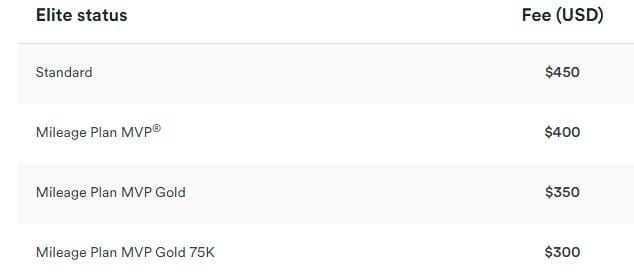
Pricing is the figure people most want pinned down, and Alaska currently lists it clearly. A standard Alaska Lounge membership is $595, and Alaska Lounge+ is $795. Both are quoted in US dollars, are non-refundable, and renew annually.
| Tier | Annual Price | What You Get |
|---|---|---|
| Alaska Lounge | $595 | All Alaska Lounges plus The Plumeria Lounge |
| Alaska Lounge+ | $795 | All Alaska Lounges, The Plumeria Lounge, and nearly 90 partner lounges |
Two discounts can bring those numbers down. Atmos Rewards members who hit the 30K milestone can select $100 off an Alaska Lounge or Lounge+ membership as an annual perk, and eligible Atmos Rewards Ascent Visa Signature or Visa Business cardholders get $100 off Lounge+ when paying with the card. The two are not combinable, so the practical move is to take whichever applies and not expect to stack them. Both tiers include the same on-the-ground experience inside Alaska’s own lounges; the only functional difference is the partner network that Lounge+ unlocks.
It is also worth knowing that Alaska sometimes lets you redeem miles toward a membership, an angle Travel Codex has covered in noting that you can redeem miles for an Alaska Lounge membership. For members who value miles below a couple of cents apiece, paying with points can be a reasonable way to cover the fee.
What Is Inside the Lounges
The in-lounge experience is consistent across the network and leans into Pacific Northwest hospitality rather than over-the-top luxury. The food rotates through the day: mornings bring yogurt and granola, steel-cut oatmeal, and freshly made pancakes, while afternoons and evenings shift to hearty soups, salad, vegetables, cheese, turkey, crackers, and similar fare. None of it is going to replace a sit-down dinner, but it is fresh, included, and genuinely useful for taking the edge off a travel day.
On the drinks side, you get soft drinks, tea, freshly brewed coffee, and hand-crafted espresso beverages from a barista station, which is a nicer touch than most domestic lounges bother with. Where local rules allow, the 21-and-over crowd can order West Coast wines, local draft beers, house spirits, and custom cocktails, including Alaska’s well-known Bloody Mary. For getting work done, the lounges offer fast Wi-Fi and easy access to power outlets, plus a television area if you would rather catch a game, and concierge staff on hand to help with travel needs. The barista espresso, the local beer and wine, and the made-to-order breakfast items are the small things regulars tend to mention most.
Tips for Getting the Most Value
The first decision is honest self-assessment about which tier fits your map. If your flying lives on the West Coast and in Alaska, the standard membership covers your reality and saves you $200 a year over Lounge+. The moment you start connecting through American or Qantas hubs with any regularity, Lounge+ pays for the difference quickly, because each partner visit you would otherwise pay for as a one-off adds up fast.
The second lever is the discounts. If you hold an eligible Atmos Rewards credit card or have reached the 30K milestone, build the $100 break into your math before deciding the membership is too pricey, and remember the two discounts do not stack, so there is no benefit to engineering both. The third is timing: renewals can be processed up to 60 days before expiration, so if a price increase or a promotion is on the horizon, you have a window to lock in current terms rather than waiting until the last day. Alaska has nudged lounge pricing upward more than once over the years, a pattern Travel Codex flagged when the lounge was increasing membership rates in a prior cycle, so an early renewal ahead of a known change can be worth real money.
Finally, lean on the access you may already have before paying. Front-cabin flyers on long-haul Alaska and Hawaiian routes, qualifying oneworld international itineraries, and Atmos elite tiers all carry conditional entry, and a $35 single-entry pass covers the occasional gap far more cheaply than a full membership you would barely use. The membership is the right answer for people who lounge often; for everyone else, the day pass and complimentary access rules usually do the job.
Frequently Asked Questions
How Much Does an Alaska Lounge Membership Cost?
A standard Alaska Lounge membership is $595 per year and Alaska Lounge+ is $795 per year, as listed by Alaska. Atmos Rewards members who reach the 30K milestone can choose $100 off either tier as an annual perk, and eligible Atmos Rewards credit card holders get $100 off Lounge+ when paying with the card, though the two discounts cannot be combined.
What Is the Difference Between Alaska Lounge and Alaska Lounge+?
Both tiers get you into every Alaska Lounge and The Plumeria Lounge in Honolulu with the same food, drinks, and amenities. Alaska Lounge+ adds access to nearly 90 partner lounges worldwide, including American Airlines Admirals Clubs, Qantas Clubs, and a handful of United Club, Escape, Aspire, and The Club locations. If you travel beyond Alaska’s own airports, Lounge+ is the tier that earns the upgrade.
Where Are the Alaska Lounges Located?
Alaska operates seven of its own lounges across five airports: Anchorage, Los Angeles, Portland, San Francisco, and Seattle, which has three locations across the C and D Concourses and the North Satellite. Members also get The Plumeria Lounge in Honolulu with either tier, plus the broader partner network on Lounge+.
Can I Get Into the Alaska Lounge With a First Class Ticket?
Yes, with conditions. A paid or award First Class ticket on a flight operated by Alaska or Hawaiian grants complimentary entry as long as at least one flight that day covers 2,000 miles or more, which captures coast-to-coast and Hawaii routes. Shorter First Class itineraries and upgraded First Class tickets do not qualify for free entry, but you can buy a $35 single-entry pass instead.
How Much Is an Alaska Lounge Day Pass?
Members can purchase a Lounge Day Pass for traveling companions or for guests not traveling with them at $35 per person. That same $35 single-entry pass is also what upgraded First Class passengers and First Class travelers below the 2,000-mile threshold can buy to get in, subject to space availability.
Does Atmos Rewards Status Get Me Into the Lounge?
Atmos Rewards Gold, Platinum, and Titanium members carry oneworld Sapphire or Emerald recognition, which opens Alaska Lounge access when flying a oneworld airline to a destination outside the US, Canada, or Mexico. For status earned through Atmos Rewards or American, this is essentially an international benefit rather than a domestic one, and your eligible frequent flyer number must be on the reservation before check-in.
Do the Alaska Lounges Have Showers?
Alaska promotes its lounges around fresh food, barista-made espresso, local beer and wine, fast Wi-Fi, ample power outlets, and concierge service rather than spa-style facilities. Shower availability is not a standard listed amenity, so travelers needing one should confirm with the specific location before relying on it.
The Bottom Line
The Alaska Lounge has quietly become one of the more sensible lounge memberships in the domestic market, not because it dazzles, but because it does the fundamentals well and then reaches much further than its modest footprint suggests through the Lounge+ partner network. Inside, you get fresh seasonal food, a real barista, West Coast wine and local beer, and a quiet, connected space to reset between flights. Outside, the program rewards travelers who understand the rules, because between paid memberships, the right Atmos Rewards credit card, front-cabin and oneworld international access, elite status, and the $35 day pass, there is almost always a path to the door that fits how you actually fly.
For West Coast and Alaska regulars, the standard membership is the easy answer. For anyone routing through American or Qantas hubs, Lounge+ turns a regional lounge program into a globally useful one, and the $100 discounts available through milestone selection or an eligible card make the math friendlier than the sticker price implies. With Atmos Rewards now tying the loyalty program, the credit cards, and the access rules together, the smart move is the same one it has always been with Alaska: know which benefit you already hold, renew before any price change lands, and pick the tier that matches your map rather than the one that sounds the most impressive.