For this blog boondoggle, I arrived in Vienna Friday afternoon, leaving Sunday afternoon. That effectively left me about a day and a half to explore the Austrian capital. With beautiful weather at my side, I set out to enjoy my spring weekend in Vienna.
Note: this post is part of my trip report series covering my visit to Austria in May, 2022. Click here for the trip report index and introductory post.
Enjoying a Spring Weekend in Vienna
Date of Visit: May 6-8, 2022
A Delightful Friday Evening
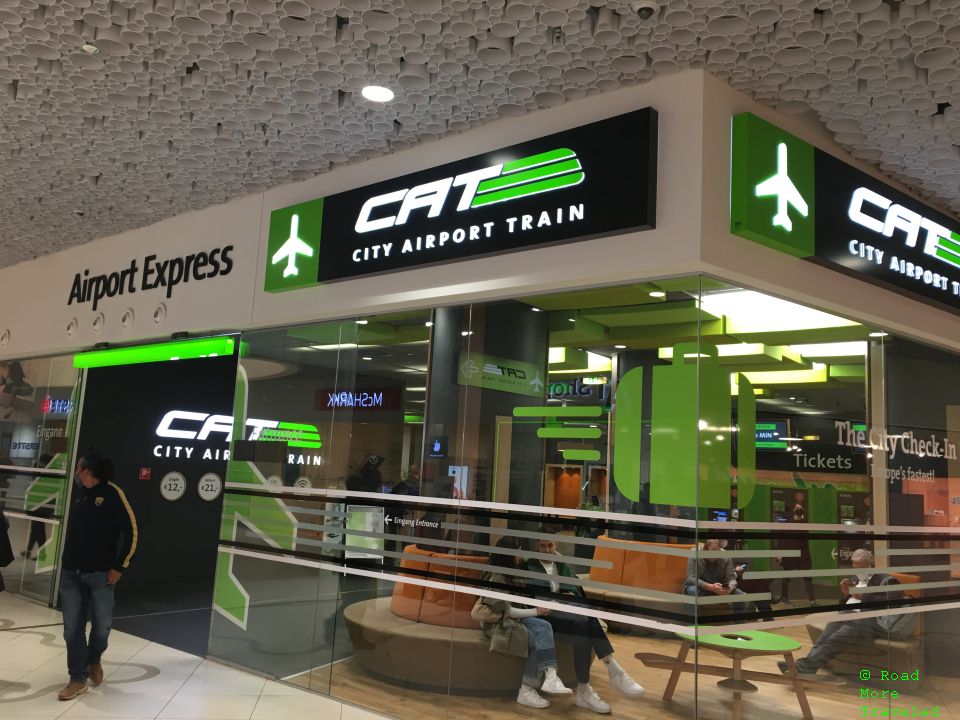
My SWISS flight from Zürich arrived a little after 2 pm. There are multiple ways to get to the city center from the airport. ÖBB Railjet trains U1 and U6 go to Wien Main and Wien Meidling stations every 30 minutes, respectively. Travel times are 15 minutes to Main and 30 minutes to Wiedling, at a cost of €4.40 one way. Or take the express S7 to Wien Mitte (Vienna Mall) or Wien Praterstern. These trains also run every 30 minutes, with a travel time of 25 minutes and 30 minutes, respectively. Cost is also €4.40 each way. Several buses also run to the city center, but these actually cost more than the train at €9.50 each way. Or you can go fancy and take the City Airport Train (CAT) to Wien Mitte. This train takes 16 minutes and costs €14.90 (or €12.45 each way if buying a return ticket).
So what’s the difference in using the CAT train versus the standard ones? The trains have WiFi, power ports, and larger bag storage areas, though the main advantage is the ability to use the “city check-in” facility at Wien Mitte for Star Alliance flights. That allows you to check bags and print boarding passes, which can save considerable time at the airport. I ended up using the CAT, though I probably should have saved the 8 euro and taken the local train.
For Vienna Airport, just follow the signs to the train station, where you can buy tickets to any train. From the mall, just look for the “Airport Express – CAT” on Level 0, down the hall from the Interspar.
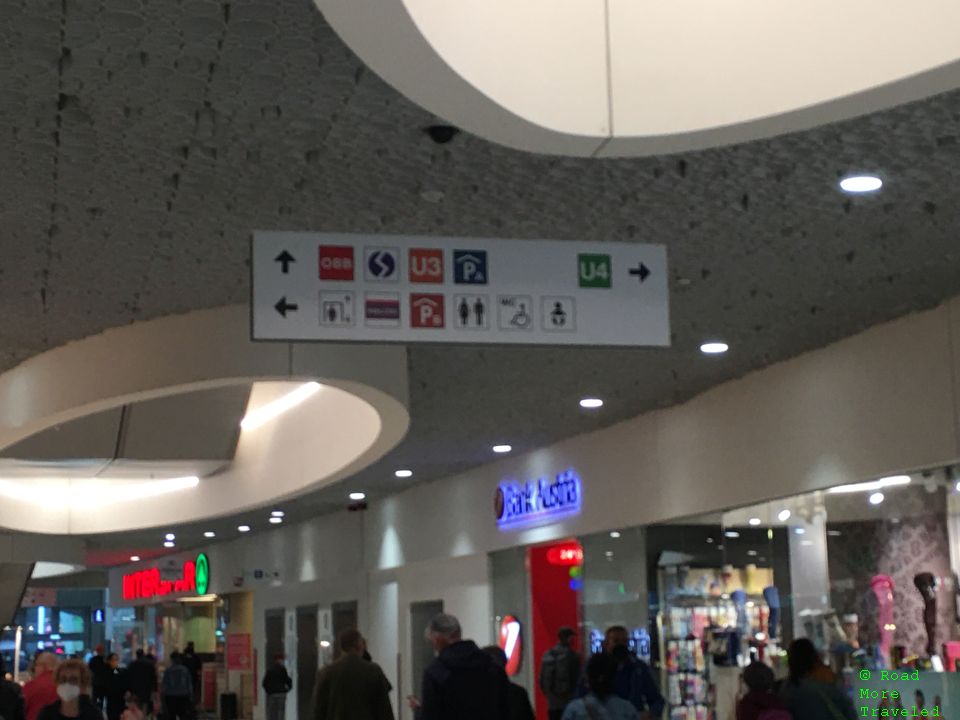
To reach street level and the ÖBB/S-Bahn/Underground platforms, go up to Level 1 and follow the signs.
Anyway, the first order of business was getting to my hotel, the Palais Hansen Kempinski. After a quick rest, I set out to explore a little and find some dinner. My hotel was on the Schottenring, on the northwest edge of the Innere Stadt. So I started walking southeast in the general direction of the old city. This part of the old city is rather quiet, with rows of 18th and 19th century buildings.
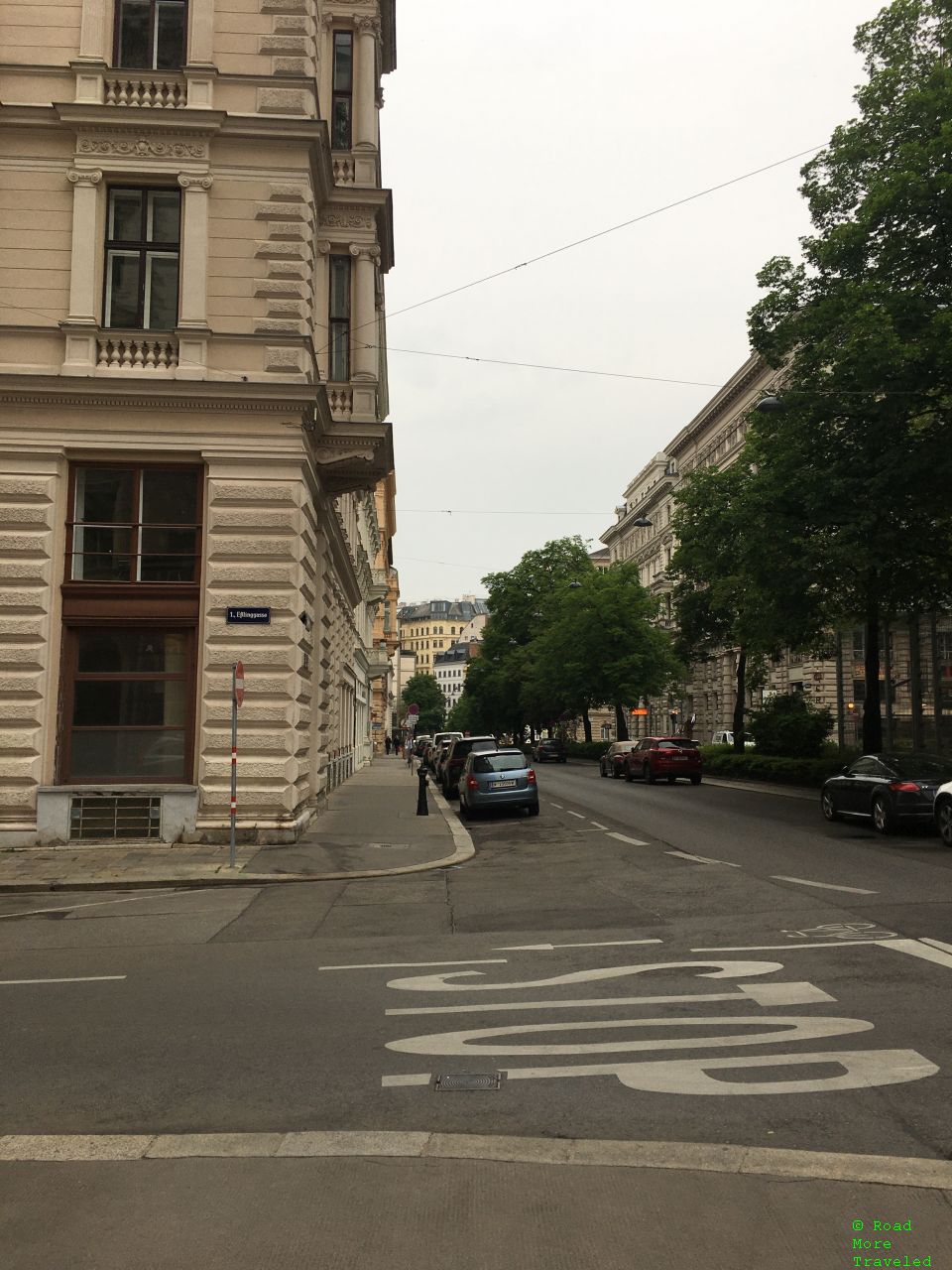
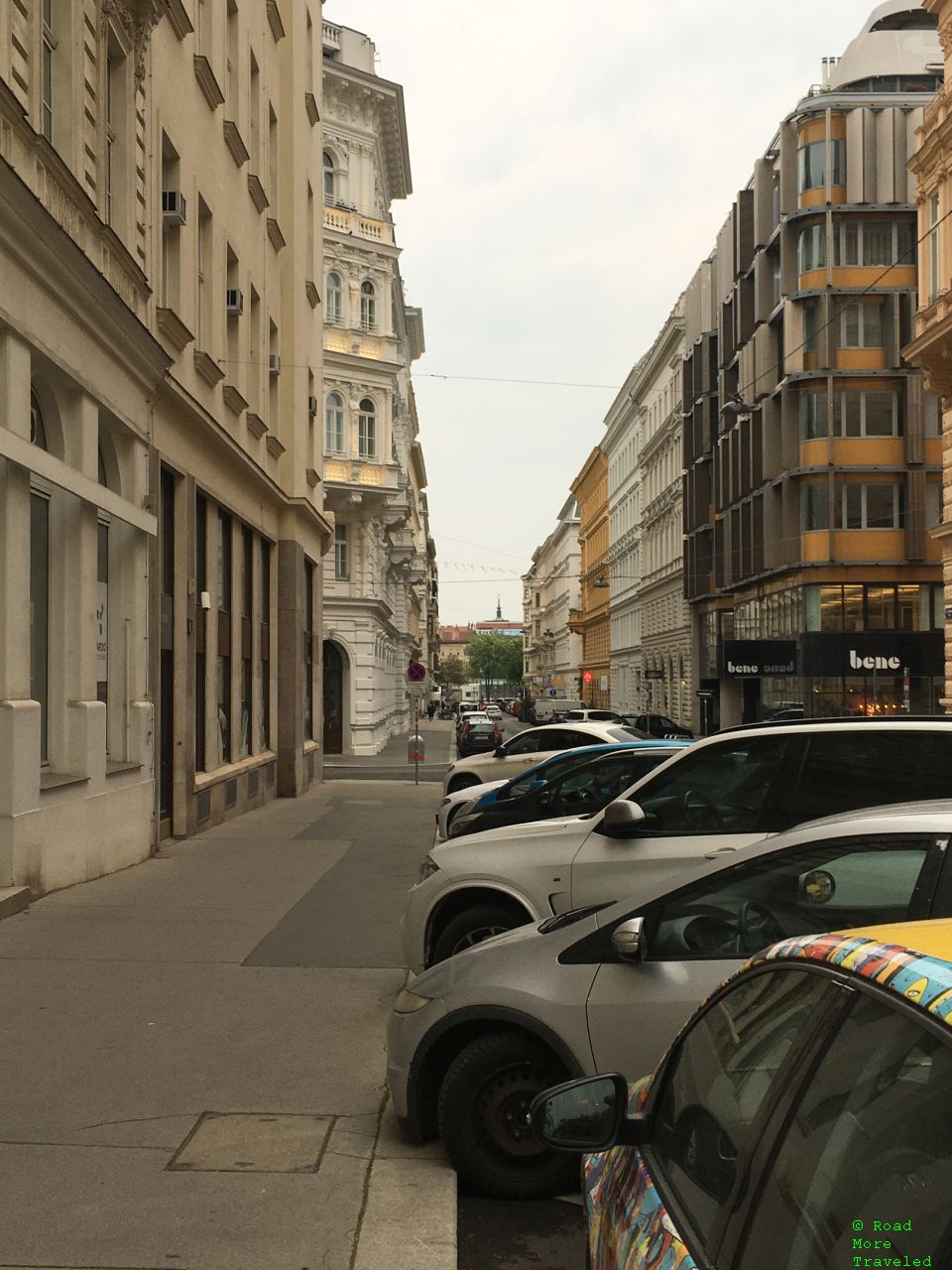
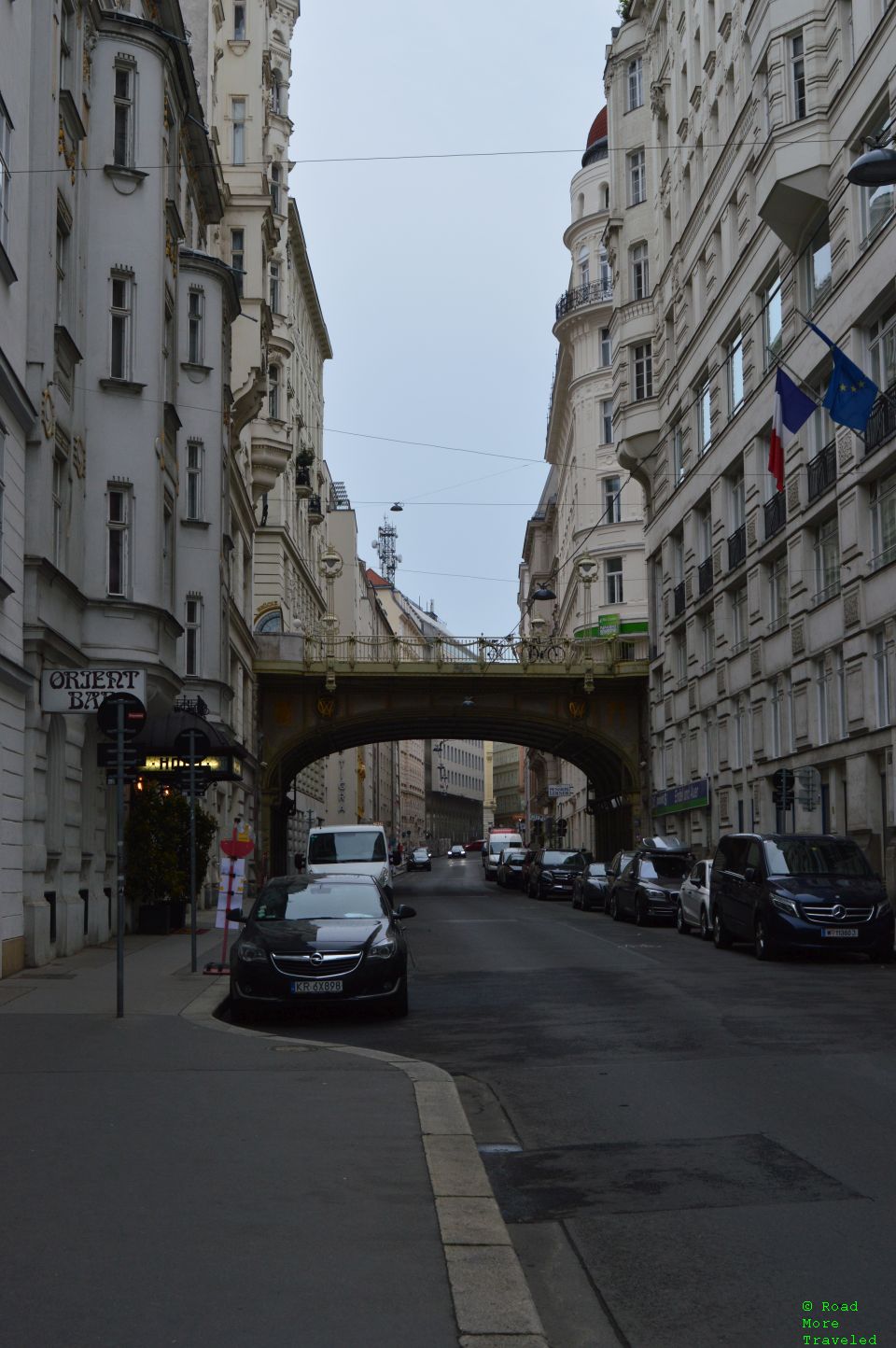
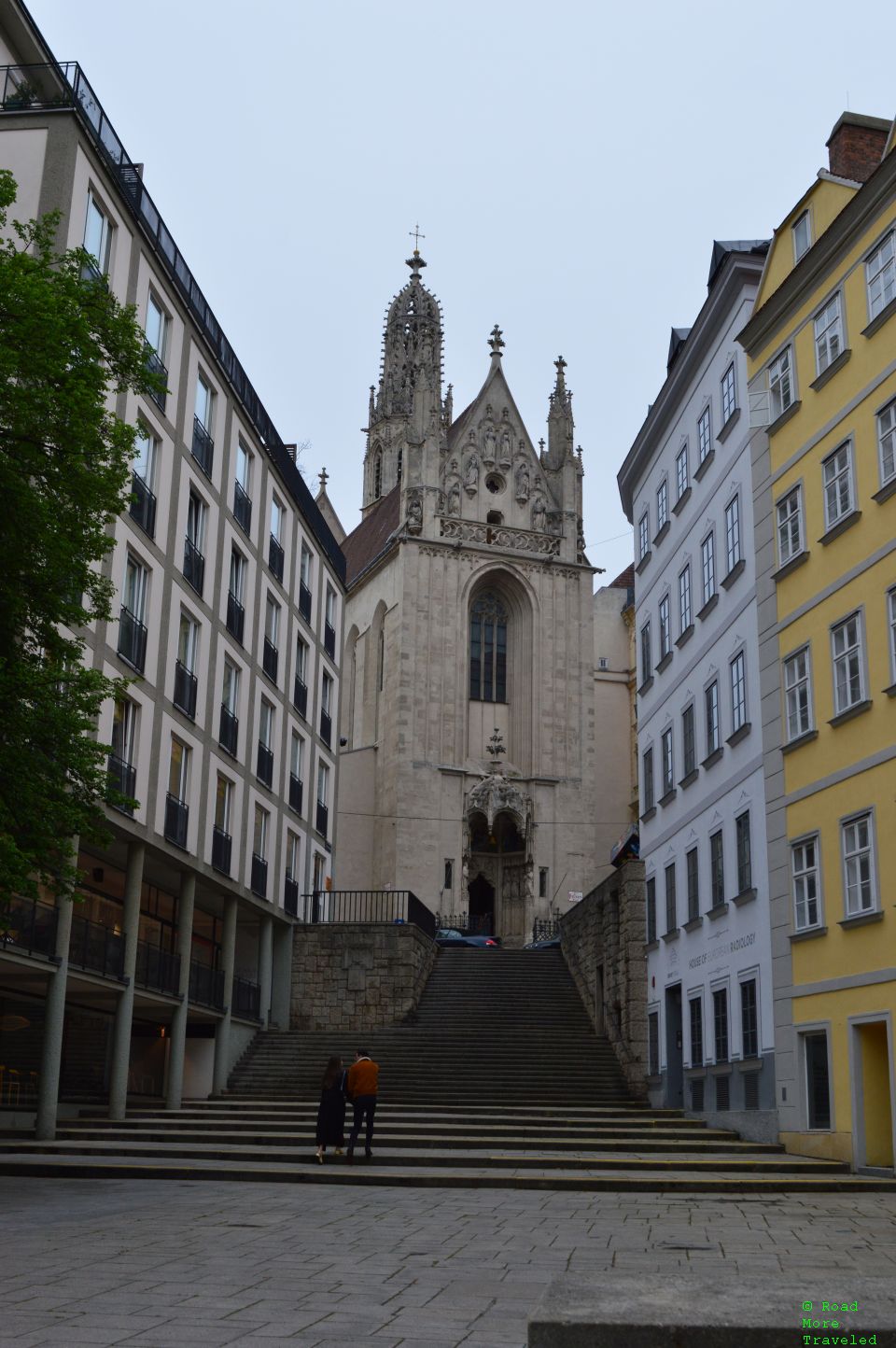
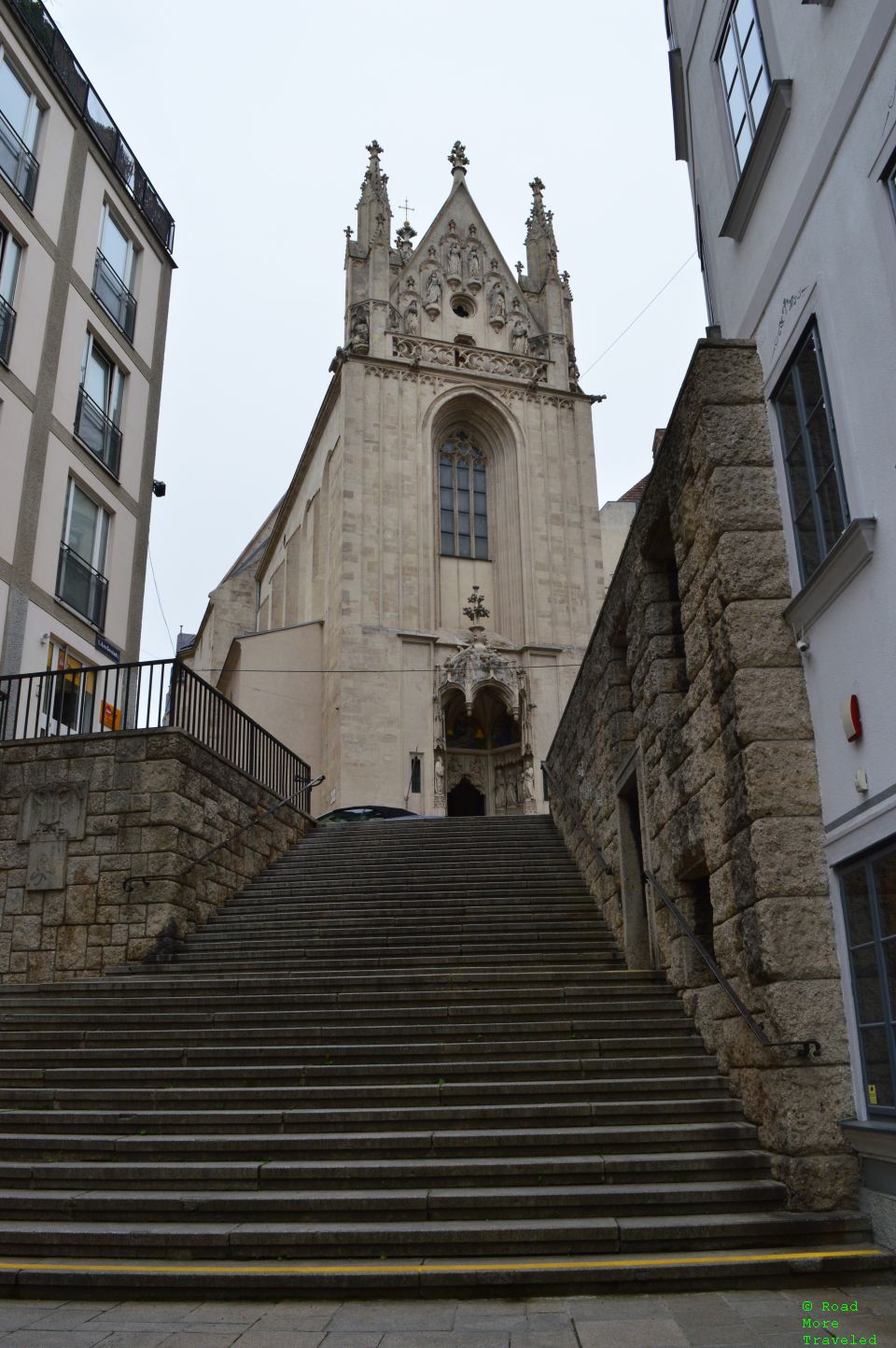
Eventually this brought me to the first historically significant site on my visit, the Maria am Gestade church. The name represents something of a misnomer. “Gestade” in German means shore of a river or sea. But the church isn’t anywhere near the Danube. The Danube did change course over the years; in fact, the Donaukanal on the edge of Old Town used to be the main river channel. Some believe the channel once flowed to the location of the church.
Anyway, the Gothic church is the 2nd oldest church in Vienna. While the exact construction date isn’t known, it likely dates to the early 12th century. The impressive tower likely appeared in the 15th century. The church’s best known feature, though, is the grand staircase leading up to the entrance.
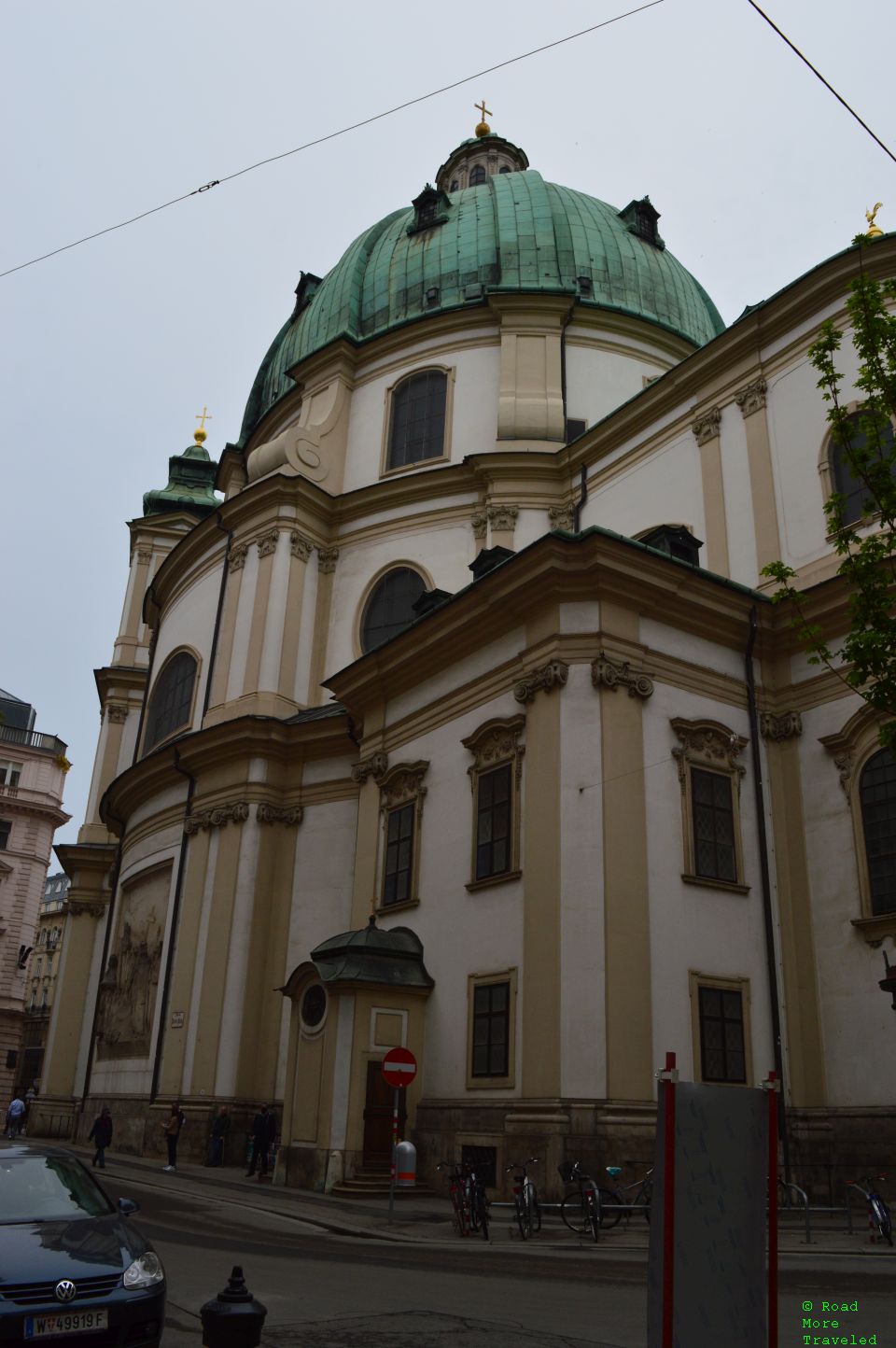
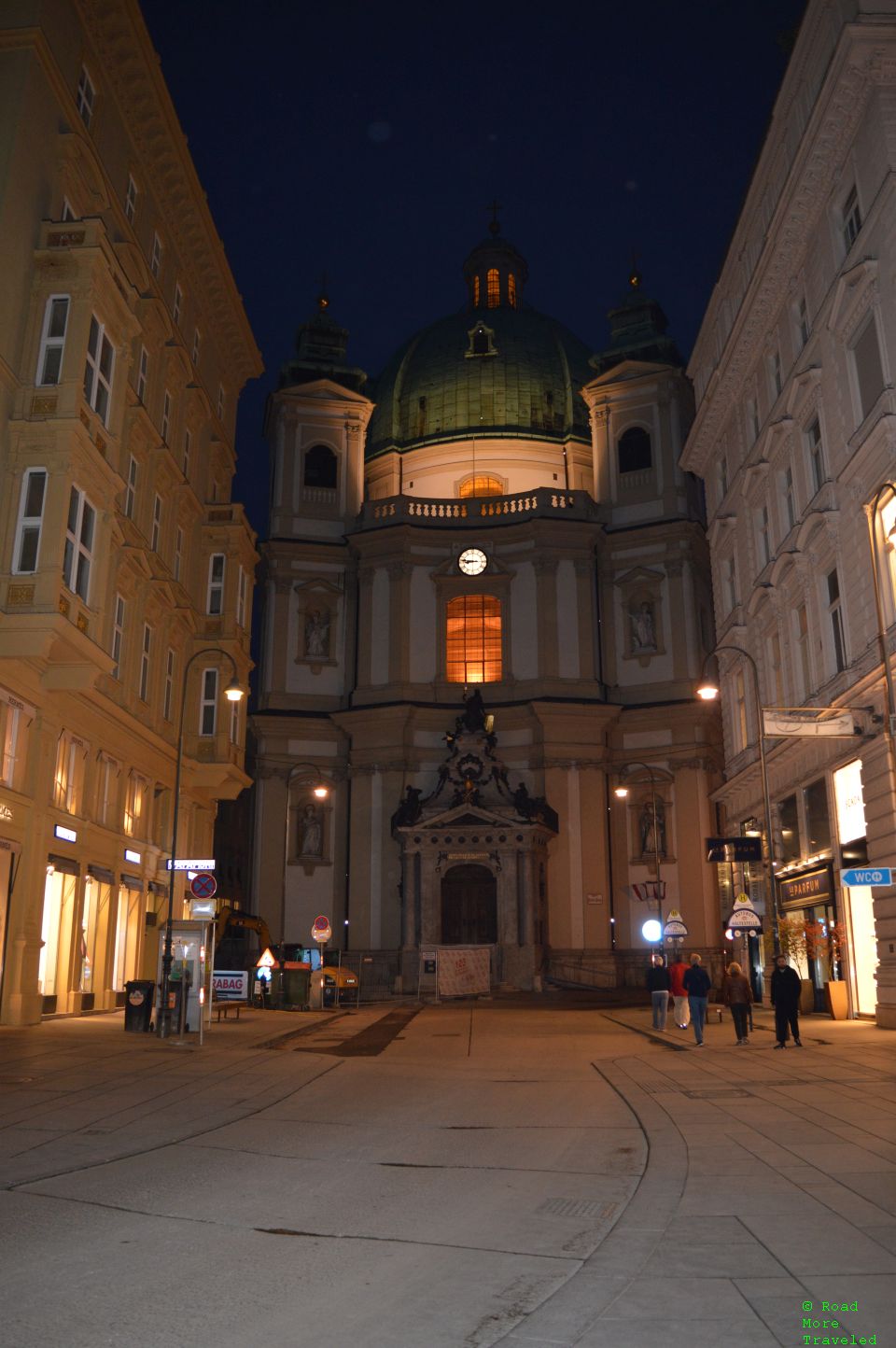
Continuing towards the center of old town, I reached Petereskirche (St. Peter’s Catholic Church). While the current Baroque structure dates to “only” 1733, its history dates back much farther. Historians believe a church existed on this site as early as the 4th century. A Romanesque church then appeared somewhere between the 8th and 11th centuries. The exterior, especially the bronze dome, somewhat resembles its famous cousin, Karlskirche (seen later). However, it’s much smaller, with its narrow façade typical of structures in the Innere Stadt. I took the first photo on my walk to dinner; the second on my way back to the hotel after dark.
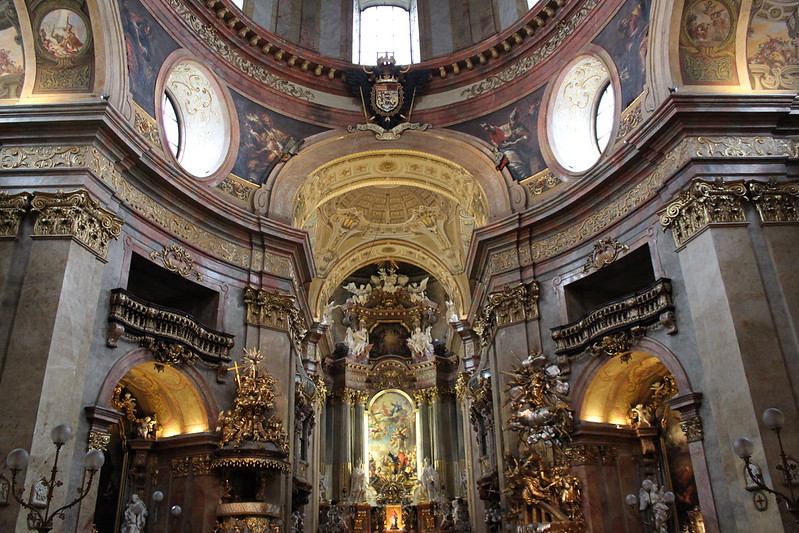
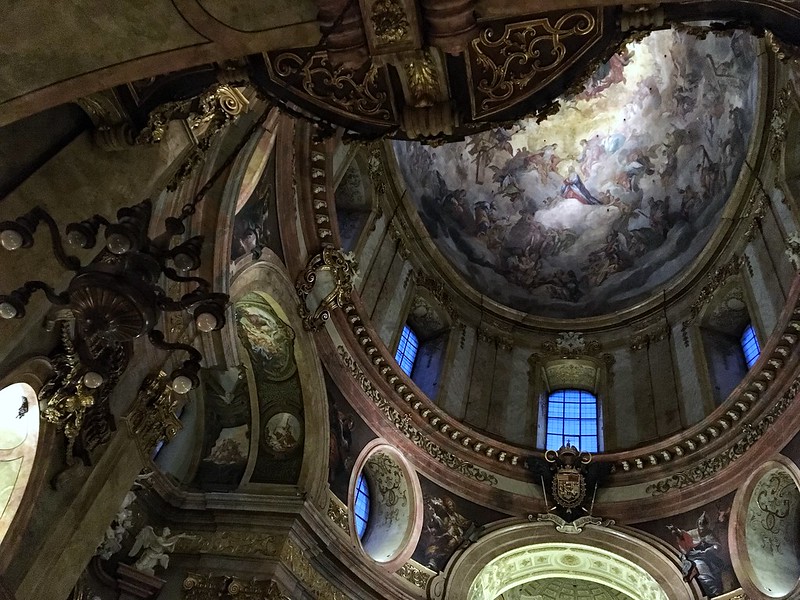
The real attraction with Peterskirche is the opulent Baroque-style interior. The frescoes along the bottom of the dome, in particular, provide a 3D-like illusion.
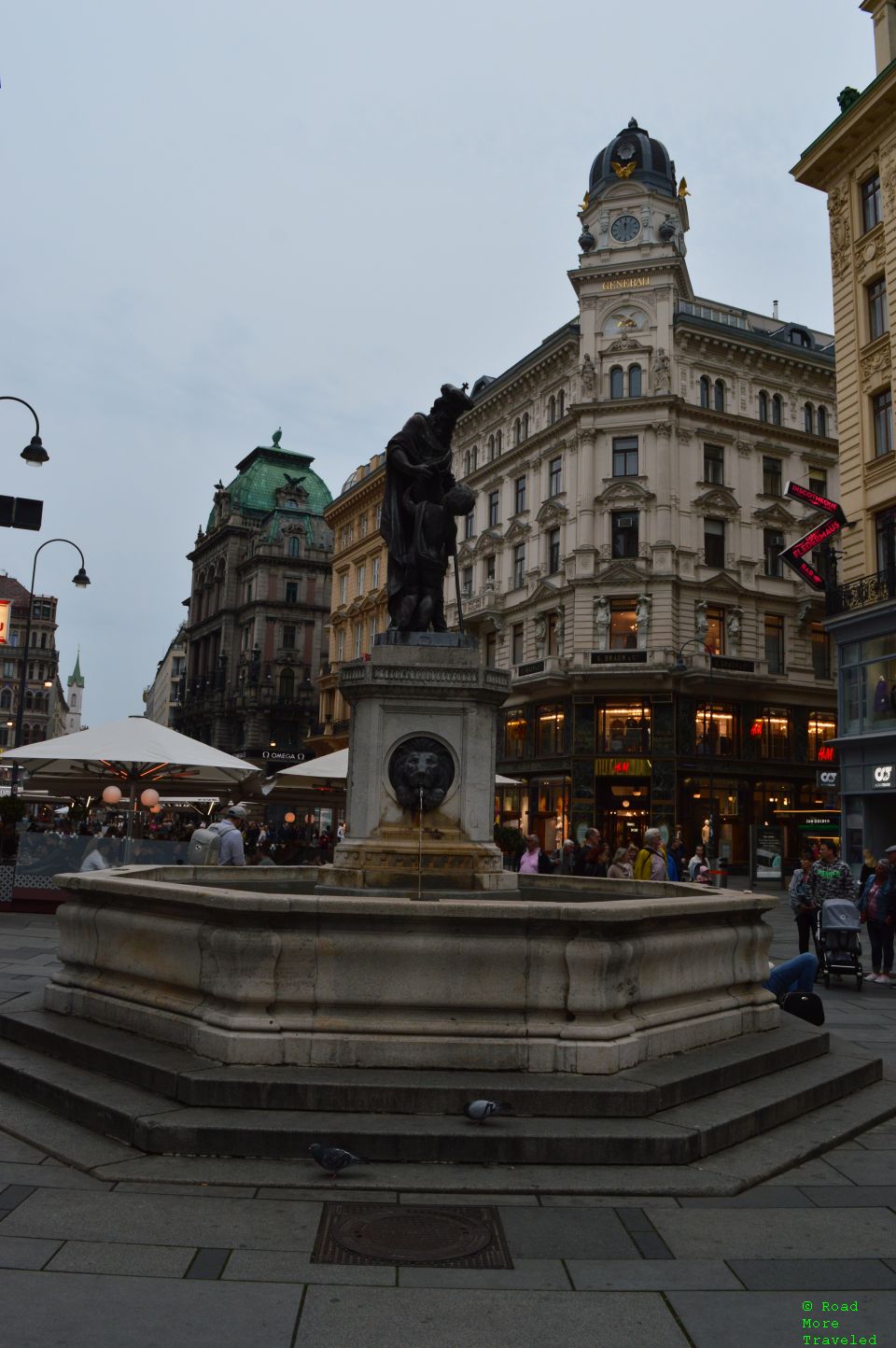
When you reach St. Peter’s, you also reach the often very busy Graben pedestrian zone. And on a Friday night, especially with gorgeous early May weather, packed it was. As I walked around Peterskirche, I first came to Leopold’s Fountain. The fountain features a sculpture of St. Leopold, originally made by Austrian sculptor Johann Frühwirth in 1680. However, the original was replaced in 1804.
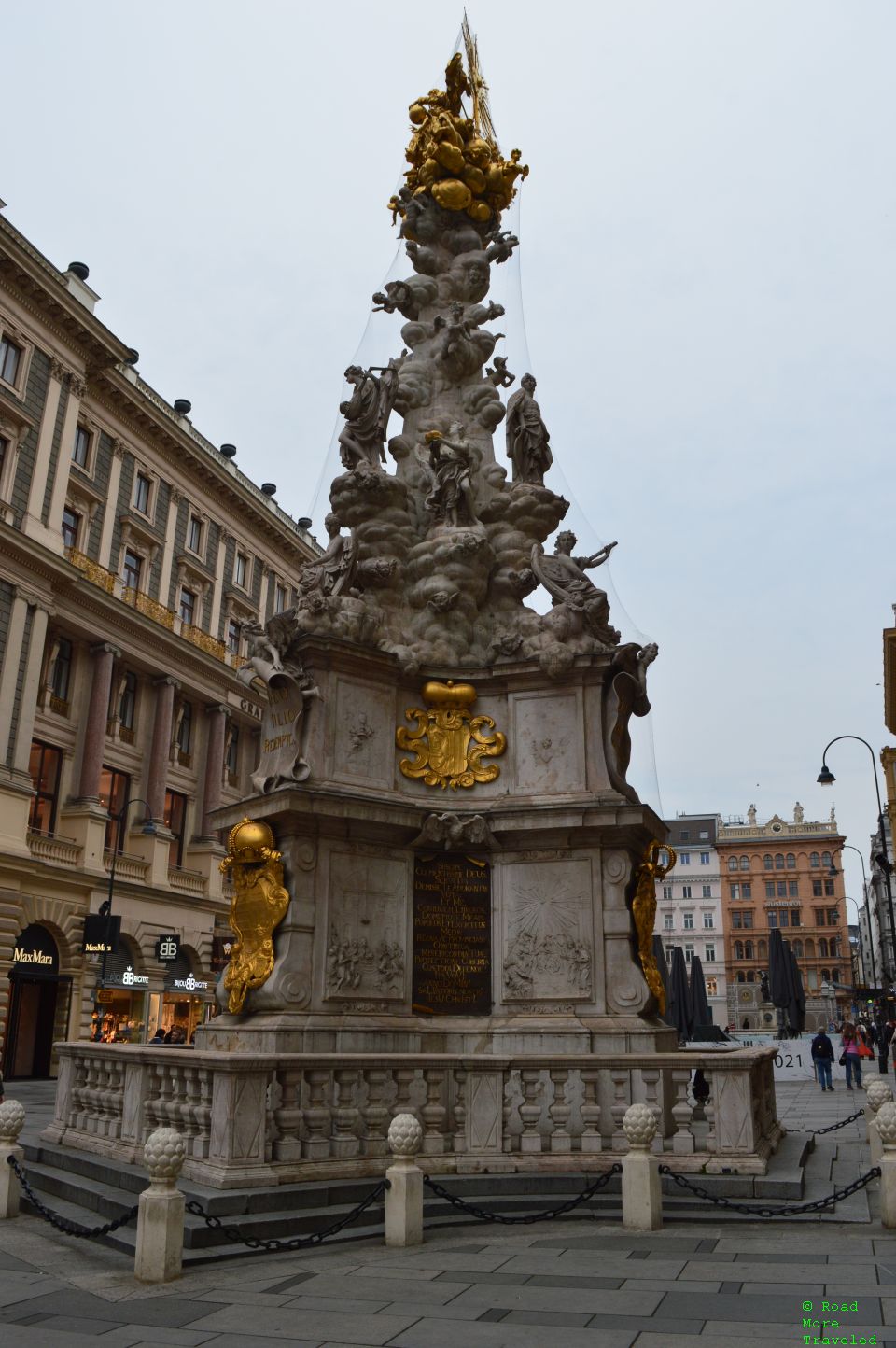
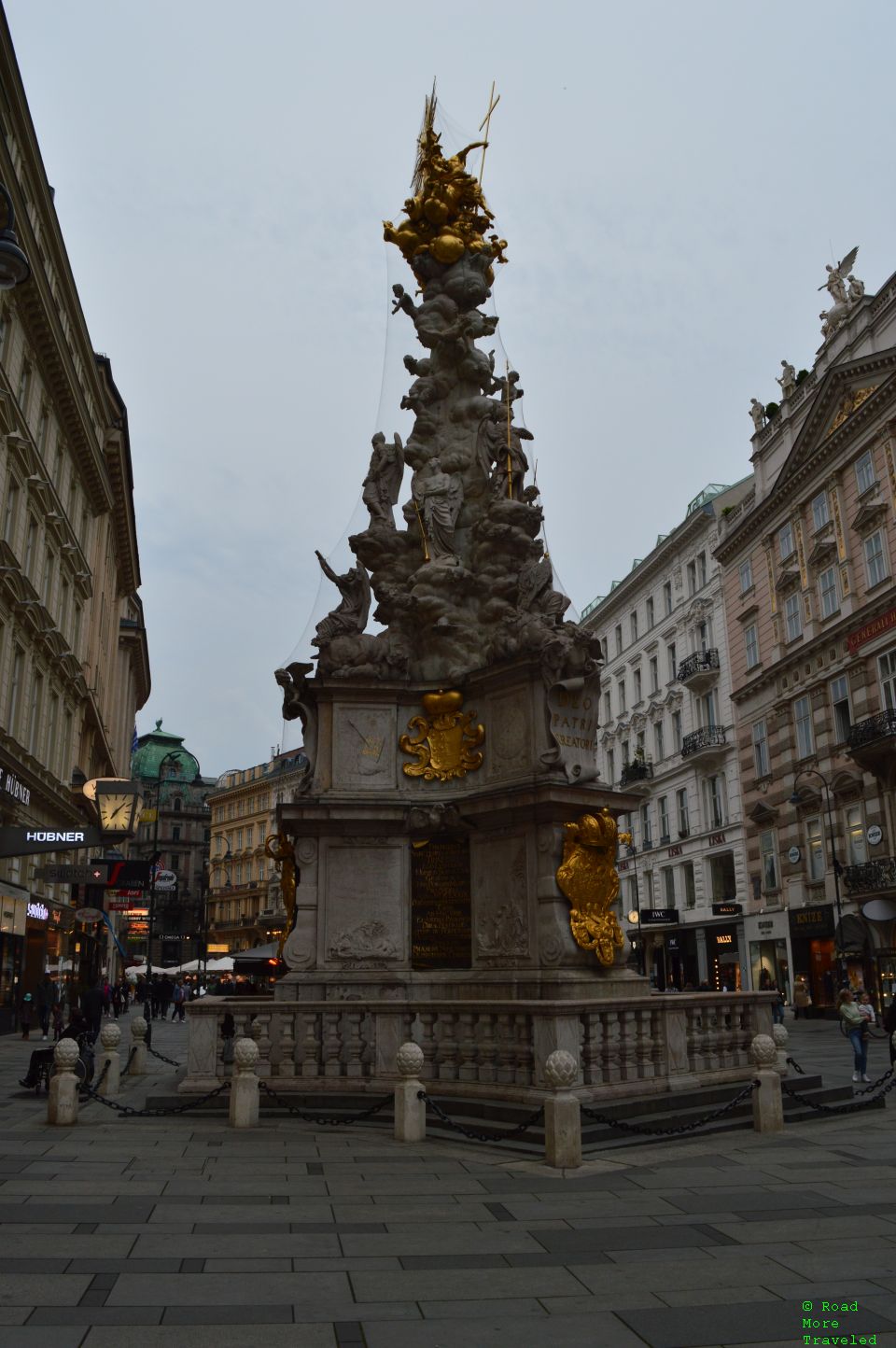
Just down the Graben is the Vienna Plague Column (Pestsäule). Plague columns are a common feature in former Habsburg Empire cities. In general, these columns featured a statue of Virgin Mary or the Holy Trinity at the top, for the purpose of warding off the plague or to praise God for the plague finally passing. Leopold I ordered construction of a wooden Plague Column in 1679, as the plague still raged in Vienna. Eventually, the emperor commissioned a permanent column as a show of thanks for the end of the plague. Started in 1683, it took 11 years and multiple designers to finally complete the column in 1694. The Baroque masterpiece remains one of Vienna’s most prominent pieces of public art today.
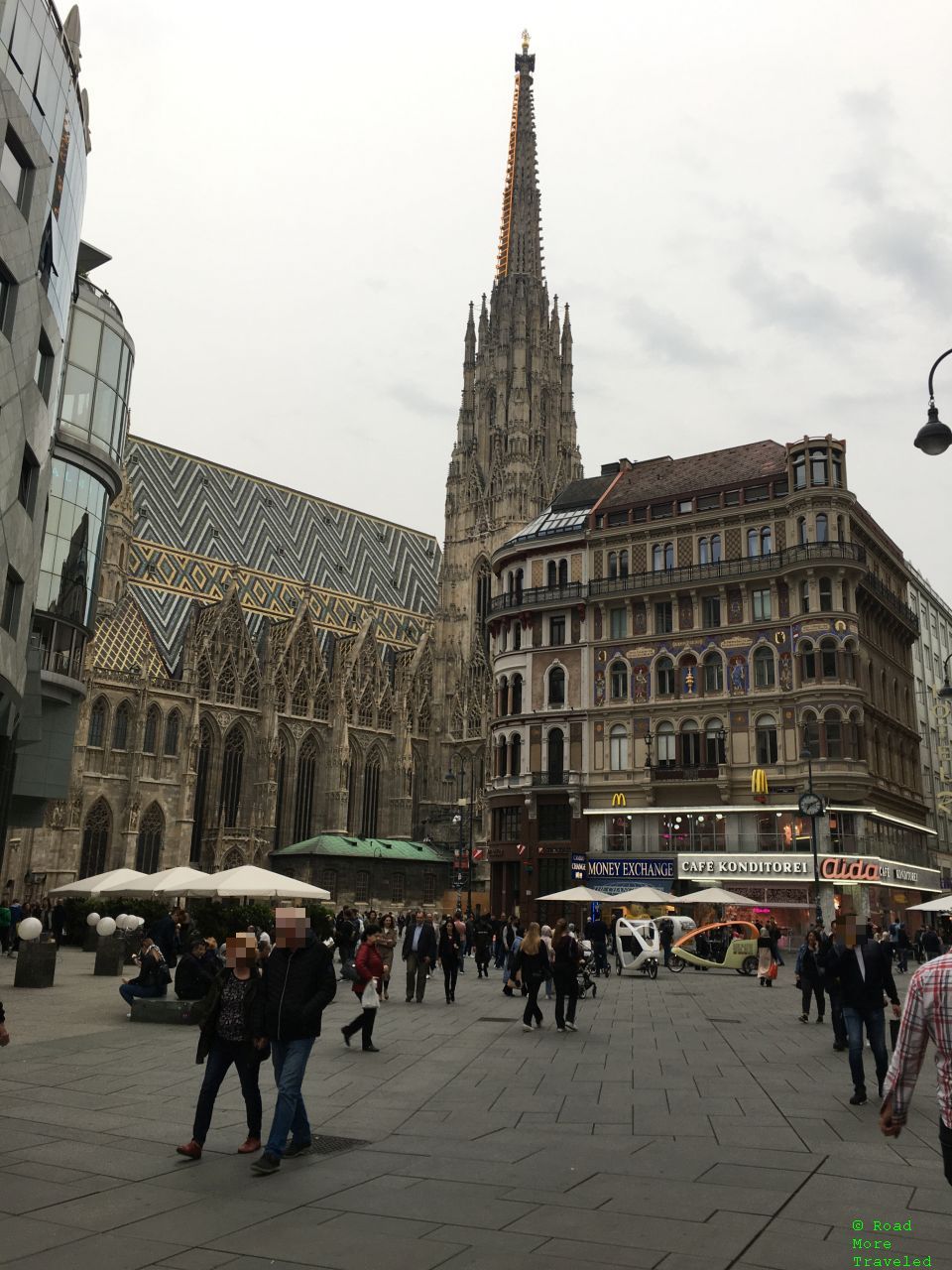
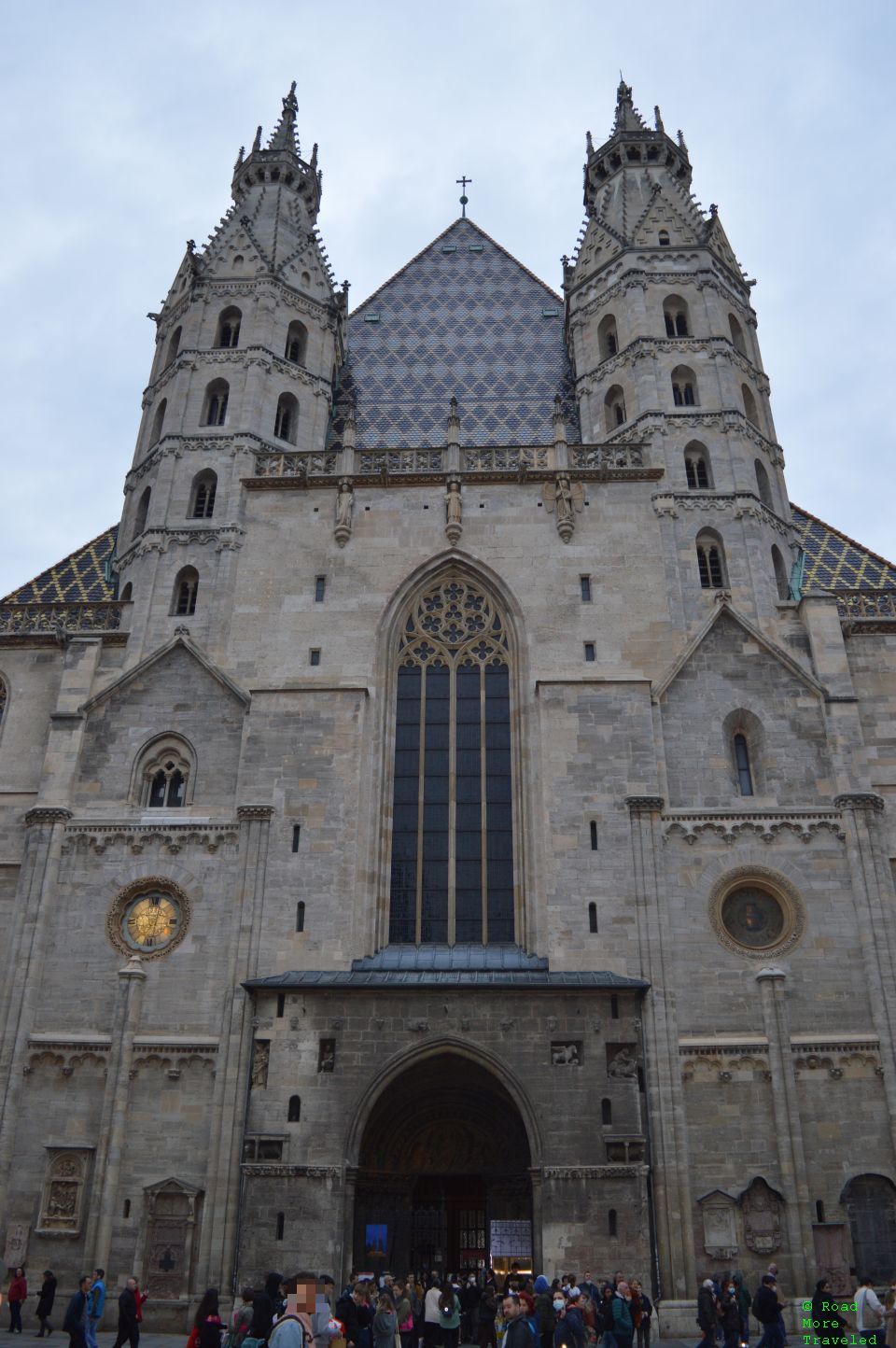
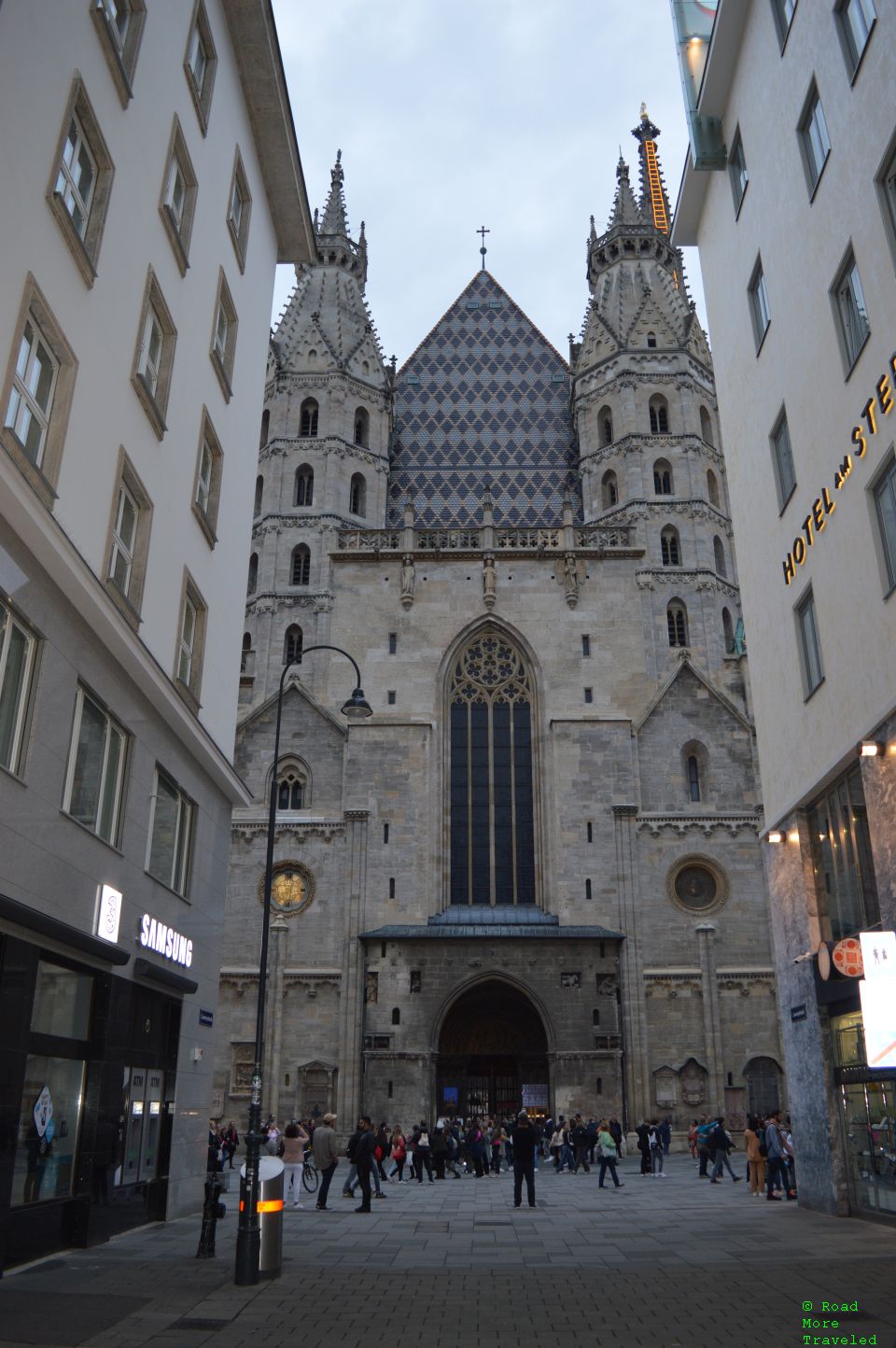
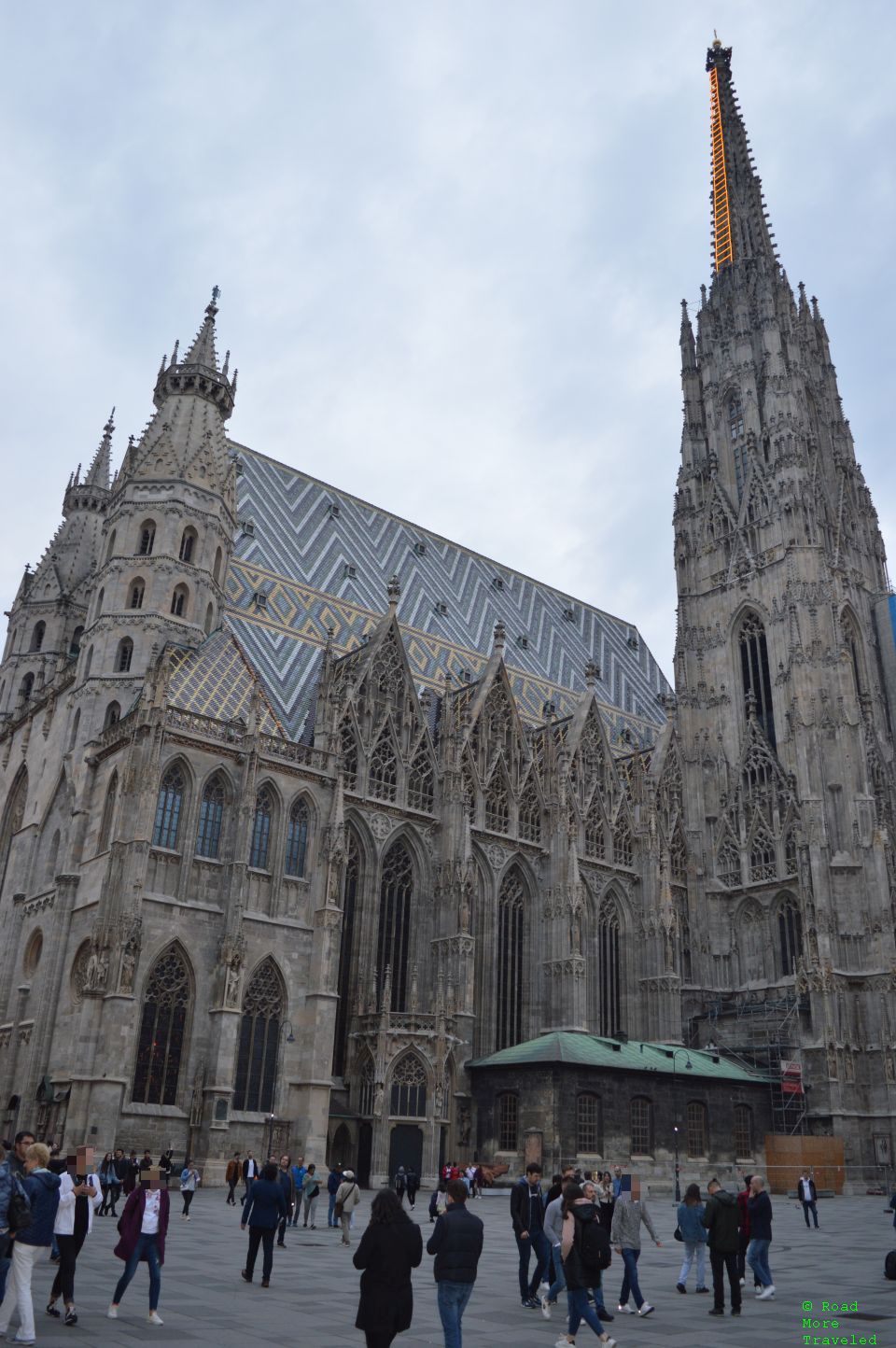
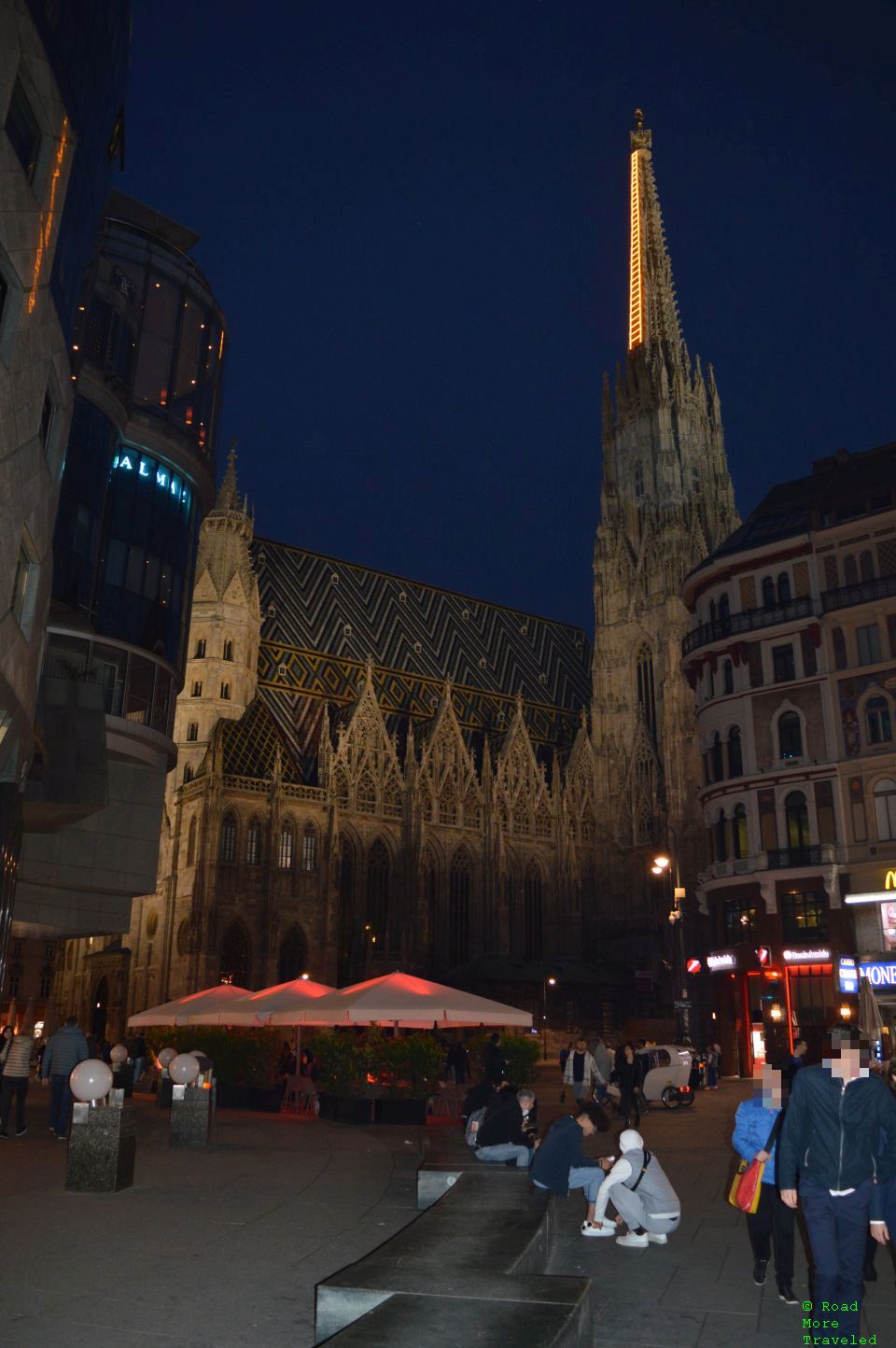
Of course, if you’ve made it to this part of town, you can’t miss Stephansdom (St. Stephen’s Cathedral), in Stephansplatz. It’s easily the most recognizable Vienna landmark, towering 136 meters above the city. In fact, that makes it the tallest church in Austria. Like the predecessor Peterskirche, the original Romanesque church dates to the mid-12th century. Most of the current Gothic structure, though, dates to a reconstruction commissioned by Duke Rudolf IV in the 1350s. Most major work on the cathedral finally ceased in 1511. The cathedral narrowly escaped destruction in World War II. While it escaped bombardment, a fire set in old town by looters caused significant damage in April, 1945.
No matter which side you approach from, the multi-colored roof and imposing Gothic spire stand out, providing a scene that is unmistakably Viennese.
After dinner, I came back after dark to admire the cathedral at night.
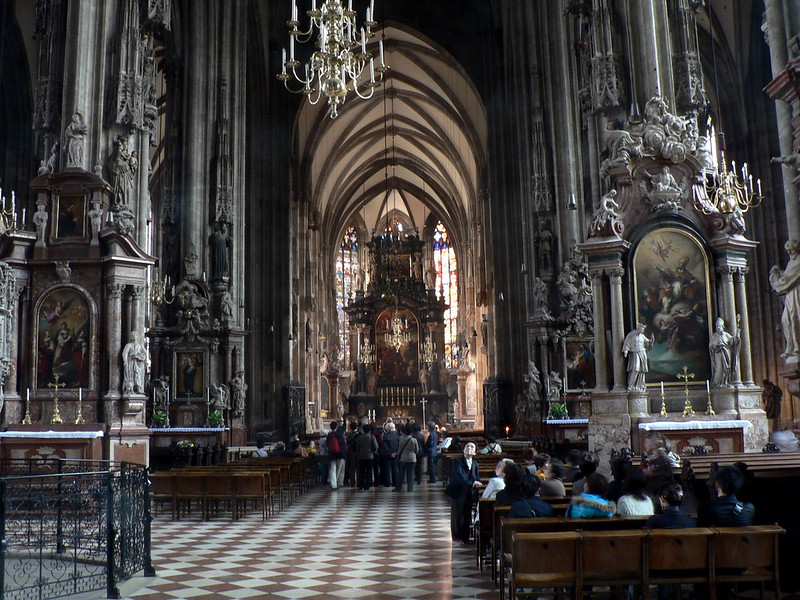
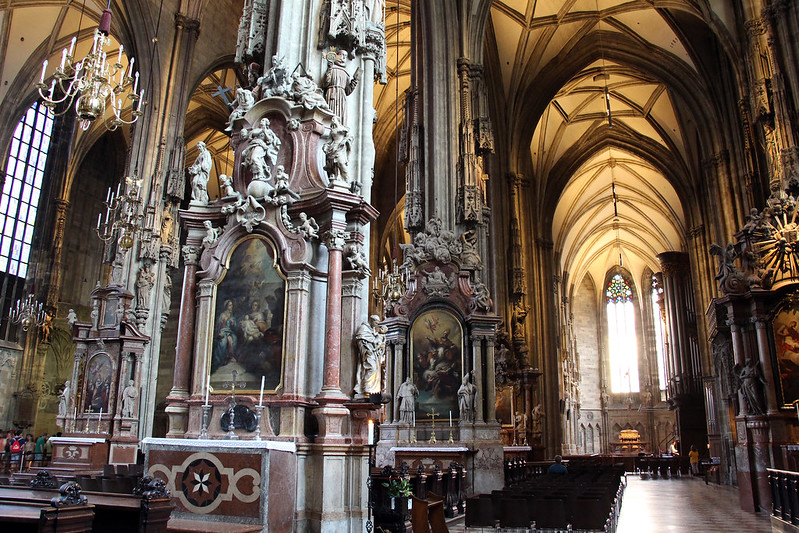
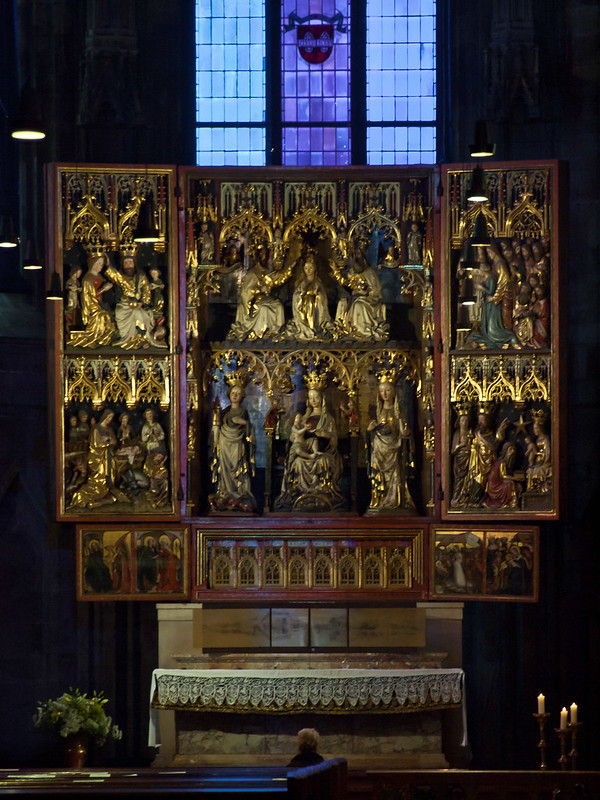
The interior underwent a substantial renovation that started in 1985, and took 20 years to complete. If you’re short on time, the northern side and front of the nave are accessible for free. This gives you a quick look at the classical architecture of the interior. The remainder of the interior requires a ticket, however. You can also buy tickets to climb both the north and south towers for a fantastic view of the city.
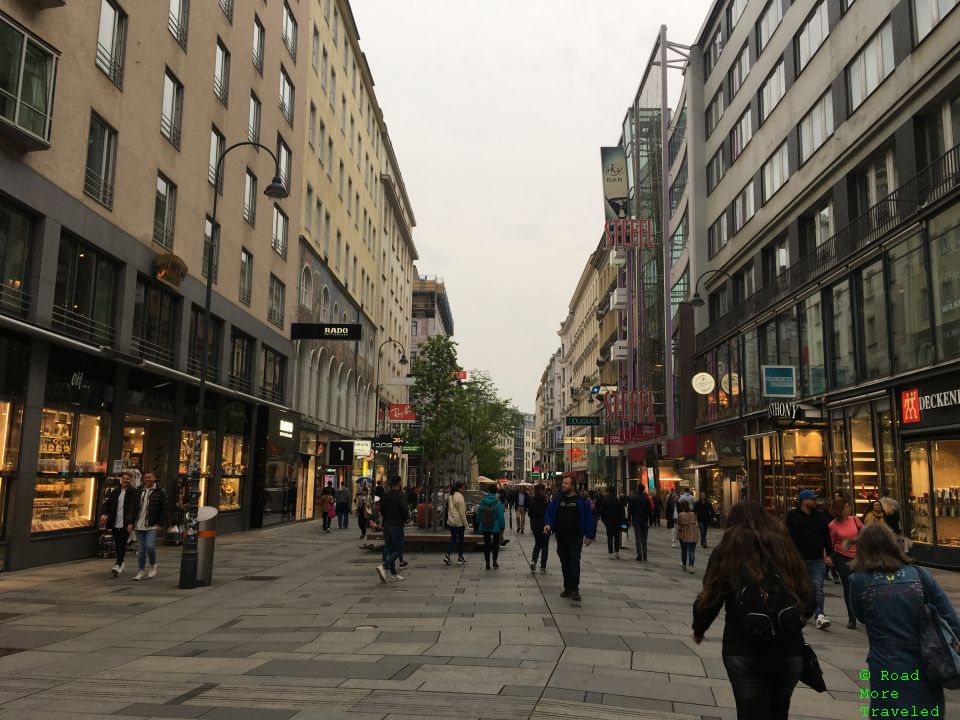
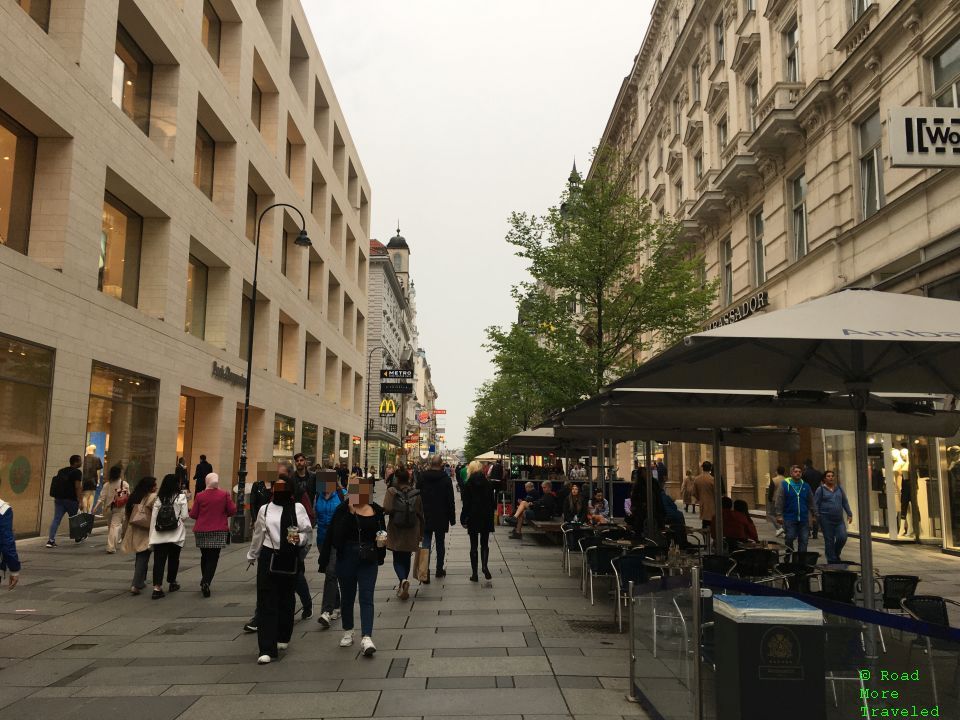
From the cathedral, I headed south along the famous Kärntner Straβe. I enjoyed some people watching on the busy pedestrian street on this cool, cloudy Friday evening.
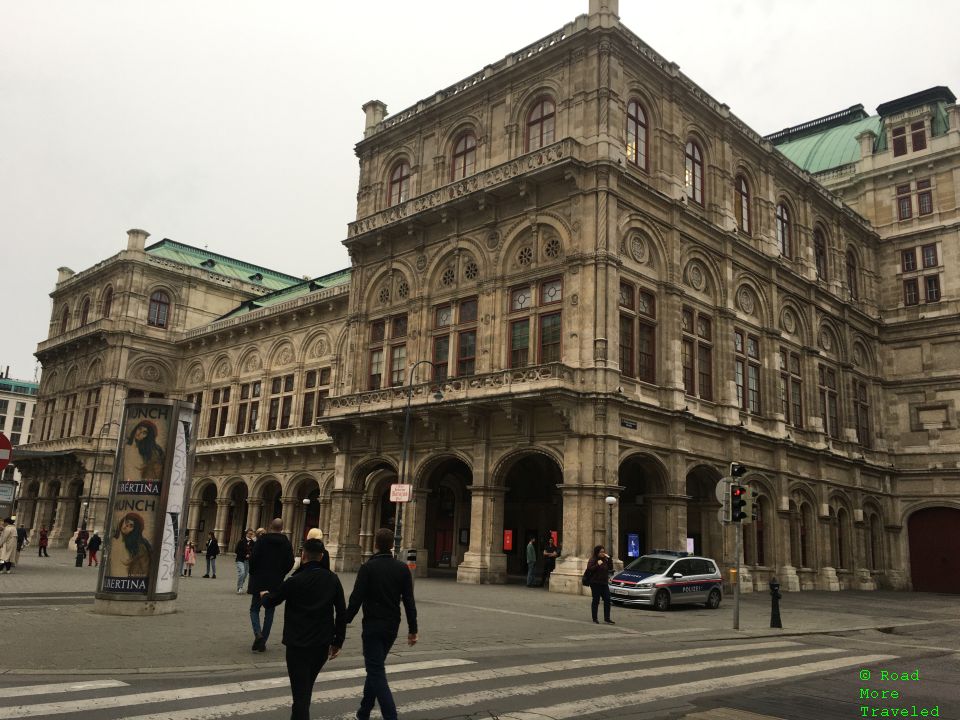
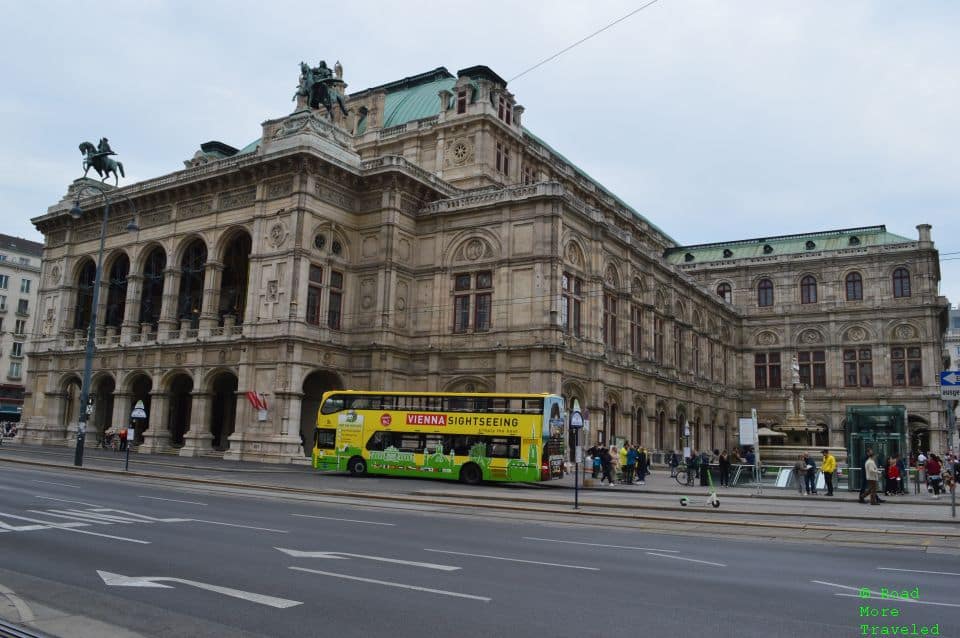
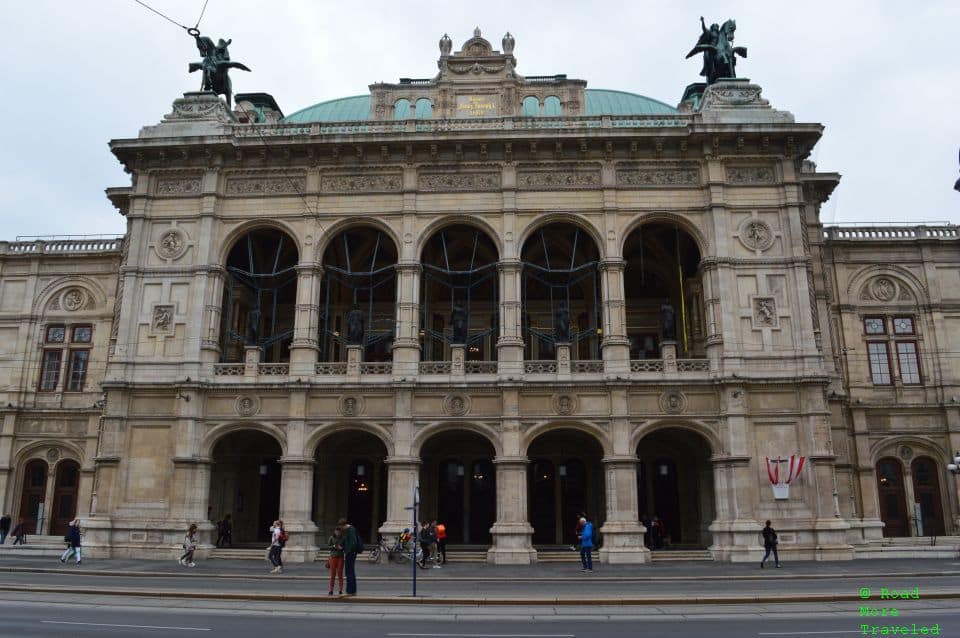
The destination for the evening? The area around the Albertina. But first, at the end of Kärntner Straβe is the impressive Vienna State Opera House (Staatsoper). This is one of those buildings where appearances aren’t what they first seem. While the building looks quite old, the structure dates to 1869. However, it suffered severe damage during World War II, and so what you see today is a mix of original and reconstructed. There are tours of the interior available, but I arrived too late (after 7 pm) to join one. And I didn’t have time Sunday morning before leaving.
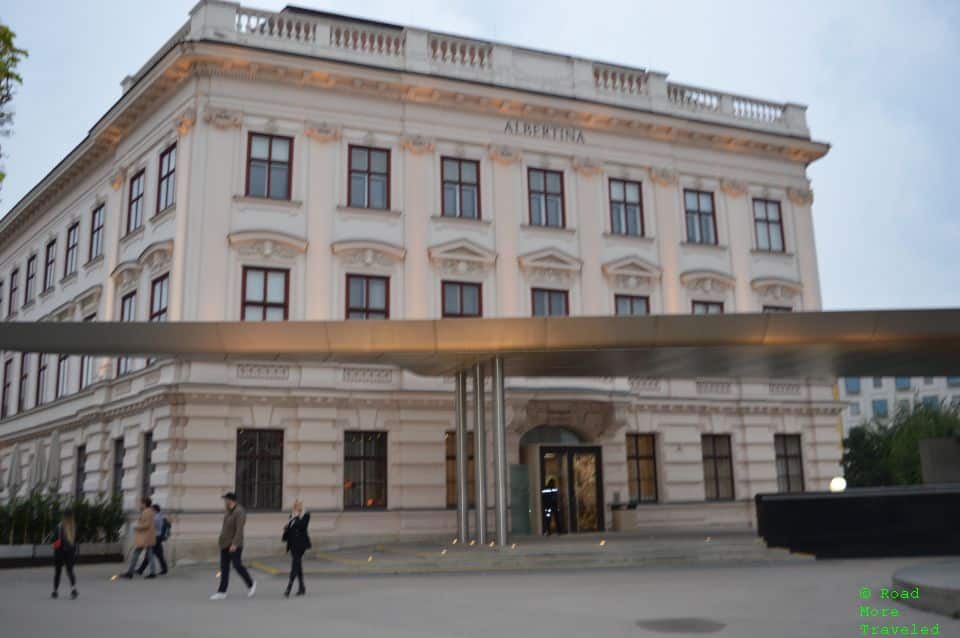
From here, I walked across the street to the Albertina. One of the foremost art museums in Europe, if not the world, I really wanted to visit the collections inside. However, given the museum’s stature, I didn’t want to rush; it closed at 9, and I only expected an hour or so to spare on Sunday. So I just explored the outside for a few minutes.
The Albertina began life as a palace constructed by Emanuel Teles Count Silva-Tarouca. Over time, the palace passed to Duke Albert of Saxen-Teschen, who began amassing an enormous collection of art totaling more than 1,000 pieces. Various Archdukes called the palace home, ending with Archduke Friedrich in the early 20th century. But in 1919, the new Socialist government of Austria seized both the palace and the artwork inside. The government soon after renamed the building the Albertina, in honor of Duke Albert. Today, the museum houses a premier collection of prints, with more than 65,000 drawings and a million plus master prints, graphic works, photographs, and architectural drawings.
The Albertina suffered significant damage as a result of Allied bombardments in March, 1945. It was reconstructed in fairly short order, with a significant modernization project completed from 1998 to 2003. The distinctive low roof in front of the building was added in 2008.
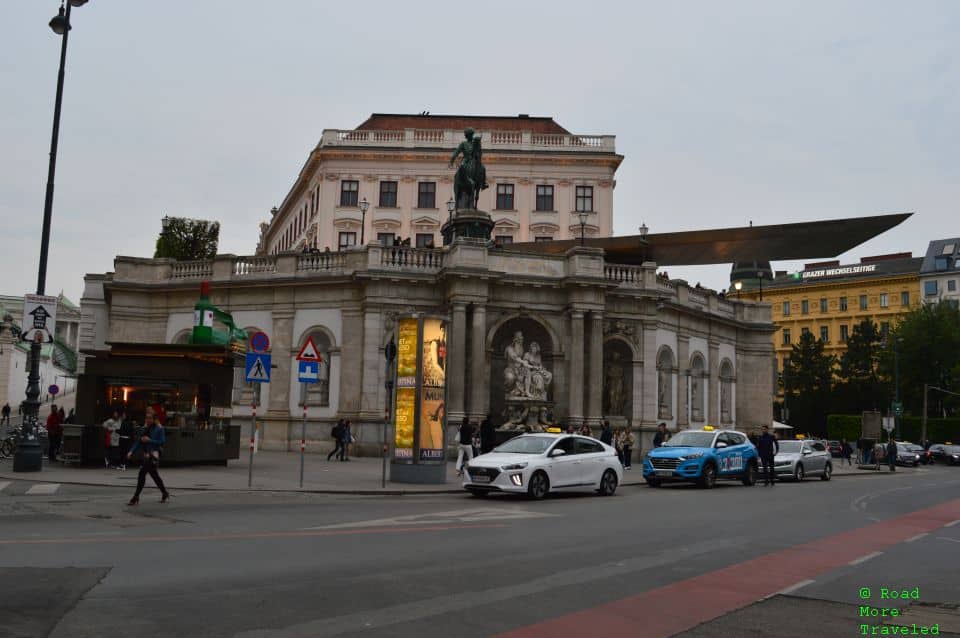
There’s also the distinctive Albrecht monument and sculpture out front, visible from the street below.
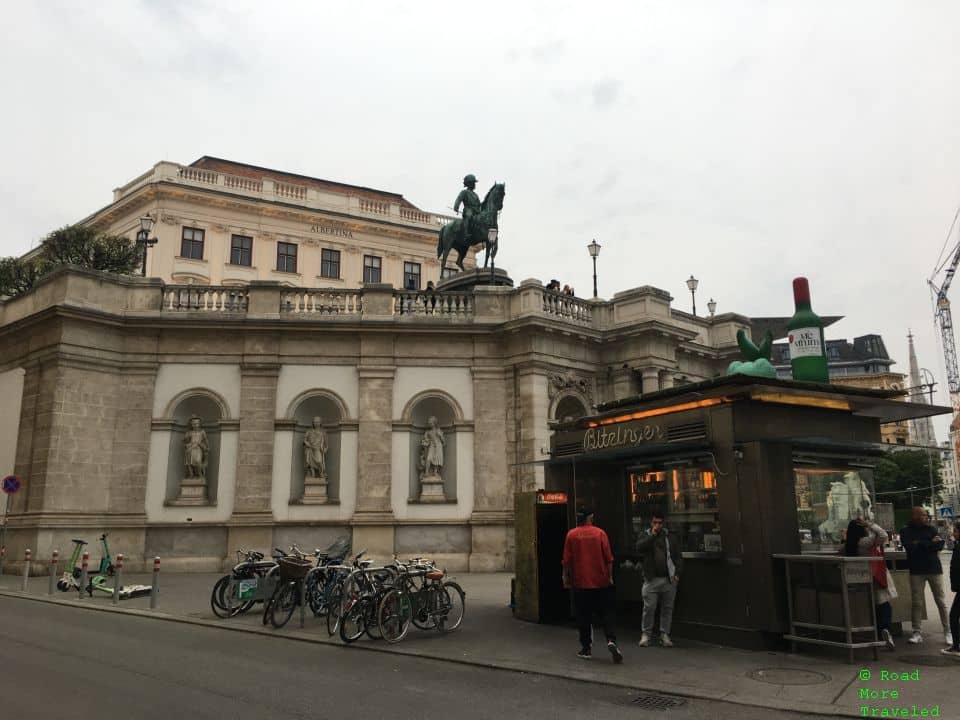
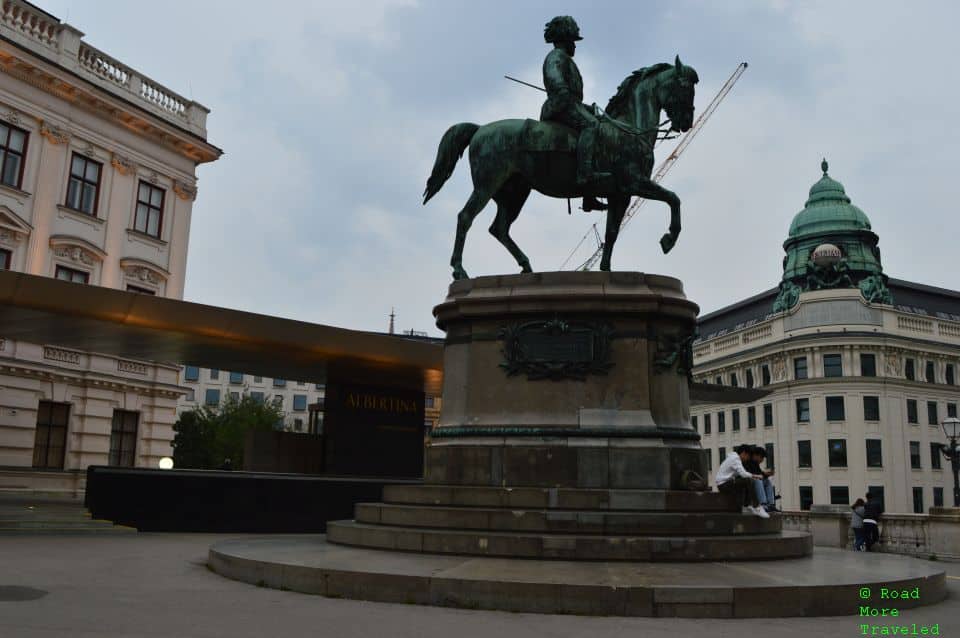
You can enjoy a nice view of the Innere Stadt below while walking around the main level.
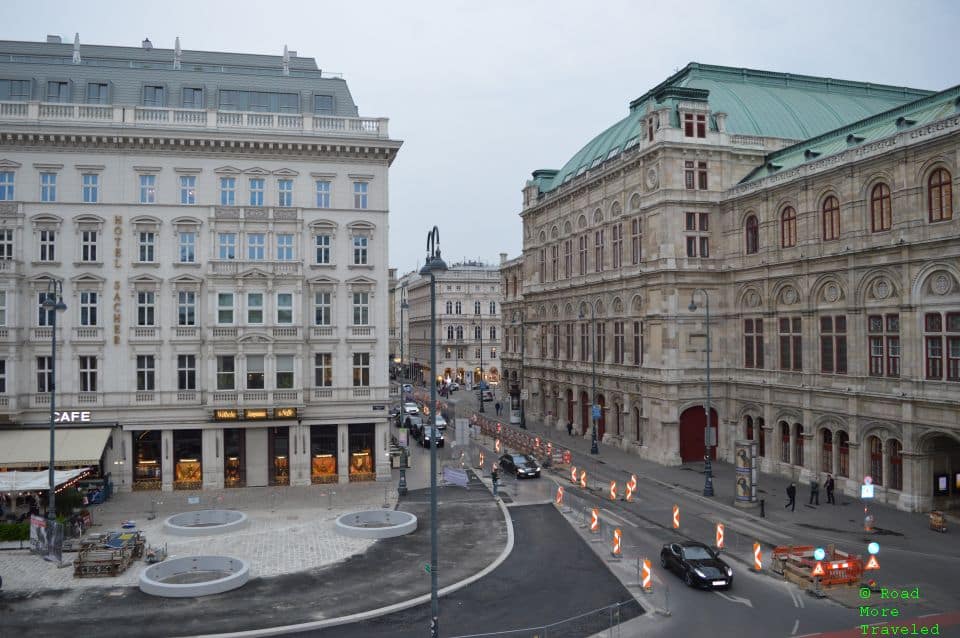
The building directly in front is the back of the famous Hotel Sacher. I’ll talk more about the Sacher a little later in this post.
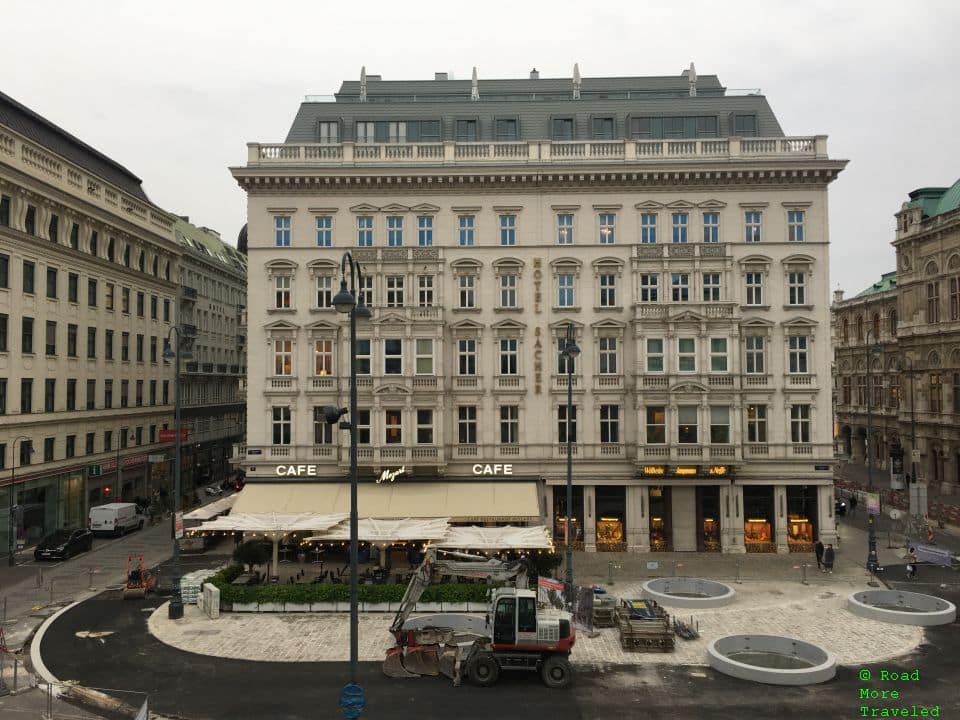
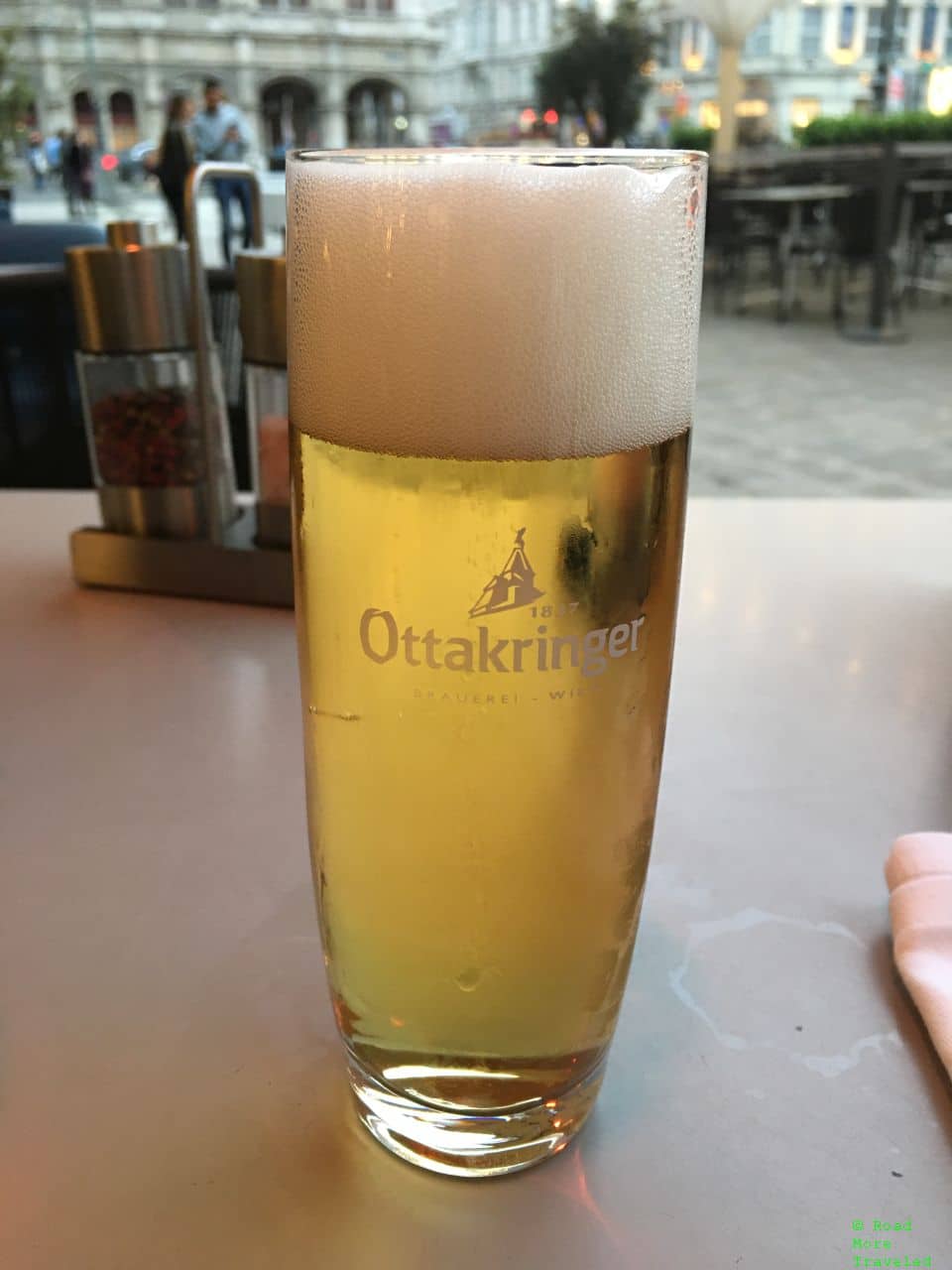
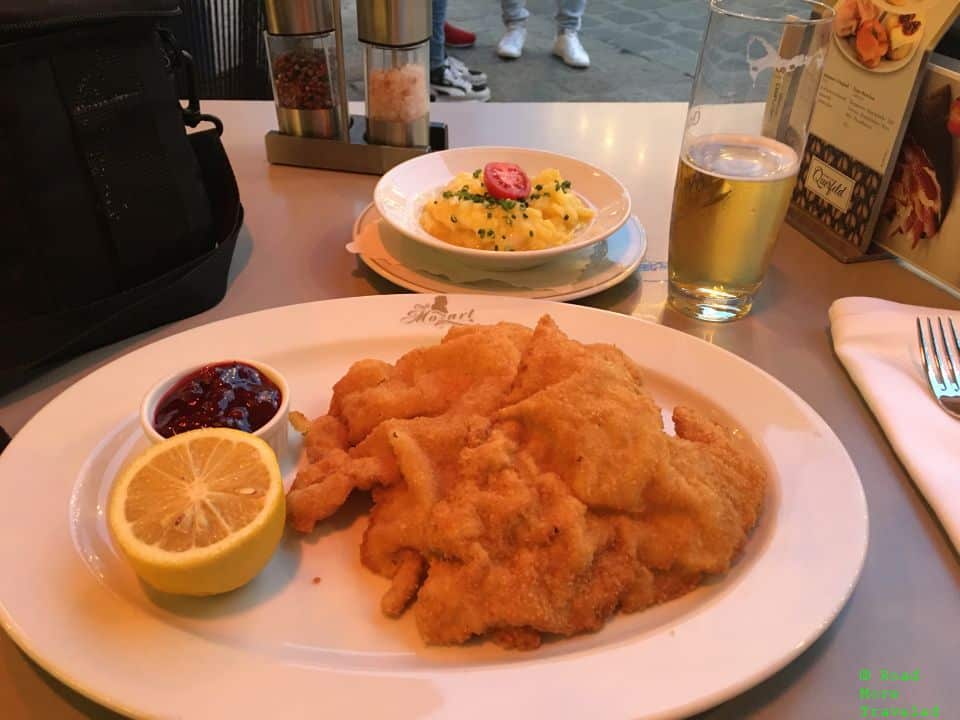
After walking around a bit more, I headed across to Cafe Mozart to grab dinner. The cafe is best known for its opulent interior, and is a popular hangout for musicians performing at the Vienna State Opera House. There’s also a much more low-key outdoor seating area, where I set down for dinner. The restaurant felt rather empty for a Friday night; Vienna in general still hadn’t fully returned to normal pre-pandemic levels by May of 2022. Still, Austrian beer and a tasty Wiener schnitzel made for a nice meal to go with the people watching.
A Quiet Sunday Morning, A Busy Afternoon In The Park
I spent Saturday taking a day trip to Bratislava on the Twin City Liner ferry. On Sunday, I set off from the hotel early to get my required (at the time) COVID test. Unlike Friday night, early Sunday morning is incredibly calm in the old city. The bustling streets leading up to St. Stephen’s Cathedral had only one or two other people out for a walk.
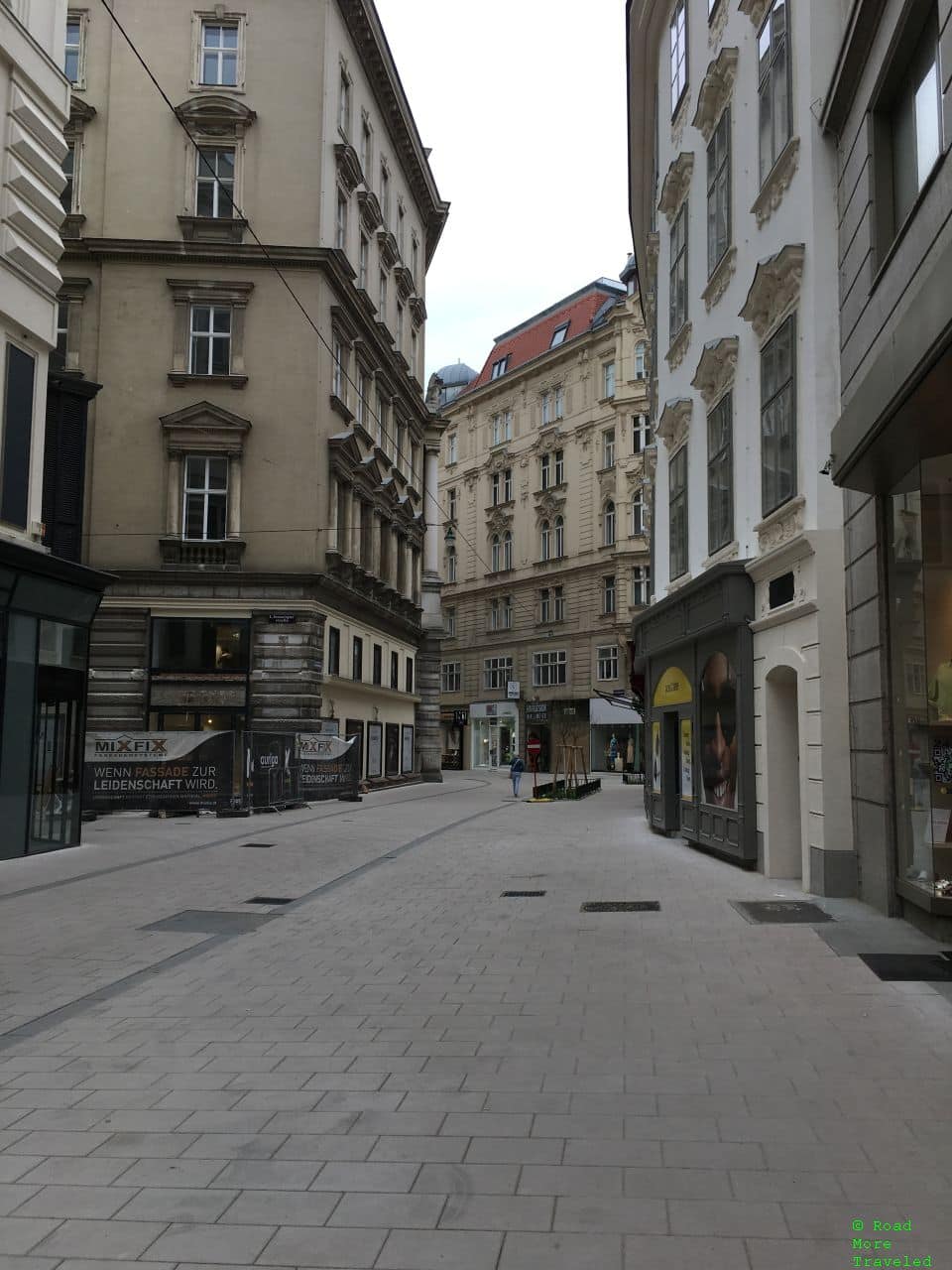
Meanwhile, out on the Kärntner Straβe, full of people on Friday night? Again, only a few people out and about this early on a Sunday.
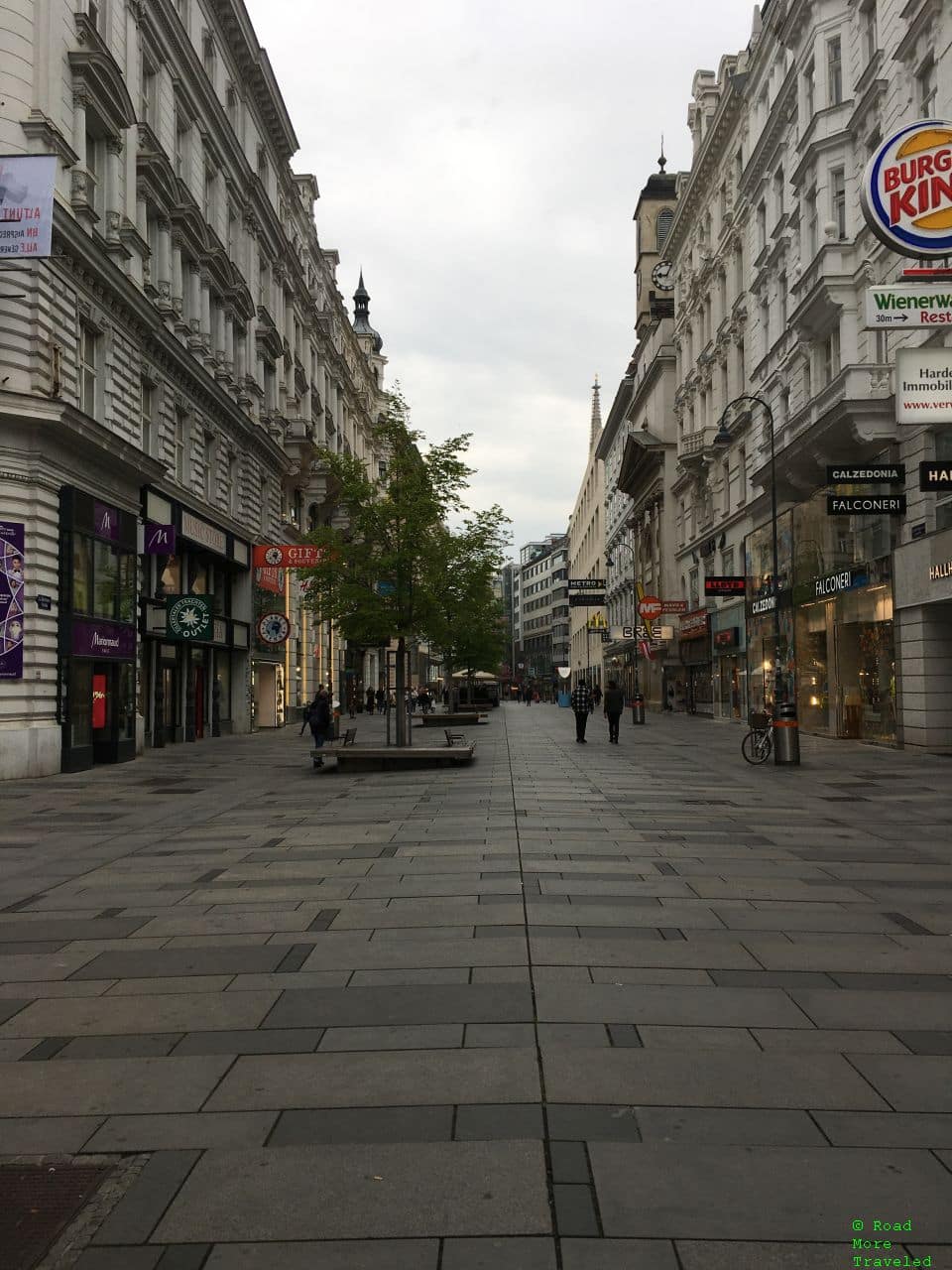
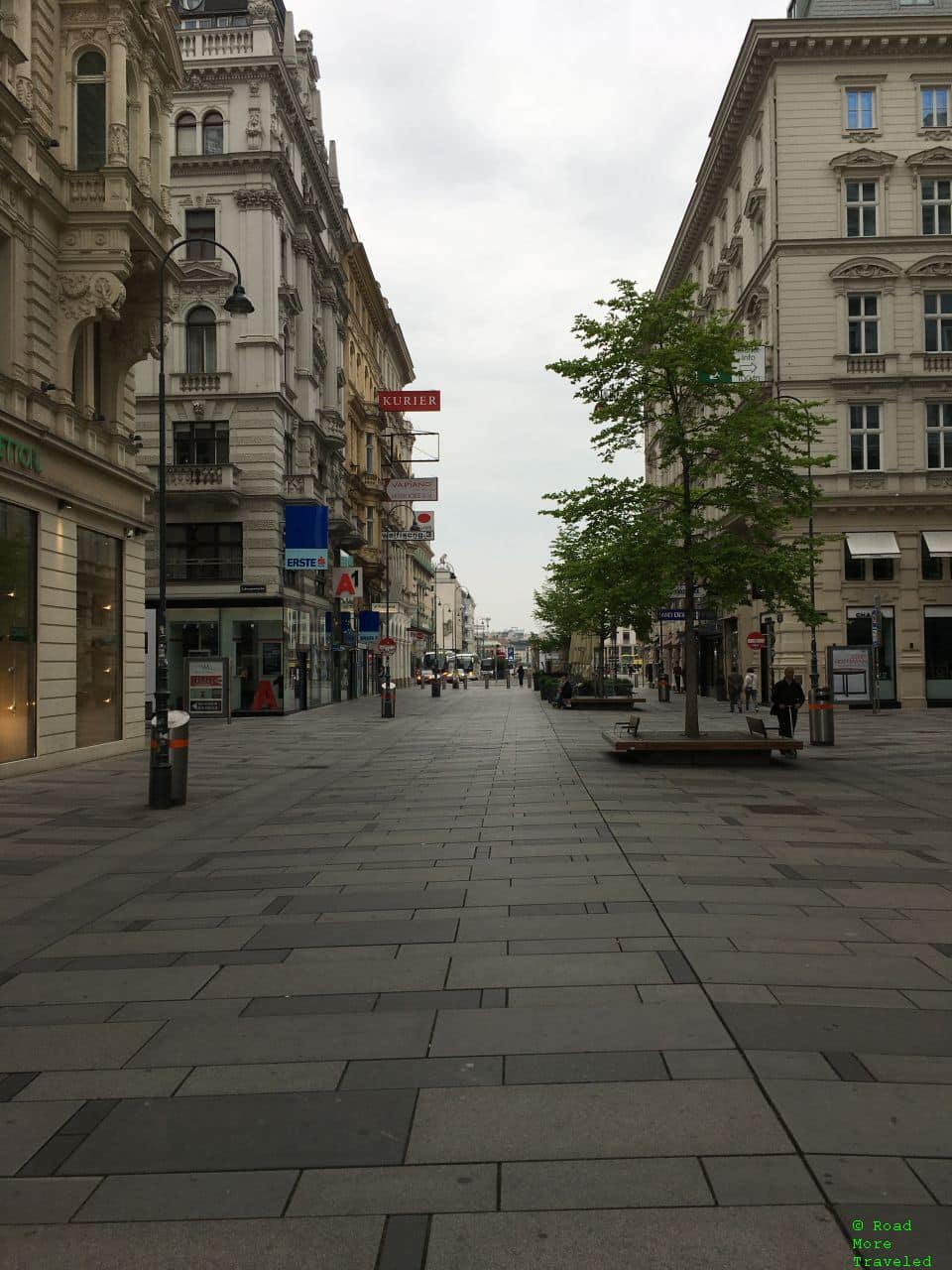
I’ve said this before, but it bears repeating – “early” is a relative term in Europe, especially on weekends. I took this walk about a quarter to 9 in the morning. So “get there early” doesn’t mean you have to be up at the butt crack of dawn.
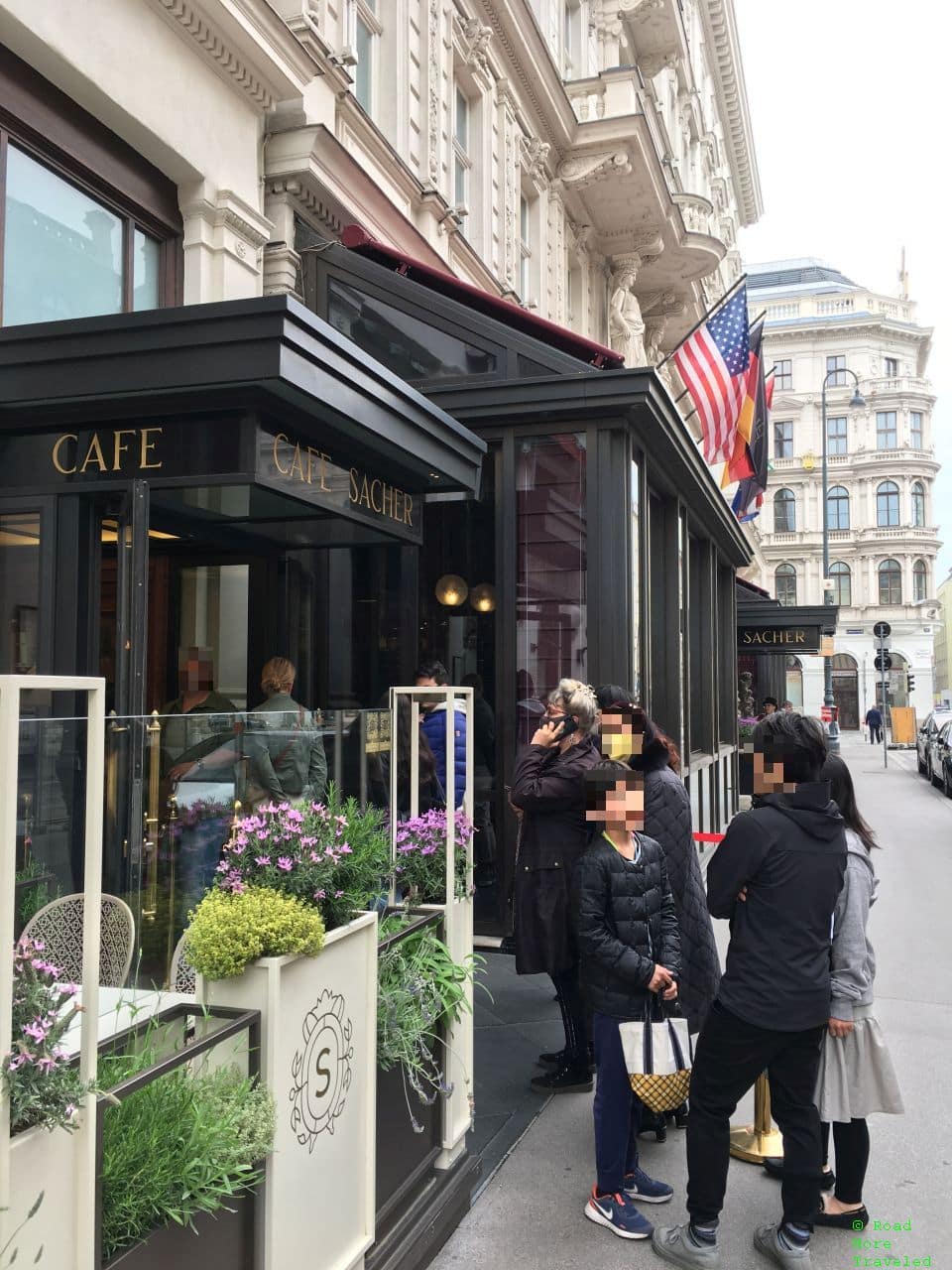
Anyway, the COVID test only took a couple of minutes, so I decided to take my chances for a table at the Hotel Sacher. The hotel’s claim to fame is the Cafe Sacher, home to the original Sacher-Torte. To reserve a table at the cafe on weekends, you have to book weeks in advance. (You can usually find sporadic times on weekdays even close-in.) Truthfully, I didn’t research this before arriving; fortunately, the cafe does keep a limited number of tables for walk-ups. I hoped coming coming relatively early might score me a table. And indeed, at a quarter past 9, I just walked right in.
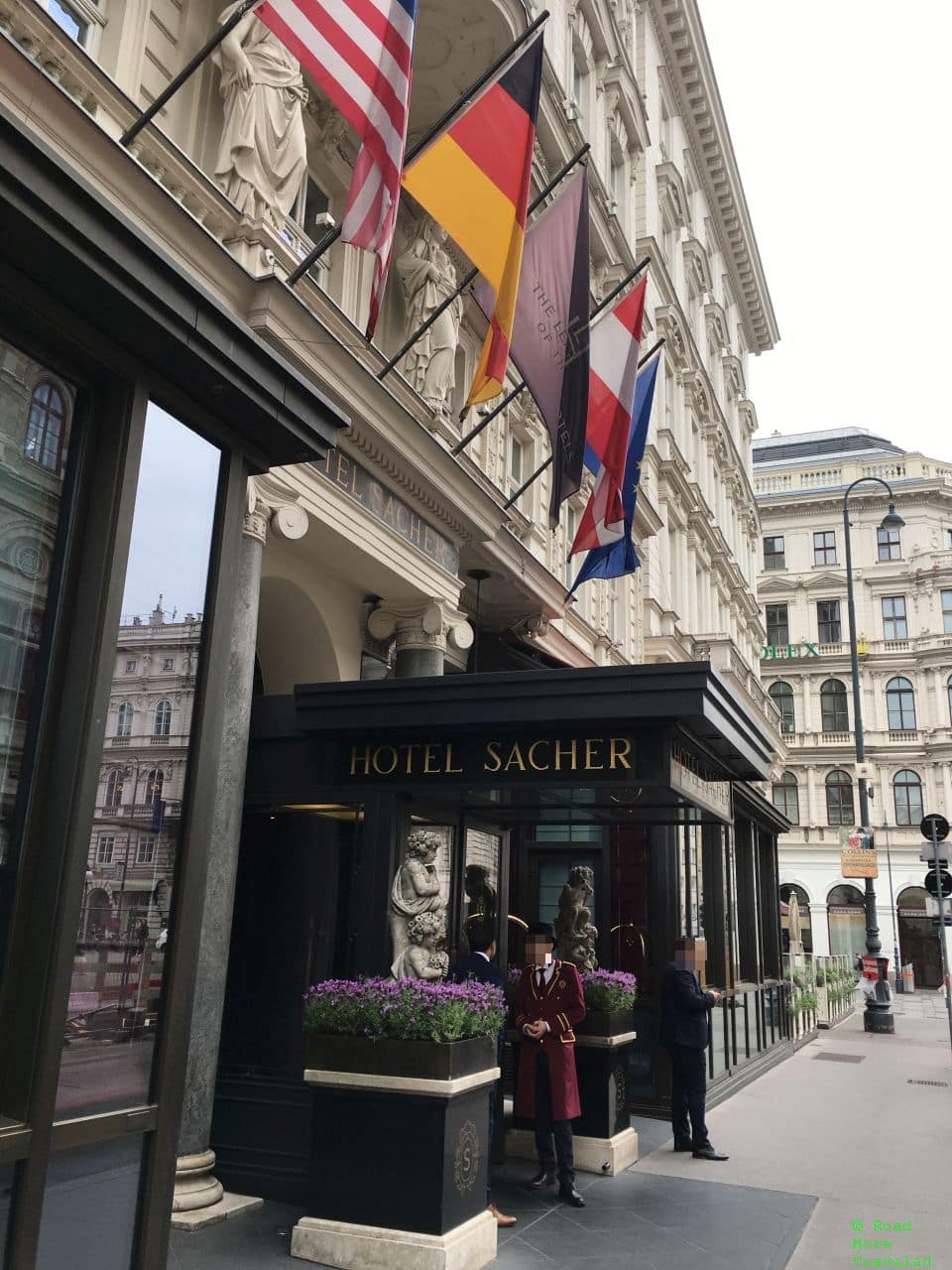
The hotel dates to 1876, though its signature dish predates it by 44 years. The hotel’s founder, Eduard Sacher, took the recipe from his father, Franz, a confectioner who invented the cake in 1832. Now a part of Leading Hotels of the World, the Hotel Sacher still maintains the opulence of its original design. You can still see this even in the cafe.
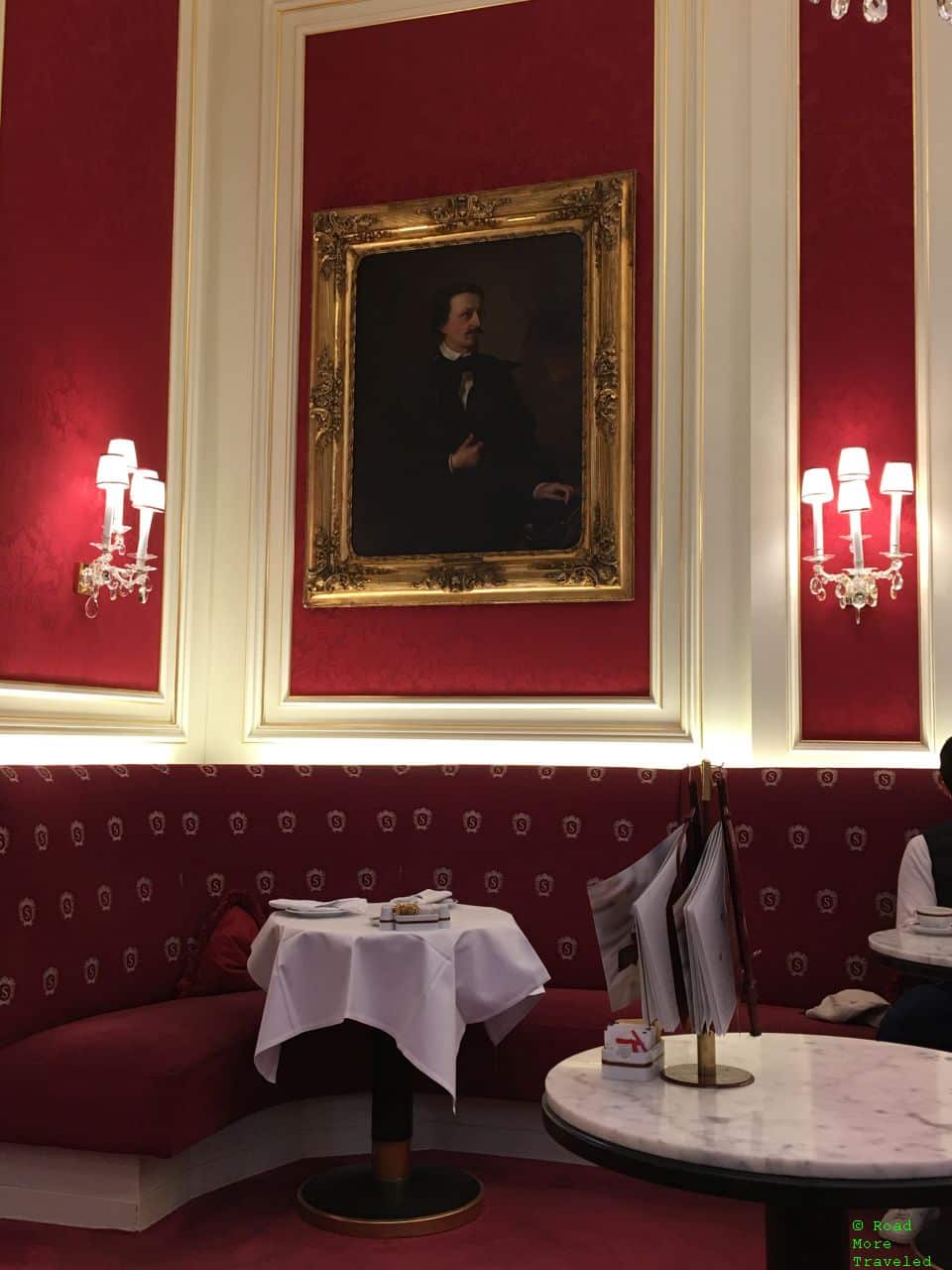
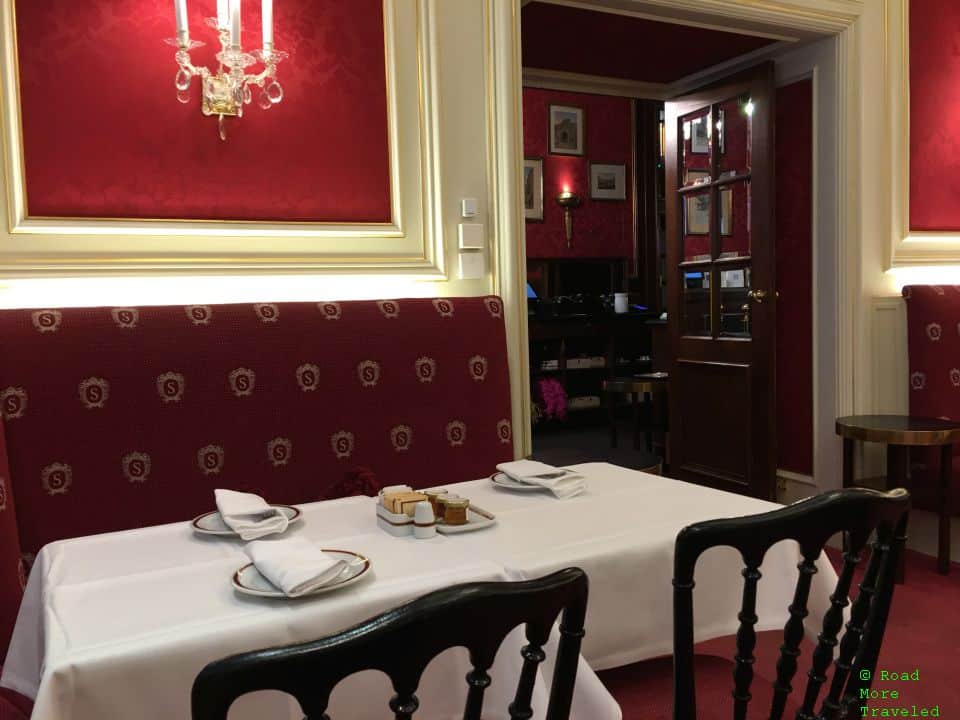
The cafe offers a full menu for breakfast, but most come here for the “Sacher Sweet Treat”. This consists of a slice of Sacher-Torte, a nonalcoholic hot beverage, and a bottle of water for 20 euro. Or substitute a glass of sparkling wine for the hot drink for 29 euro. I went with the standard package, ordering a Sacher melange (espresso with whipped cream) to go along with the cake.
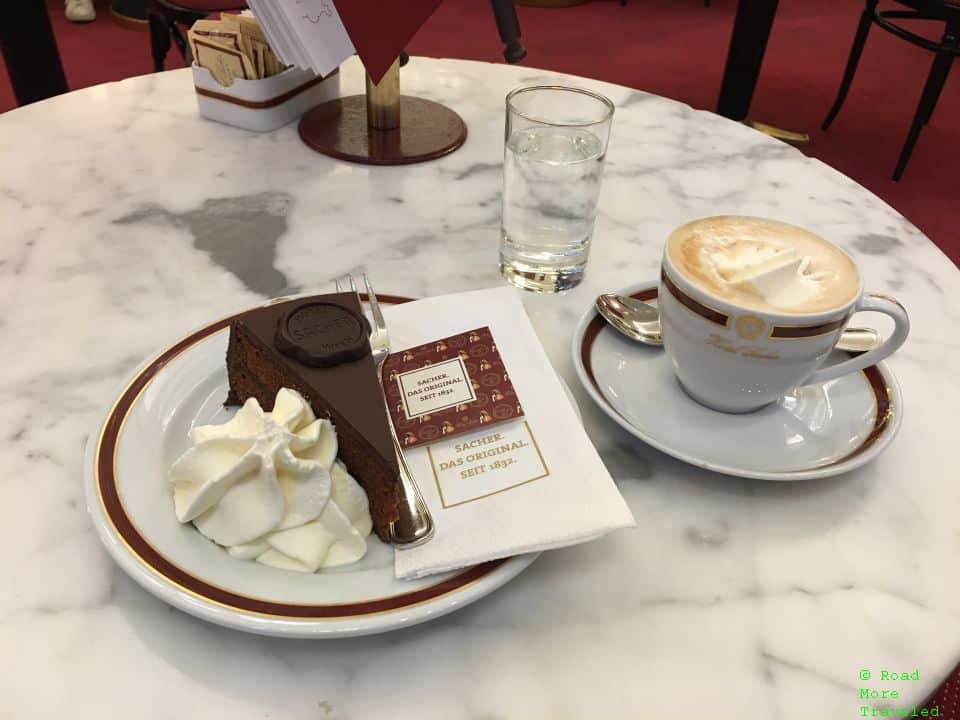
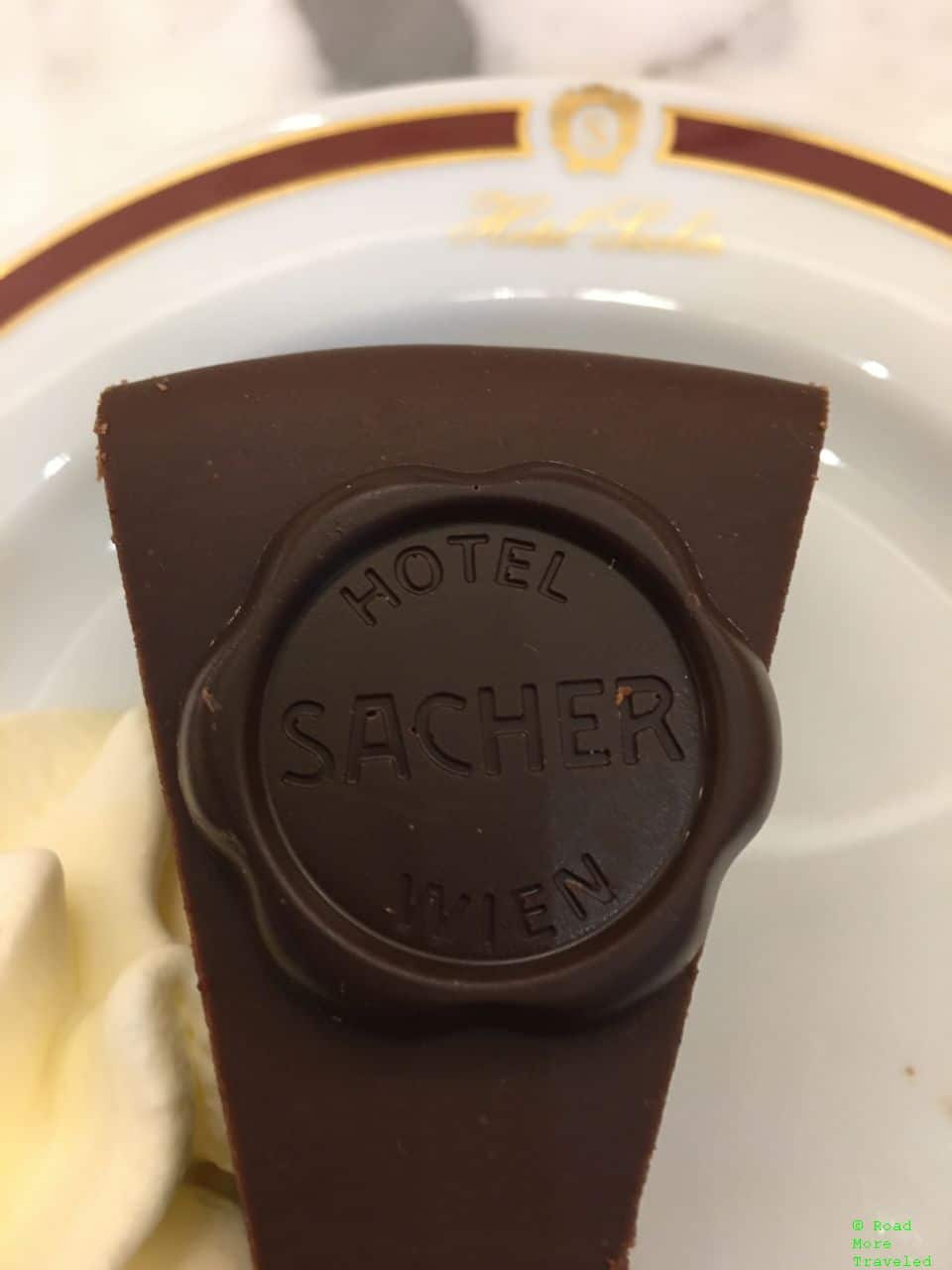
To be honest, I found the cake kind of “meh”. While flavorful and not too sweet, it was rather dry. And let’s face it, dry cake just isn’t very satisfying. I did enjoy the coffee, though.
When I left about 9:45, I saw a pretty good line already forming outside. Later in the afternoon, it snaked quite a ways around the building. The cafe opens at 8, so if you want to get in without a reservation on weekends, I suggest arriving before 9:30.
Before moving on, I also took a photo of the impressive façade of the hotel.
After cake, I headed south to Karlsplatz to explore Karlskirche (St. Charles’ Church). The origins of the Baroque masterpiece date to 1713, a year after the end of the final plague epidemic. King Charles VI of the Holy Roman Empire pledged to build a church in honor of his patron saint, Charles Borromeo, revered as a healer for plague sufferers. Construction began in 1716, but took 21 years to complete. Originally, Karlskirche had a direct line of sight to the Hofburg. Karlskirche is best known for its bas-reliefs out front. The Pantheon-style against the Baroque dome and exterior also makes for a unique look. Take a photo from the pool in front of the church, and you can also catch the church’s reflection in the water.
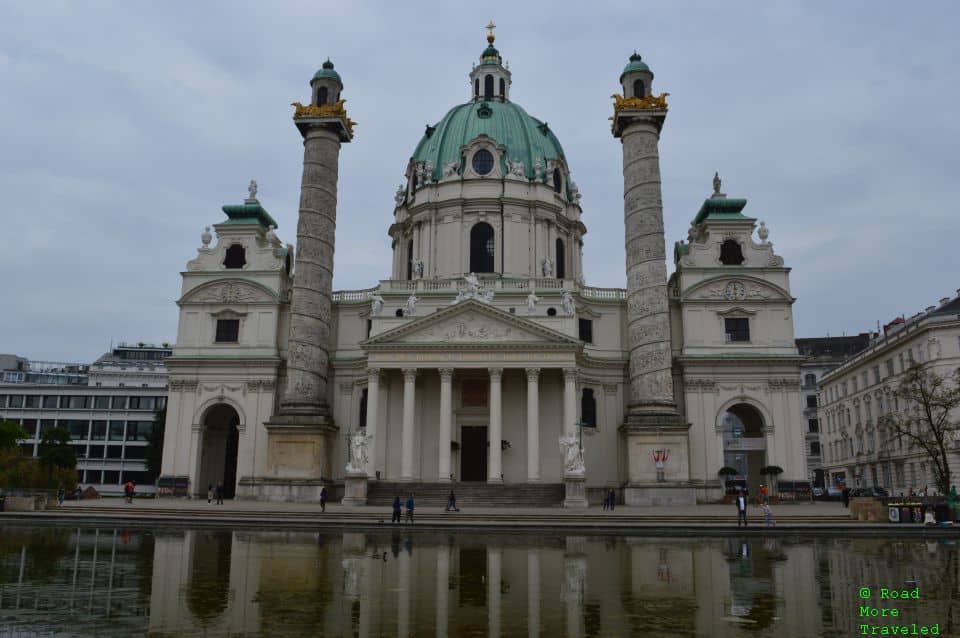
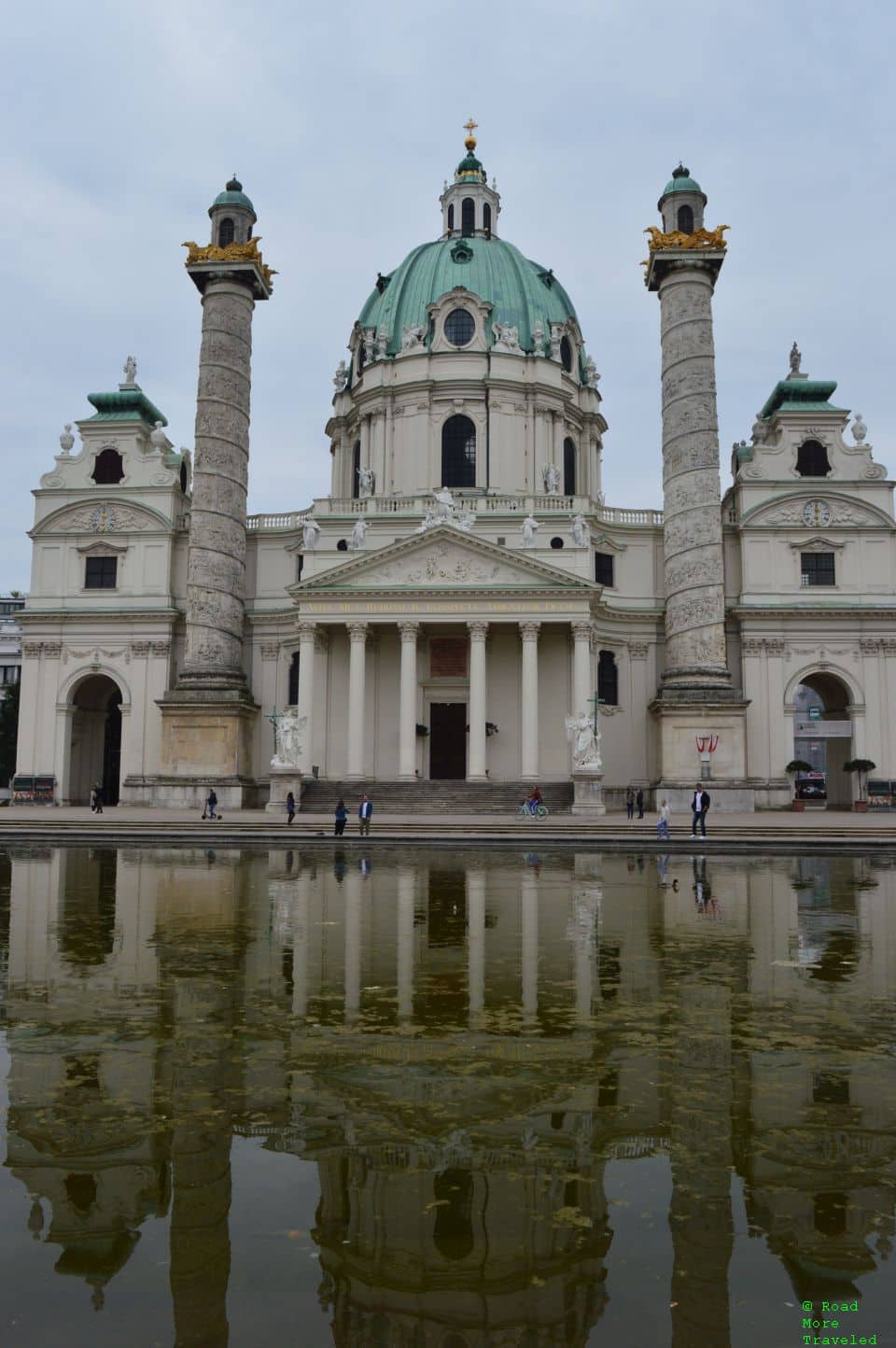
I also didn’t expect to find palm trees in Vienna. But they do look interesting with the church as a backdrop.
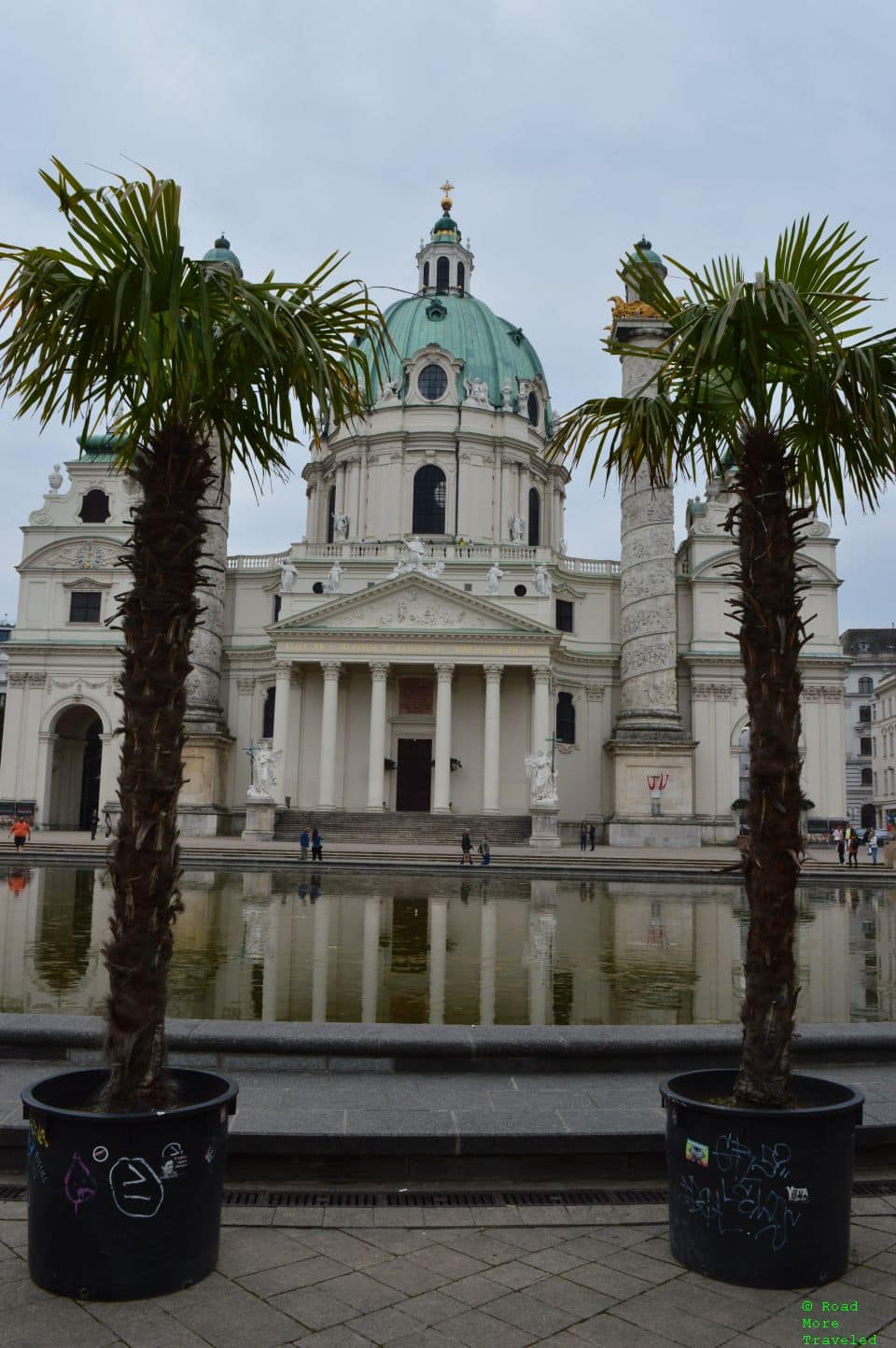
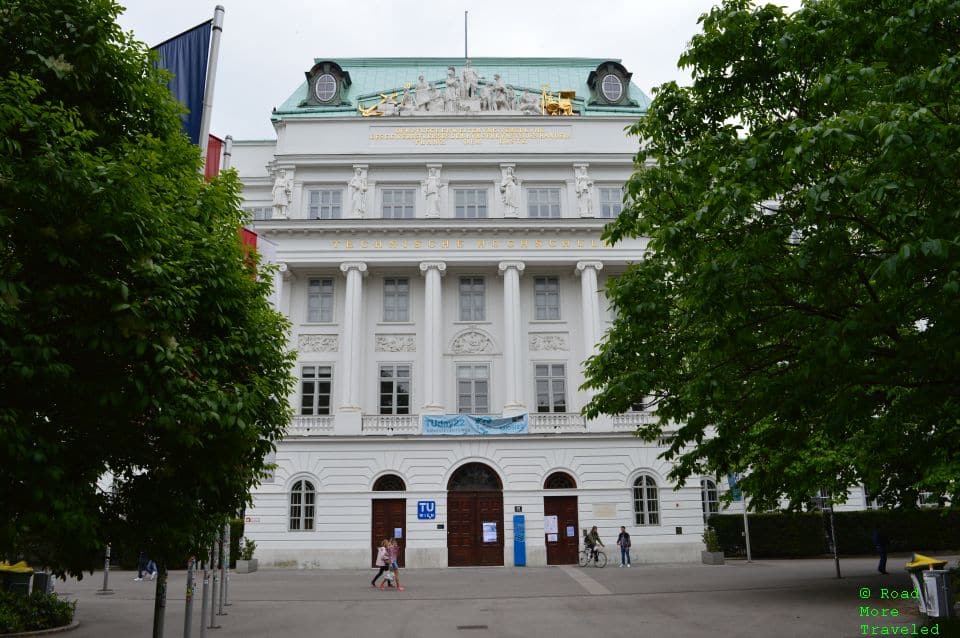
For classical music lovers, Ensemble 1756 offers performances of Vivaldi’s Four Seasons at Karlskirche seasonally. Speaking of Vivaldi, he was buried a short distance away, at what was known as Spitaler Gottesacker. The former site of the tomb now lies under the campus of the Vienna University of Technology next door.
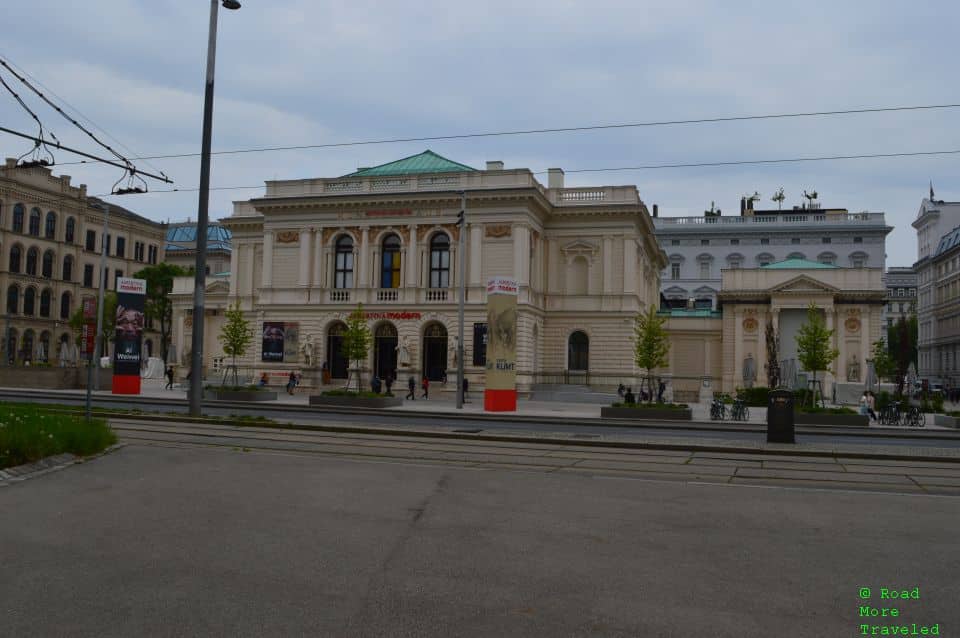
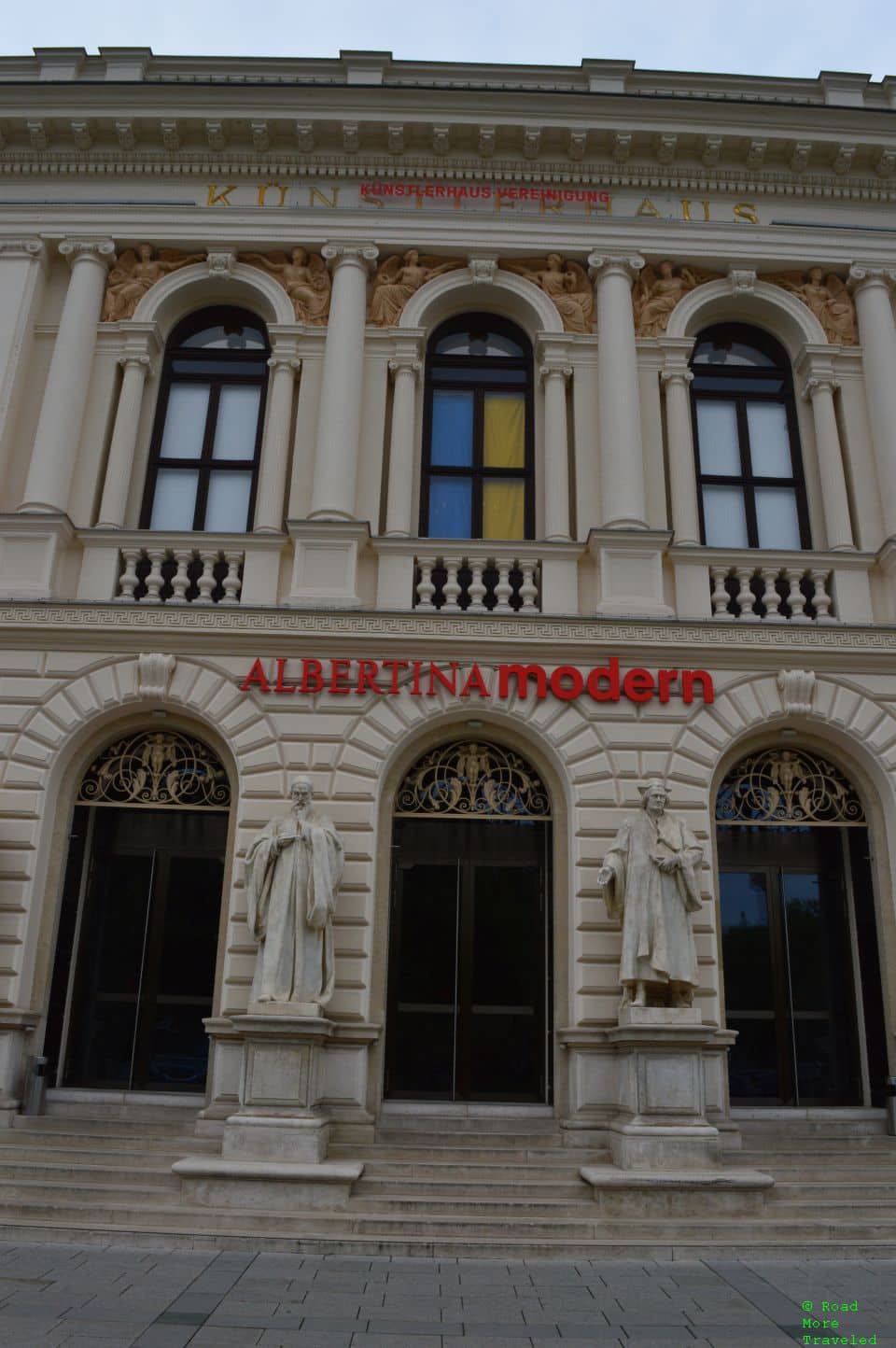
After walking around Karlsplatz, I headed back the way I came, passing by the Albertina Modern. Housed in the 19th century Künstlerhaus, this museum boats a collection of modern art. The Albertina Modern specializes in works by post-war Austrian artists, though exhibits also include renowned international artists such as Warhol. The building itself dates to the 1860s, commissioned by Emperor Franz Josef. Then, as now, the building was designed as an art exhibition space. After evading the wrecking ball through much of the 20th century, it underwent a full renovation from 2017-2020. At that time, it reopened as the Albertina Modern.
From here, I walked in the direction of the Hofburg, first passing through the Burggarten. The public park is the palace garden on the back side of the Hofburg. Of particular importance here is the Mozartdenkmal (Mozart Monument), fittingly with a treble clef in front of the statue of Wolfgang Amadeus Mozart.
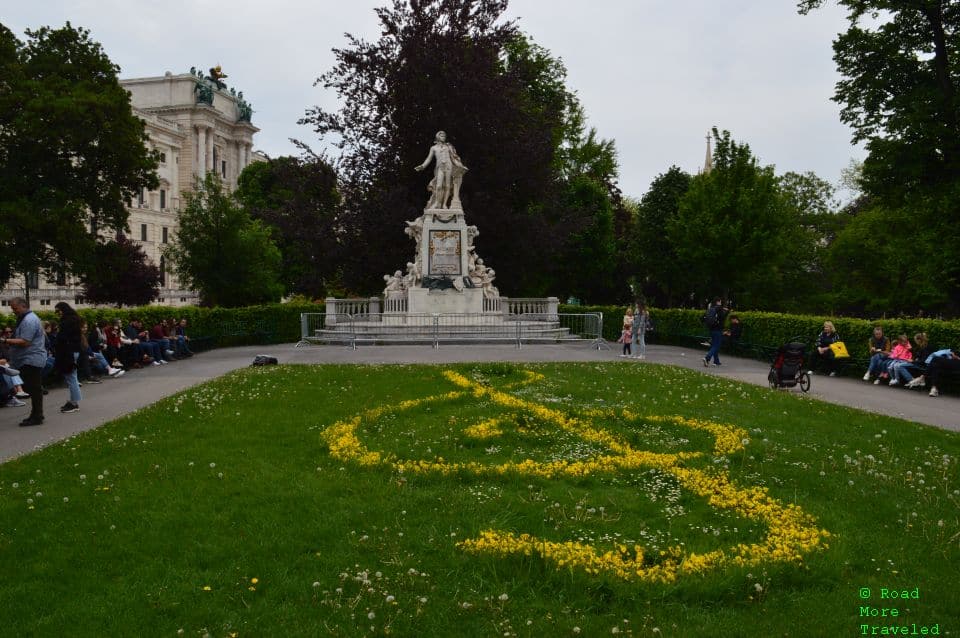
There were quite a few locals enjoying the sprawling gardens on this pleasant Sunday.
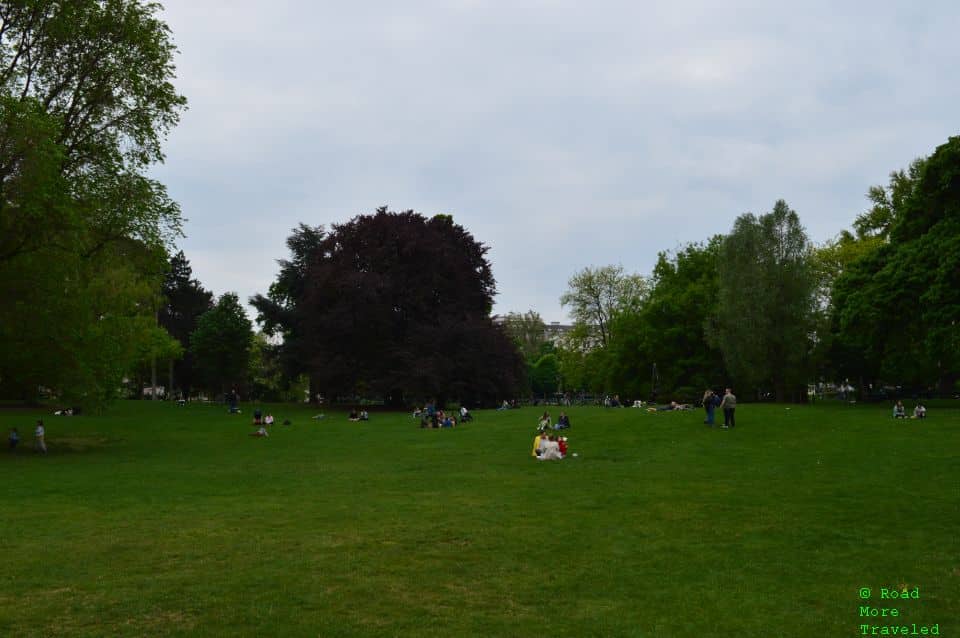
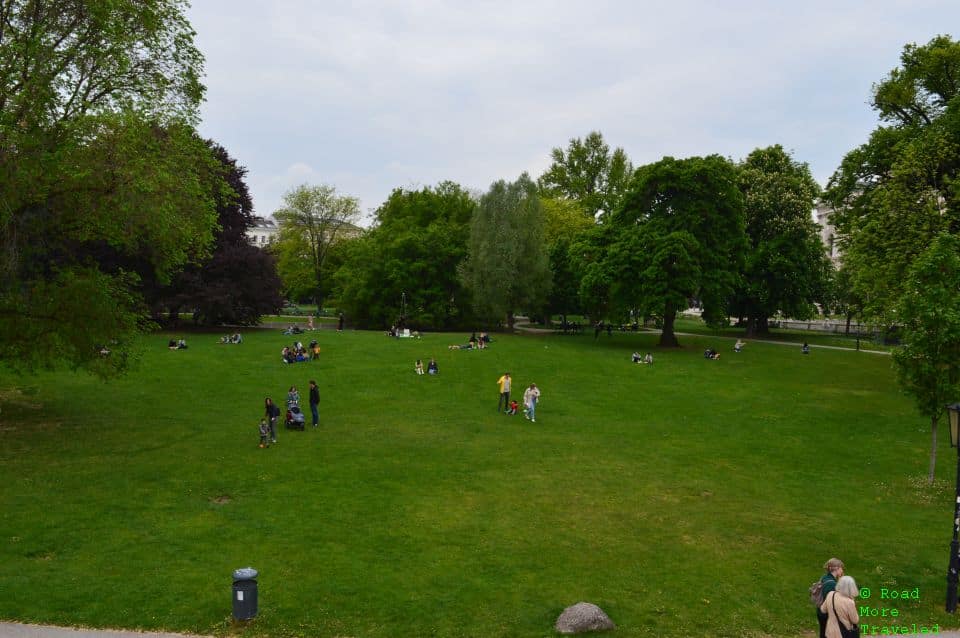
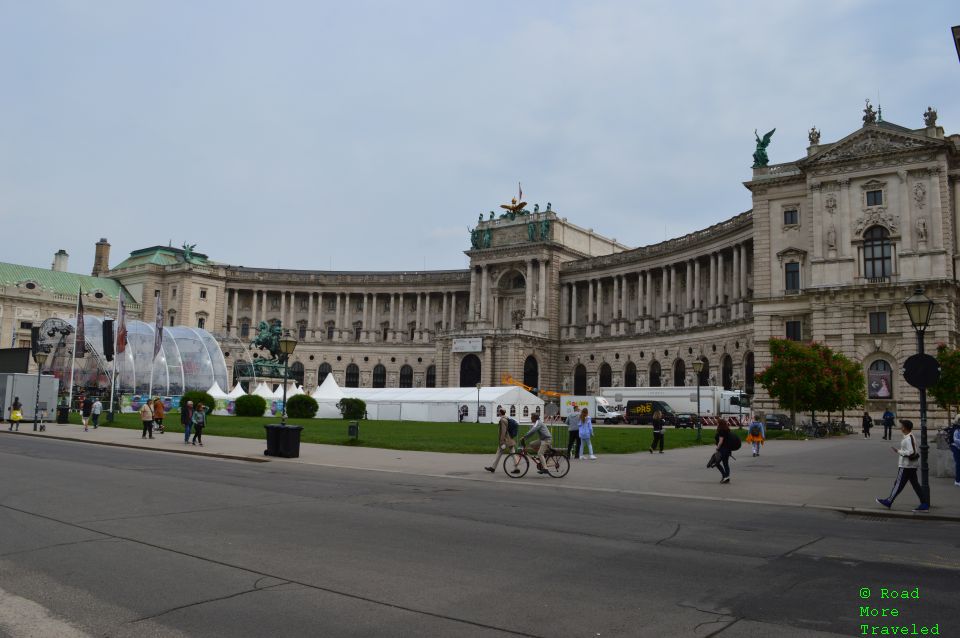
And that brings us to arguably the most important building in Vienna – the Hofburg. The Hofburg palace complex dates back several centuries, to the 13th century to be precise. Originally designated the seat of the Habsburg empire in 1279, even today, it is the official residence of the President of Austria. Like many European palaces, the Hofburg grew over time, with various expansions occurring between the 13th and 18th centuries. The area directly in front of the Buggarten is actually the palace’s newest, an addition constructed in the late 19th/early 20th centuries.
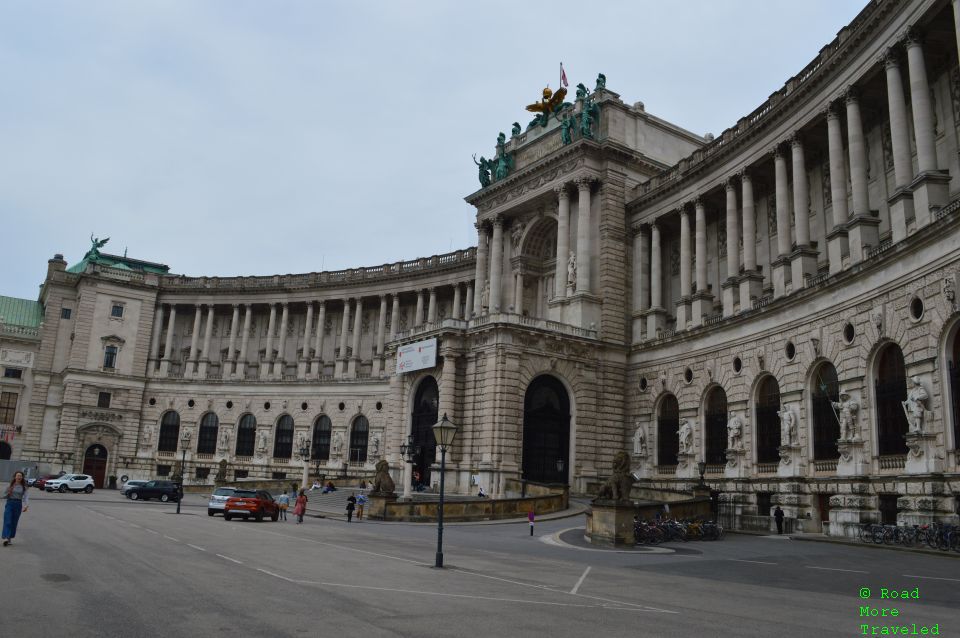
Continuing to the end of the Buggarten, you come up to the Neue Berg Wing. This represents the newest section of the Hofburg complex, completed in 1913. Just in time for the end of the monarchy, as it happens. The plans for this section, the last major expansion of the Hofburg, came about after the demolition of Vienna’s city walls in the 1860s. The initial plan called for the Neue Berg Wing to extend beyond the Burgring as an “Imperial Forum”. However, rising costs eventually led to the cancellation of most of the project. Today, the wing houses several museums, including the Welt Museum, Ephesos Museum, Collection of Ancient Musical Instruments, and others.
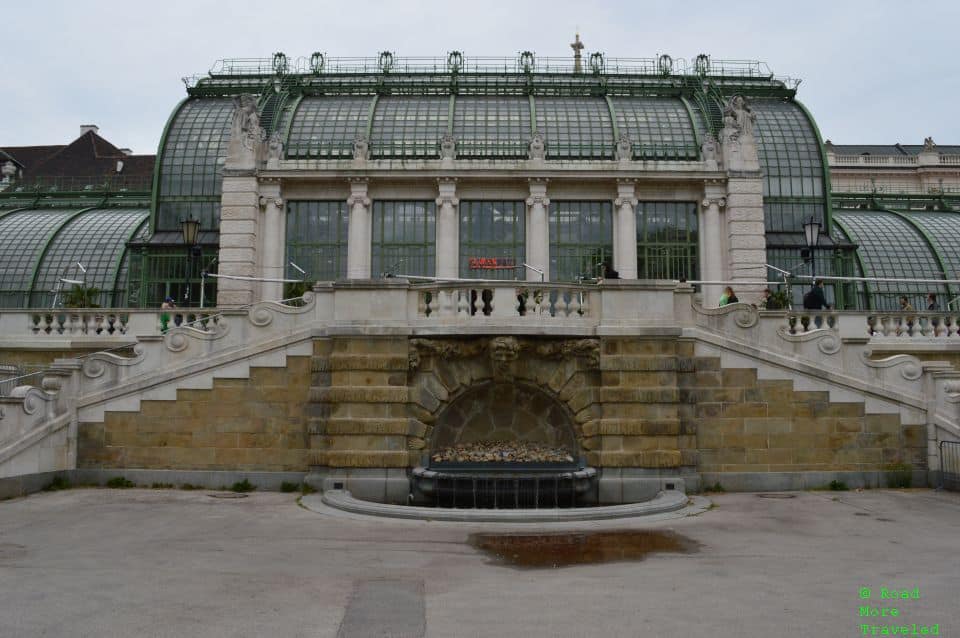
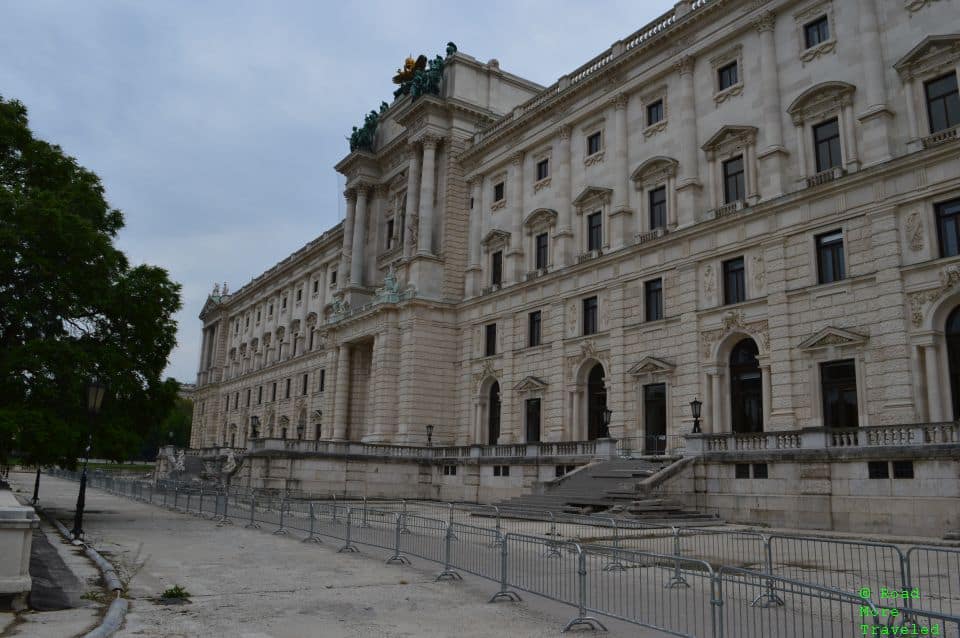
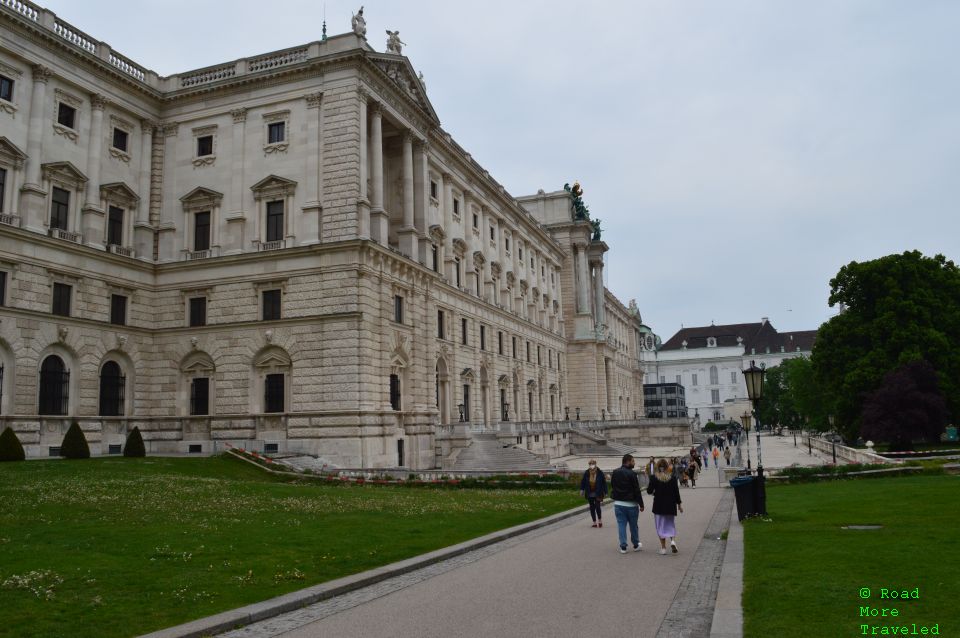
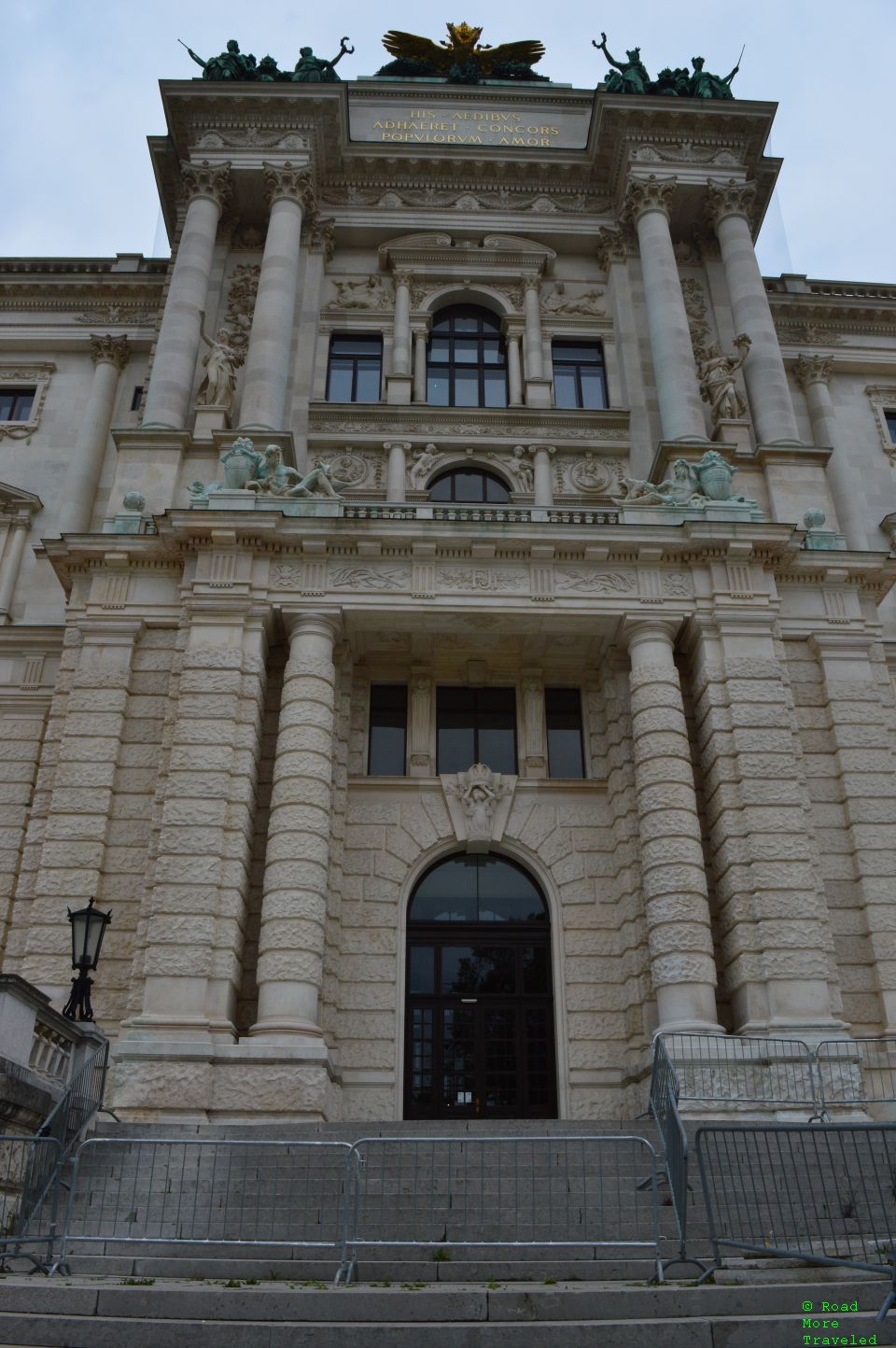
Walking around to the front side of the complex, you can find the entrances to the various museums. And a few panoramas of the front of the palace. Even though this wing is barely 110 years old, it looks and feels a lot older.
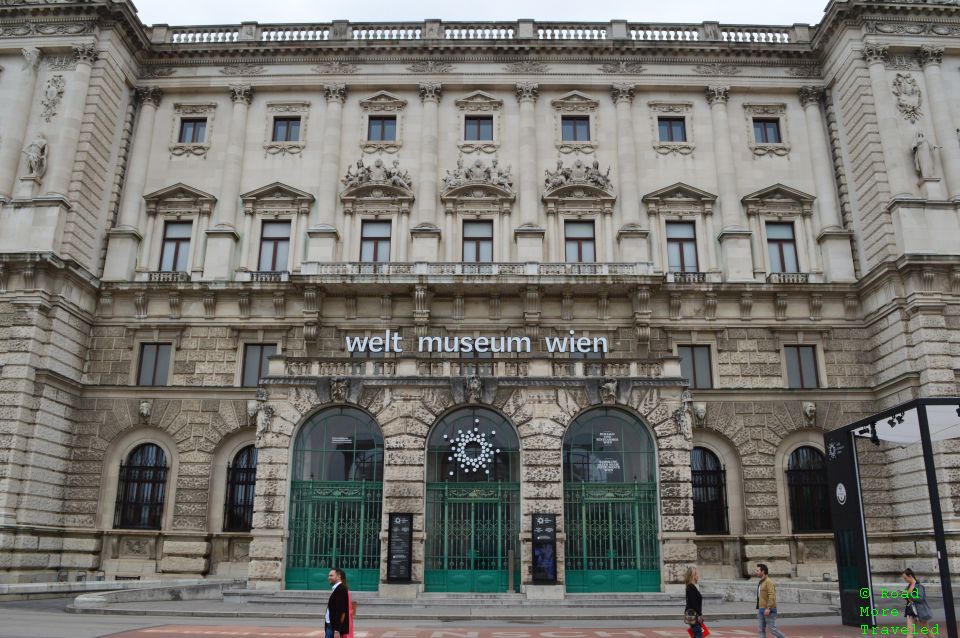
I was particularly interested in the large lion statues out front. (What can I say, I’m a crazy cat dude.)
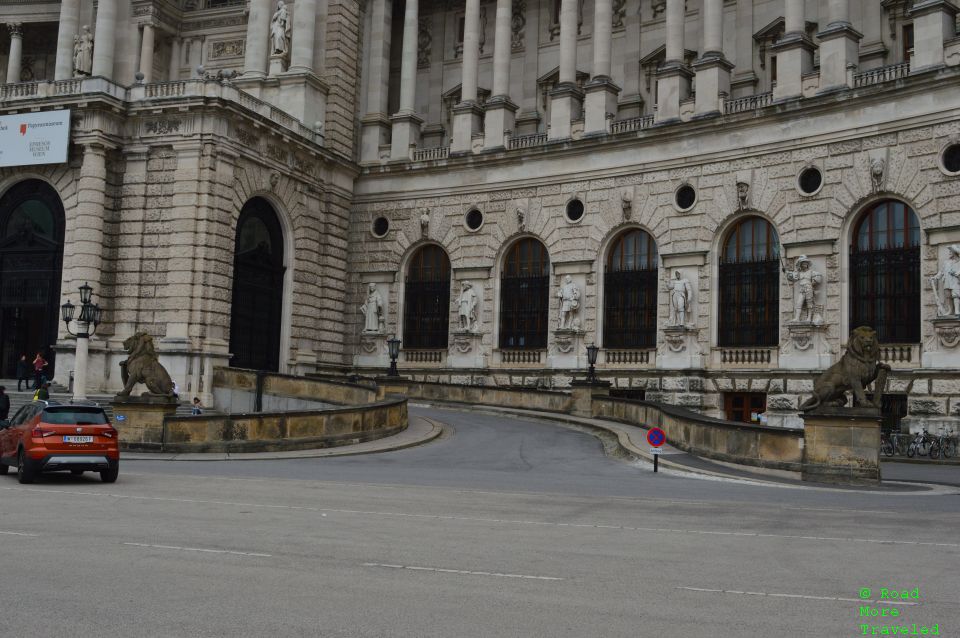
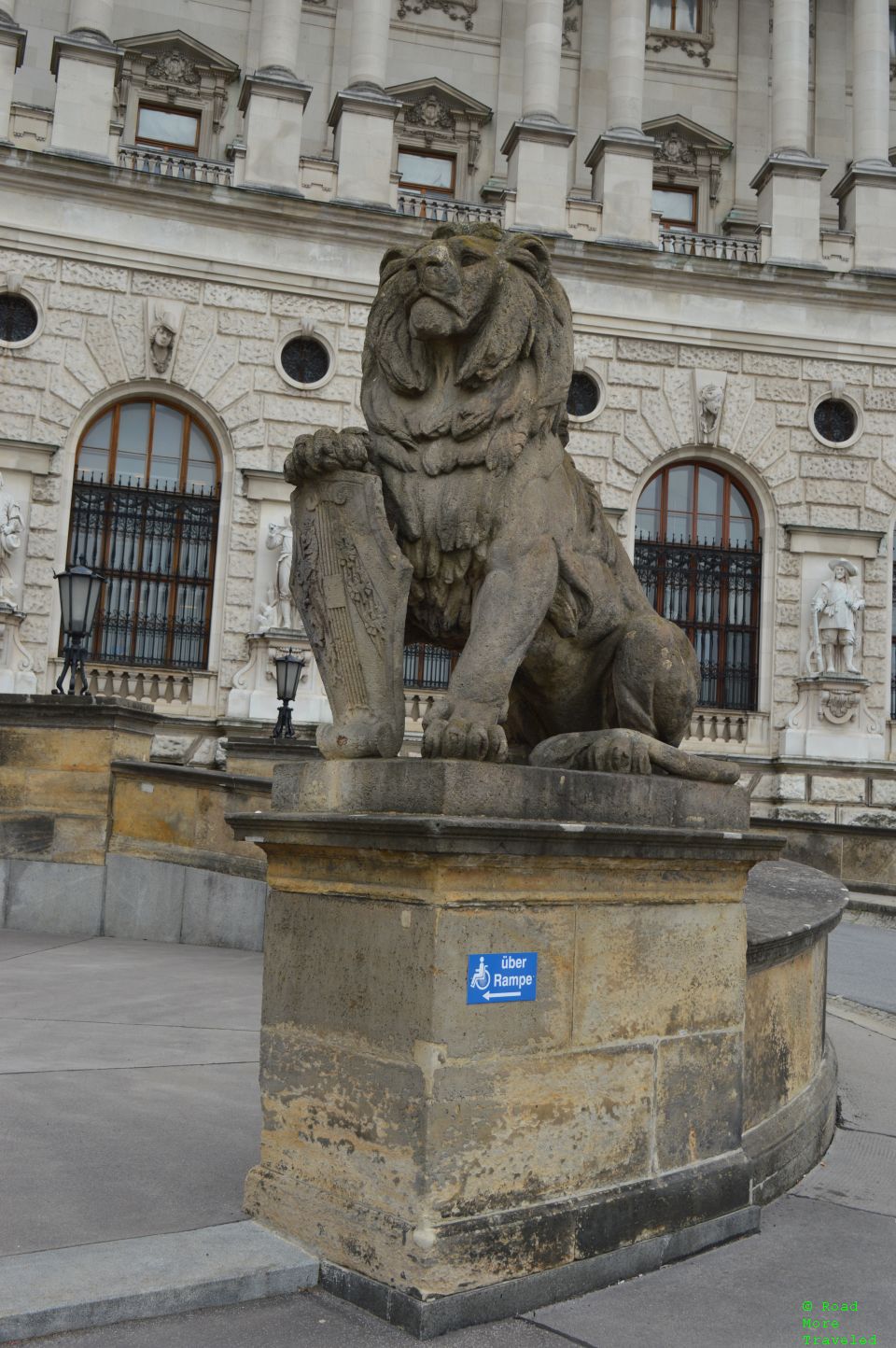
A little short on time, I went inside to check out the Ephesos Museum. As the name implies, the museum houses a collection of artifacts from the ancient Greek city of Ephesus. It’s a fairly small collection, which you can see in about half an hour. And it does give you a taste of the opulence of the Hofburg’s interior. How did these artifacts end up in Vienna? Austrian archaeologists began excavating the ruins of Ephesus in 1895, and until 1906, many of those artifacts were brought back to Vienna.
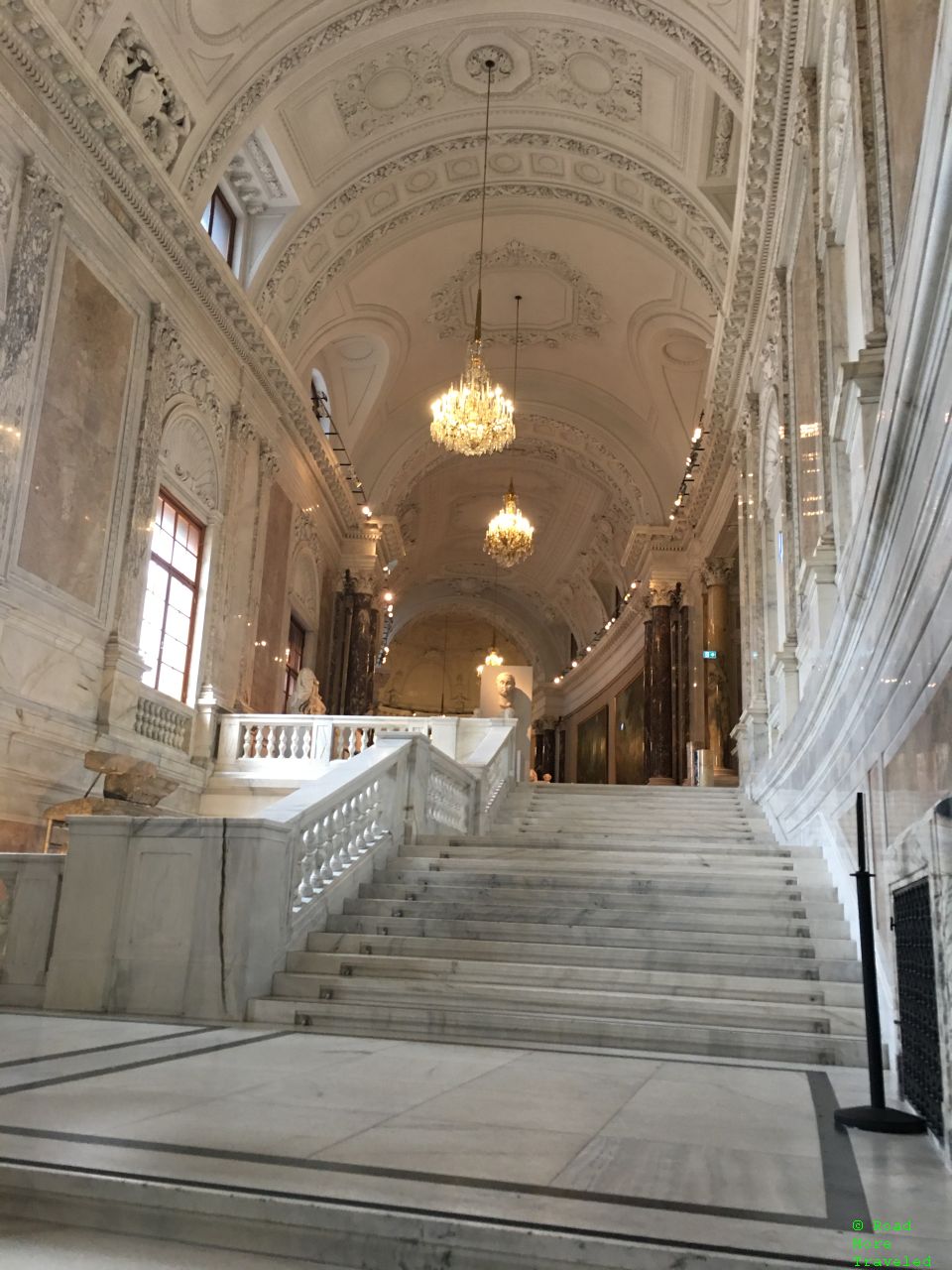
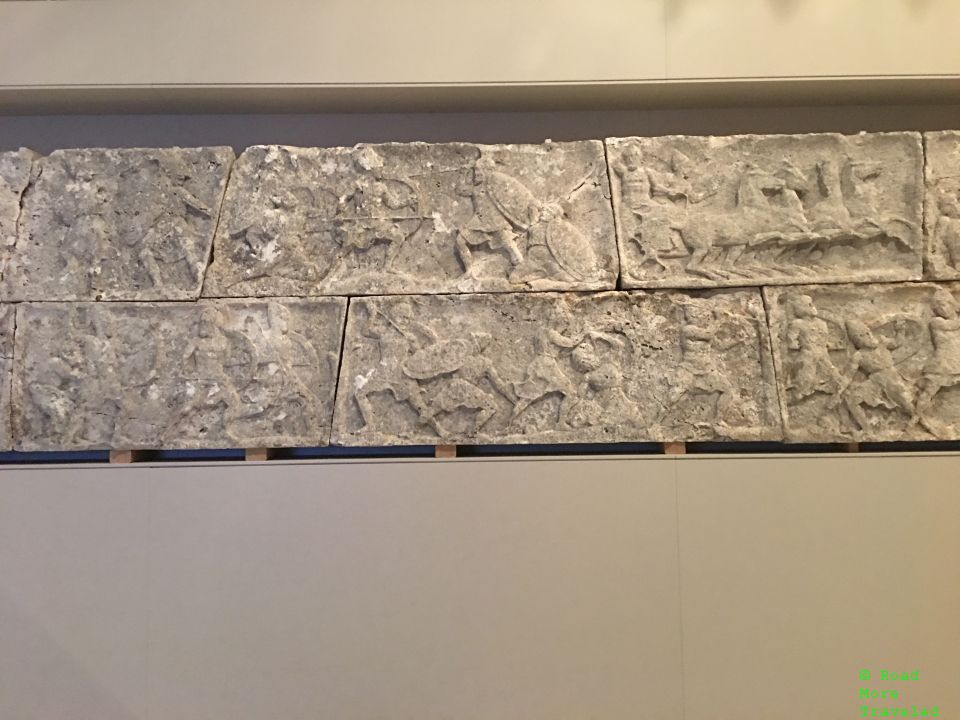
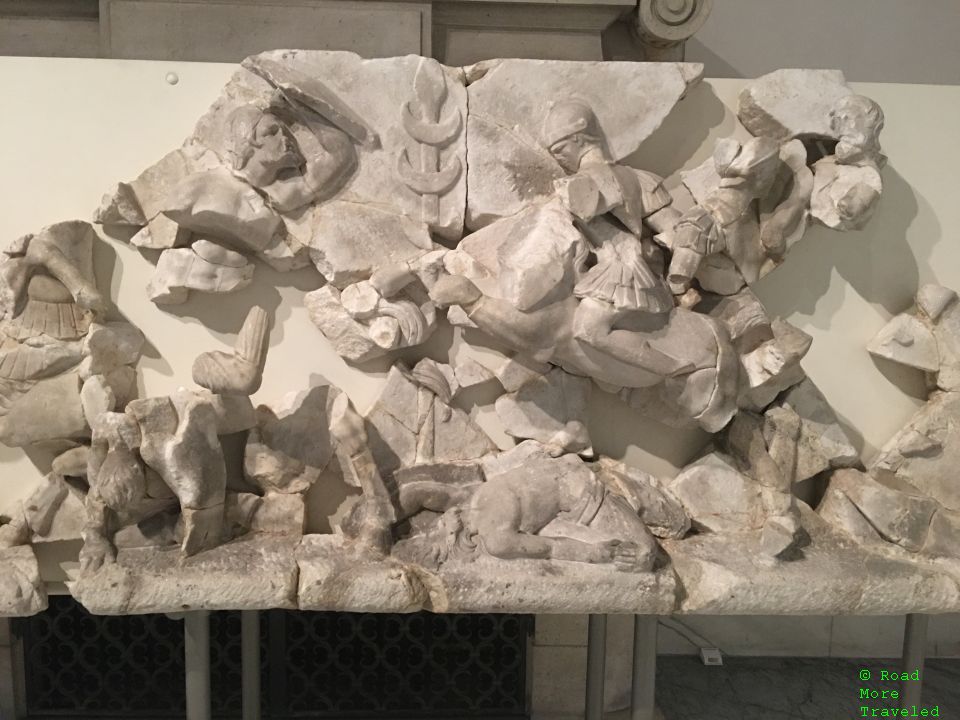
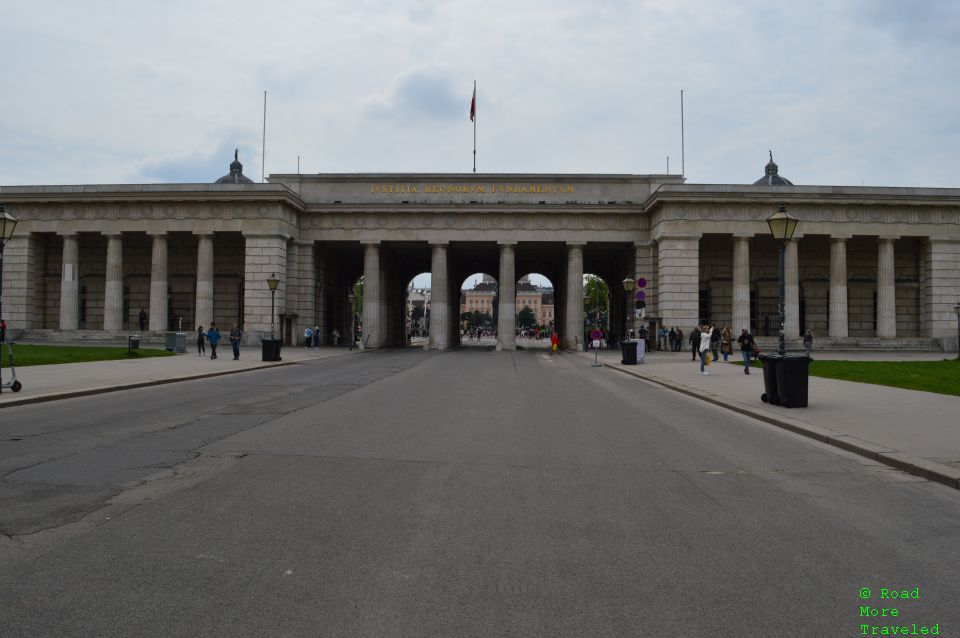
After a quick look at the exhibits, I headed out through the Äußeres Burgtor (Outer Castle Gate). This gate was built in the 1821 to commemorate the Austrian army’s successful resistance against Napoleon’s invasion.
I only later realized I missed the older (13th-18th century) portion of the Hofburg, towards the Swiss Gate. Oops…
Anyway, with a flight not scheduled until late evening, I had one more stop on my itinerary. That’s the Stadtpark, a large city park separating the Innere Stadt and Landstraße (Third District). After getting off the Underground, it initially seemed like a quiet Sunday in the park.
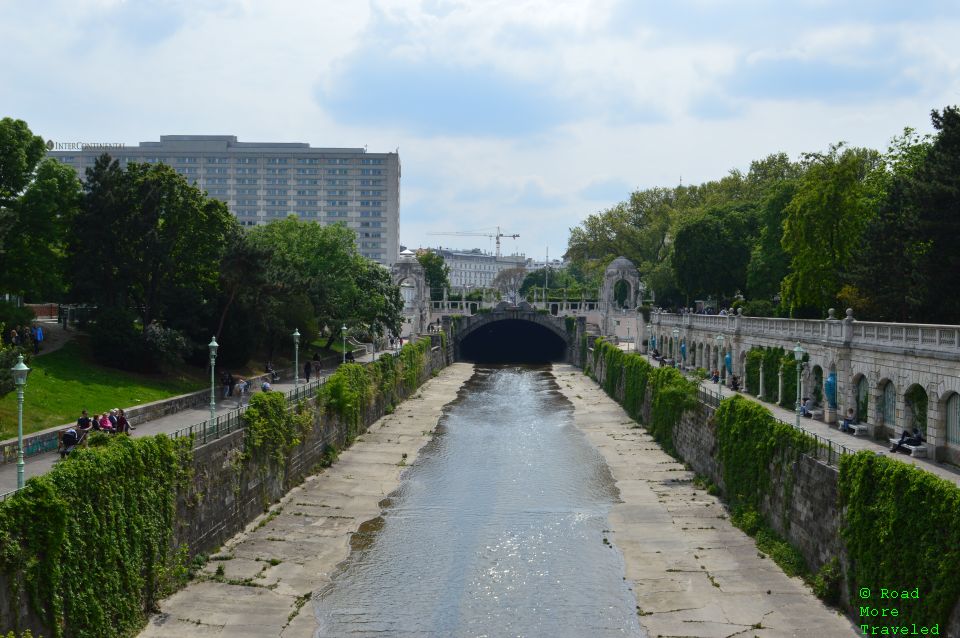
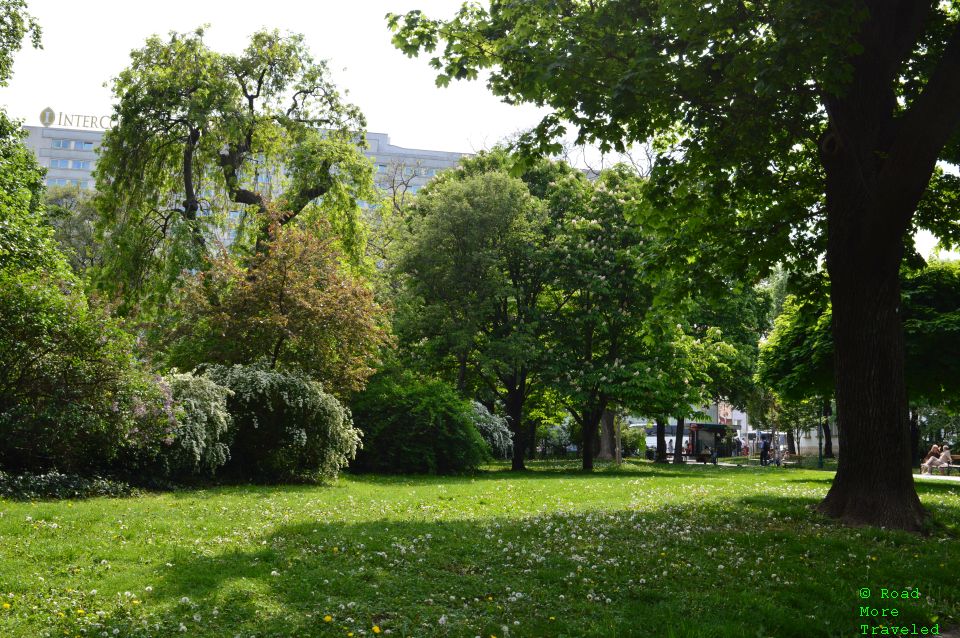
But as I crossed the bridge over the canal, I encountered an enormous crowd. There was a weekend farmer’s market in progress, showcasing the foods and wines of the various regions of Austria. (“Genuss Region” translates to “Regions of Delight”.) And the sunny Sunday afternoon brought out a huge mass of humanity to buy some fresh goodies. It’s really too bad I spent my last few euros earlier in the day. A bottle of Austrian wine would have made a nice addition to my cabinet.
Since admission was free, I decided to look around for a bit.
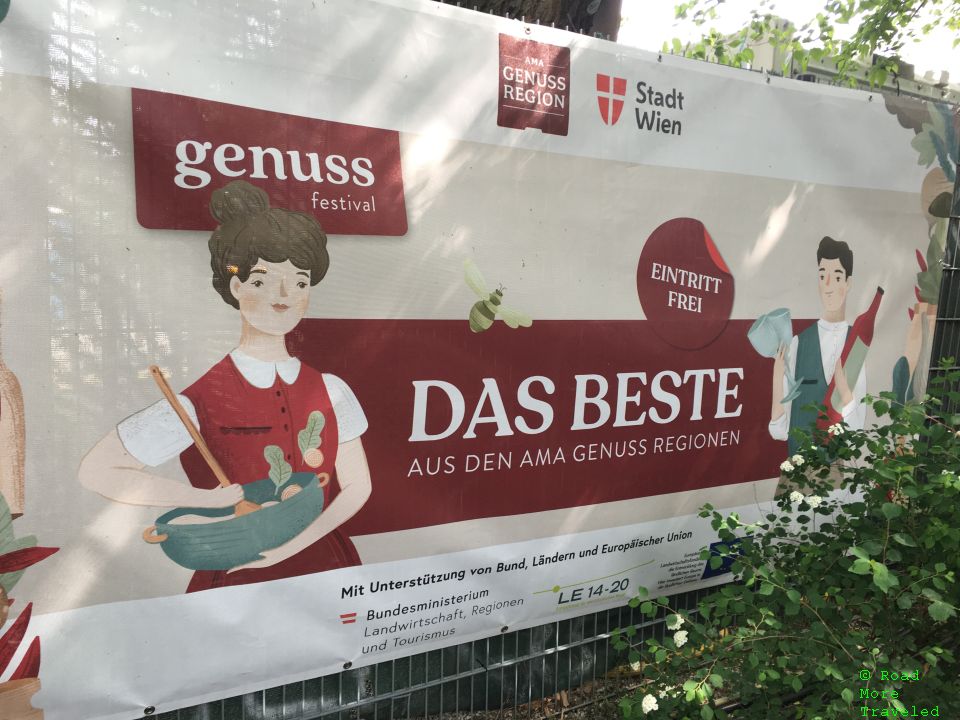
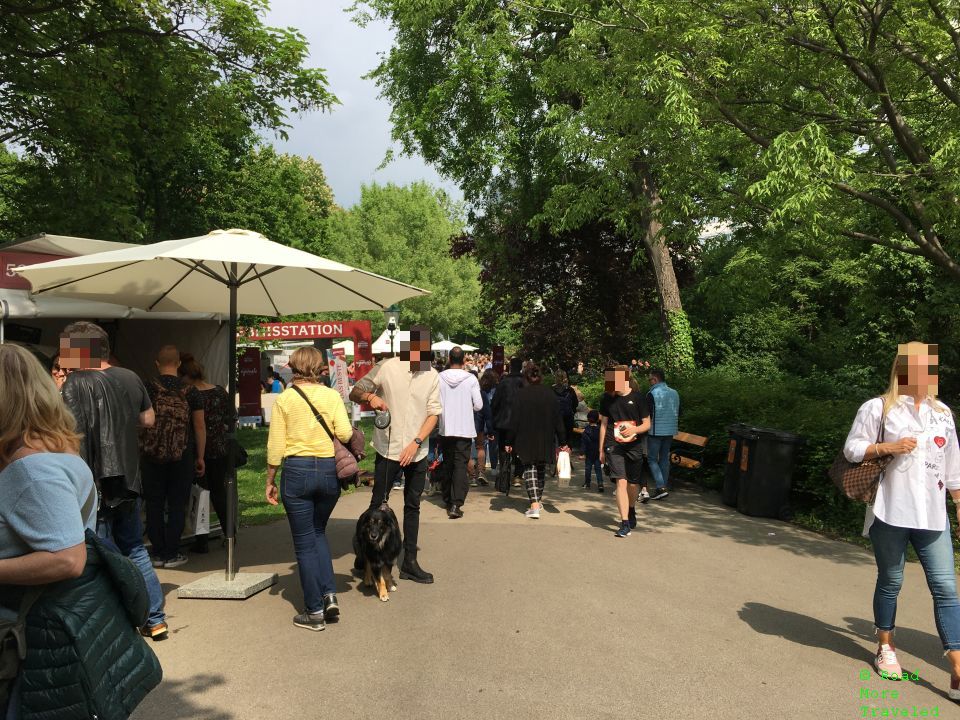
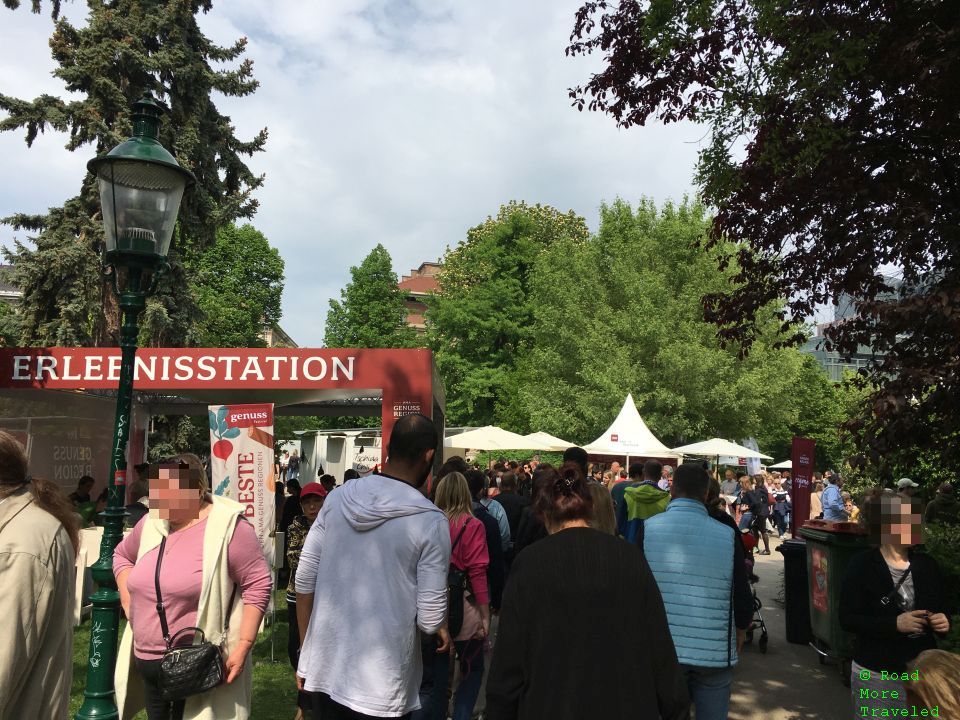
Meanwhile, a collection of food carts set up near the park’s main pond, with many enjoying their snacks along the shore.
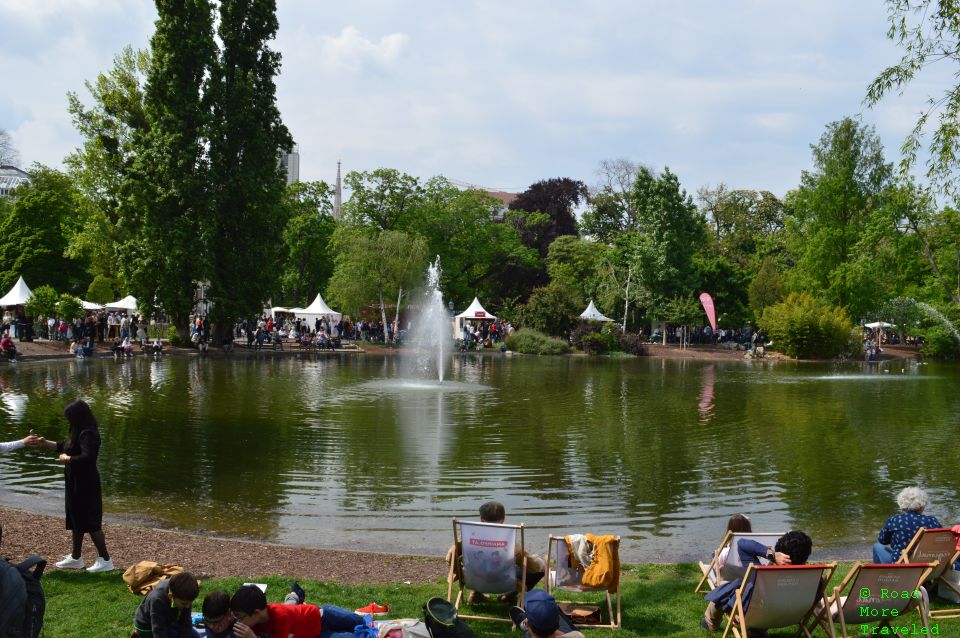
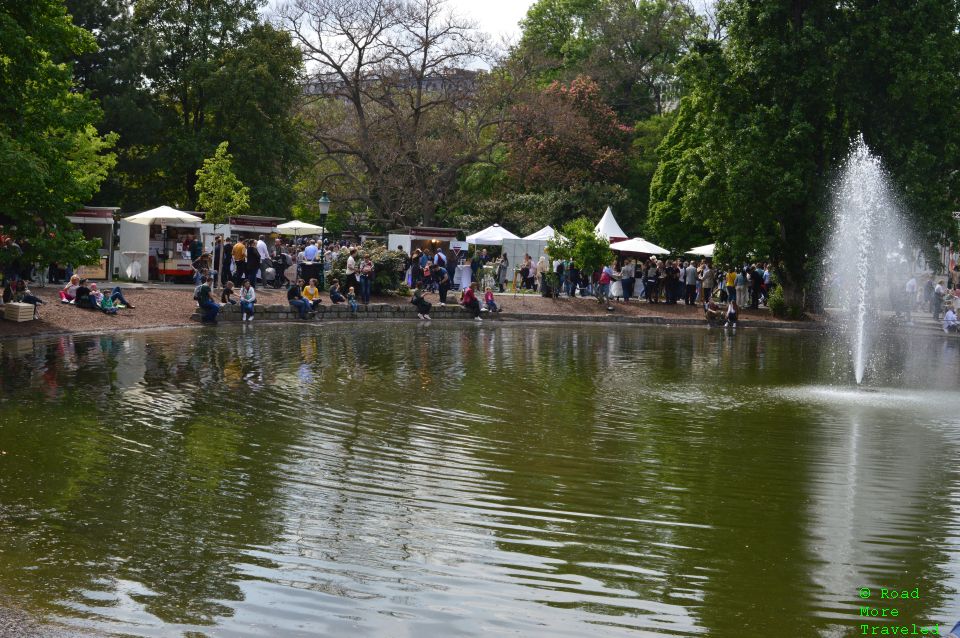
At this point, with mid-afternoon upon me, I decided to call it quits on my weekend in Vienna. This probably represented my most poorly planned trip I’ve taken, but I still managed to keep myself plenty occupied over the weekend. Up next – an overnight in Paris. And then an unpleasant surprise courtesy of an equipment swap to get home…