Hawaiian Airlines is making another visible move toward its long‑anticipated integration with Alaska Airlines, rolling out self‑service bag‑tag kiosks and quietly nudging passengers away from printed boarding passes altogether. They are adding much needed technology to the Hawaiian Airline experience. (Although I can’t say Alaska tech is that great!)
Beginning later this month, passengers traveling through Hawaiian’s five Hawai‘i airports will see new self‑service bag‑tag stations installed in phases. Similar updates are already underway or completed at several continental U.S. and international airports, with the remaining locations expected to transition by mid‑April. The goal: shorter lobby lines, faster bag drops, and fewer reasons to interact with an agent unless something goes wrong. We’ve seen this standard across the industry as automation cuts waiting time and costs for airlines. As an airline can staff fewer people and process more people more quickly.
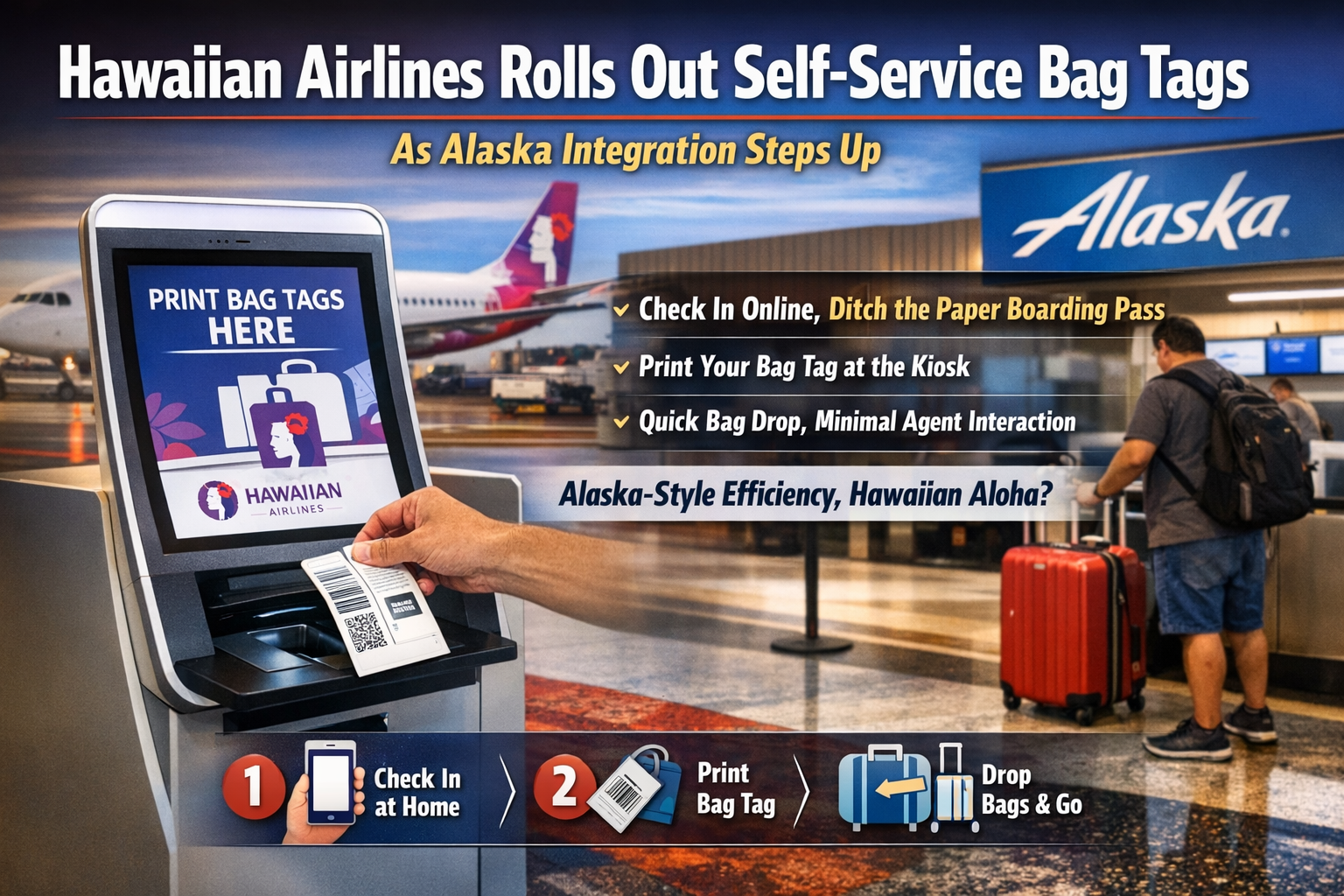
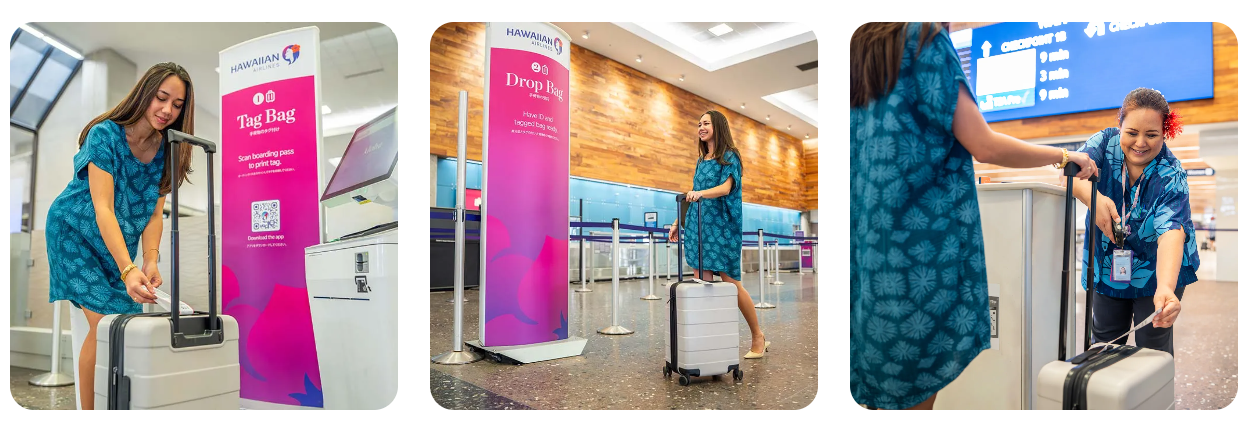
Under the new setup, travelers are expected to check in via the Hawaiian Airlines website or mobile app, obtain a digital boarding pass, and then use lobby kiosks solely to print and attach baggage tags before dropping bags at designated counters. Printed boarding passes are being phased out, framed by the airline as both a time‑saver and a sustainability win. Less paper equals fewer trees. Just make sure your phone battery is charged. Don’t have a charged phone, internet connection or a smart phone. Agents can still print passes.
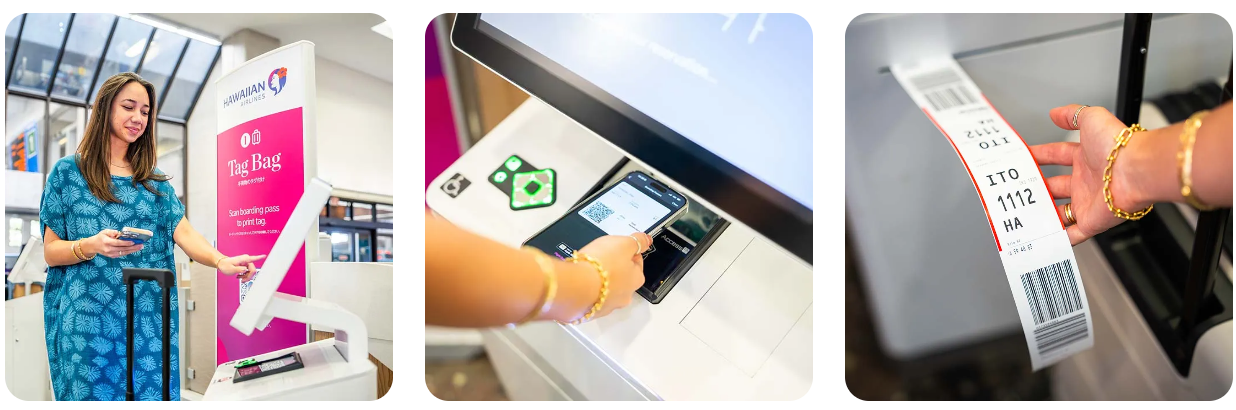
The model isn’t new. Alaska Airlines deployed the same system across its network in 2023 and Hawaiian is essentially copying and pasting that playbook. Alaska says prepaid‑bag customers now average under 60 seconds at bag drop, a statistic Hawaiian is clearly eager to replicate as it prepares to merge passenger service systems in April. Yet a stat I would question. I feel like I am constantly fumbling with the machines and never can get it to read my digital boarding pass, resulting in me typing in my confirmation number instead. What’s your experience?
Executives insist this is all about speed and simplicity. The airline says most of its customers already check in on mobile, making self‑tagged bags the logical next step. For passengers unwilling or unable to handle everything on their phone, Hawaiian says staffed service counters will remain available. Just expect a longer line at the assistance needed counters.
That said, the shift is also unmistakably about cost, labor efficiency, and standardization ahead of deeper Alaska integration. Fewer printed documents, fewer staffed kiosks, and more automation mean lower overhead and a lobby that looks increasingly like Alaska’s, not legacy Hawaiian. Or Alaska’s new look, which the airport of the future concept changes ever 10-15 years with more self-service items.
From the passenger perspective, the experience should be familiar to anyone who flies Alaska, Delta, or United regularly. Travelers who embrace mobile check‑in will likely move through the airport faster. Those who don’t or who encounter a hiccup may find themselves waiting longer for limited agent assistance.