
As much as I LOVE having inflight internet on planes, I also hate it. We now have gogoinflight and viastat plus other options. Wifi on planes means, as a business traveler, I can no longer disconnect from the world. Instead, plane rides are spent responding to active email conversations, going through reports, and working from a mobile office at 30,000 feet. Thankfully, VoIP is not supported on most planes. I personally cannot imagine having to take a conference call while flying. Despite this, one part of Wi-Fi on planes which is annoying is the exuberant prices!
Save on GogoInflight
Update: Delta air lines now offers free wifi to Skymiles members. Check out how to get free wifi on Delta flights
Advice: You can save on gogoinflight internet by going to gogoair’s website also known as wifi onboard. By purchasing your inflight wifi flight pass early you can save on both flights in the United States and worldwide. Save on gogoinflight Alaska or gogoinflight Delta or others.
Previously, when flying from San Diego to Minneapolis, I went to log onto the inflight Wi-Fi and was taken aback by the high prices. Who in their right mind would pay $7 for 30 minutes of wifi!? My at home DSL only costs me $30 a month, and GoGo is asking for ½ of that cost for 90 minutes of use! Especially as a 24 hour wifi pass is only a few dollars more.
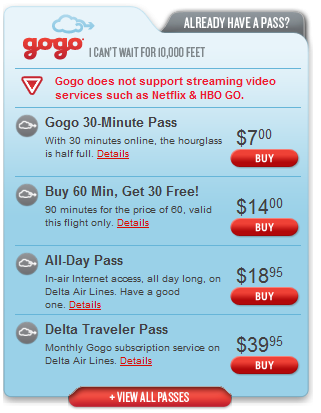
Despite these high prices there is a way to save on GoGo Wi-Fi. Buy it in advance from the Delta.com “Trip Extras” page before or while on GoGoair.com. Delta charges just $16 for a 24-hour GoGo pass.
Before traveling or when in the air, open up your itinerary via Delta.com and buy your 24-hour GoGo Wi-Fi internet pass for only $16. Delta.com, eBay, and guilt (among some other sites depending on promotions) are free to browse while flying Delta.
To buy your ticket, follow these simple steps. First, open up your itinerary.
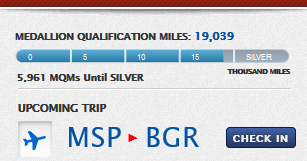
Next, Scroll to the bottom of the page. Go to the section that reads “trip extras”. In this section you can buy a 24 hour pass for only $16. This is quite the saving, giving you 24 hours of access to Gogo inflight Wi-Fi for the same price the GoGo landing page charges for 90 minutes.
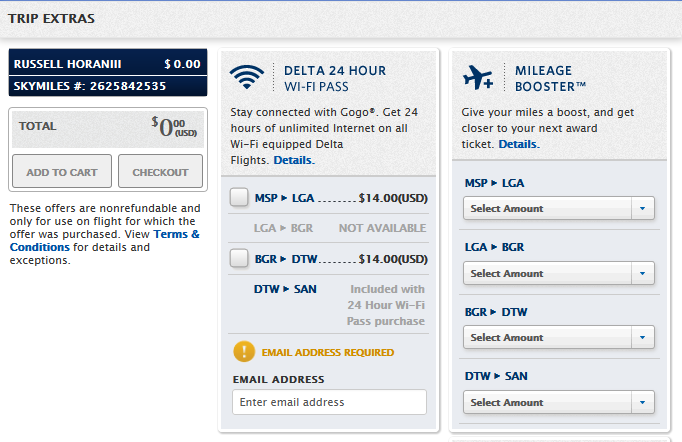
Then, select the day/trip you want to purchase Wifi for (even if you’re in flight, this option will remain available) and put in your email address and select check out.
Finally, you will be redirected to the payment page where you can provide your credit card information and receive your 24-hour inflight wifi pass.
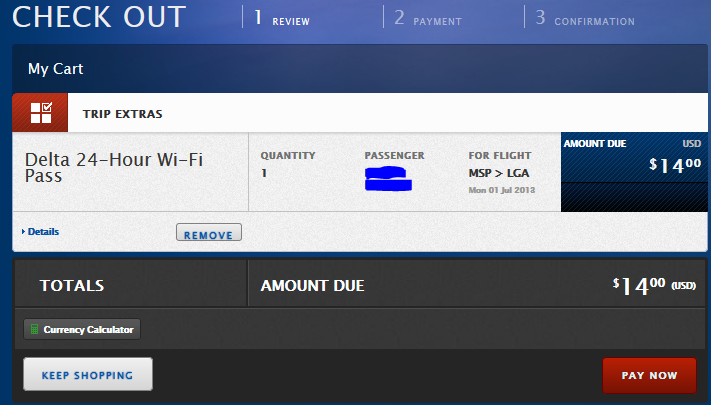
Although saving a few dollars is not doorbuster material, it’s still a better deal than 18.95 or $14 for 90 minutes of use. If you fly often, then consider GoGo Unlimited which is $49 or the Delta Unlimited for $39 if you primarily fly Delta. Remember GoGo Unlimited is good on all GoGo equipped flights on all airlines, whereas the Delta Unlimited is only valid for Delta & connection carrier flights. In addition, always check out gogoair.com before flying, because you never know what promotion GoGoinflight may be offering.

What Gogo Inflight Internet Is in 2026 (and Who Owns It Now)
The name “Gogo” still shows up on the Wi-Fi network list of countless domestic narrowbody flights, but the company behind the consumer inflight product changed hands several years ago. In December 2020, Gogo Inc. completed the sale of its Commercial Aviation business to Intelsat for $400 million in cash. That transaction covered everything passengers interact with: the portal, the passes, and the air-to-ground network powering domestic flights. As part of the deal, Gogo entered into a ten-year network services agreement giving Intelsat exclusive access to Gogo ATG services for the commercial aviation market in North America.
What remains of Gogo Inc. today is a business and private aviation connectivity company, operating under the brand Gogo Business Aviation at gogoair.com. That site is for corporate jets and charter operators, not airline passengers. If you land on gogoair.com looking for a Wi-Fi pass for your upcoming Delta or Alaska flight, you are in the wrong place.
For retail passengers, the relevant portal is now wifionboard.com (formerly gogoinflight.com). The network name a traveler sees on board may still read as “gogoinflight,” but the underlying service and billing flow through Intelsat’s infrastructure. The practical experience of connecting, choosing a plan, and paying has not changed dramatically for most passengers, but knowing the ownership picture helps explain why prices, plans, and participating airlines have shifted since the early-2010s era of the original Gogo product.
How to Connect to Gogo Inflight Wi-Fi
Step-by-Step Login
Connecting to the inflight Wi-Fi network on a Gogo-equipped aircraft follows a predictable sequence regardless of which device you are using. First, put your device into Airplane Mode, then re-enable Wi-Fi. Your device should detect the inflight network and show it as available. Connect to it. Once connected, open a browser and type wifionboard.com directly into the address bar. If that does not load the portal immediately, try typing any non-secure URL starting with http:// (not https), which forces the browser to surface the captive portal. At that point, select a pass or sign in to an existing subscription, complete payment, and the connection activates. The service operates above approximately 3,000 feet of altitude. If you board and connect on the ground, expect a brief window before full access is available once the aircraft climbs.
An alternative portal address, wifi.inflightinternet.com, can also reach the plan-selection screen if wifionboard.com does not load cleanly. Both resolve to the same service.
Troubleshooting a Failed Connection
The most common connection problem is a browser that has cached a secure (https) version of a domain, preventing the portal redirect from working. The fix is straightforward: forget the inflight Wi-Fi network, re-join it, then manually type the portal address into the address bar rather than searching for it. Disabling any active VPN before attempting to connect is equally important since VPN traffic typically cannot reach the captive portal. Switching to a different browser or clearing the cache on your current one resolves most remaining cases. Cloud sync services such as iCloud backup or Google Drive can consume background bandwidth once the connection is active, so suspending them before boarding keeps the available speed more usable.
How Much Gogo Inflight Wi-Fi Costs
The following pricing reflects plans available through wifionboard.com as of mid-2026. Prices are set by the portal and may vary slightly depending on the airline or flight. Purchasing before you board, when the option is available, has historically been cheaper than buying at onboard list price.
| Pass / Plan | Price | Coverage |
|---|---|---|
| One-Hour Pass | $7 | Any domestic Wi-Fi Onboard serviced flight; expires 30 days after purchase |
| All-Day Pass (24 hours) | $19 | Any domestic Wi-Fi Onboard serviced flight; valid one year from purchase |
| Monthly Plan (Alaska or Delta) | $49.95/month | Domestic flights on the specified airline |
| Monthly Global Plan (Delta) | $69.95/month | Domestic and international Delta flights |
| Annual Plan (Alaska or Delta) | $599/year | Domestic flights on the specified airline |
For an occasional traveler, the all-day pass at $19 is usually the most practical option since it covers an entire day of flights and is valid for a full year from purchase. The one-hour pass at $7 makes sense for a short leg where the goal is a single video call or a focused email session. Frequent flyers who regularly cover domestic routes on Delta or Alaska are almost always better served by the monthly or annual subscription, since the math tips in favor of the flat rate after just a few flights per month.
One important note on speed expectations: the Gogo network that powers most of these flights is an air-to-ground (ATG) system, meaning it communicates with towers on the ground rather than satellites overhead. On longer domestic routes where ATG coverage is solid, the service handles email, documents, and general web browsing reliably. Streaming video and large file transfers are less consistent, and the network does not support VoIP calls on most aircraft.
Which Airlines Still Use Gogo Inflight Wi-Fi
Gogo’s air-to-ground network historically served a broad roster of US and Canadian carriers, and several of those airlines continue to operate flights where the “gogoinflight” portal remains the connection point. Airlines that have run Gogo ATG-equipped domestic flights include Delta Air Lines, Alaska Airlines, United Airlines, and Air Canada among others.
The participation picture has narrowed and become more uneven since the Intelsat acquisition. Multiple carriers have been transitioning portions of their fleets to newer satellite-based connectivity from providers such as Viasat and SpaceX’s Starlink, which offer faster throughput and broader global coverage than the ground-based ATG system. United Airlines, for instance, has committed to Starlink for its future inflight internet needs. Delta has been rolling out its own Delta Sync satellite Wi-Fi platform across more than 1,000 aircraft. The result is a mixed fleet environment where a traveler might encounter Gogo ATG on one flight and a satellite provider on the next, even within the same airline’s schedule.
The most reliable way to know which connectivity system is on a specific flight is to check the airline’s seat map tool or aircraft details page at booking, since most major carriers now indicate the Wi-Fi type by fleet. The presence of a “gogoinflight” network name when you board is a reliable sign that the Gogo ATG system, now operated under Intelsat, is what is on that aircraft.
How to Get Gogo Inflight Wi-Fi for Free
Free Wi-Fi Through Your Airline
Delta Air Lines offers free Wi-Fi, branded as Delta Sync, to all SkyMiles members on a growing portion of its fleet. As of mid-2026, Delta Sync is available on more than 1,000 aircraft with a full fleetwide rollout continuing through the end of 2026. Any traveler with a SkyMiles account, including those enrolled at no cost, can log in using SkyMiles credentials and connect without paying. Delta Sync is presented in partnership with T-Mobile and uses satellite connectivity on equipped aircraft, which means it is a distinct network from the legacy Gogo ATG product, though it fulfills the same purpose for passengers.
Alaska Airlines is similarly expanding free Wi-Fi availability. The carrier has partnered with T-Mobile to offer free, ultra-fast Wi-Fi to Atmos Rewards members, with the fleetwide rollout beginning in 2026 across narrowbody, widebody, and regional aircraft.
T-Mobile Subscriber Benefits
T-Mobile customers have long had access to free inflight Wi-Fi sessions on participating airlines, though the scope of that benefit has narrowed. As of April 2026, T-Mobile’s free inflight Wi-Fi is no longer available on United or American Airlines flights, after both carriers moved to different connectivity providers. The benefit remains active on Delta Air Lines, Alaska Airlines, Hawaiian Airlines, and Southwest Airlines. T-Mobile subscribers on those carriers can access free Wi-Fi through the standard portal at wifionboard.com or the airline’s own sign-in screen, and the session is covered at no additional charge. Checking T-Mobile’s current In-Flight Connections page before travel confirms which routes and carriers are included, since the benefit has shifted several times as airline-provider contracts have changed.
Credit Cards and Airline Incidental Credits
Premium travel credit cards occasionally include inflight Wi-Fi as a covered incidental expense, but this benefit is less straightforward than it appears. Some cards that offer annual airline fee credits, such as those from American Express, list inflight Wi-Fi as a potentially eligible purchase, though coverage depends on how the charge is processed. When a Wi-Fi session is billed directly by the airline, it is more likely to be reimbursed through an airline incidental credit than when it is billed by a third-party provider. The cleaner approach for frequent flyers is an airline-cobranded card that explicitly includes Wi-Fi access as a named benefit, or a card whose statement credits cover the wifionboard.com charge directly. Before counting on a credit to cover a Wi-Fi purchase, confirming the current benefit terms with the card issuer is the only reliable method since eligibility rules change independently of the Wi-Fi pricing itself.
Is Gogo Inflight Wi-Fi Worth It?
For a working business traveler on a two-hour-or-longer domestic flight, paying for inflight Wi-Fi frequently makes economic sense. The all-day pass at $19, spread across even a single productive hour of billable or deadline-critical work, tends to pencil out. The one-hour pass at $7 is a reasonable call for a shorter flight where the goal is specifically to handle email before landing. Where the math becomes harder to justify is on sub-90-minute hops, or on any flight where a free-access option exists through airline status, a T-Mobile subscription, or an eligible card credit.
The honest caveat in 2026 is that the Gogo ATG network is the older of the two main inflight connectivity architectures. It works well for light productivity tasks and is entirely adequate for email and documents, but it is not a satellite connection. Travelers who frequently fly routes served by the newer Delta Sync, Alaska’s satellite Wi-Fi, or United’s Starlink rollout will notice a meaningful speed difference. For those flyers, the argument for paying out-of-pocket for Gogo ATG access on legacy-equipped aircraft is weaker, since their primary fleet may already offer faster service free or at a lower relative cost through loyalty program credentials.
Frequent domestic flyers on Delta or Alaska who do not already receive free Wi-Fi through SkyMiles or Atmos Rewards should do the math on the monthly subscription versus the per-flight all-day pass. At $49.95 per month, the subscription breaks even at fewer than three all-day passes per month, which is a low bar for anyone who flies weekly. The annual plan at $599 per year reduces that further. The subscription approach also removes the per-flight decision entirely, which has its own practical value on early-morning flights when no one wants to be negotiating a payment portal at 30,000 feet.
Frequently Asked Questions
How do I connect to Gogo inflight Wi-Fi?
Switch your device to Airplane Mode, then re-enable Wi-Fi. Connect to the inflight network shown in your available networks list. Open a browser and navigate to wifionboard.com. If the portal does not load automatically, type any http:// address to trigger the redirect. Select a pass or sign in to a subscription, complete payment, and the connection activates above approximately 3,000 feet. If wifionboard.com does not load, try wifi.inflightinternet.com as an alternative entry point.
How much does Gogo inflight Wi-Fi cost?
As of mid-2026, a one-hour pass is $7 and an all-day (24-hour) pass is $19, both valid on domestic Wi-Fi Onboard serviced flights. Monthly subscriptions for Delta or Alaska are $49.95 per month, and annual plans are $599 per year. A Delta global monthly plan covering international flights is $69.95 per month. Purchasing before boarding has historically been cheaper than onboard list pricing.
Which airlines still use Gogo inflight internet?
Delta Air Lines, Alaska Airlines, United Airlines, and Air Canada have all operated Gogo ATG-equipped flights. However, fleet compositions are uneven and changing as carriers add satellite-based Wi-Fi from providers like Viasat and Starlink. The best way to confirm whether a specific flight uses the Gogo network is to check the airline’s aircraft details at booking, since the same airline may have both Gogo ATG and satellite-equipped aircraft in rotation on the same route.
How can I get Gogo Wi-Fi for free?
The main paths to free access are Delta’s SkyMiles program (free Wi-Fi for all SkyMiles members via Delta Sync on equipped aircraft), Alaska Airlines’ partnership with T-Mobile (free access for Atmos Rewards members on qualifying flights), and T-Mobile’s inflight Wi-Fi benefit, which as of April 2026 covers Delta, Alaska, Hawaiian, and Southwest flights. Some premium credit cards may also reimburse Wi-Fi purchases as an incidental airline credit, though eligibility depends on how the charge is processed.
Is gogoinflight still around, and who owns it now?
The consumer inflight Wi-Fi product associated with the “gogoinflight” name was sold by Gogo Inc. to Intelsat in December 2020 for $400 million. The portal and service continue to operate, now through wifionboard.com, while Gogo Inc. itself pivoted to serving business and private aviation at gogoair.com. Passengers may still see the “gogoinflight” network name on board on legacy ATG-equipped aircraft, but the company behind it is now Intelsat.
What is wifionboard.com?
Wifionboard.com is the current login and purchase portal for the inflight Wi-Fi service formerly known as gogoinflight.com. After connecting to the inflight network, navigating to wifionboard.com in a browser is where travelers select a pass, sign in to a subscription, or take advantage of a complimentary access method. The URL wifi.inflightinternet.com serves as a backup portal address that reaches the same service.

