

A high-speed derailment and collision near Córdoba has killed 39, injured more, and raised fresh questions about rail safety across Europe.
The Night That Changed Everything On A Spanish Rail Line
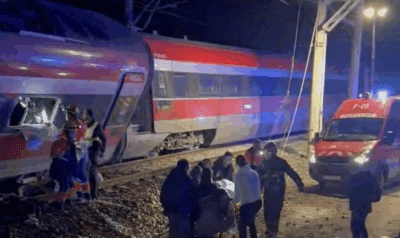
On the evening of January 18, 2026, one of Europe’s most modern railway networks suffered a devastating disaster near Adamuz in Spain’s Córdoba province. At around 7:45 p.m. local time, a high-speed passenger train traveling in Southern Spain from Málaga to Madrid to Huelva derailed, crossed onto an adjacent track and collided with an oncoming train. The result was catastrophic. Spanish authorities confirmed the accident killed at least 39 people were killed and over 120 injured, with the toll feared to rise as recovery efforts continue.
Trains in Spain’s high-speed rail network typically glide across dedicated lines at speeds up to 250 kilometers per hour or more. What happened near Adamuz was not only shocking for its violence but because it occurred on a straight section of track that had been recently renovated, according to officials, raising immediate questions about what went wrong. Emergency services continue to assist both trains involved and those killed and injured. The Spanish Transport Minister, rail operator Adif, another operator Renfe, and the Spanish Civil Guard, were all working together to evacuate, save lives, and clean up the tragic collision according to Spain’s Prime Minister, Pedro Sánchez. This Spanish train accident is one of the deadliest since 2013 in which 80 were killed in the country’s northwest.
What Happened At Adamuz
Reporting based on on-scene updates from Reuters and other major outlets paints a grim sequence of events:
-
A privately operated Iryo high-speed train appears to have derailed first, with its last two carriages leaving the rails.
-
Those carriages crossed onto the track of an oncoming Renfe Alvia service, leading to a violent head-on impact and the derailment of the second train.
-
The collision caused at least some carriages to fall down embankments and sustain extensive structural damage.
-
Rescue personnel, supported by heavy machinery, have been painstakingly accessing crushed, distorted wreckage well into the night.
Transport Minister Óscar Puente has described the crash as “extremely strange,” noting that the stretch of line was straight and believed to be in excellent condition after recent work. The cause has not been officially established, though some technical sources say investigators have found signs of wear on rail joints at the site that might have contributed to the derailment.
Spain has declared three days of national mourning and suspended rail services between Madrid and Andalucía as authorities continue their probe.
Rail Disasters In Europe Over Recent Months
While rail travel remains statistically safer than road transport, catastrophic events do occur with shocking frequency when systems fail. Several accidents in Europe over the past year remind us of the variety of ways rail journeys can go tragically wrong:
-
Germany (July 2025): A regional passenger train derailed near Riedlingen, killing three and injuring dozens. Early findings suggest heavy rainfall and a landslide may have destabilized the track.
-
Denmark (August 2025): A derailment at a local crossing resulted in at least one fatality and multiple injuries, highlighting vulnerabilities even on lower-speed regional lines.
-
Lisbon, Portugal (September 2025): A popular funicular railway derailed, killing at least 15 people and injuring others. Though not part of a high-speed network, it underscored safety risks in diverse rail systems.
-
Slovakia (October 2025): Two trains collided in the east of the country, injuring dozens, a reminder that signal and routing issues can lead to serious consequences even without fatalities.
-
Czech Republic (November 2025): A head-on collision between passenger services near České Budějovice injured many, though thankfully caused no deaths.
Across Europe, these disparate incidents reveal that while major high-speed systems attract attention, everyday regional operations and historical lines also face safety challenges.
What The Adamuz Crash Means For Rail Travel
Rail networks in Europe, especially those that move millions of passengers every day, are the product of decades of engineering and refinement. They are statistical outliers for safety when compared to highways or even short-haul flights. Yet when a serious accident does happen, the contrast between expectation and reality is stark.
High-speed lines are designed with multiple layers of safety: ballasted track beds, continuous welded rail, automatic train control systems and strict operational standards. That such a crash occurred on newly refurbished straight track has sparked intense scrutiny. It suggests that detectives in hard hats may need to look as much at maintenance records, signaling data and materials science as at driver actions or weather conditions.
These questions are not academic. When families board a train, especially on routes praised for their modernity and comfort, they expect those journeys to be routine. The psychological toll in the wake of a crash extends beyond physical injuries, touching the core of public trust in transportation infrastructure.
Conclusion
The Adamuz derailment and subsequent collision is a tragic chapter in European rail history. Beyond the immediate sorrow for the nearly four dozen lives lost and the scores injured, it exposes how even well-regarded rail systems can suffer catastrophic failures. As investigations unfold, authorities will need to deliver answers that are thorough and publicly transparent, showing how crews, infrastructure and oversight converged to prevent disaster. For the traveling public, this event should not prompt fear, but a renewed confidence that safety systems work only when they evolve as fast as the networks they protect.