Two crashes in two days near Barcelona and Adamuz raise hard questions, even as rail remains among Europe’s safest ways to travel.
A Rough Stretch For A Country That Depends On Its Trains
Spain has every reason to be proud of its rail network. It is modern, fast, and (most days) boring in the best possible way. That is why the last few days have been so shocking and tragic: a deadly high-speed collision near Adamuz in Andalucía, followed almost immediately by a commuter derailment outside Barcelona after heavy rain and a collapsed wall.
When you stack tragedies back-to-back, concerned travelers want answers. Sometimes it is a pattern. Sometimes it is just the cruel math of chance. Either way, Spain is now asking the question out loud.
What Happened Near Barcelona
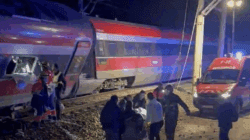
On Tuesday, January 20, a commuter train derailed near Gelida, roughly 35 minutes outside Barcelona, after a retaining wall fell onto the tracks. Authorities reported one death, the train driver, and dozens of injuries (with several listed as serious or critical).
Spain’s infrastructure manager, Adif, pointed to heavy rainfall as the likely trigger for the wall collapse, and emergency services surged to the scene with a large response that included dozens of firefighting units and around 20 ambulances.
News outlets also noted an additional disruption that night on the Barcelona commuter network, when an axle came off a train between Blanes and Maçanet-Massanes, underscoring that the region’s rail system has been dealing with reliability strain even before this week’s headlines.
The Adamuz Collision And The Story That Stopped Everyone
Two days earlier, Spain was already reeling from a high-speed disaster near Adamuz, in Córdoba province. A high speed train derailment and collision involving two trains, with a death toll reported around 39 to 40 (and higher figures cited elsewhere as recoveries continued), plus well over 100 injured.
Investigators have been circling a potential infrastructure issue. A broken rail joint (a “fishplate” joint) was found and is believed to be central to the crash, though the investigation is ongoing and official conclusions will take time.
And then there are the stories that cut through the statistics. A 6-year-old girl was the sole survivor of her immediate family, found barefoot after escaping through a broken window, now cared for by grandparents. It is the kind of detail that makes a “transportation incident” feel like what it really is: heartbreaking.
Rail Accidents Are Rare, Which Is Why This Feels So Jarring
Rail remains one of the safest ways to move people anywhere but especially within Europe. The European Union Agency for Railways has pegged passenger fatality risk at extremely low rates when measured per billion passenger-kilometres.
That does not mean Europe has zero rail deaths. Eurostat’s railway safety statistics show hundreds of fatalities annually across the EU, but a large share are tied to crossings, trespassing, and other non-passenger scenarios, rather than accidents of the nature occurring in the last week. When Spain sees two serious crashes in essentially one news cycle, it feels abnormal because, statistically, it is.
Social media images that captured the wreckage from Sunday in northeastern Spain that killed at least 42 people coupled with yesterday’s Barcelona train crash that was far less fatal (a handful of attributable deaths but injured dozens) play into people’s natural fears. This second train crash in Spain in such a short time frame can make it feel as though it’s far more common than it is.
Tragic Coincidence, Or A Broader Warning?
The Barcelona derailment looks, at least preliminarily, like weather meeting infrastructure in the worst possible way occurring during heavy rainfall that swept through the area. If that wall truly failed because of rain, it raises a different set of questions than the Adamuz collision, where investigators are probing track integrity and possible long-standing wear. Travelers do not experience tragedies as organized categories. They experience them as a single headline: “train crash.”
What worries me is not that trains have suddenly become unsafe overnight. It is that multiple pressure points can exist at the same time: aging or underfunded commuter corridors, extreme weather events that stress slopes and retaining structures, and the sheer operational complexity of running high-frequency passenger service with near-zero tolerance for failure.
If you want a broader European frame, the past year has had its own grim reminders. A regional passenger train derailment in southwestern Germany killed three people in July 2025. And Lisbon’s historic Glória funicular crash in September 2025 killed at least 15 people, showing that “rail” risk is not limited to mainline routes.
None of this proves a continent-wide rail safety decline. It does suggest that the systems around rail, from maintenance to climate resilience, are becoming the story, not just the trains themselves.
What This Means For Travelers Right Now
If you’re traveling in Spain this week, the practical guidance is boring, and that’s good: follow operator updates, expect localized disruptions, and give yourself margin in connections, especially around Barcelona commuter lines and any reroutes tied to the Adamuz investigation.
The bigger point is psychological. Tragedies like these can distort risk perception, even when the underlying data still says rail is among the safest ways to travel.
Conclusion
Spain’s rail system did not become unsafe overnight, and Europe’s safety data still supports rail as an exceptionally low-risk way to travel. But two severe incidents in two days, one plausibly tied to extreme weather and the other under investigation for track integrity, should not be waved away as “one of those things.” Whether this is tragic coincidence or a warning flare about infrastructure, maintenance, and climate stress, the correct response is the same: investigate hard, fix what is found, and earn back the public confidence that modern rail depends on.