The stars finally lined up again to hit up a product inaugural. Way back in 2017, I attended Southwest’s launch of the Boeing 737 MAX-8. Or should I say, attempted to, because that flight…didn’t go according to plan. This time, I set out to get on American’s inaugural flight on the new Airbus A321XLR. I found American A321XLR Premium Economy a nice if pricey ride. Pricey enough to where I question the economics, at least on transcontinental routes. I paid cash for this ticket…way too much, frankly. The total fare for coach from Dallas to New York, and then Premium Economy to Los Angeles, clocked in at $1,179.
Incidentally, if you thought I left – you’re not imagining things. Yours truly is returning to Travel Codex. All of the content that used to be here will be reactivated over time.
American Airlines (AA) Flight 3
- Thursday, December 18, 2025
- Depart: New York – John F. Kennedy International Airport (JFK), Terminal 8, Gate 12, 11:02, 2m late
- Arrive: Los Angeles International Airport (LAX), Terminal B, Gate 151, 14:42, 24m late
- Duration: 6 hours 40 minutes
- Equipment: Airbus A321XLR
- Seat: 12A
Pre-Flight Inaugural Party
I turned up at the gate about an hour and a half prior to departure. As I expected, I found a thumping gate party in progress, with a live DJ, decorations, and an XLR backdrop.
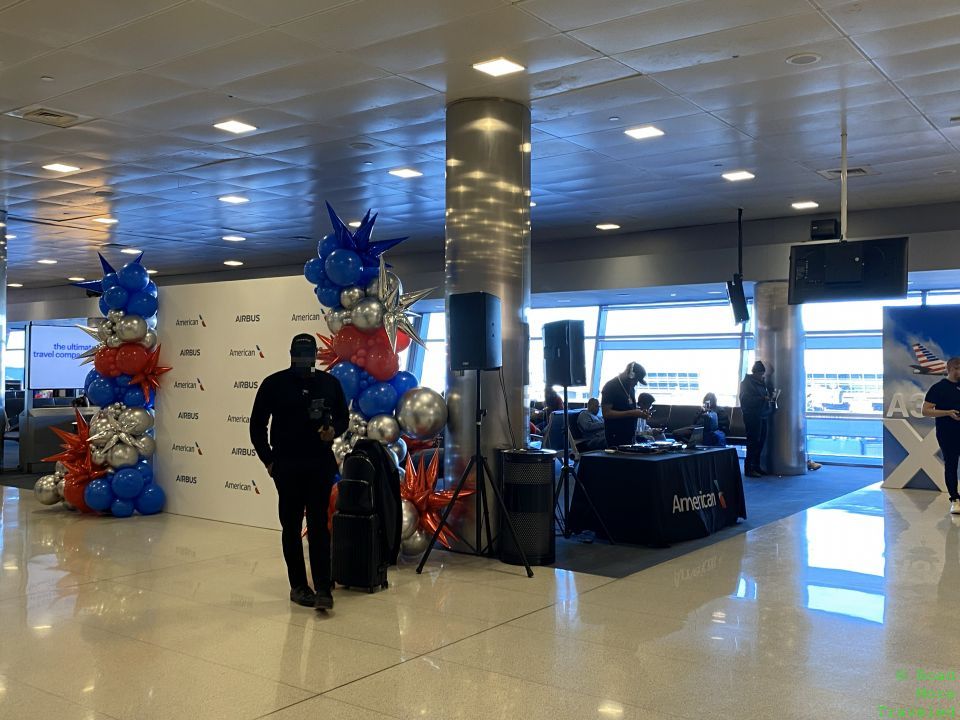
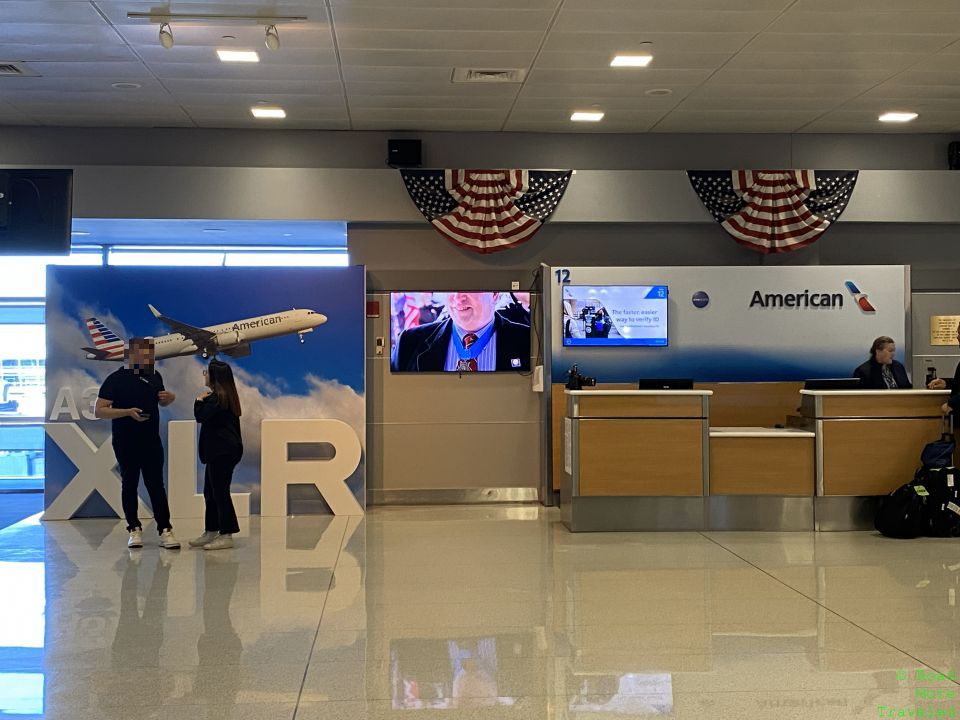
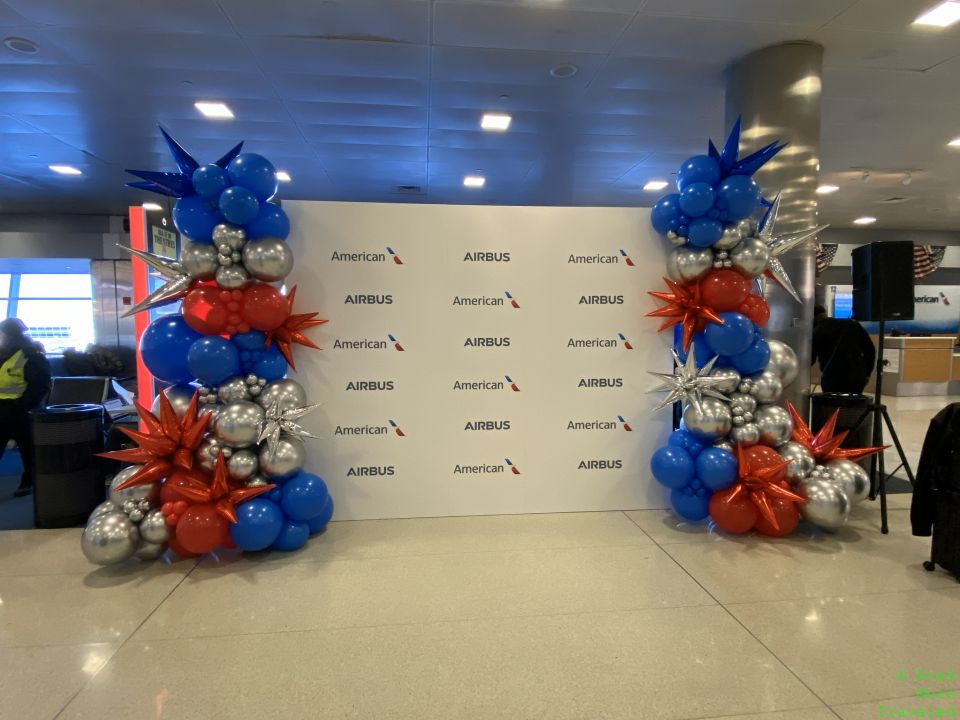
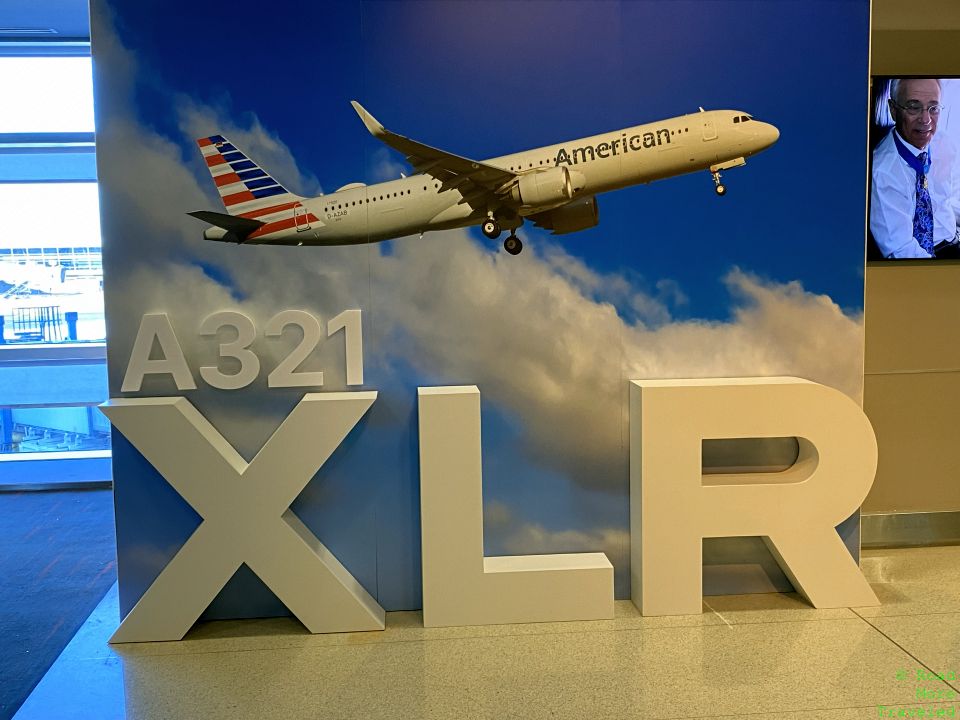
A fellow passenger was kind enough to take my photo with the XLR backdrop and sign.


From what I could tell, most of the passengers were AA employees, along with a smattering of avgeeks and bloggers. And a handful of really bewildered people just trying to get to LA and wondering what the fuss was about.
Also at the gate were a few propaganda posters highlighting the new cabins in the XLR.
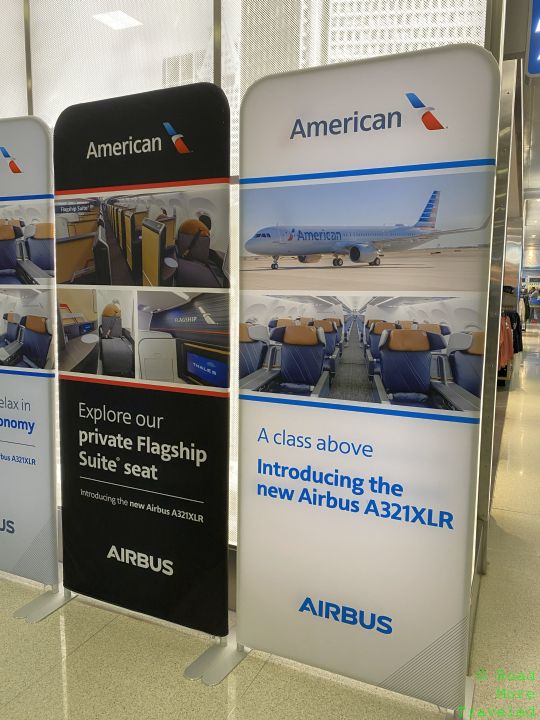
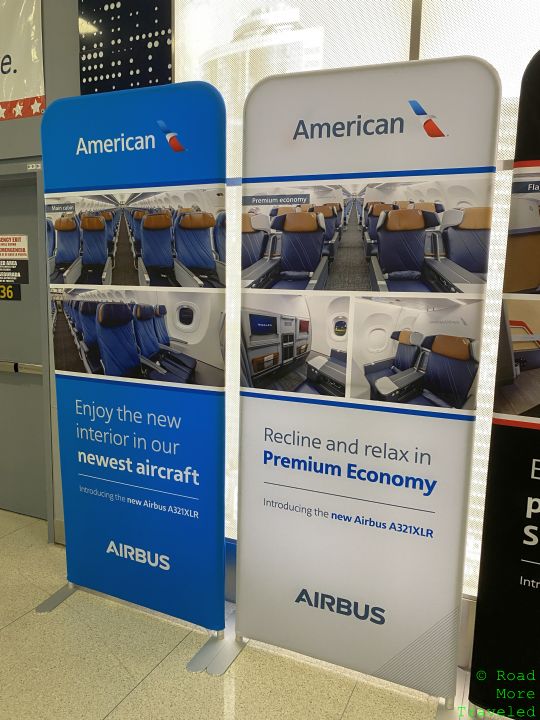
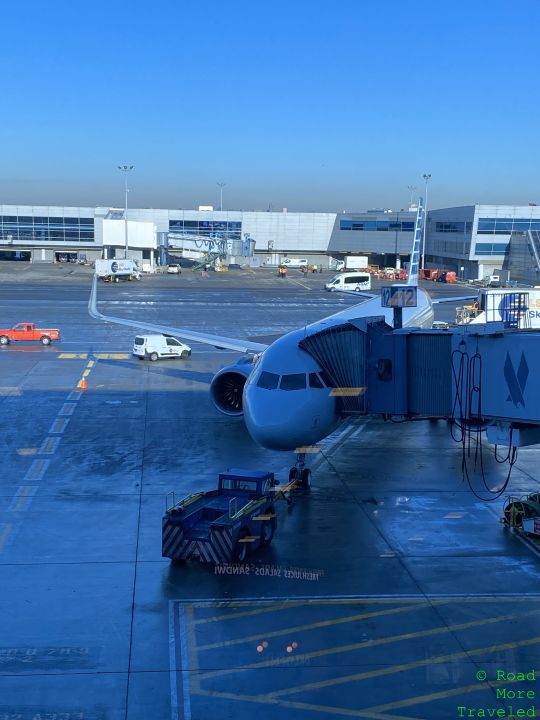
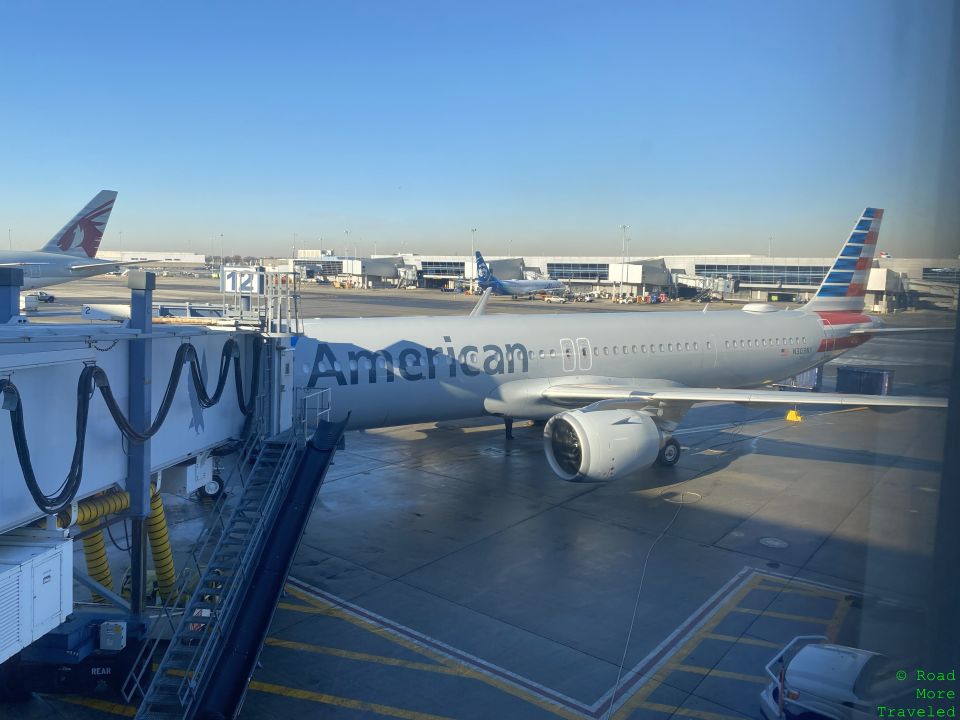
I also took a few minutes to grab a couple of photos of the brand-new bird from the windows.
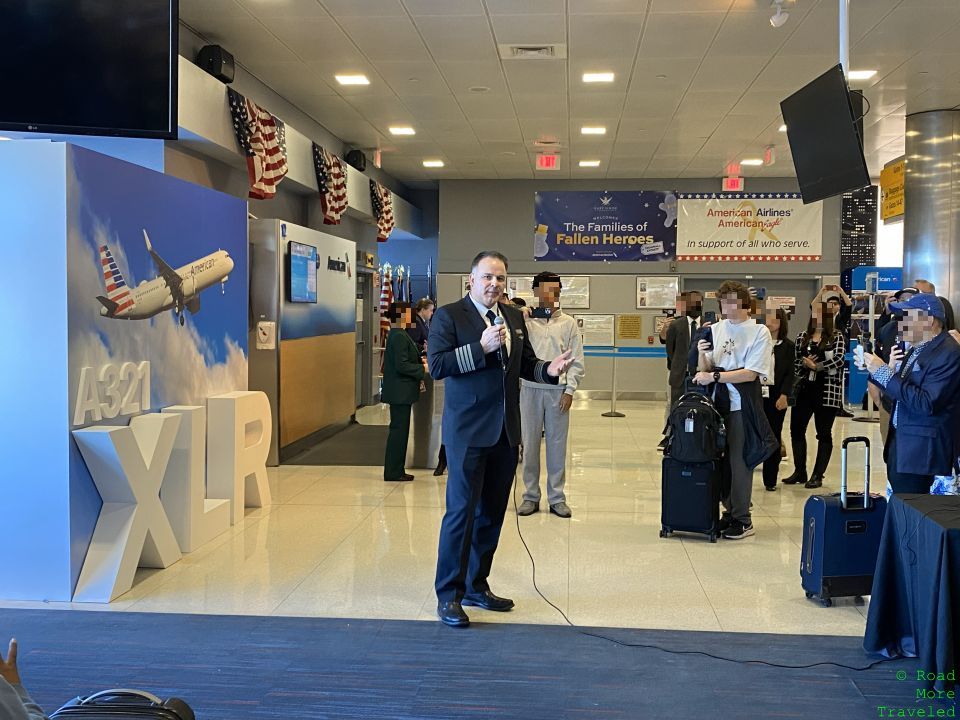
Captain Hall then joined a handful of AA execs in a ceremonial ribbon cutting.
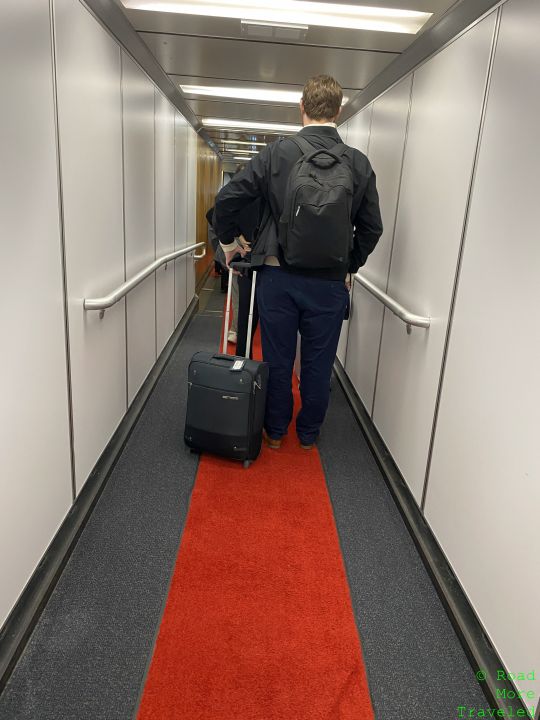
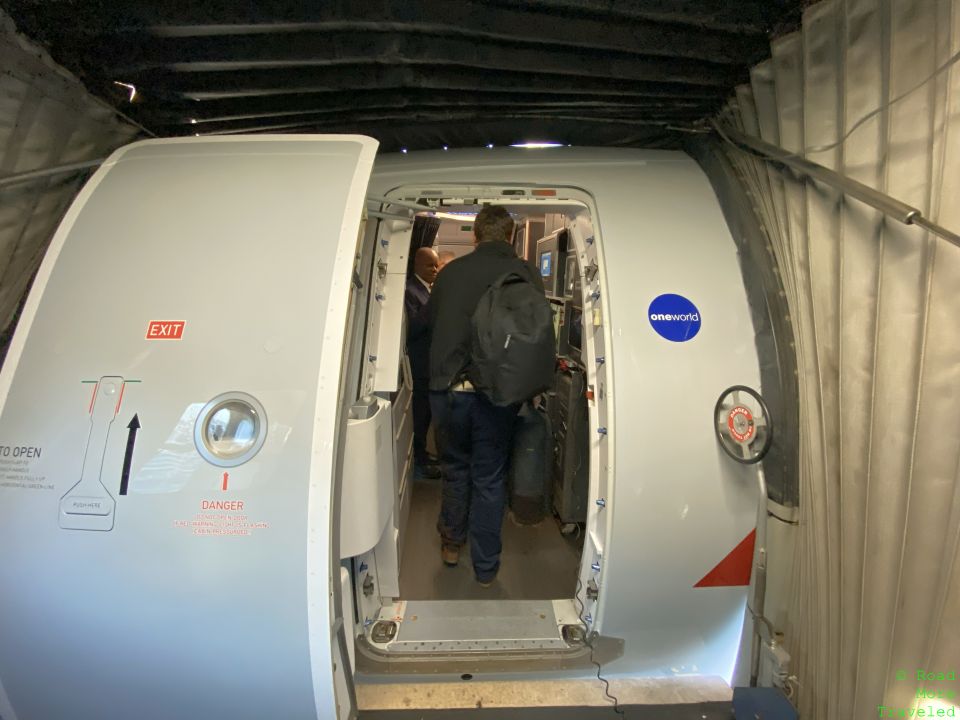
Boarding began exactly on time at 10:20 am. American even laid out the red carpet for everyone on the jetbridge.
Before I get into the actual review, I’ll spend a few minutes discussing the basics of the A321XLR. The plane serve two purposes, to service thinner routes to Europe, and to replace the aging “A321T” transcontinental configuration. The plane features a less-dense 155-seat configuration. This includes 20 Flagship Suites, 12 Premium Economy recliner seats, and 123 standard Main Cabin seats. Somewhat surprisingly, the XLR includes just 12 Main Cabin Extra seats, and only at the exit rows (14 and 15). This strikes me as a pretty big miss. As I’ll discuss later, there’s a significant price premium for Premium Economy. You’d think that would create higher demand for Main Cabin Extra. But for those who don’t like the exit row, or have young kids and can’t book the exit rows, you’re SOL.
Initially, American has the XLR scheduled on two flights per day between New York JFK and Los Angeles. Later this year, American plans to expand the XLR to the JFK to San Francisco and Boston to Los Angeles routes. Meanwhile in March, the XLR enters Transatlantic service from JFK to Edinburgh. Eventually, American plans to operate all premium transcontinental routes on the XLR, along with shorter, thinner European routes.
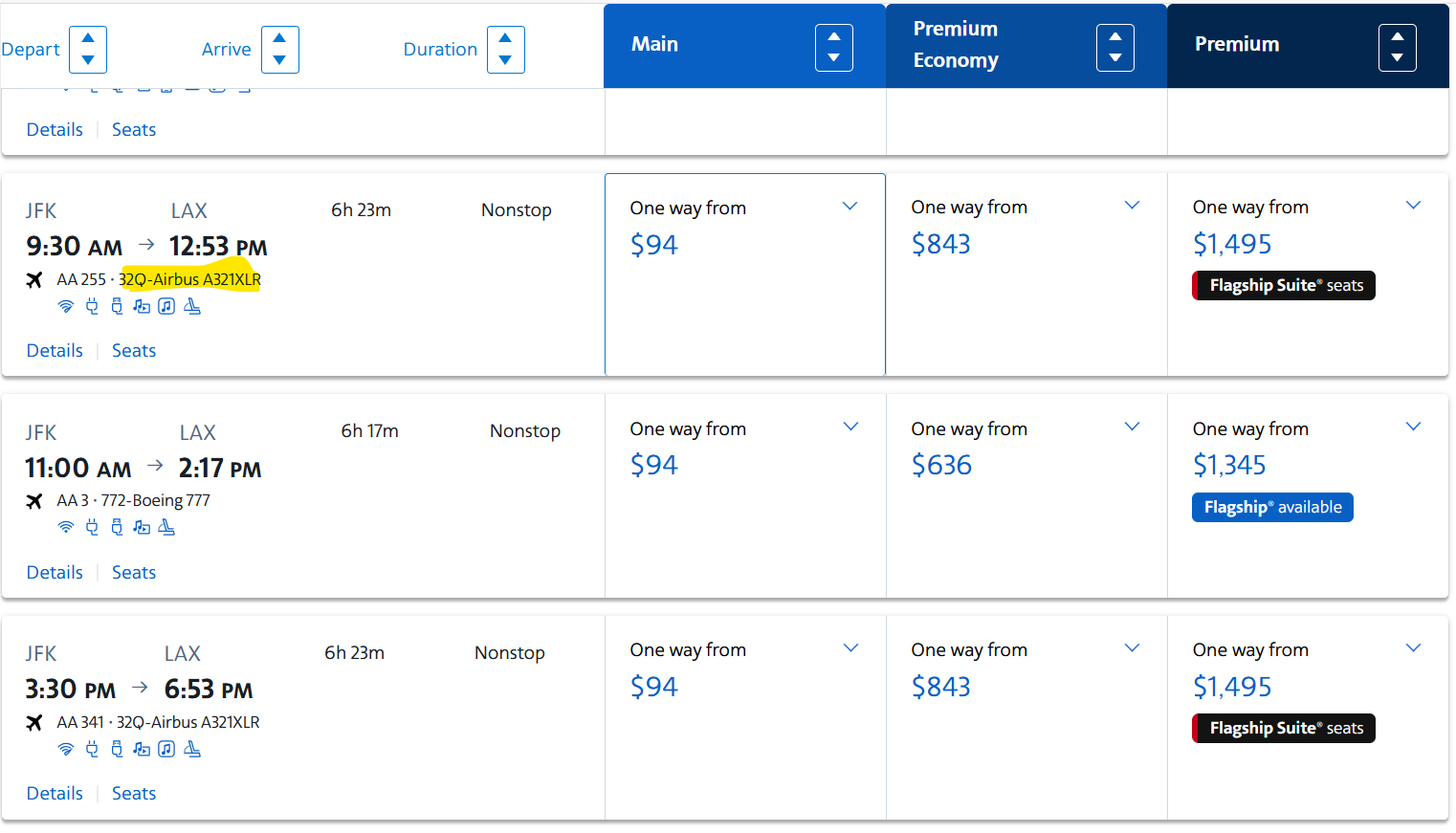
So how do you know if the new XLR operates your flight? Look for the “32Q” identifier in the equipment section. BUT make sure it specifically says “Airbus A321XLR”. American uses “32Q” to generically refer to any Airbus A321neo. You’ll also know it’s the XLR if “Flagship Suite” appears as an option.
American A321XLR Premium Economy – Seating and Interior
While heading back to my seat, I did try to grab a photo of the new “Flagship Suites”. The cabin looks nice enough, but I have to admit, seems kind of tight. The aisle also felt noticeably narrow. I have another flight scheduled in Business next month and will report back.
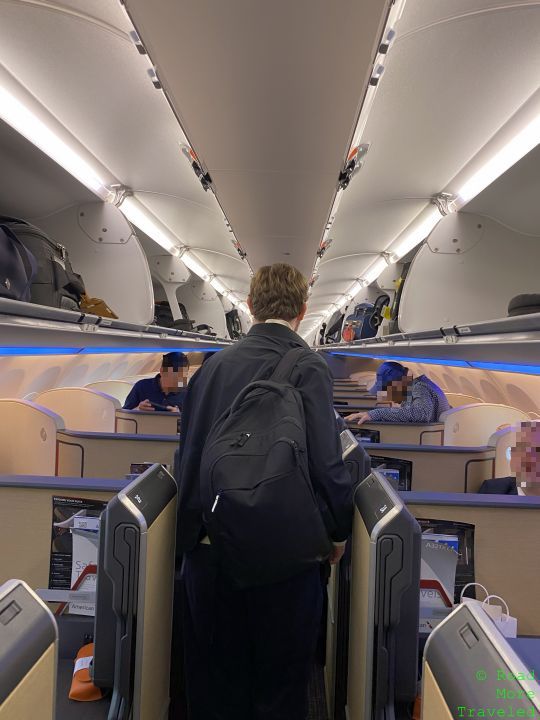
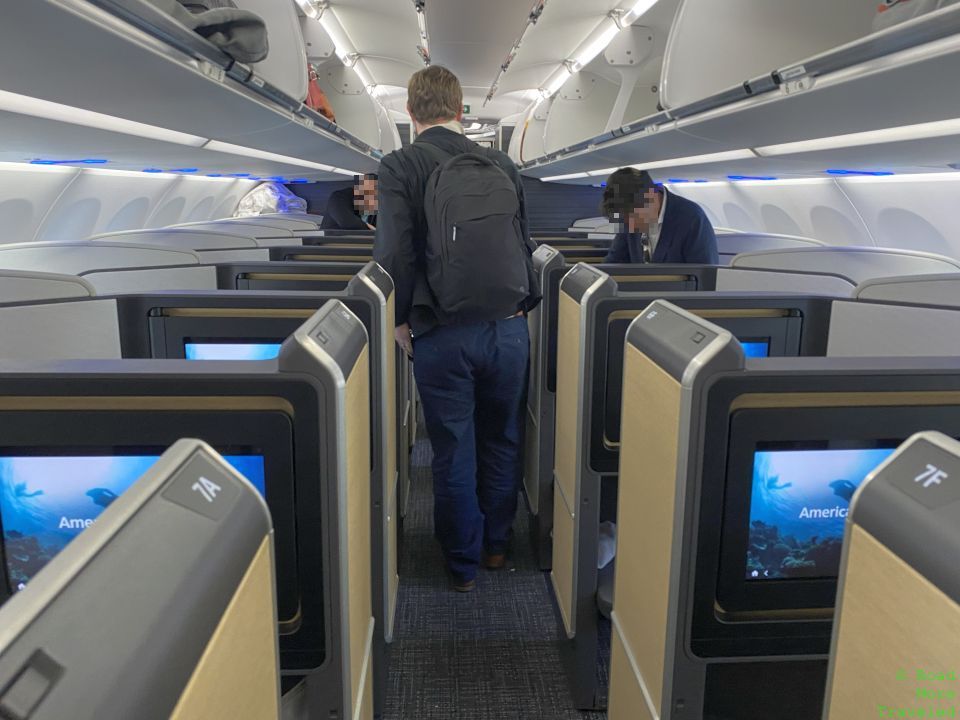
While walking back, I overheard a passenger complaining about having to lean back to look out the window. And apparently, AA will require Business Class passengers to stow their TVs during meal service. That’s hardly a premium experience, so hopefully they backtrack. (But it’s AA we’re talking about, so don’t be surprised if it sticks around.)
Anyway, back in Premium Economy, the cabin consists of 12 Recaro R5 recliners in a 2-2 configuration. The seats feature a generous 21″ of width, and 37″ of pitch. My first impression is these look strikingly similar to Delta’s new First Class on the A321neo. Which isn’t bad, because that’s actually a pretty good seat. The main difference? The divider between seats isn’t nearly as wide. That results in less privacy than Delta’s First Class, though it also makes it easier to converse with your neighbor if traveling together.
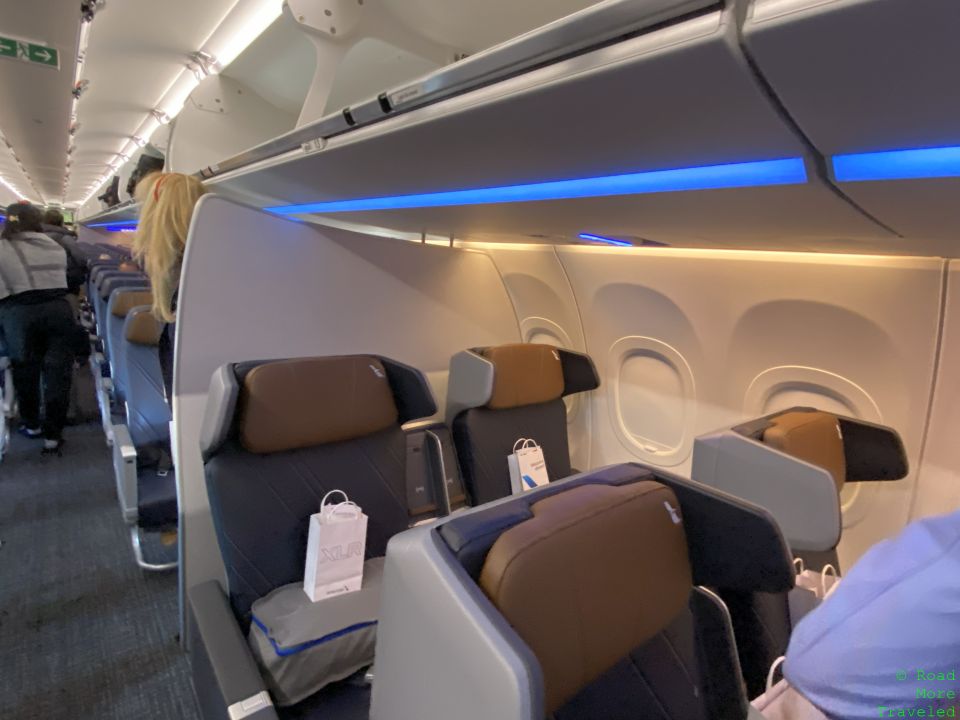

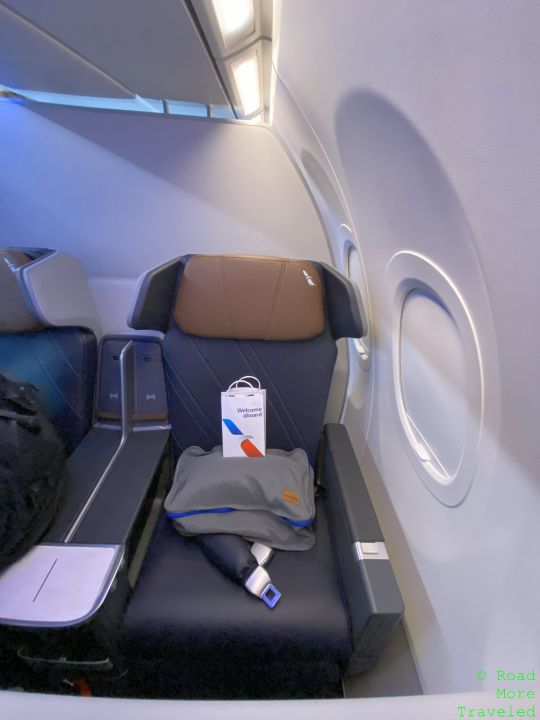
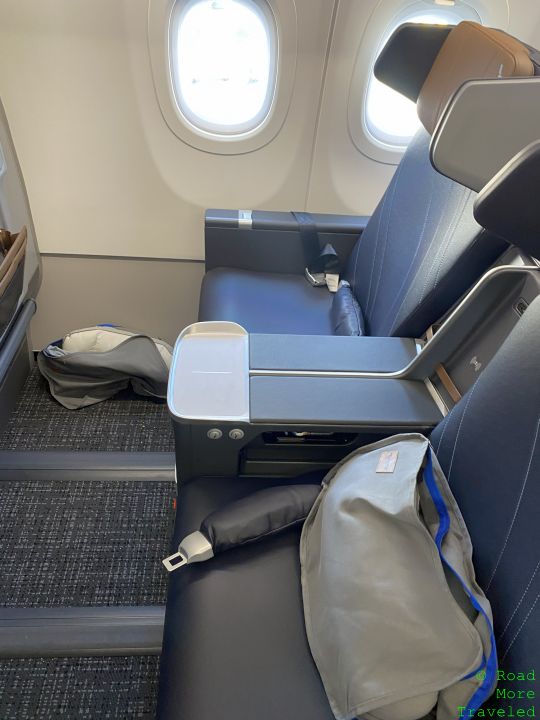
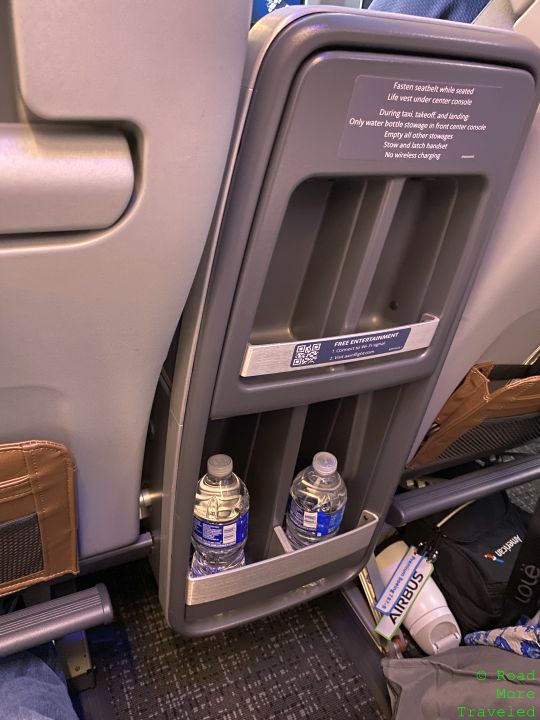
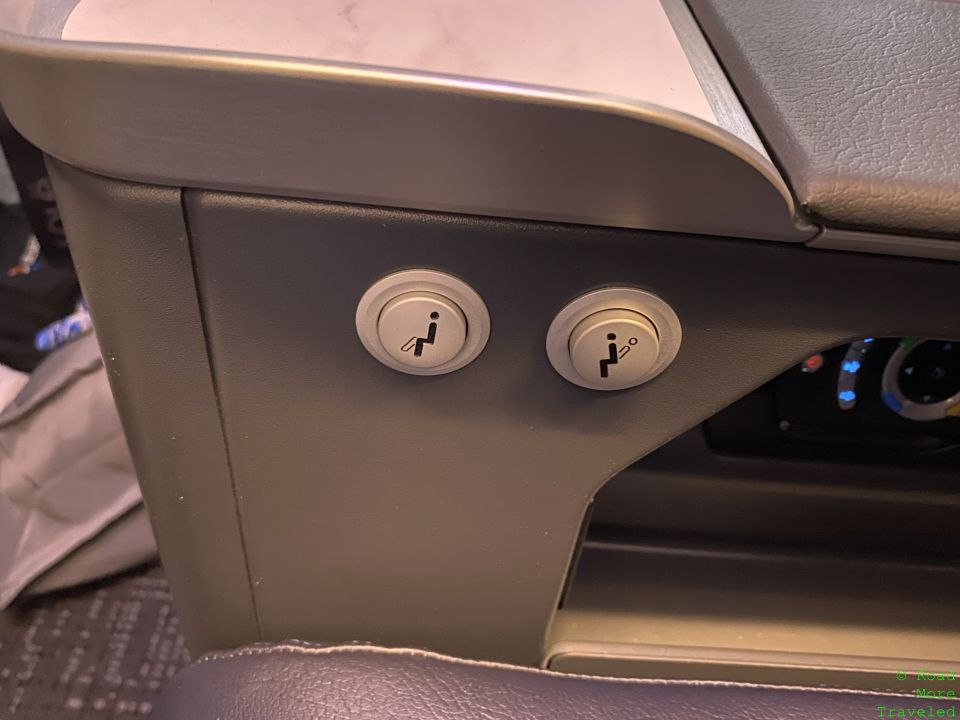
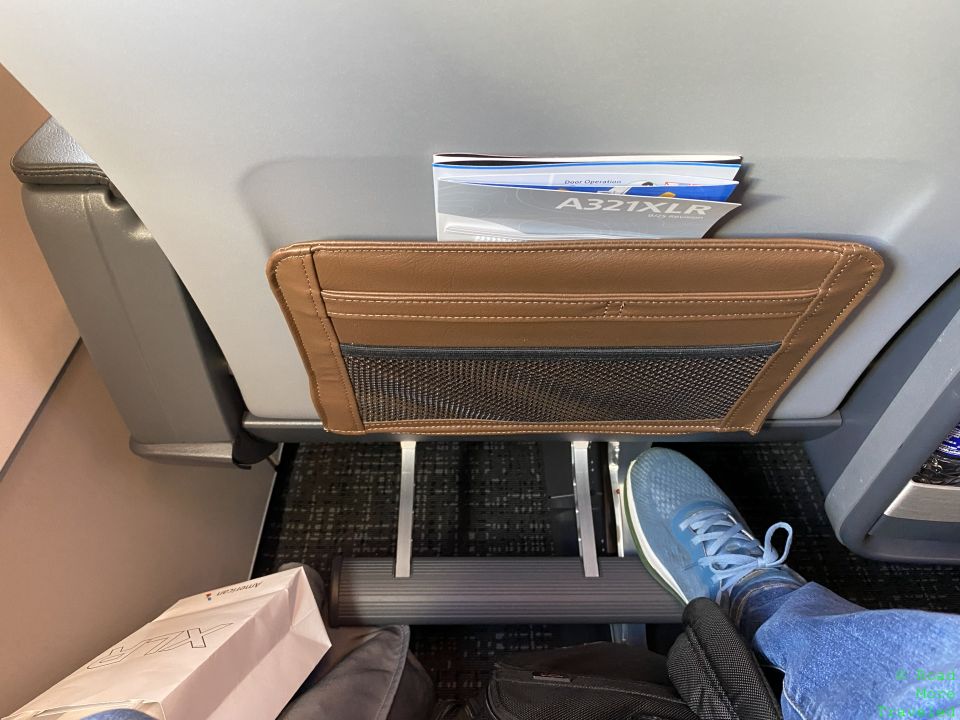
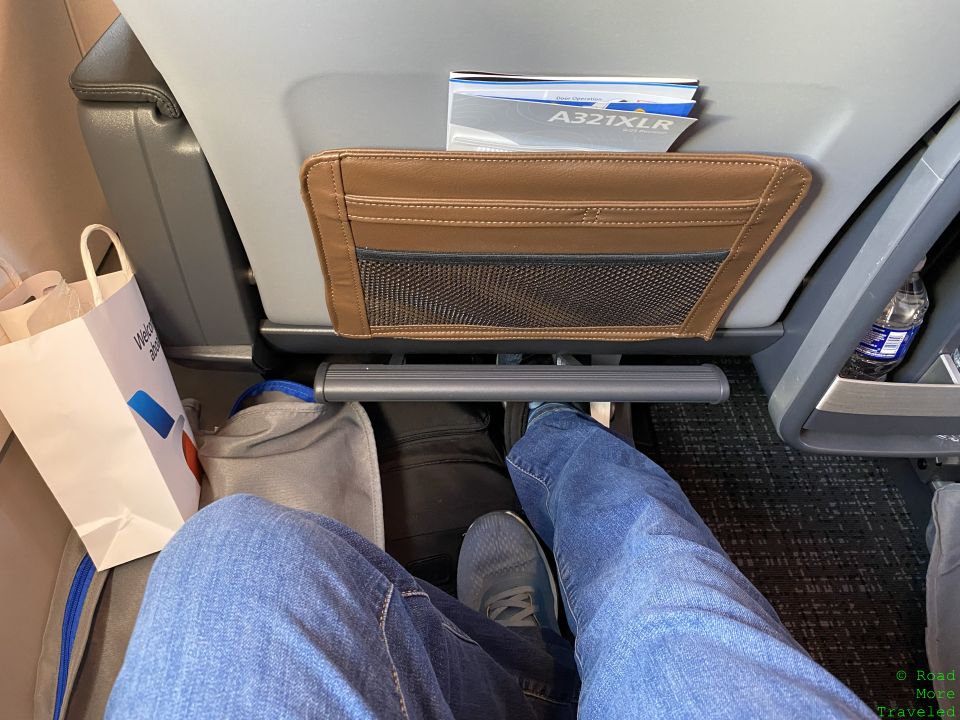
As far as seat comfort goes, back support felt fine, though my posterior started getting numb after about an hour’s nap. I tend to slide down when sleeping, so that’s pretty typical for this type of recliner seat in my experience.
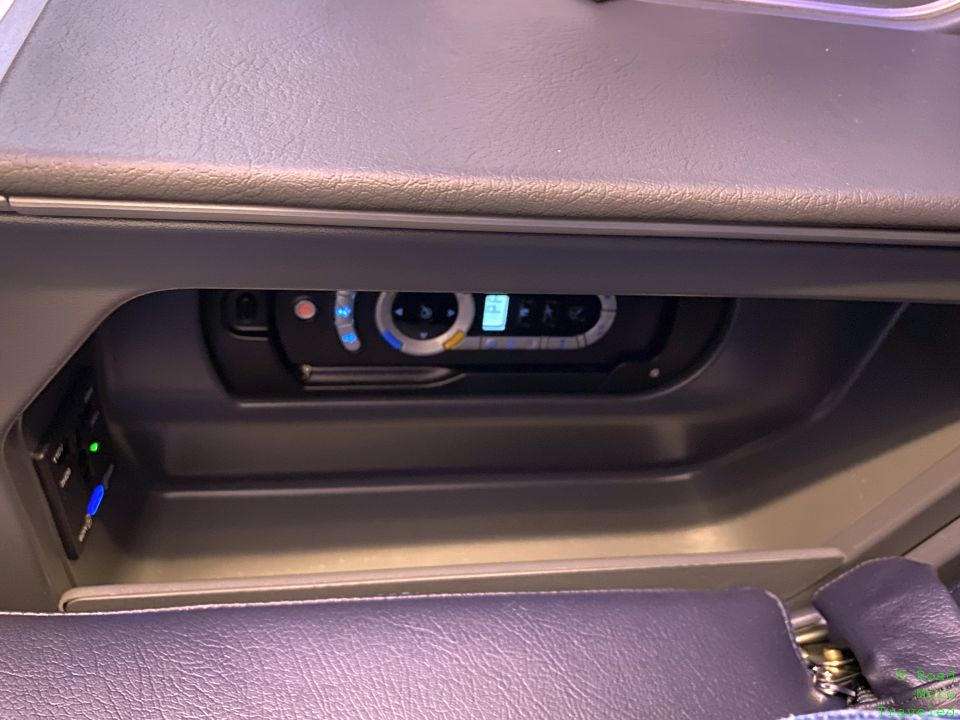
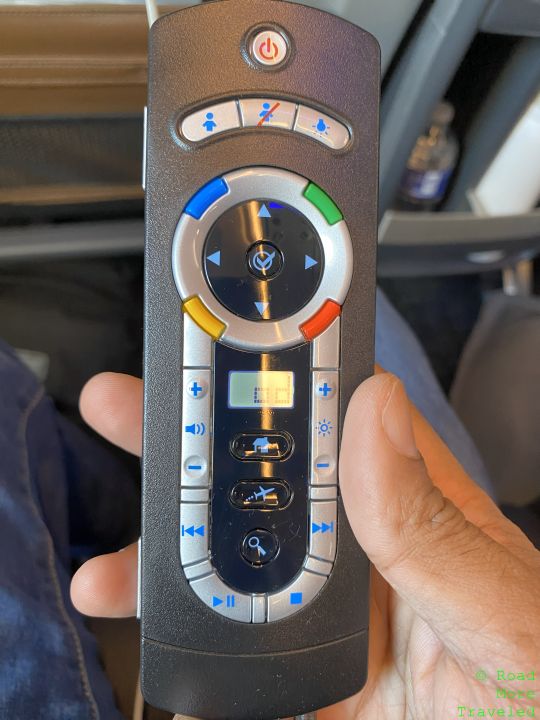
Finally, there is a small storage area underneath the armrest, where the IFE controller is stored.
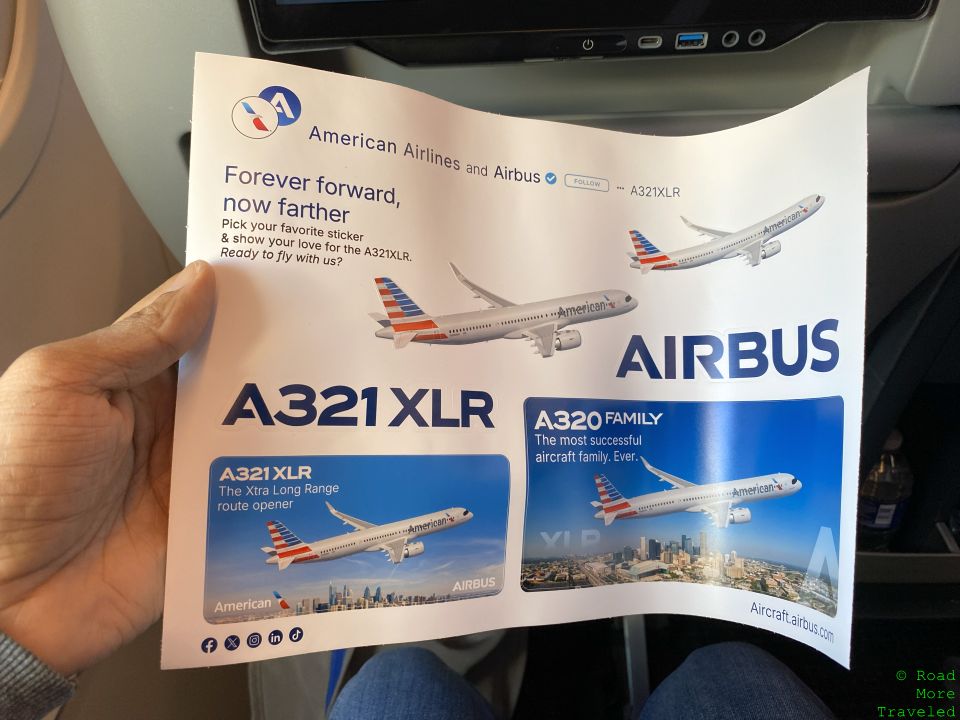
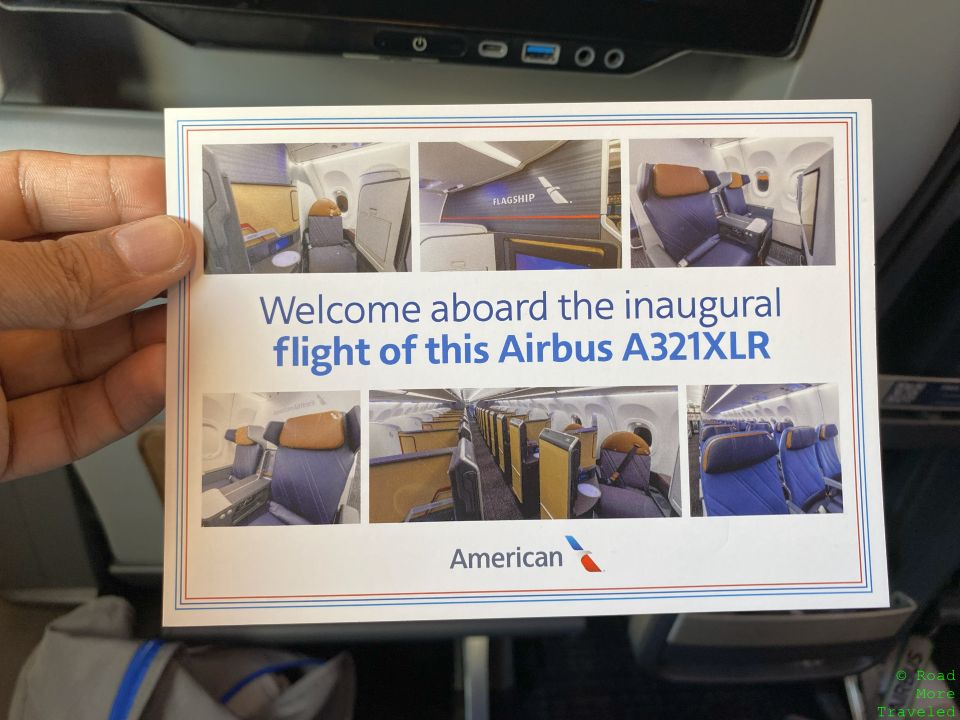
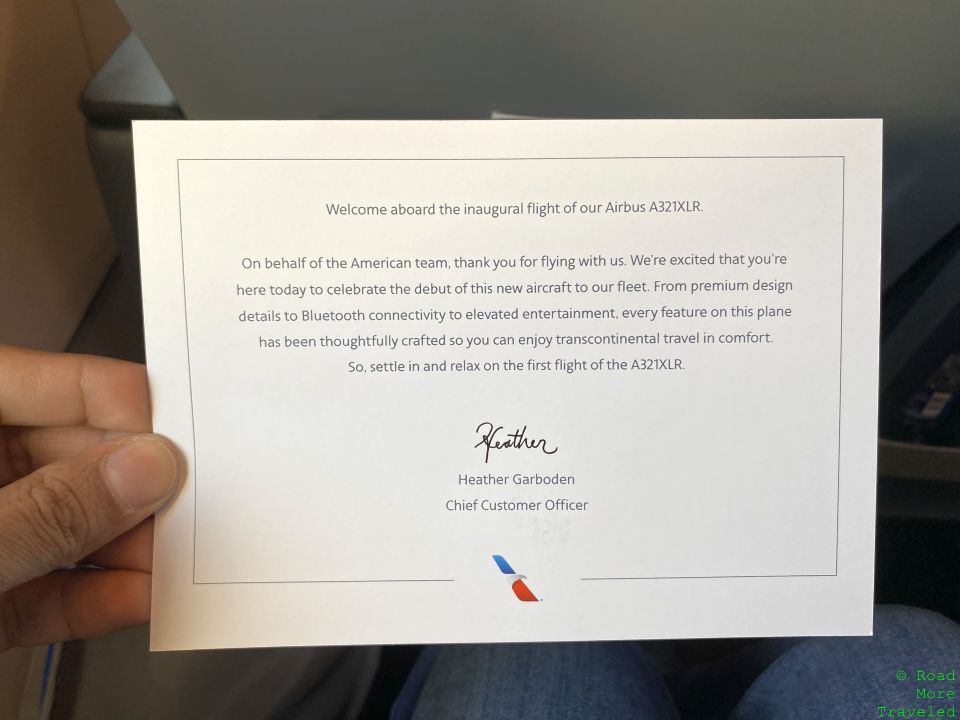
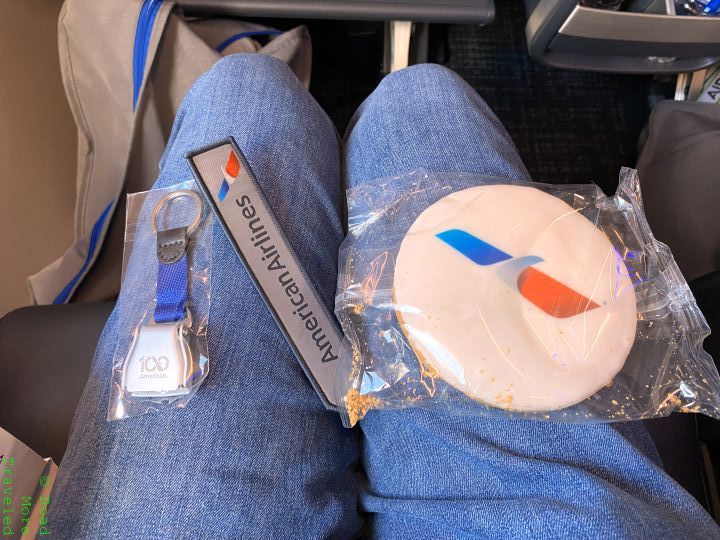
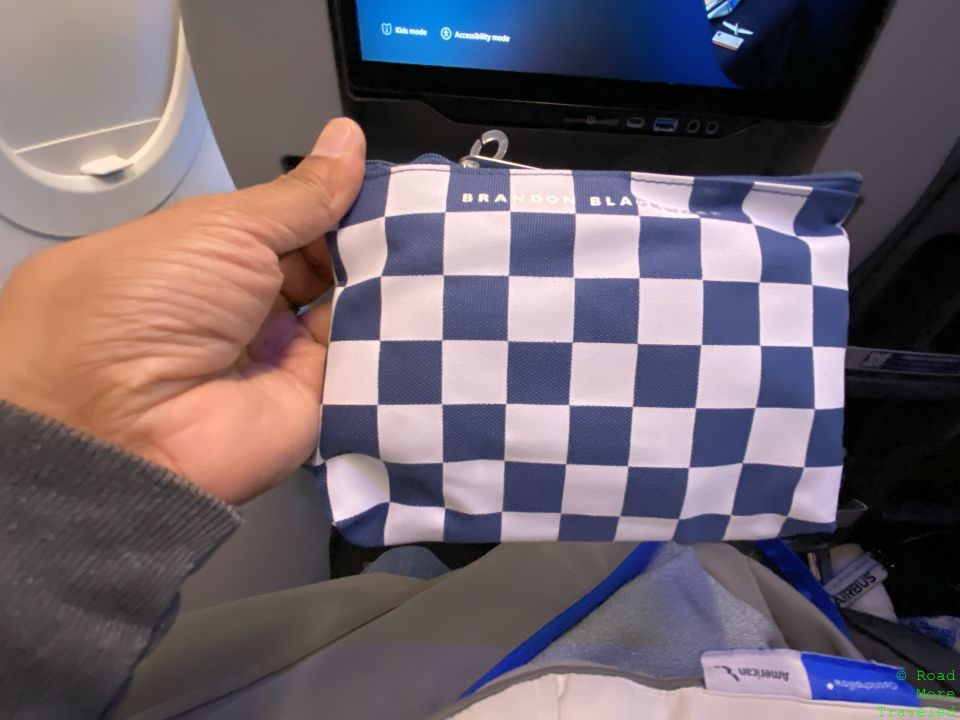
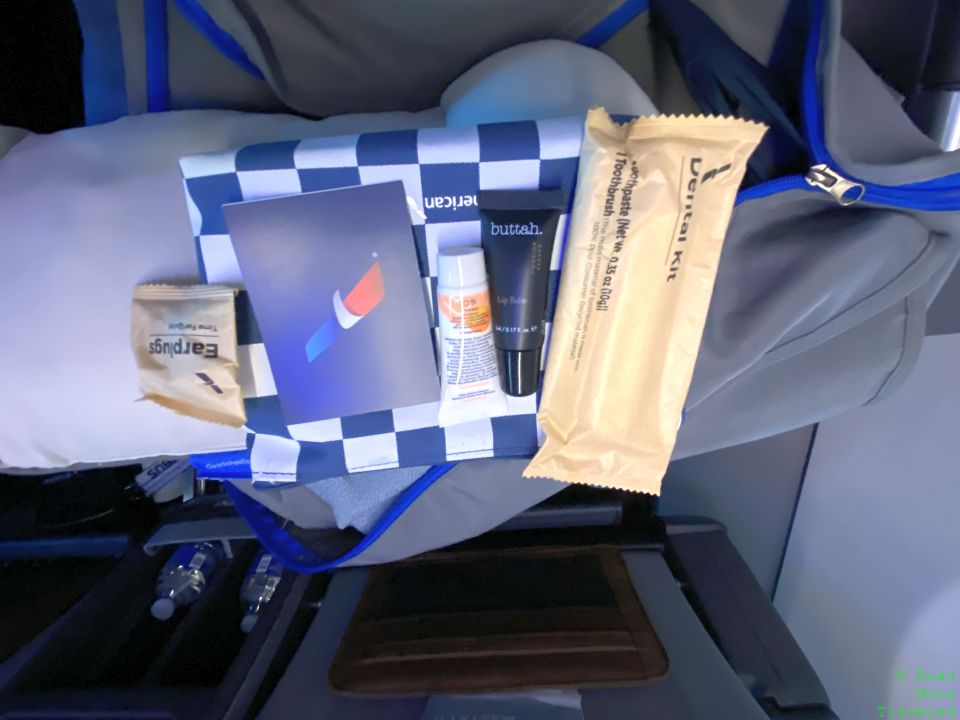
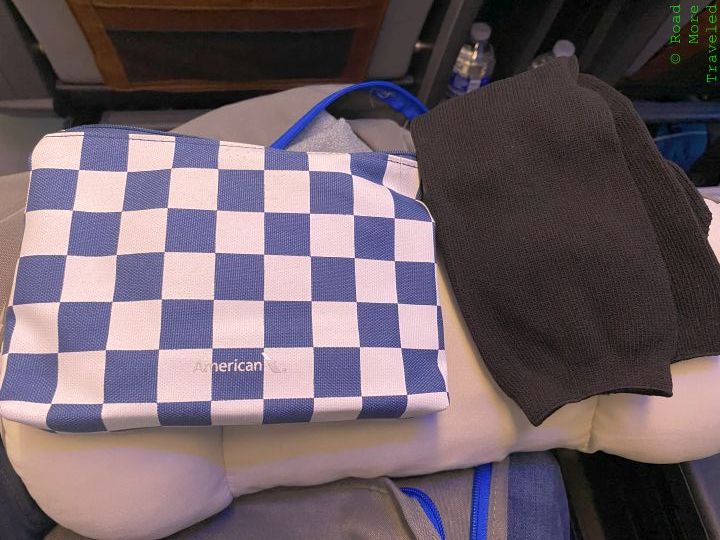
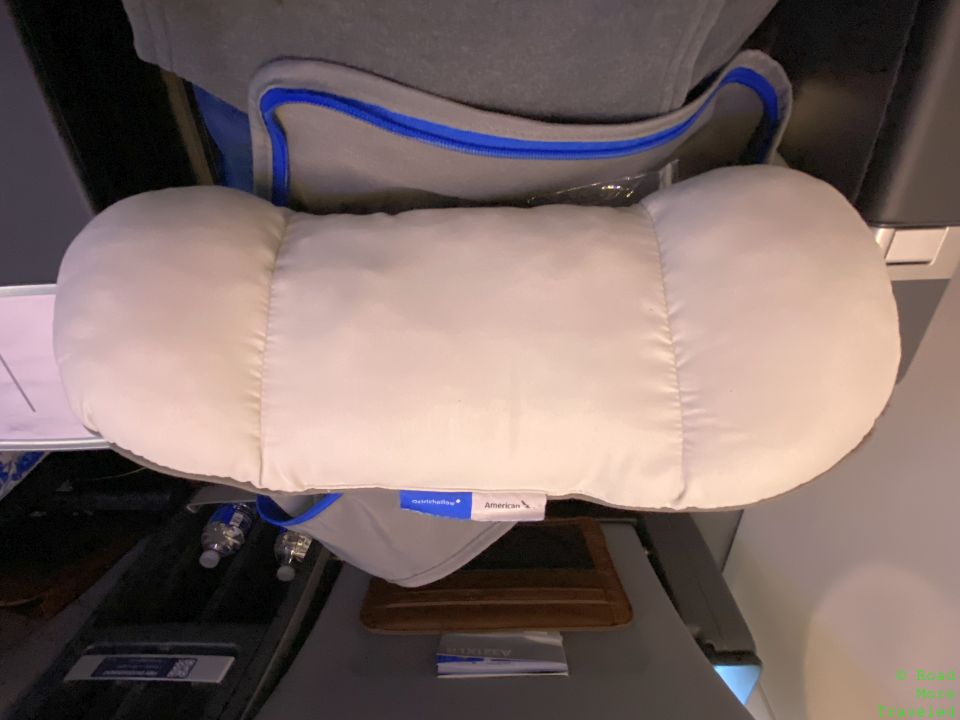
In-Flight Entertainment
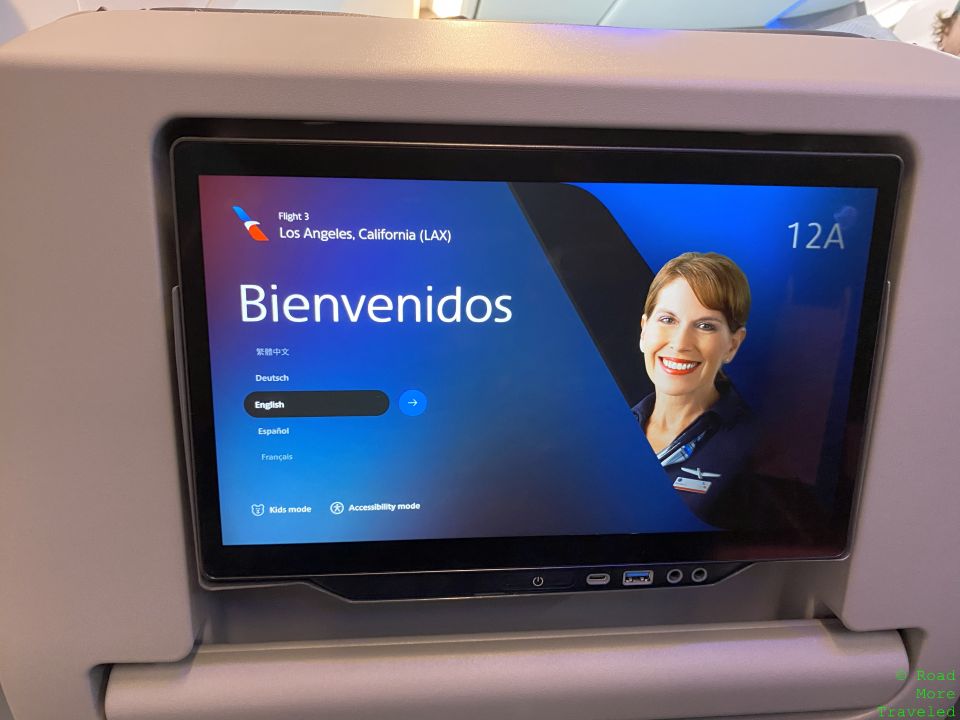
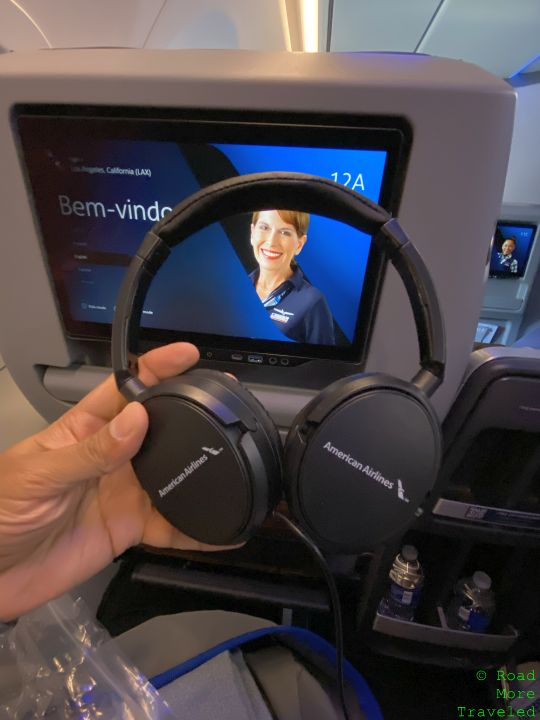
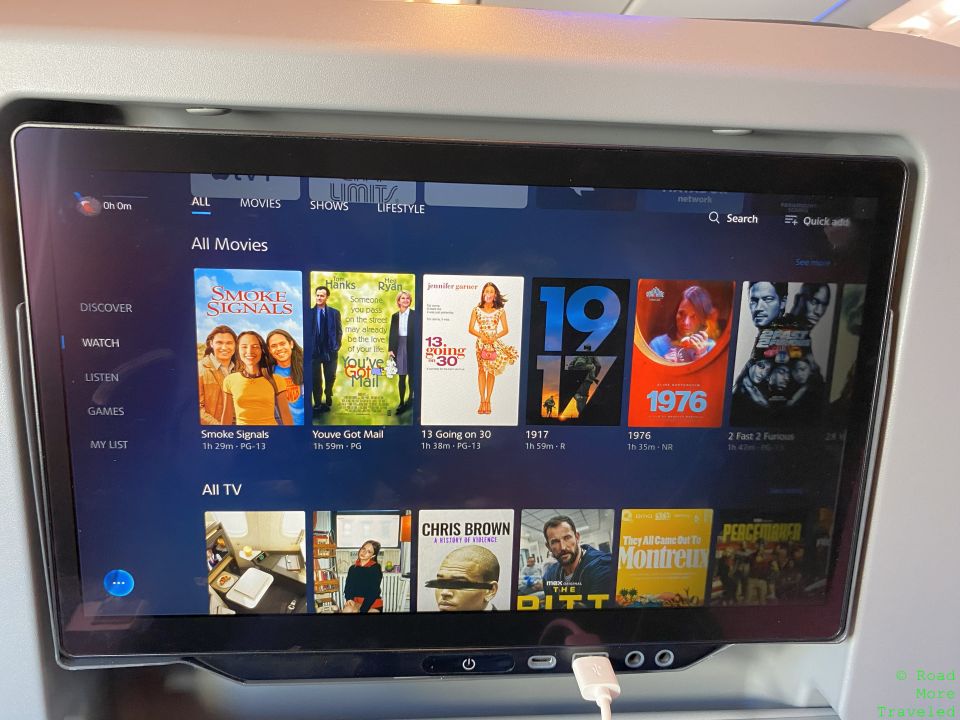
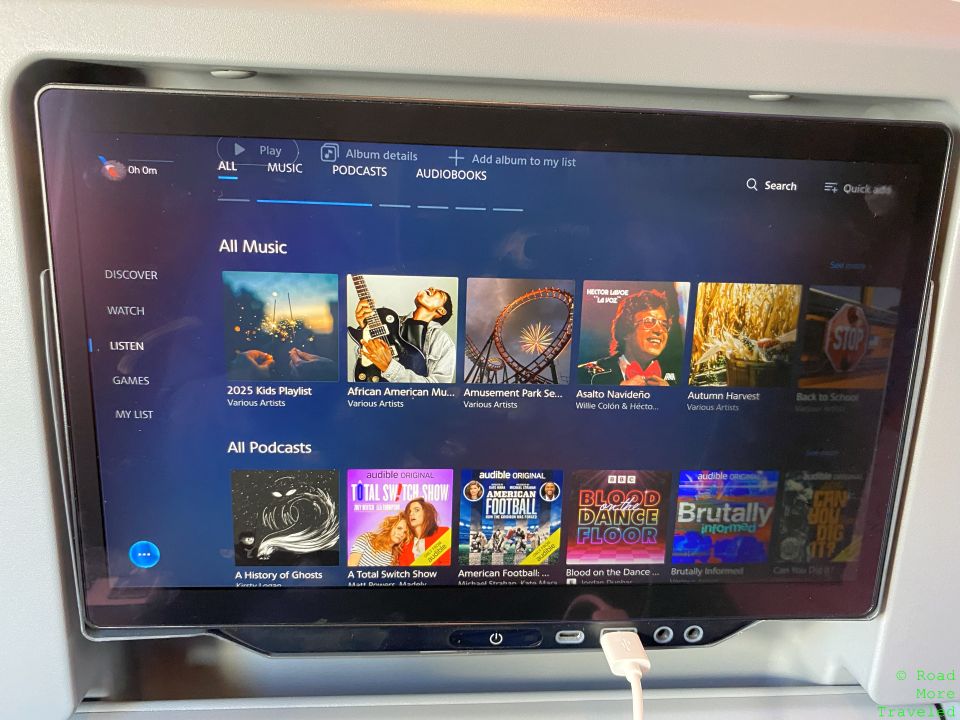
American’s new A321XLR comes equipped with all the usual bells and whistles you expect on a long-haul aircraft. Front and center is a 13.3″ 4K touchscreen display with Bluetooth capability. I didn’t try to connect my earphone to see if the Bluetooth worked, but will do so when I try Business Class next month and report back. Note that if seated in the bulkhead row (Row 11), the screen is fixed into the bulkhead wall. And looks quite a bit larger. American equips its IFE screens in Premium Economy with both USB-A and USB-C charging ports. I did find it a bit hard to remove my lightning cable from the USB-A port. It required a bit of jiggling and force to pull out. That concerns me that these may break easily over time.

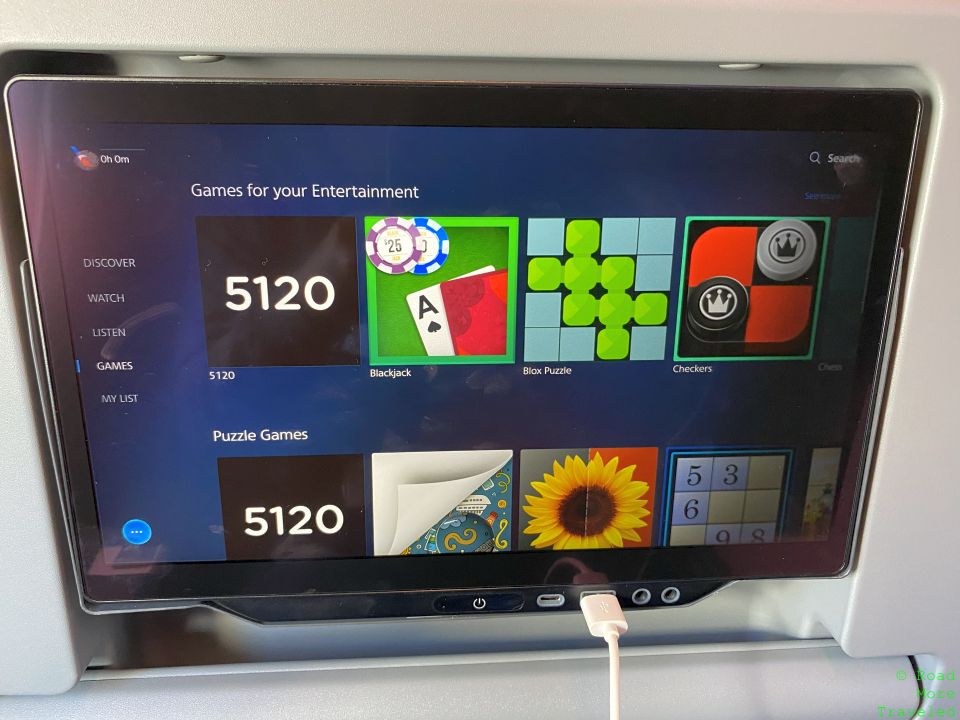
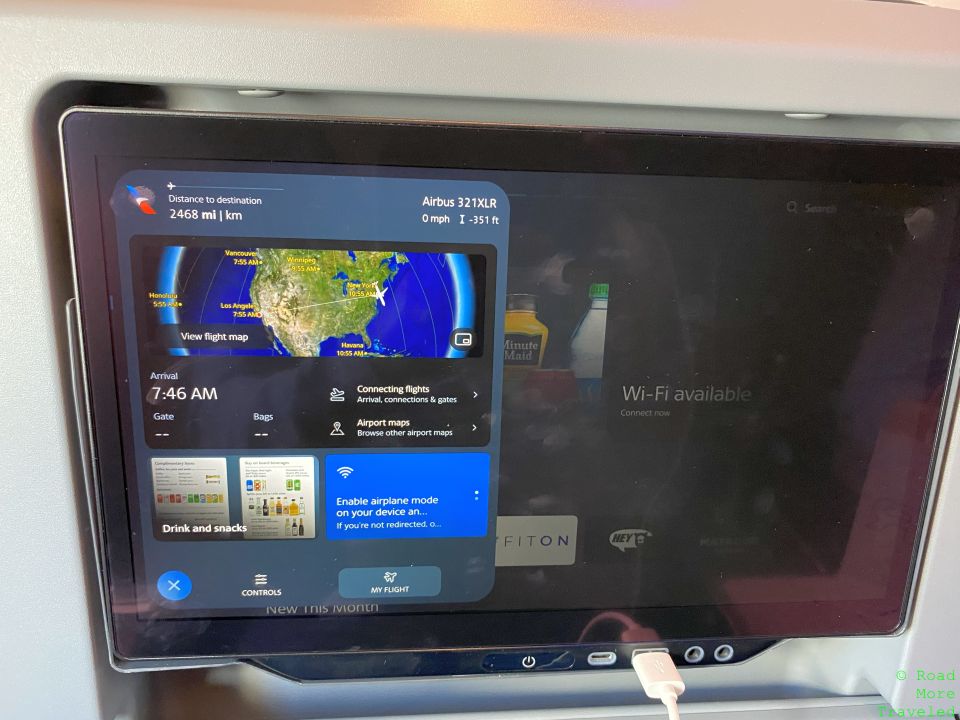
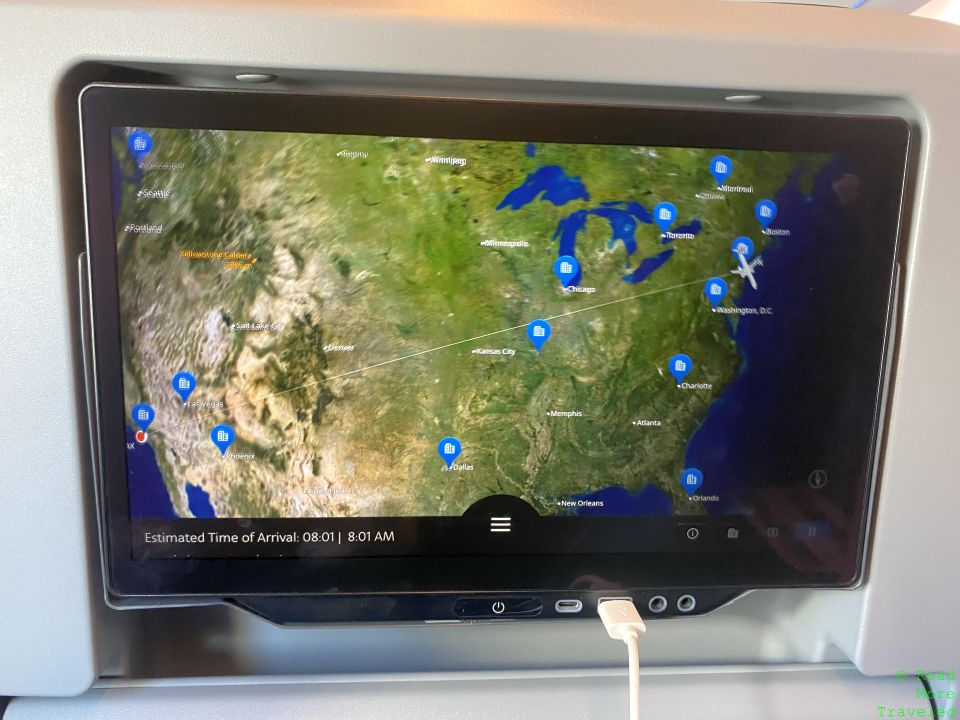
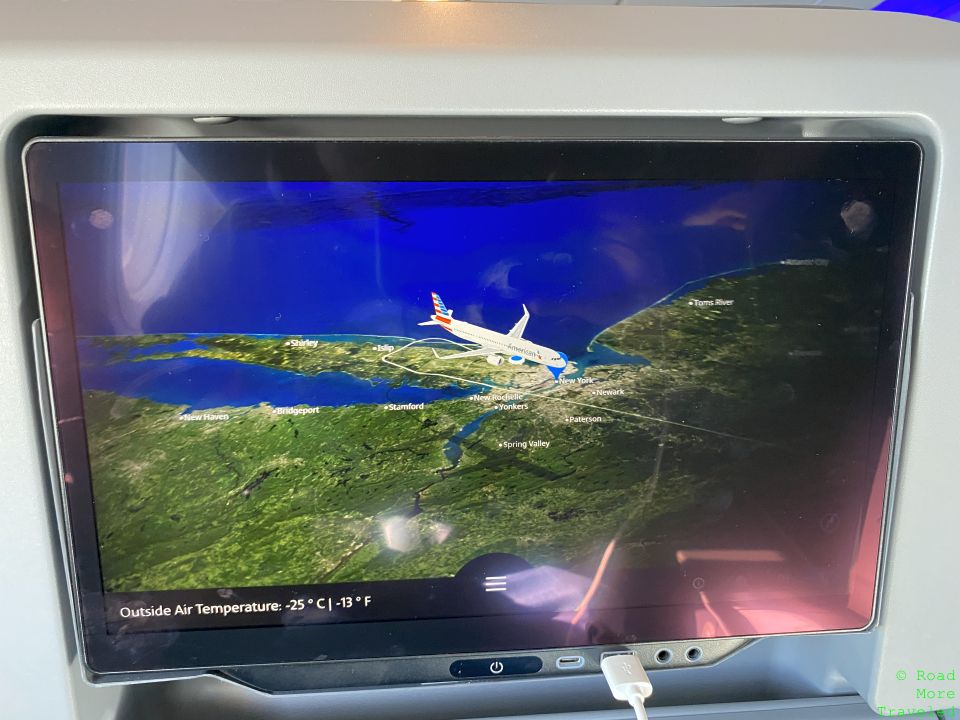
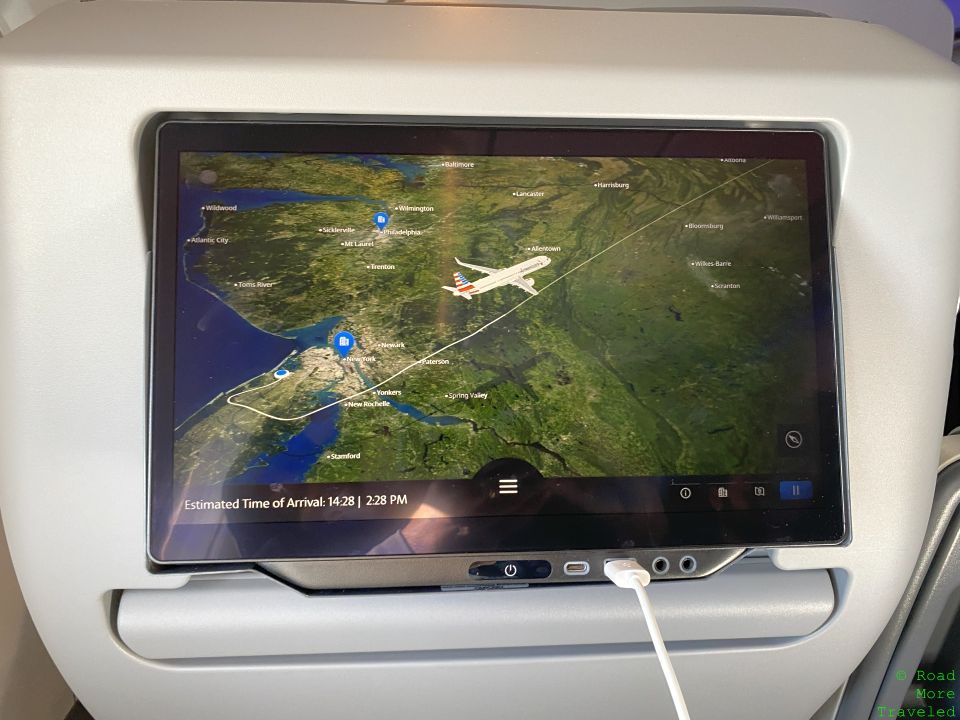
American A321XLR Premium Economy – Food, Beverage, Service, Flightseeing
Food & beverage service in Premium Economy follows a pretty standard Main Cabin protocol. About 40 minutes after takeoff, the FA offered a choice of chicken or a quinoa salad. I ordered the chicken, which was…surprisingly not bad. First, the bad – it was the exact same chicken with pesto sauce American’s been serving forever. But it wasn’t dry this time, and I found the plantains a nice bonus.

But after lunch service? Nothing until about an hour before landing, when the drink cart came back through again. In fact, the drink glass from my lunch remained on my armrest the entire time. I figured the FAs might be on their best behavior with a number of AA bigwigs onboard. But nope, they disappeared for a good 3 1/2 hours. Don’t get me wrong, the crew was courteous, but there’s little to distinguish the service from coach.
Beautiful weather most of the way made for some fine flightseeing, though. As we departed the gate, FDNY gave us a water cannon salute as we headed to the taxiway. (The captain gave everyone a heads-up before pushback. Smartly, he didn’t want any of the non-avgeeks to panic if they saw fire trucks spraying us with water.)

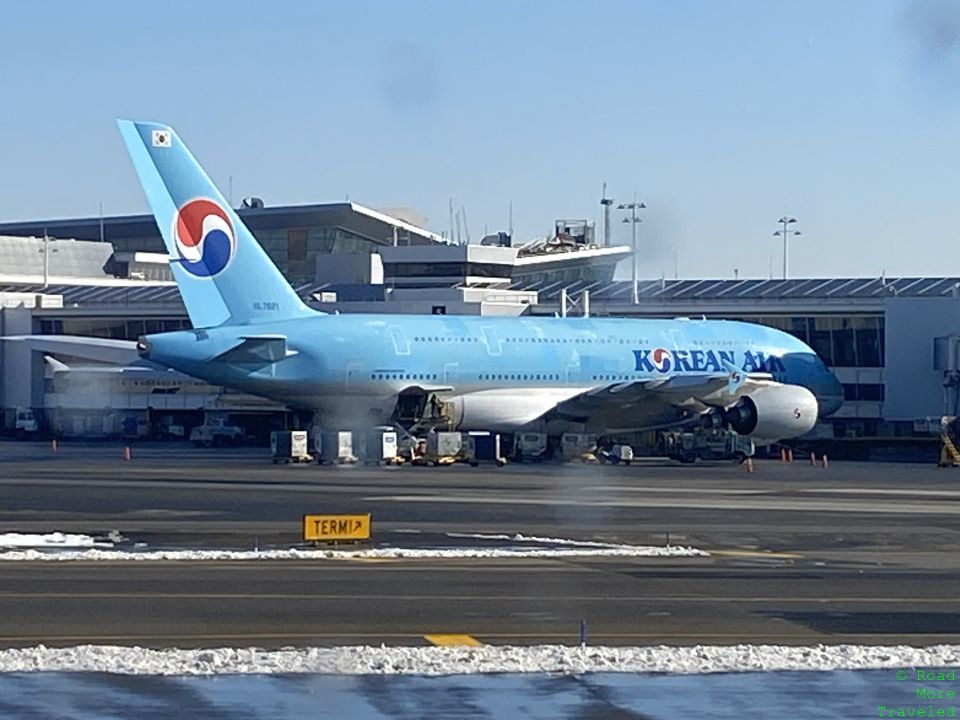
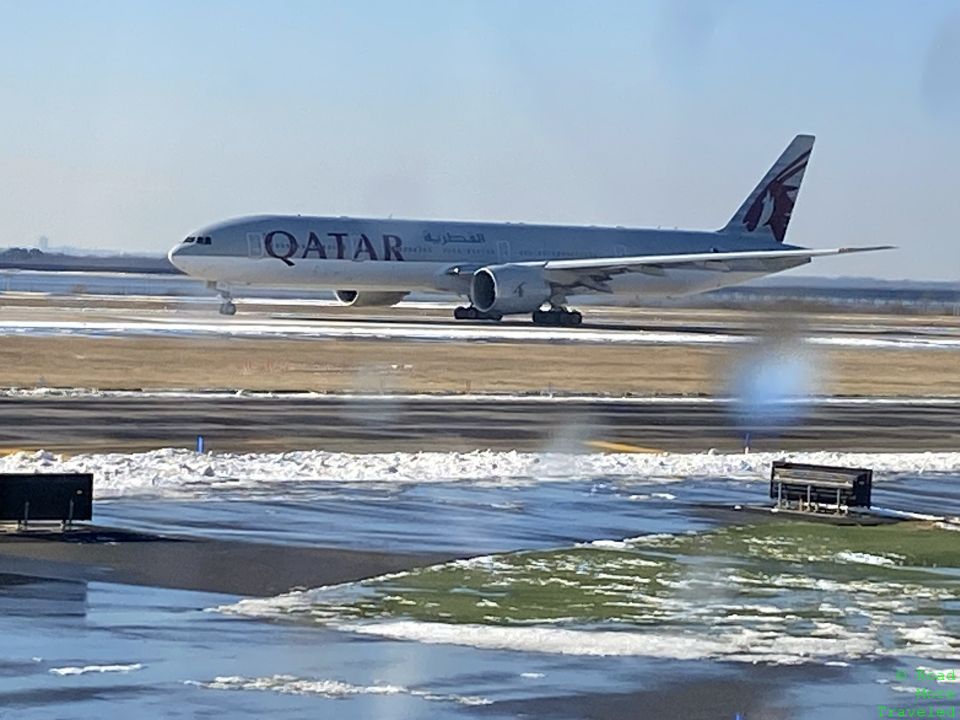
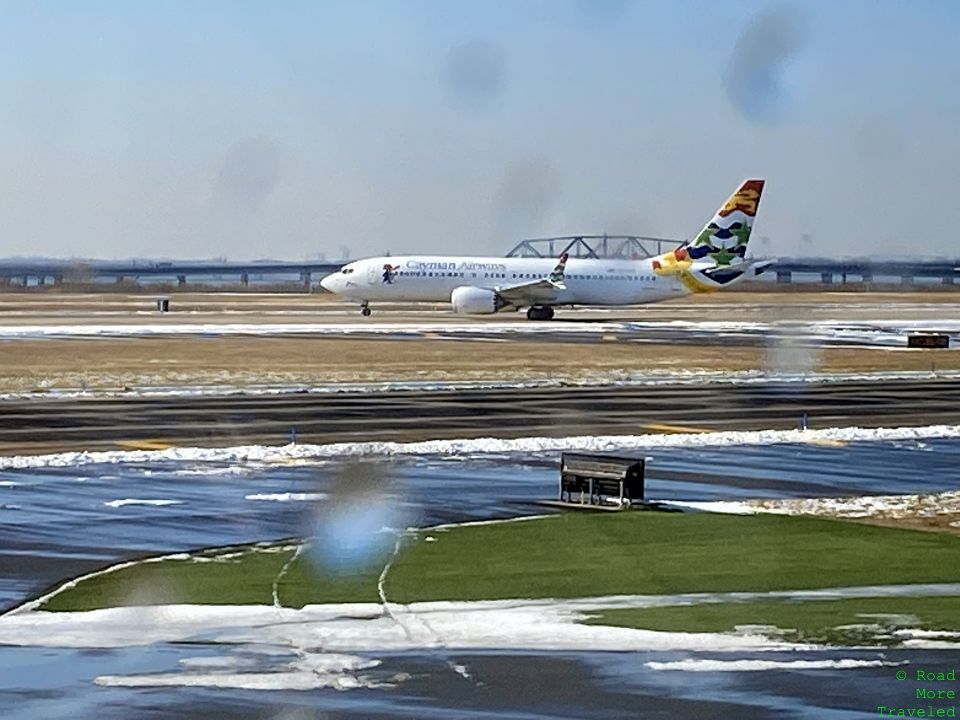
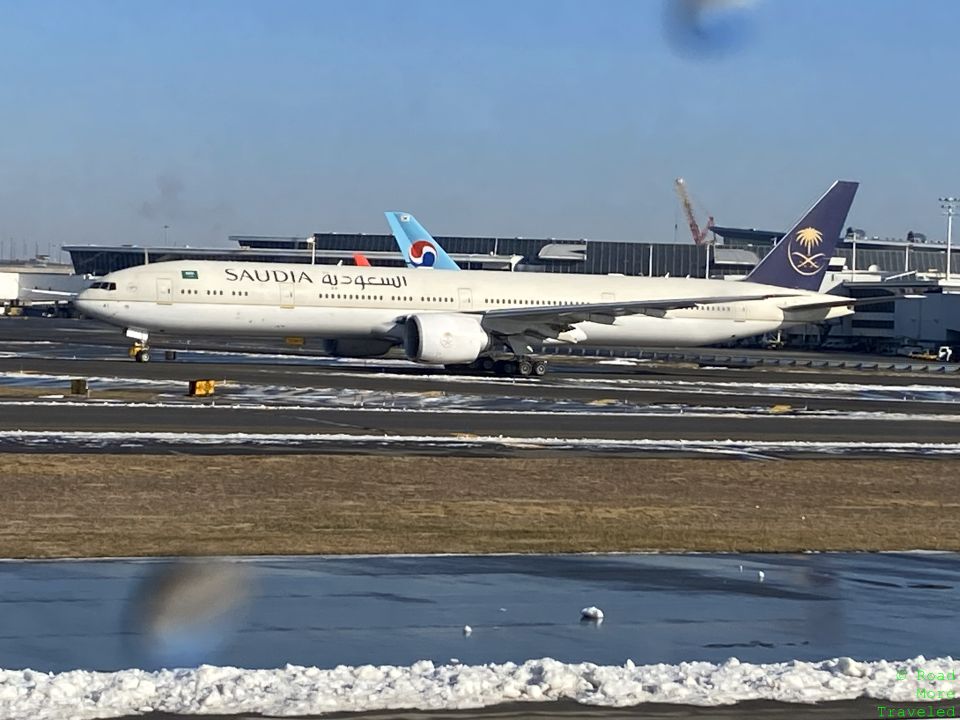

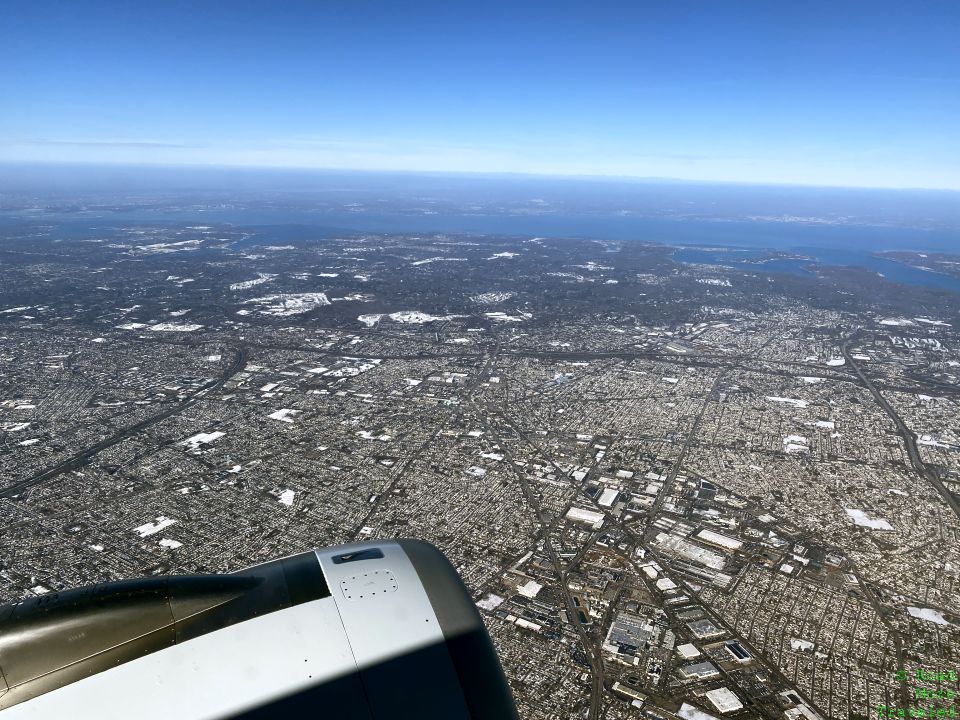

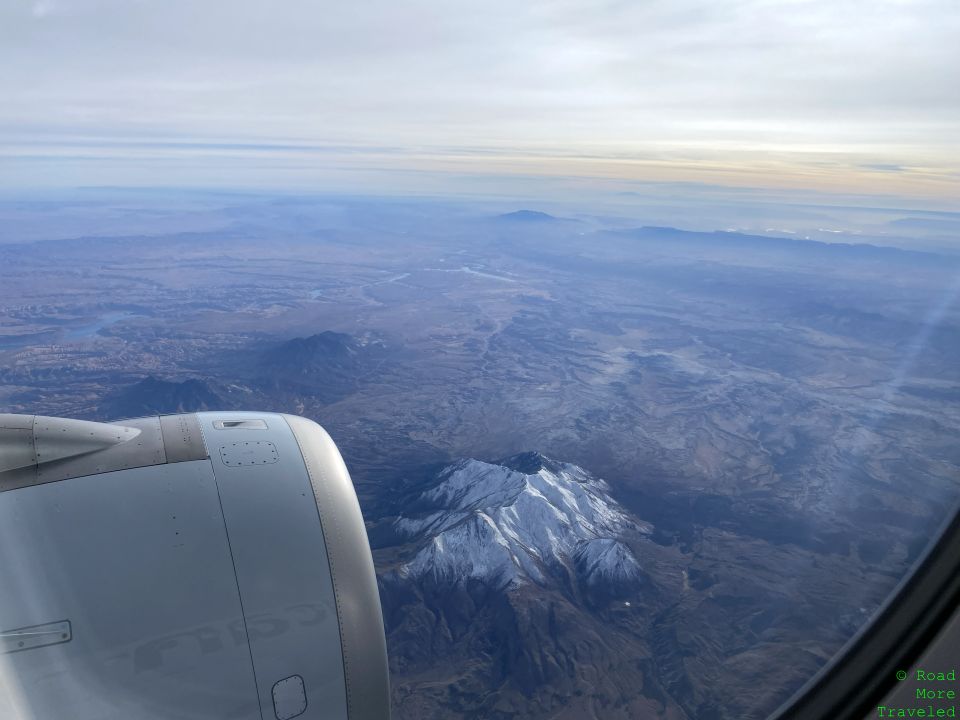




Fortunately, we had a short taxi in to the Tom Bradley terminal, and we arrived only about 20 minutes late. Plenty of time to grab something to eat, and still get a standby seat on an earlier flight back to Dallas. While walking over to Terminal 4, though, I grabbed one last photo of the spanking new XLR at the gate.
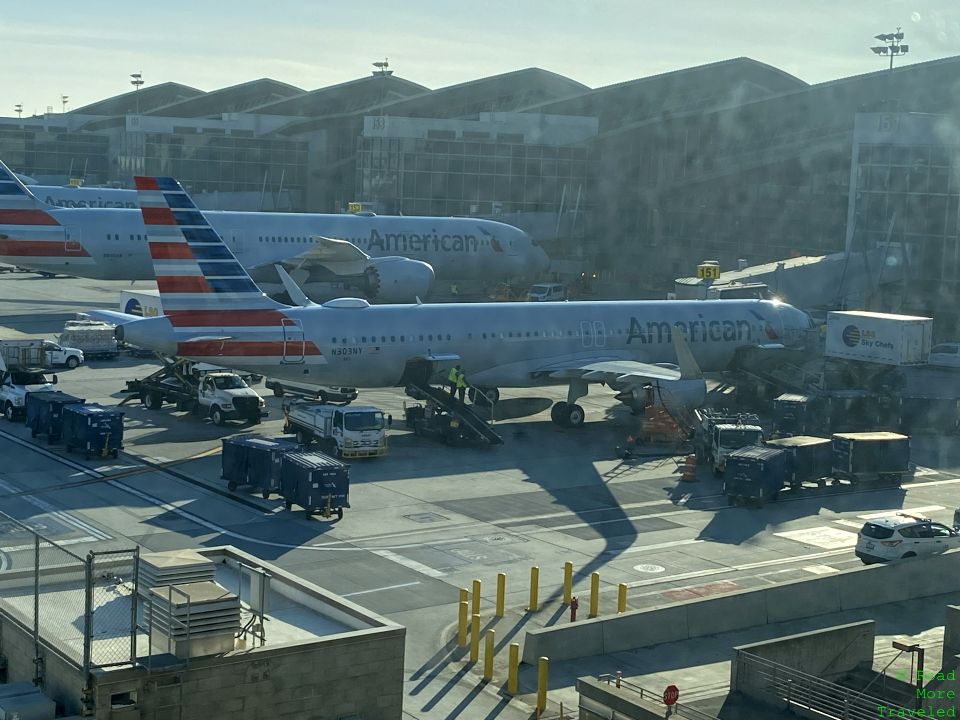
Final Thoughts
So what’s my final verdict on Premium Economy on the XLR? In terms of hard product, it’s good. The seat in particular more closely resembles a domestic First Class seat, rather than American’s current Premium Economy standard. But the price of admission seems really high here. The random weekday dates I posted above show a nearly $700 premium over Main Cabin (not Basic). On some dates, the premium is more like $900, which gets you within a few hundred dollars of Business. That’s a heavy price to pay for a domestic First seat with coach service.
Which is why I think American erred here with the lack of Main Cabin Extra seats. Personally, I don’t like exit rows even when traveling solo, so the choice is to either stay in the back or fork over an extra $800. That’s the whole point, I guess, though we’ll see how many takers American gets.
American A321XLR At A Glance
The A321XLR is a long-range narrowbody that Airbus designed to bridge the gap between short-haul regional jets and traditional widebody aircraft. American Airlines was the North American launch customer, and its configuration reflects an intent to deliver a genuine three-cabin experience on routes previously limited by range or economics. The table below captures the key specs for the Premium Economy cabin specifically.
| Spec | Detail |
|---|---|
| Aircraft | Airbus A321XLR (look for equipment code “32Q” that specifically says “Airbus A321XLR”) |
| Total seats | 155 (20 Flagship Suite / 12 Premium Economy / 123 Main Cabin) |
| Premium Economy seats | 12 Recaro R5 recliners, rows 11 to 13 |
| Cabin layout | 2-2 |
| Seat width | 21 inches |
| Seat pitch | 37 inches |
| Recline | Approximately 8 inches, with adjustable legrest and hanging footrest; not lie-flat |
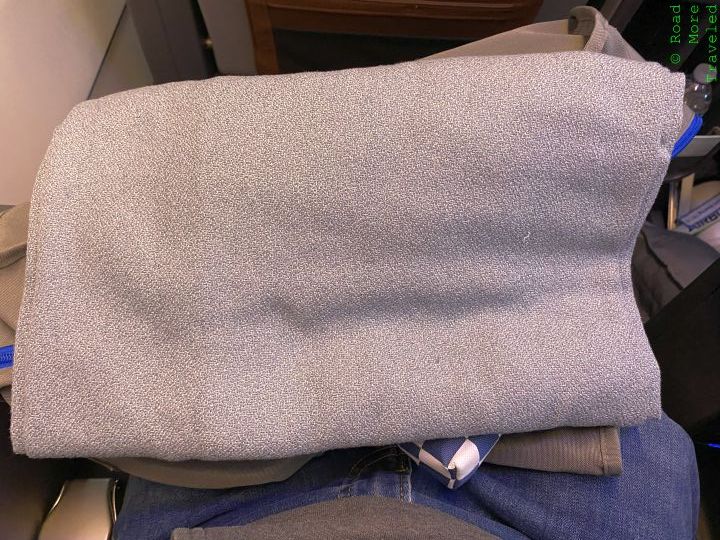
| Bedding | Winged pillow and blanket provided |
| Amenity kit | Brandon Blackwood checkerboard kit (earplugs, lip balm, face cream, dental kit, eye mask, socks) |
| Entertainment | 13.3-inch 4K touchscreen with Bluetooth pairing, international content library, moving map |
| Power | 110V AC outlet, USB-A and USB-C at seat, USB-C on IFE panel, wireless charging pad |
| Wi-Fi | Free for AAdvantage members (sponsored by AT&T, launched January 2026) |
| Main Cabin Extra | 12 seats, exit rows 14 and 15 only |
The A321XLR Cabin Layout
Understanding where the three cabins sit on the plane helps set realistic expectations before booking. The 155-seat configuration keeps all three products compact, which has consequences worth knowing about.
How The Three Cabins Are Arranged
Rows 1 through 10 hold the 20 Flagship Suite seats in a 1-1 herringbone arrangement that, despite the narrow fuselage, provides a lie-flat bed and a door on each suite. Rows 11 through 13 are Premium Economy, with 12 Recaro R5 recliners in a 2-2 configuration. Main Cabin starts at row 14 and runs through row 34. Those first two Main Cabin rows, seats 14 and 15, are the only Main Cabin Extra positions on the aircraft, meaning the jump from a standard Main Cabin seat straight to Premium Economy is a significant one and there is almost no middle ground for travelers who want extra legroom without paying the full Premium Economy premium.
Row 11 is the bulkhead row for Premium Economy. Passengers in row 11 use a screen mounted in the dividing wall rather than the standard 13.3-inch seatback screen. The bulkhead position also means no hanging footrest from the seat in front, though legroom is ample. Rows 12 and 13 benefit from the hanging footrest, which drops down from the seat directly ahead and adds meaningful comfort.
How To Confirm Your Flight Is On The A321XLR
American uses the equipment code “32Q” for multiple variants of the A321neo family, so the code alone is not a guarantee. Confirm that the aircraft description specifically reads “Airbus A321XLR” rather than just “Airbus A321.” The other reliable indicator is the presence of Flagship Suite as a booking class on the flight. Standard A321neo variants do not carry the Flagship Suite product, so if that cabin shows up in the booking flow, the XLR is almost certainly operating. Third-party tools like aerolopa.com publish the seat map for the 32Q (A321XLR) configuration and can confirm the layout before purchase.
American Airlines A321XLR Routes
American launched the A321XLR on December 18, 2025, with two daily departures between New York JFK and Los Angeles, making it the first US carrier to put the type into revenue service. The expansion schedule that followed is substantial. JFK-San Francisco service began May 7, 2026. Boston to Los Angeles launched July 2, 2026. On the international side, JFK-Edinburgh operates seasonally from March 8 through October 24, 2026, marking the aircraft’s first transatlantic crossing by any US airline.
American’s longer-term plan calls for the XLR to serve all premium transcontinental routes and a portfolio of thinner European routes where widebody economics would not make sense. The aircraft’s range of roughly 5,400 miles makes it well suited to secondary transatlantic city pairs that cannot fill a 787 or 777. Travelers planning to book the XLR on a specific flight should verify the equipment at booking and again closer to departure, since schedule changes can substitute a different A321 variant on shorter notice than widebody swaps.
Pros And Cons Of American A321XLR Premium Economy
The honest case for and against booking this product comes down to one core tension: the seat is better than anything else in US premium economy, and the experience surrounding the seat is not.
What Works
- Seat width is genuinely market-leading. At 21 inches, the Recaro R5 is noticeably wider than the 18.5-to-18.7-inch seats in Delta Premium Select and United Premium Plus, and wider still than American’s own legacy premium economy product on widebodies.
- The footprint reads like domestic First Class. Thirty-seven inches of pitch and roughly 8 inches of recline put the seat in the same ballpark as many US domestic first class seats, which is a meaningful upgrade over the typical premium economy recliner.
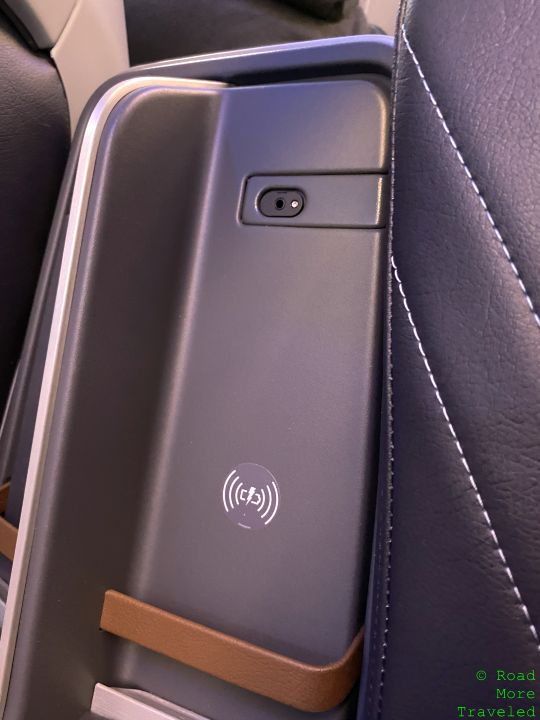
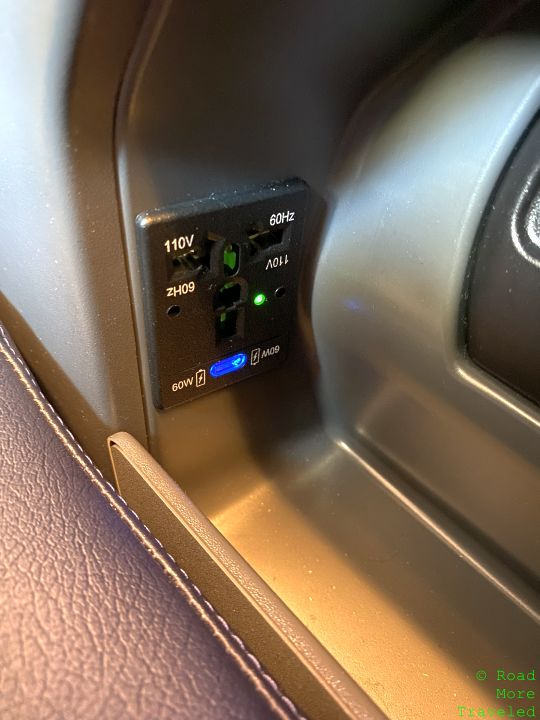
- Power is genuinely comprehensive. A 110V AC outlet, USB-A, USB-C at the seat, a second USB-C on the IFE panel, and a wireless charging pad mean there is no shortage of charging options for a full travel day.
- The 13.3-inch 4K screen with Bluetooth is a step up from domestic streaming. The full international content library and moving map are a material improvement over the BYOD system on most US domestic flights.
- Wi-Fi is free for AAdvantage members. Following American’s January 2026 launch of complimentary Wi-Fi sponsored by AT&T, AAdvantage members can connect without paying extra.
- A real amenity kit is included. The Brandon Blackwood kit with skincare, socks, and an eye mask is a thoughtful touch that most domestic products skip entirely.
What Does Not Work
- Service follows the Main Cabin playbook. One meal service and then a long gap before landing is standard here, which is a mismatch with a seat that looks premium and costs a premium.
- The transcon price premium is steep. Premium Economy typically runs $700 to $900 above a Main Cabin fare on transcontinental routes, which in many cases brings the total within a few hundred dollars of Flagship Business.
- Main Cabin Extra is almost nonexistent. Only 12 MCE seats, all at the exit rows, mean travelers who want extra legroom without the full Premium Economy price have very little to choose from.
- The seat is not lie-flat. For overnight or redeye flying, the recliner position and the compact winged pillow limit how comfortable true sleep will be.
- The legrest and footrest require some practice to stow. Both have two-step retraction mechanisms that are not intuitive under time pressure during descent.
Is American A321XLR Premium Economy Worth It?
The seat itself is the best hard product in US premium economy right now, and that is not a close call. The 21-inch width beats every domestic and transcon competitor, and the 37-inch pitch with a proper legrest and footrest produces a daytime comfort level that American’s legacy widebody premium economy and both Delta and United’s comparable products struggle to match. For travelers who genuinely value more space during a six-plus-hour flight and plan to sit upright, read, or work, the seat earns its premium over Main Cabin in a way that many domestic First Class upgrades do not.
The honest limitation is everything above the seat. Service is not differentiated from Main Cabin in a meaningful way, which means the price of the ticket buys hardware, not hospitality. On a transcon route where Flagship Business can run $200 to $400 more than Premium Economy, the economics become genuinely hard to justify. A lie-flat bed, a full meal service, and a dedicated cabin crew represent a significant quality gap for a relatively modest additional cost when the fares line up that way.
Premium Economy makes the most financial sense in three scenarios: when the fare gap over Main Cabin drops below $400 or so, when award pricing makes it bookable at a reasonable miles cost through AAdvantage, or when the aircraft flies longer transatlantic routes where six or more hours in a recliner starts to feel genuinely different from a standard economy seat. On a domestic transcon at full fare with Business close in price, the calculus is considerably less favorable. Travelers who prioritize sleep over daytime comfort should consider whether the Flagship Suite, at its current transcon pricing, is worth closing that gap entirely.
Frequently Asked Questions
How Many Premium Economy Seats Are On The American A321XLR?
Twelve. The A321XLR carries just 12 Premium Economy Recaro R5 recliners in a 2-2 layout across rows 11 to 13. That is part of a 155-seat configuration that also includes 20 Flagship Suite seats and 123 Main Cabin seats, with only 12 Main Cabin Extra positions at the exit rows.
What Are The Seat Width And Pitch In A321XLR Premium Economy?
The Recaro R5 recliners in Premium Economy measure 21 inches wide with 37 inches of pitch and approximately 8 inches of recline. The width is the standout figure, beating the 18.5-to-18.7-inch seats in Delta Premium Select and United Premium Plus by a clear margin.
Does The A321XLR Premium Economy Seat Lie Flat?
No. The seat is a recliner with a legrest and a hanging footrest in rows 12 and 13. It is comparable in feel to a domestic US First Class seat and is comfortable for daytime flying, but it does not convert to a flat bed. For a lie-flat option on this aircraft, Flagship Suite in the front cabin is the only choice.
Is American A321XLR Premium Economy Worth It?
The seat hardware is the best in US premium economy by a clear margin, but service follows Main Cabin protocol and the transcon price premium can run $700 to $900 above a standard Main Cabin fare. It is most worth it when the gap over Main Cabin is modest, when booked with AAdvantage miles, or on longer transatlantic routes where the extra space earns its keep over a longer flight. At full transcon price with Flagship Business within a few hundred dollars, the value case is harder to make.
What Routes Does The American A321XLR Fly?
As of mid-2026, American operates the A321XLR on four routes: JFK to Los Angeles (launched December 2025), JFK to San Francisco (from May 2026), Boston to Los Angeles (from July 2026), and JFK to Edinburgh seasonally from March through October 2026. American plans to expand the aircraft to additional premium transcon and thinner European routes over time.
How Can You Tell If Your Flight Is On The A321XLR?
Look for the “32Q” equipment code in American’s booking system, but confirm the description specifically reads “Airbus A321XLR” rather than just “Airbus A321,” since American uses 32Q for multiple A321neo variants. The clearest indicator is that Flagship Suite appears as a booking option on the flight. Standard A321neo variants do not carry the Flagship Suite product, so its presence in the booking flow is a reliable confirmation.