

Caracas blasts and US-linked strike claims prompt flight restrictions and cruise itinerary nerves from Venezuela to Colombia and the ABC islands.
This is a developing story, not all facts or outcomes can be verified beyond the sources indicated in this post.
US Attacks Venezuela
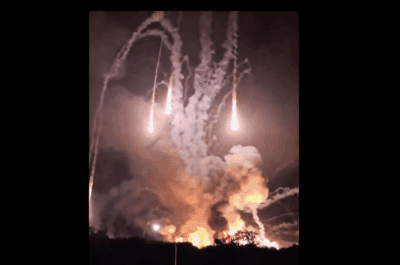
Early Saturday morning, January 3, 2026, Caracas residents reported a rapid series of loud explosions, low-flying aircraft, smoke plumes, and power outages in parts of the capital near key military areas. Venezuelan officials blamed the United States, while a US official told Reuters that the US carried out strikes inside Venezuela.Videos found on social media showed a view inside Caracas, Venezuela and beyond.
🚨🇻🇪🇺🇸 U.S. STRIKES HIT VENEZUELAN AIR FORCE HQ – MASSIVE EXPLOSIONS REPORTED
Strikes have reportedly targeted El Libertador Air Base, the headquarters of the Venezuelan Air Force, in Maracay.
Major secondary explosions have also been reported following a U.S. airstrike near… https://t.co/Ev4swcPjSEpic.twitter.com/WNOX5OEQei
— Mario Nawfal (@MarioNawfal) January 3, 2026
Venezuela’s government said attacks also hit nearby states including Miranda, Aragua, and La Guaira, and Venezuelan President Nicolás Maduro announced emergency measures while ordering defense plans into motion.
On the US side, spokespeople for the Trump Administration did not immediately provide a public on-the-record explanation in the early reporting window, and the Pentagon referred questions back to the White House in multiple accounts.President Donald Trump has stated in recent weeks that targeted operations on boats in the Caribbean were carrying drugs. There’s been a significant military buildup in the Caribbean Sea beginning with the boat strikes but now culminating in the actions early this morning.
🇻🇪‼️ — URGENTE: El 160º Regimiento de Aviación de Operaciones Especiales (SOAR), parte de las Fuerzas Especiales de los Estados Unidos, parecen estar realizando una misión en Fuerte Tiuna.
Posible lugar de escondite de Nicolas Maduro o Diosdado Cabello. pic.twitter.com/BM4rk88ZQi
— Agustín Antonetti (@agusantonetti) January 3, 2026
‼️ 🇺🇸💥🇻🇪 BREAKING: Initial reports indicate that the US Marine Corps has launched an amphibious assault operation north of Caracas. Further details are still emerging. pic.twitter.com/FfHcW2t4O2
— Defense Intelligence (@DI313_) January 3, 2026
The Broader Arc: From Pressure Campaign To Kinetic Night
This did not appear out of thin air. Reuters and CBS describe a months-long escalation that included US military assets in the region, maritime enforcement actions tied to alleged drug trafficking, and increasing pressure on Maduro’s government.
Internationally, Colombia’s President Gustavo Petro publicly pushed for emergency multilateral engagement after the strikes were reported, underscoring just how quickly this could spill into a regional diplomatic crisis.Coincidentally, this comes after recent comments from Maduro stating that all of the cocaine trafficked through Venezuela is from Colombia.
🚨 Venezuela’s President Maduro throws Gustavo Petro’s Colombia under the bus: All the cocaine trafficked in our region is produced in Colombia. All of it. All the cocaine. We are victims of Colombian drug trafficking, not just today, but for several decades. pic.twitter.com/RPaitb5XFJ
— Raylan Givens (@JewishWarrior13) January 2, 2026
Chinese officials were recently in Venezuela as part of scheduled BRICS talks. At the time of writing it’s unclear as to whether those Chinese officials remained in Venezuela or departed before the military activity began.
JUST IN: 🇨🇳🇻🇪 Chinese officials arrive in Venezuela for talks with President Nicolás Maduro. pic.twitter.com/abviFRZV3f
— BRICS News (@BRICSinfo) January 3, 2026
The Venezuelan government has declared a state of emergency and indicated it will invoke UN articles in its own national defense but did not highlight any elements of its response. Skeptics of the initial operations doubted the veracity that actions were solely for the US to combat drug trade, and many inside the US government have challenged the legality of those actions and will undoubtedly challenge the current escalation.
Travel And Tourism: Air, Land, And Sea All Get Nervous At Once
When military activity moves from rhetoric to reports of aircraft overhead and explosions, travel friction follows. Sometimes it is immediate (airspace restrictions). Sometimes it is the slow grind of “out of an abundance of caution” decisions that quietly shrink schedules and reroute ships.
Air: Overflights And Caribbean Routings Tighten
The clearest travel impact so far is aviation related. The FAA prohibited US commercial carriers from operating at all altitudes over Venezuela, citing safety-of-flight risks tied to ongoing military activity. AP also reports the FAA warning extended to the airspace over Curaçao, which matters because Curaçao sits just off Venezuela’s coast and is part of the ABC islands orbit for both flights and cruises.
“As the U.S. carries out strikes in Venezuela, the Federal Aviation Administration prohibited U.S. commercial air carriers from operating at all altitudes over Venezuela, citing “safety-of-flight risks associated with ongoing military activity.”
The notice was issued at 2 a.m. local time in Caracas (1 a.m. Eastern) on Saturday, and was set to end at 1 a.m. Caracas time on Sunday.
The order does not apply to foreign or military aircraft.” – CBS News
Even if you are not flying to Venezuela, losing a chunk of airspace can create ripple effects: detours, longer block times, and re-optimized schedules for carriers moving between North America, the Caribbean, and northern South America. You may not “feel” it as a traveler unless it stacks into missed connections, but airlines definitely feel it in fuel and time.
Land: Borders And Border Regions Are The First To Get Sticky
For overland movement, the immediate practical point is that the Colombia–Venezuela border region already carries elevated risk guidance in official travel advisories, and any fresh instability raises the odds of tightened controls, disrupted crossings, or simply fewer people choosing to move around near the frontier.
Sea: Cruises Get Conservative, Fast, Especially Near The ABC Islands
Cruise lines do not like uncertainty. Not because they panic, but because rerouting a floating city is easier than dealing with a security surprise.
We already have a recent clue about how the industry behaves around Venezuela-adjacent itineraries. In December 2025, reporting on itinerary changes described Norwegian ships dropping Curaçao calls, citing reasons like “naval exercises” and port availability changes. Local reporting in the Kingdom of the Netherlands press also tied cruise-call uncertainty to rising US–Venezuela tensions, while noting officials said there was no immediate threat to Aruba, Bonaire, and Curaçao.
Now layer that against a headline night of explosions in Caracas plus an FAA action that explicitly flags Curaçao airspace, and it is easy to see why travelers heading for the southern Caribbean are suddenly refreshing their inboxes.
What I’m Watching Next As A Traveler, Travel Agency Owner
First, whether airlines publish broader operational advisories beyond the FAA’s restriction, especially for connections that normally clip Venezuelan airspace. Second, whether cruise lines preemptively “shuffle” southern Caribbean port calls, particularly anything that runs near Venezuela’s coastline or relies on the ABC islands in tight sequence.
Third, watch Colombia. It is not that Colombia suddenly becomes unsafe as a whole. It is that regional posture changes(diplomatic, military, or border) can create localized disruption that affects tourism gateways, including cruise calls on Colombia’s Caribbean side, depending on how the next several days unfold.
We have clients, friends, and family throughout the region currently, and extending over the next few weeks and months. My family intends to visit the southern Caribbean within the next two months as well. We are watching the news, exercising caution, and should circumstances extend or expand, rerouting or cancelling itineraries.
Conclusion
Caracas waking up to explosions is not just a breaking-news moment, it is the kind of event that compresses decision-making across the travel ecosystem. With Reuters reporting a US official confirming strikes, Venezuela declaring emergency measures, and the FAA restricting US flights over Venezuela and even flagging Curaçao airspace, the region is now in the phase where schedules get rewritten quietly and movement gets a little harder around the edges. If you are booked to the ABC islands, transiting northern South America, or cruising southern Caribbean routes that touch Colombia, this is the week to expect detours, substitutions, and more cautious operations until the picture sharpens.Our thoughts are with those affected by the events.