

To cap off our trip to India and Korea, I decided to give my son a legitimate avgeek experience. At the time, Asiana operated the A380 on the Seoul to Los Angeles route. And so I took advantage of the chance to let my son experience the upper deck of an airplane. Asiana Airlines A380 Business Class seems pretty dated at this point, though still a comfortable ride on a long flight. After expending all my miles to get to India, I paid cash to the tune of $2,655 each. The last time I flew Asiana long-haul in Business Class was way back in 2007, and I was curious how it would compare.
Note: this post is part of my trip report series covering our family’s trip to India and Korea in July, 2025. Click here for the trip report index and introductory post.
Also see: Scott’s review from 2018; the product hasn’t changed very much in the interim.
Asiana Airlines (OZ) Flight 202
- Tuesday, July 22, 2025
- Depart: Seoul Incheon International Airport (ICN), Terminal 1, Gate 10, 15:10, 30m late
- Arrive: Los Angeles International Airport (LAX), Terminal TBIT, Gate 150, 11:13, 53m late
- Duration: 12 hours 3 minutes
- Seats: 16A, 16E, 16F
- Equipment: Airbus A380-800
Check-In and Boarding
Our airport transfer dropped us off around 11:15, giving us plenty of time to get situated. Asiana does offer a dedicated premium check-in area for Business Class and elite status passengers in Zone A. There’s nothing overly fancy about it, but it does offer a quiet space to get checked in, along with a few seats. Unlike some premium check-in offerings, though, there is no dedicated security or immigration line. You simply return to the main hall and join the regular queue once you’re done.
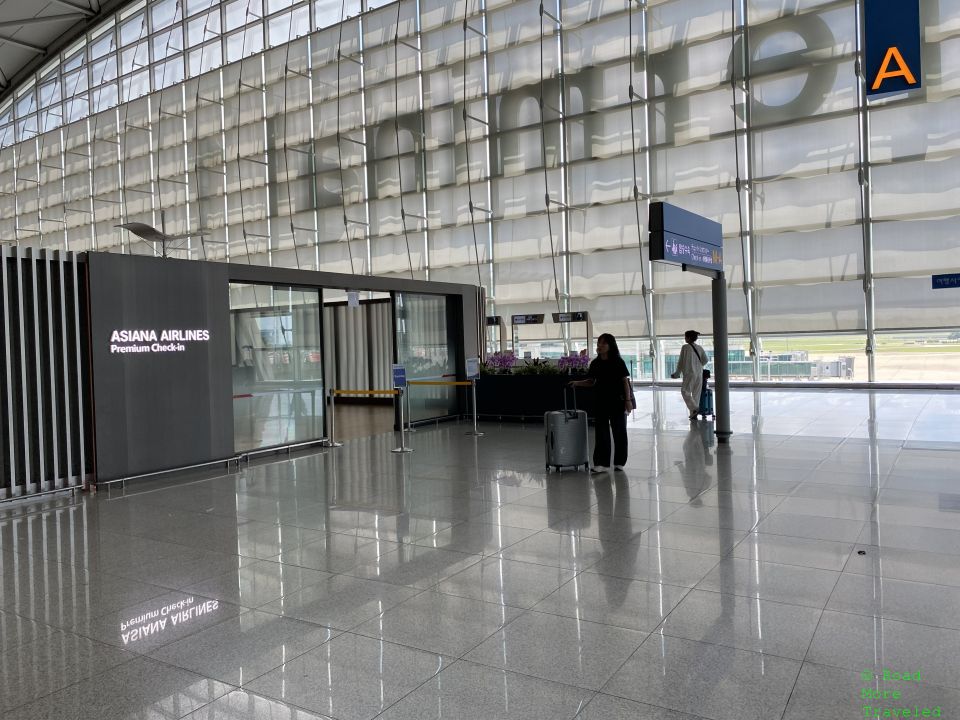
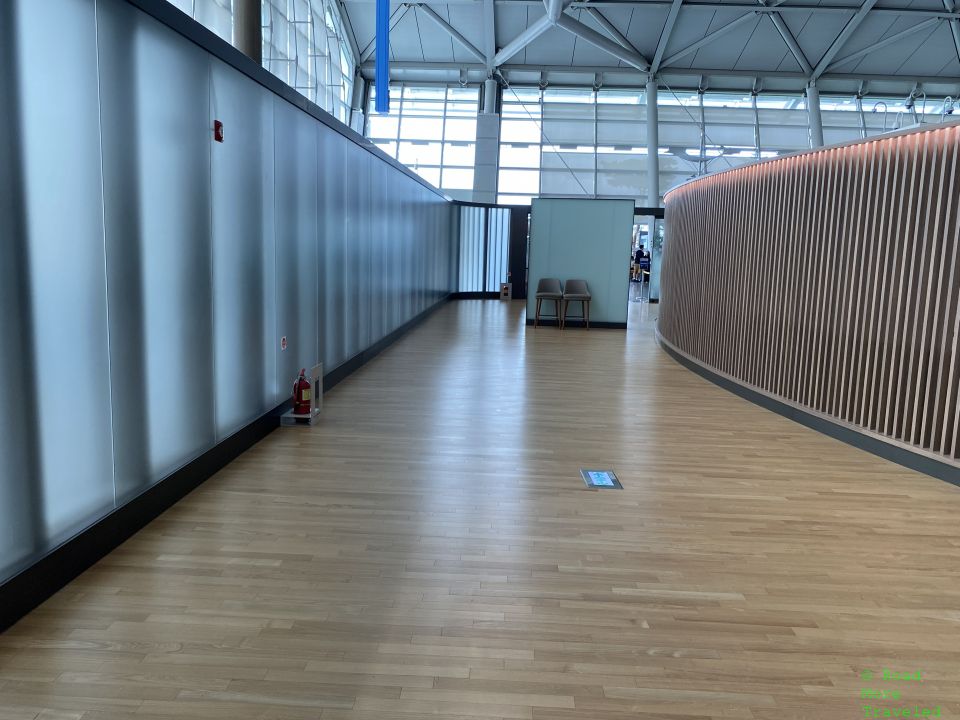
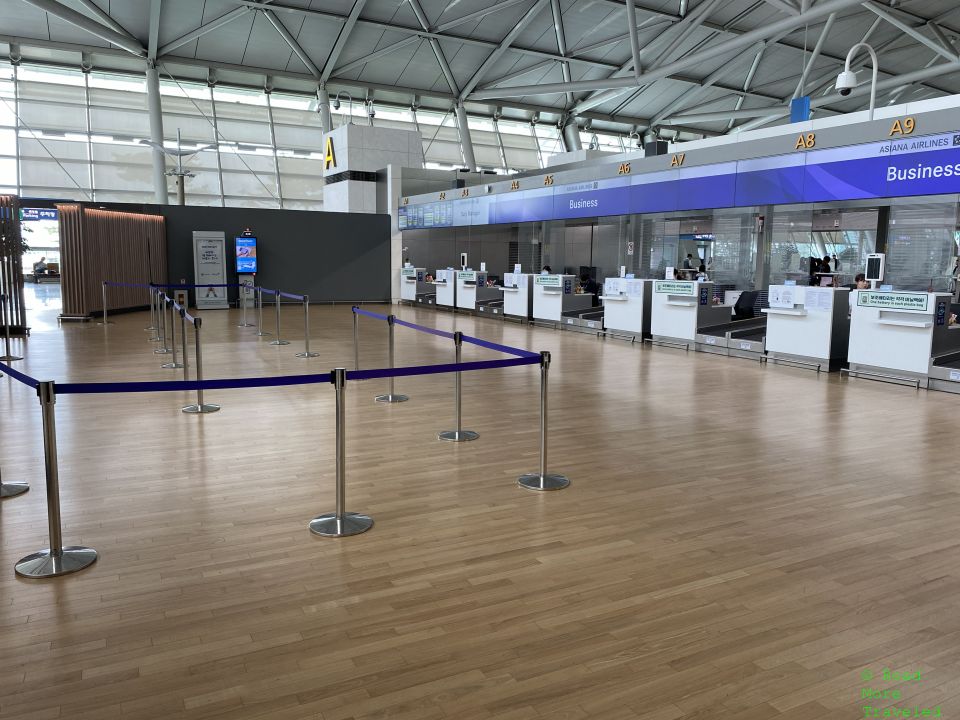
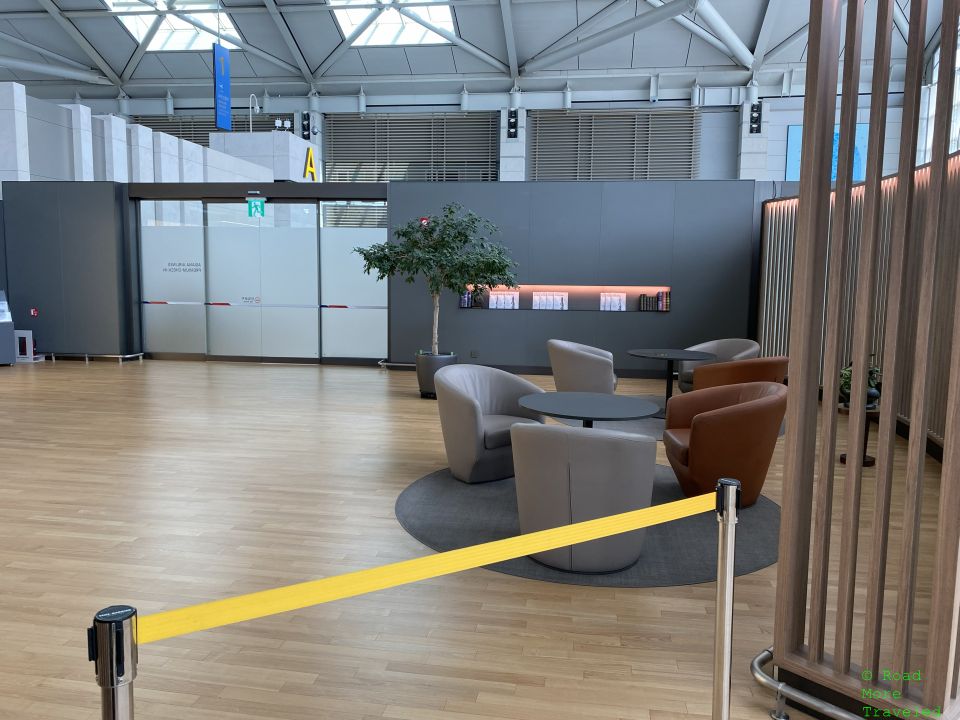
We were literally the only ones in line at the time, so check-in only took a minute or so. Security and immigration were likewise deserted, and we made it to the other side in about 10 minutes.
After enjoying some time in Asiana Business East lounge, we headed to the gate about 10 minutes before scheduled boarding. Unfortunately, boarding ended up starting quite late, leading to a 30-minute departure delay. Once boarding commenced, we headed on board with the rest of business class to our seats upstairs.
Asiana Airlines Airbus A380 Business Class – Seating and Interior
Note that this review covers standard Business Class on the A380, not “Business Class Suites”. Those seats on the lower deck represent Asiana’s former First Class cabin. While I thought about booking the suites, the price premium ($700-850 each) seemed too steep. That and I thought my son would enjoy the upper deck more.
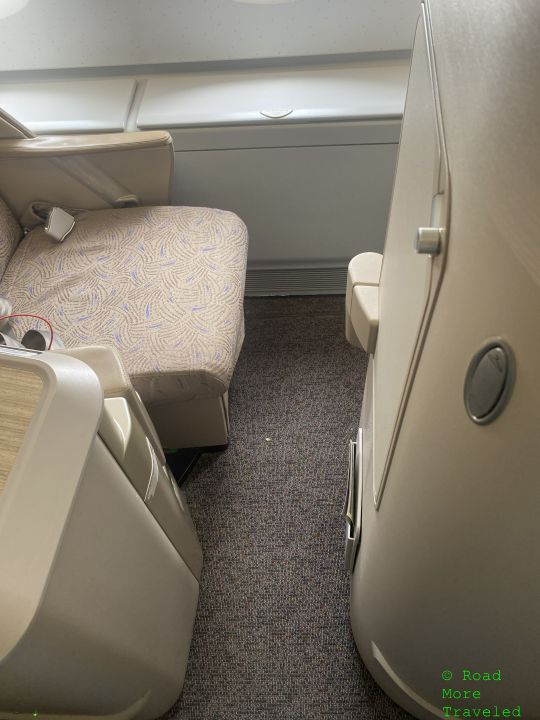
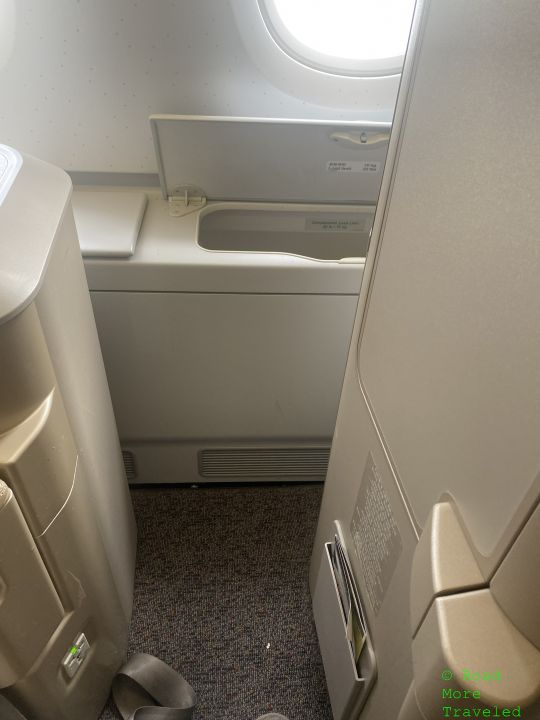
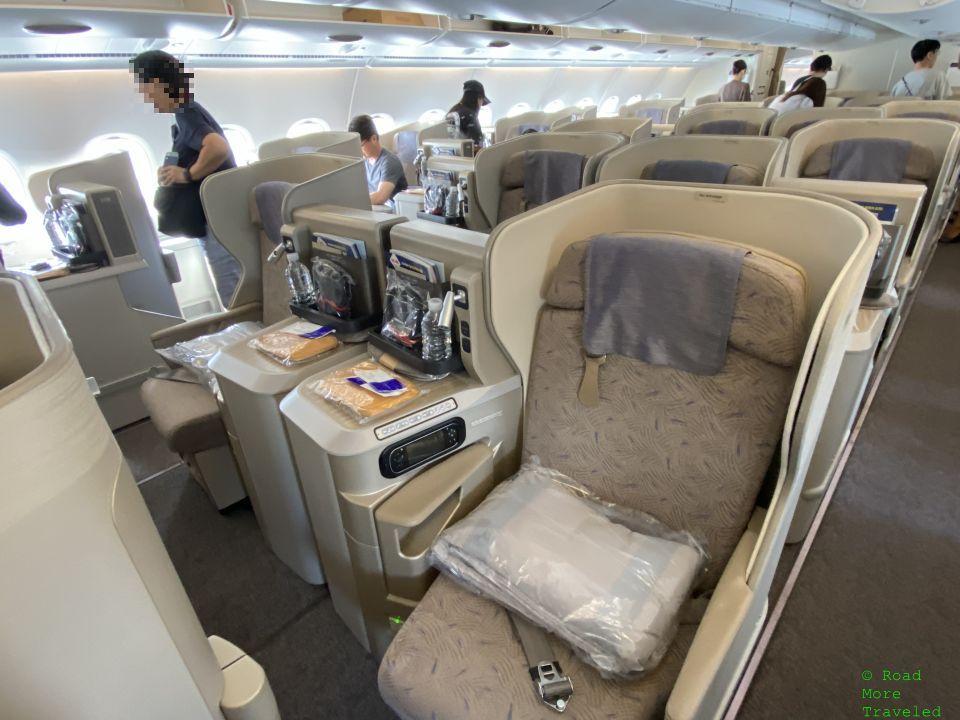
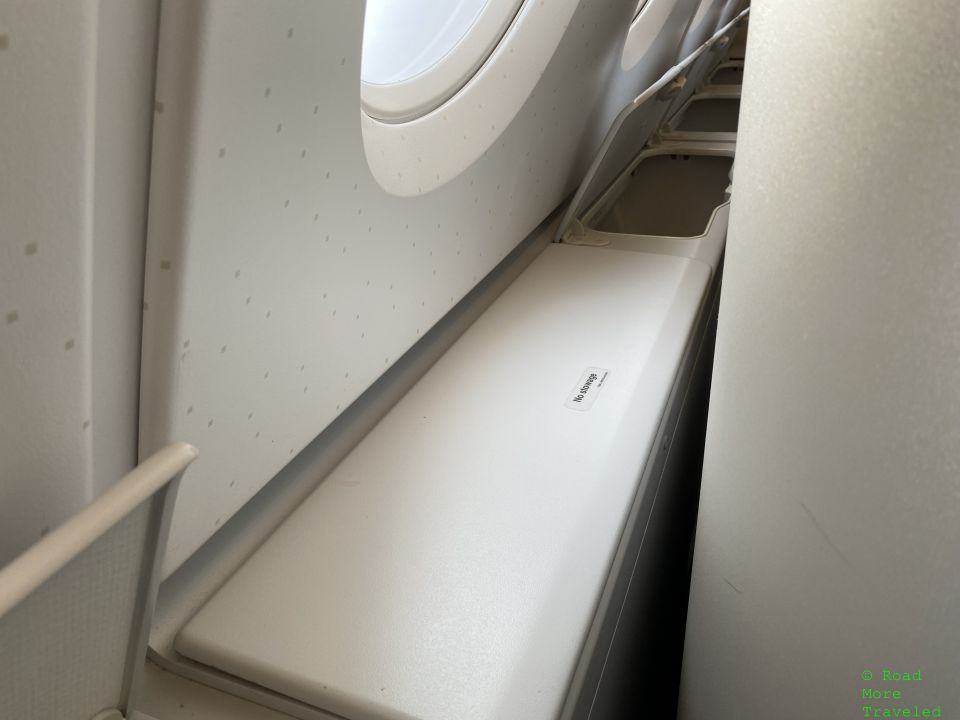
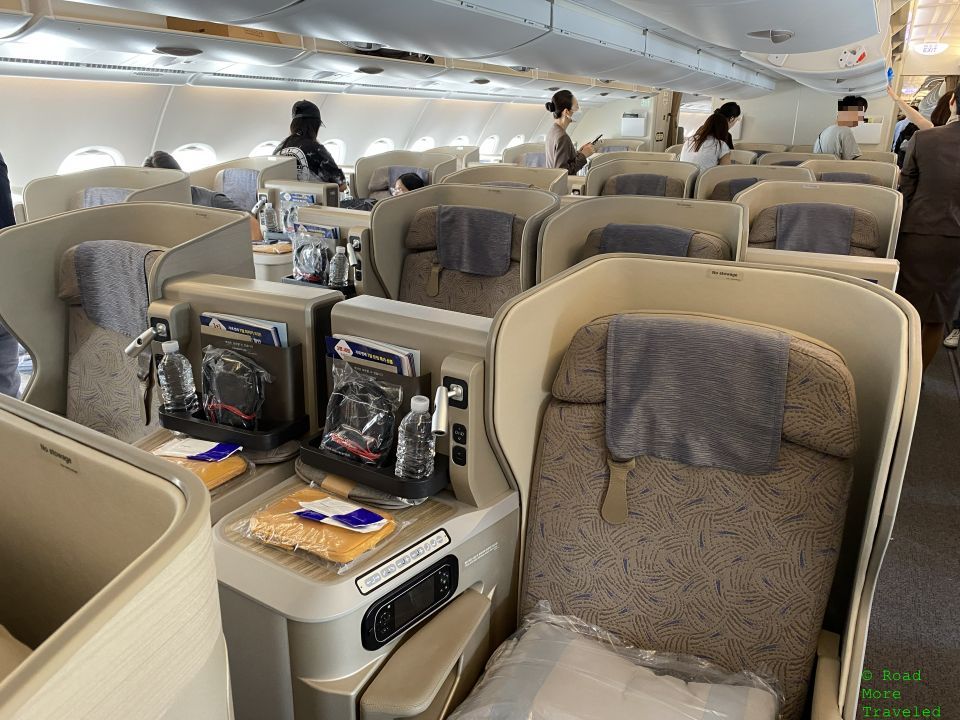
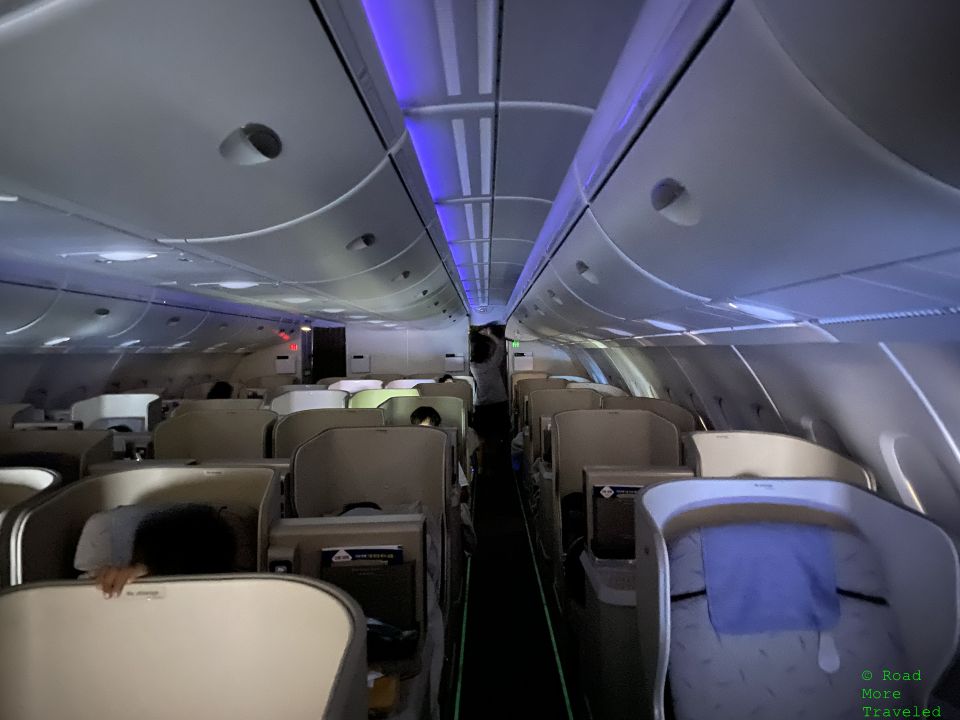
Anyway, Asiana’s standard Business Class consists of 66 Stelia Solstys seats (called “Business Smartium”) arranged in a staggered 1-2-1 configuration. It’s quite a large cabin, covering 16 rows spread across two mini-cabins. Row 16 is the third full row in the second mini-cabin, behind the galley. The seats measure 20″ wide, and fold into a 76″ long flat bed. Due to the staggered configuration, odd-numbered rows in the second mini-cabin are “true” window seats, whereas even numbered rows sit along the aisle with extra storage at the window. In the front mini-cabin, the setup is reversed. Even-numbered rows are true window seats, with odd rows angled towards the aisle.
I don’t love the design of the offset window seats. While you do receive extra storage, the armrest isn’t flush with the window-side storage compartment. Thus, you don’t really have the benefit of an oversized storage area, such as in Delta’s A330-900neo suite.
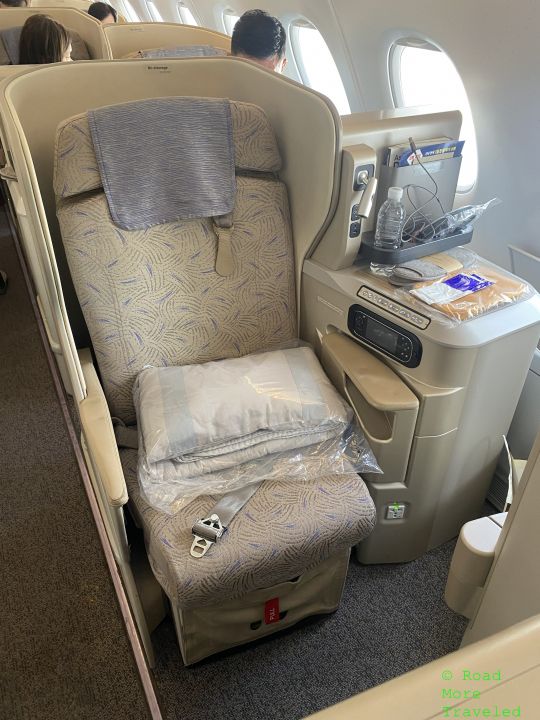
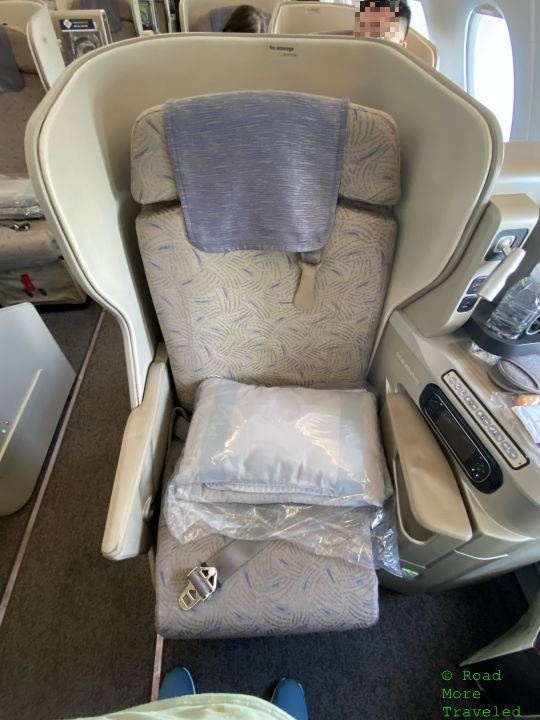
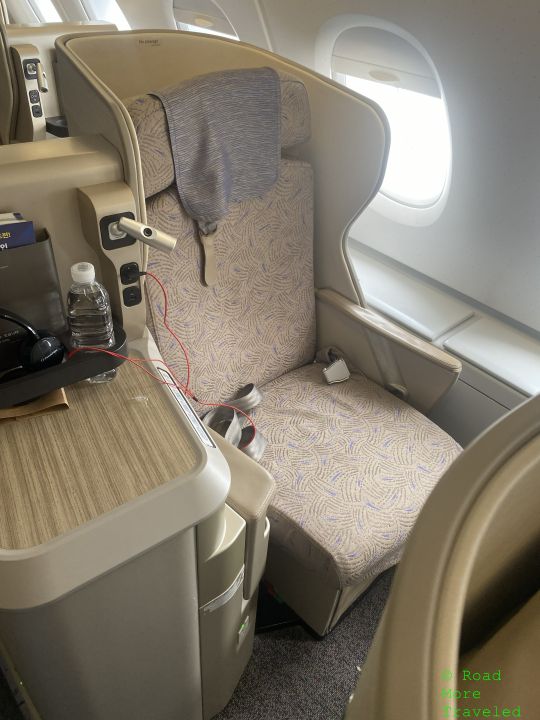
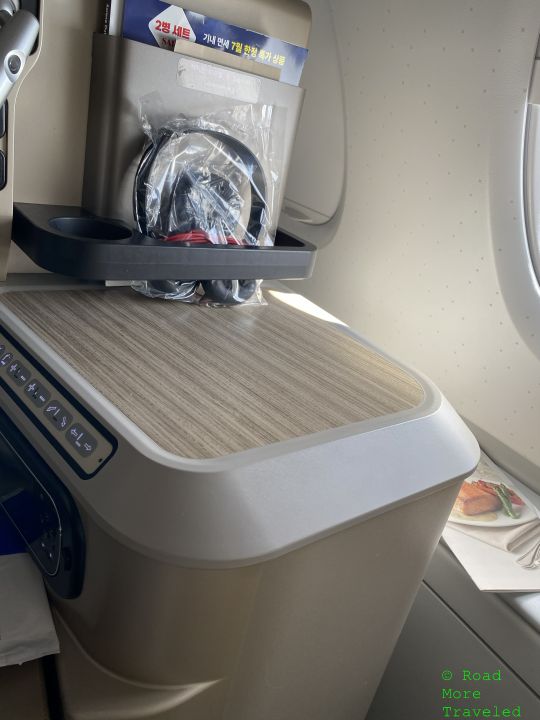
I also found egress to the window seats a little tight, in both the regular and offset window rows.
Meanwhile, center seats alternate between “honeymoon” seats, and seats along the aisle. The honeymoon seats are decent enough for couples or families traveling together. On the other hand, if traveling alone, you face something of a Hobson’s choice. The honeymoon seats give you privacy from the aisle, but not much from your neighbor. But the seats along the aisle feel pretty exposed to passing traffic.
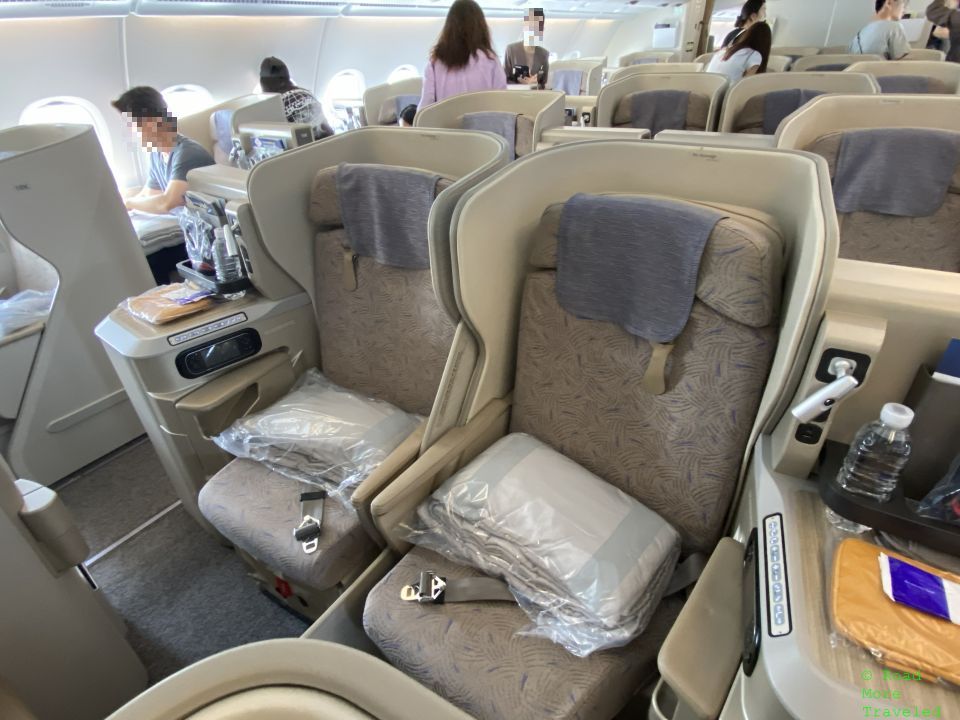
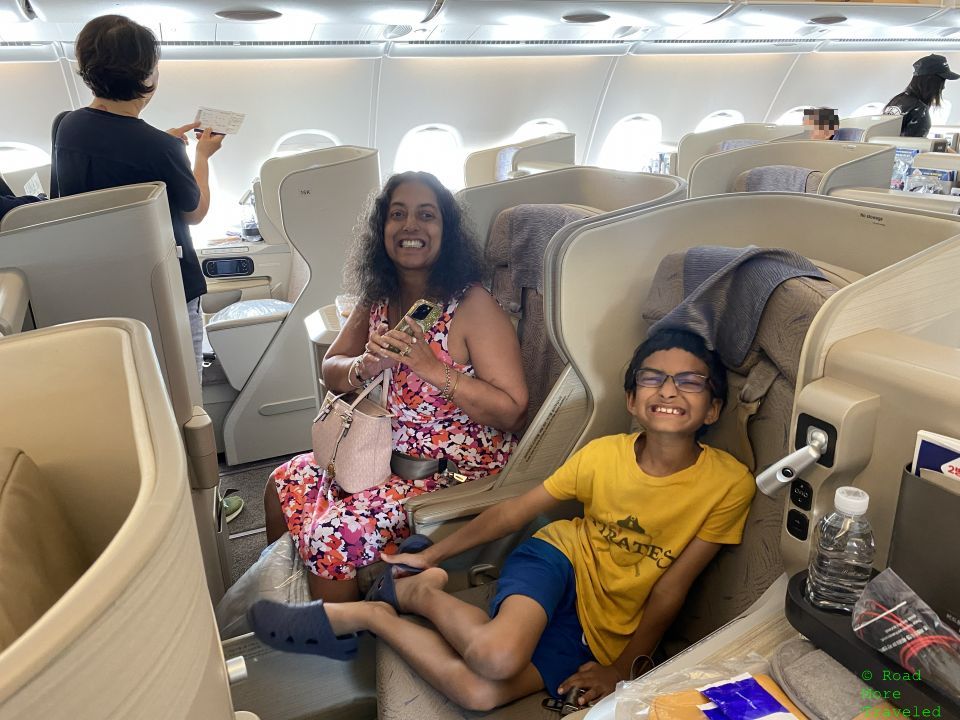
My wife and son certainly enjoyed their comfy ride back home.
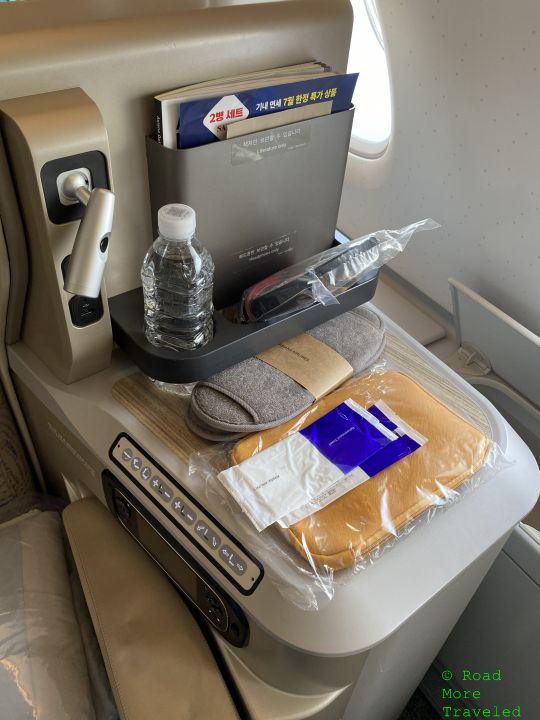
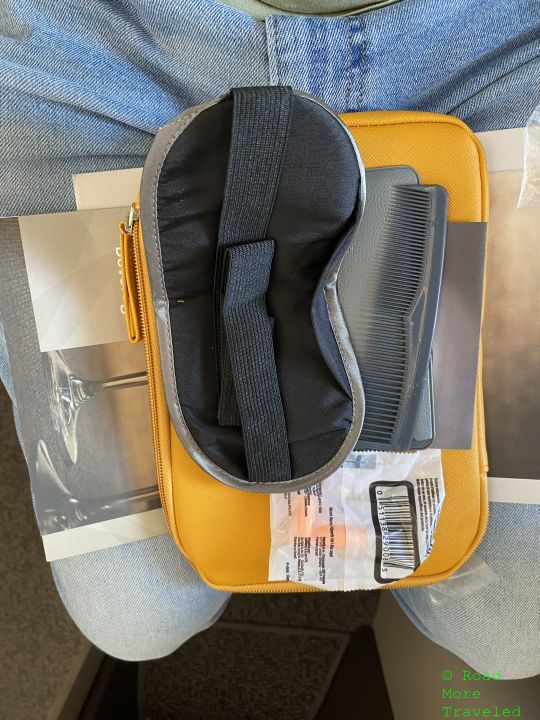
Amenities waiting at each seat included a bottler of water, headphones, slippers, and an amenity kit.
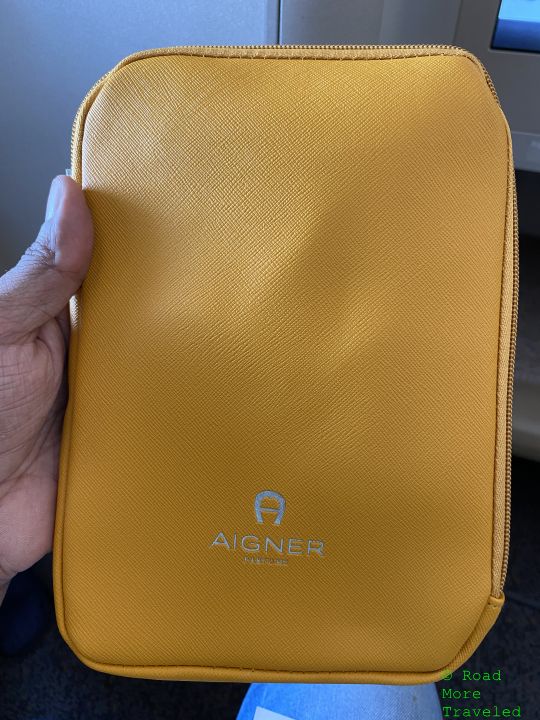
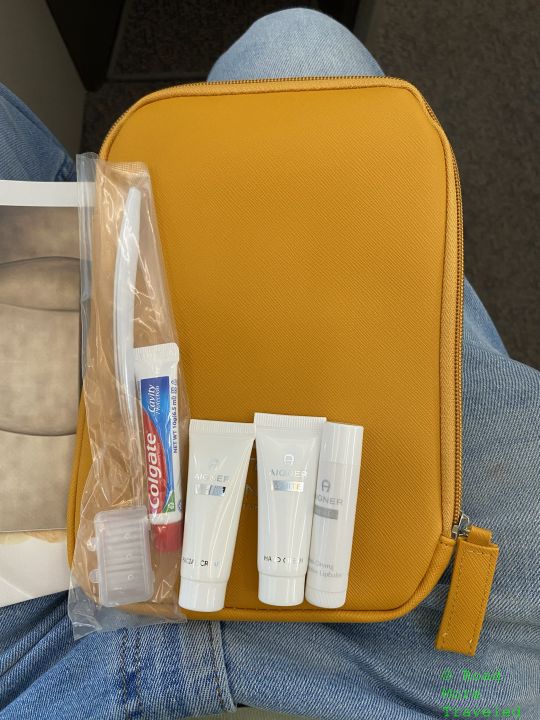
Asiana provides “Aigner” zipper bag amenity kits in business class. The kit is reasonably well-equipped, with face cream, lip balm, hand lotion, dental kit, eye mask, comb, and earplugs. I found the pouch itself pretty good quality and durable, and it should reuse well.
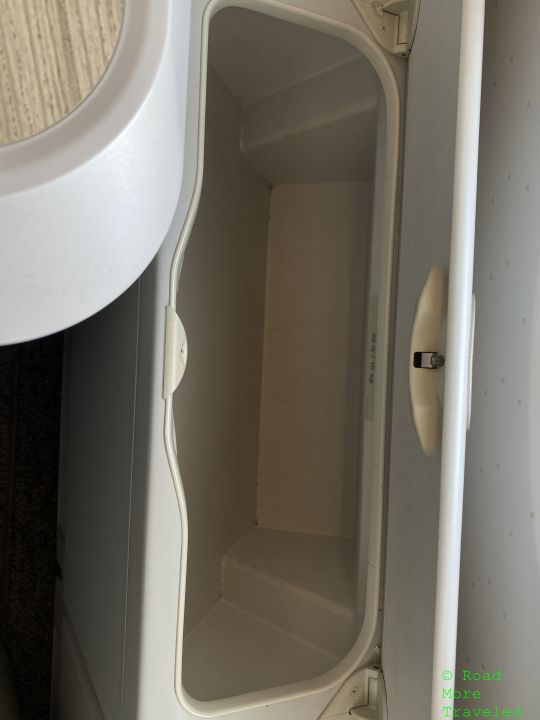
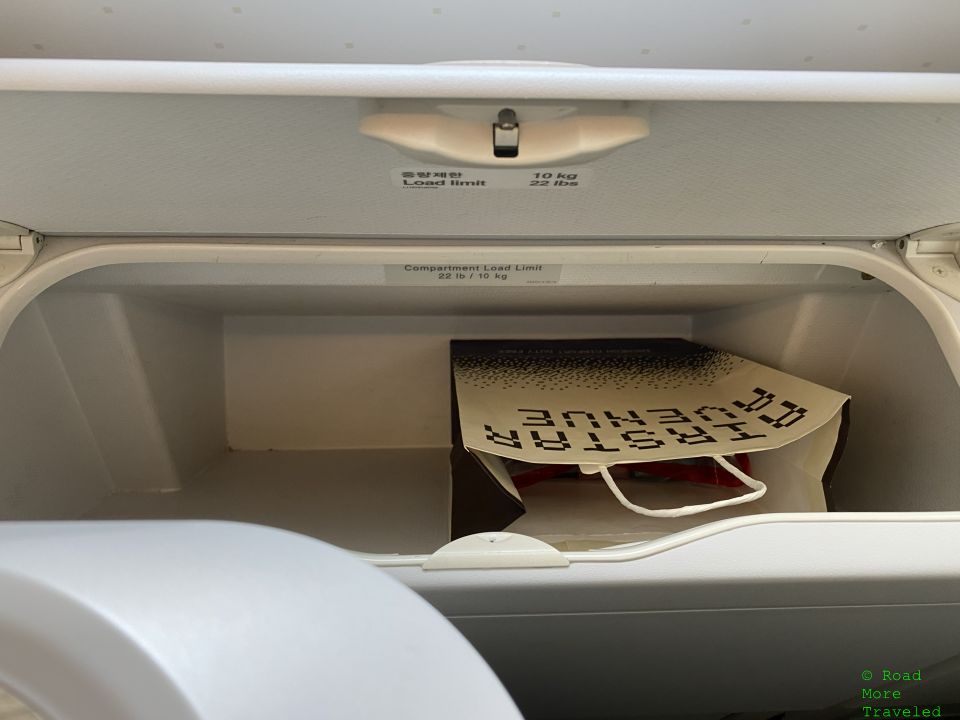
Storage space along the window is quite generous, with two deep cubbies per seat. These cubbies are large enough to store a duty free bag. Unfortunate for me, because I put my bag with a pricey bottle of perfume in here. And proceeded to forget to take it with me after we landed.
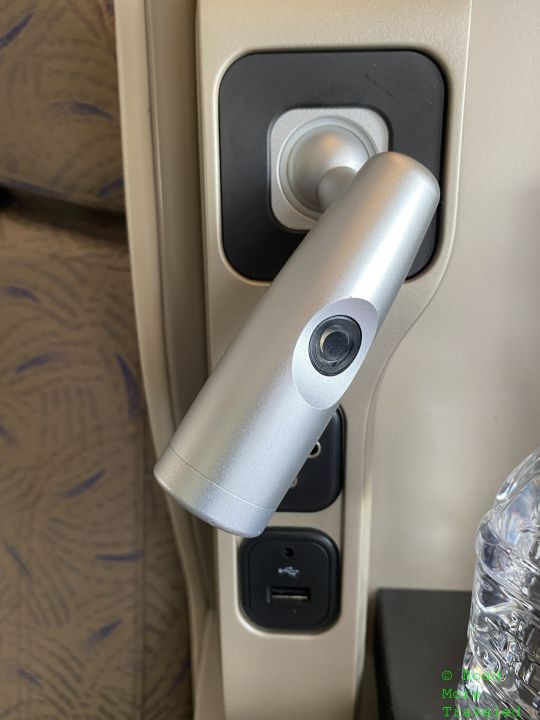
For extra lighting, there is a small lamp at headrest level.
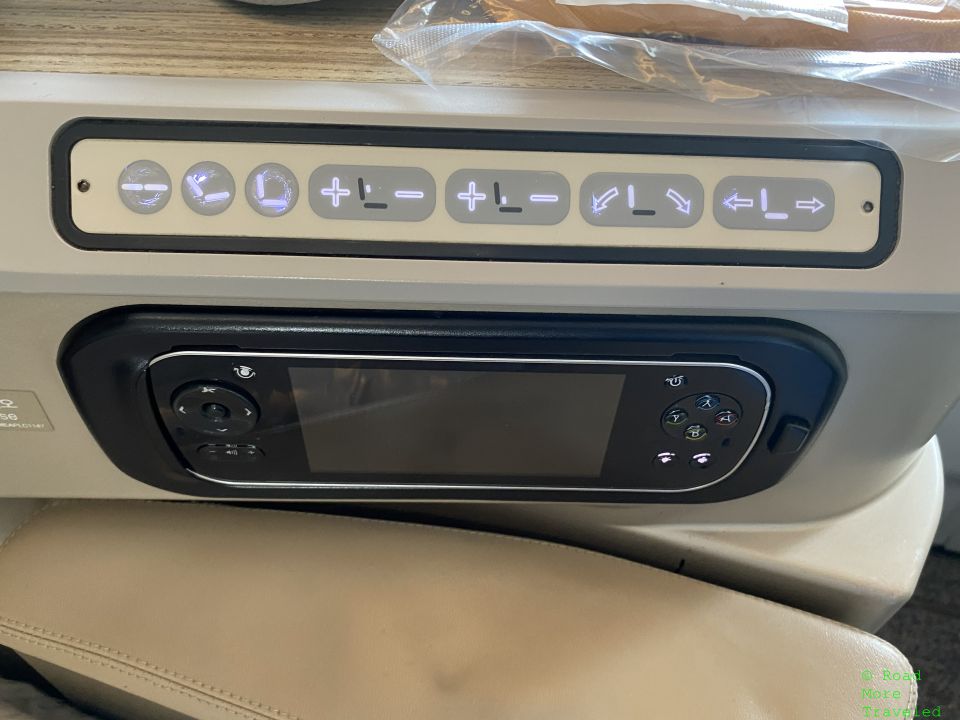
Seat controls, meanwhile, are on the armrest above the IFE controller. As an older product, the controls are rather simple, which I prefer to be honest.
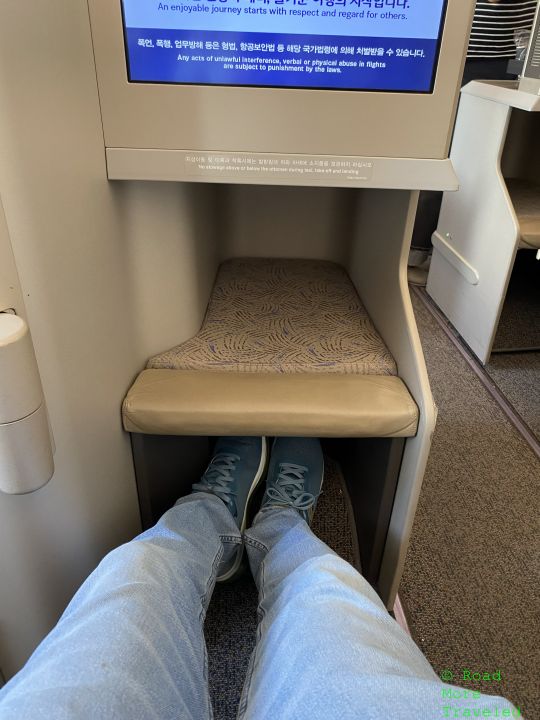
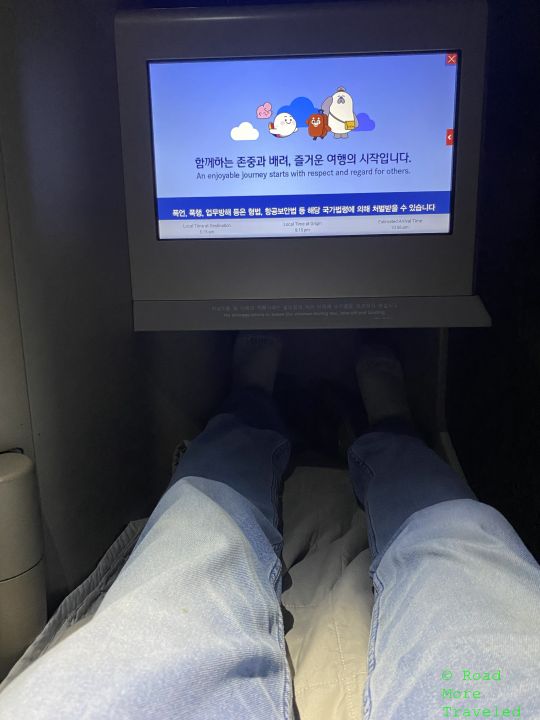
While I found the seat comfortable overall, I do need to issue a demerit for foot space. The footwell narrows noticeably, leading to a somewhat cramped feel when in bed mode.
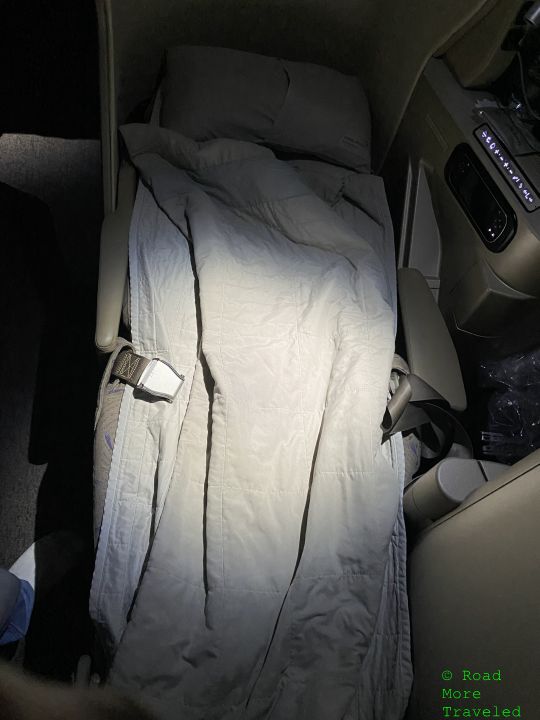
Speaking of bed mode, Asiana provides comfortable bedding, allowing for a good rest, aside from the narrow footwell. (I’m short, and so didn’t notice it too much, but if you’re taller, expect cramped foot space, especially for side sleepers.) I stayed up watching TV for a good bit, but ended up sleeping for a little over 4 hours once I did turn in.
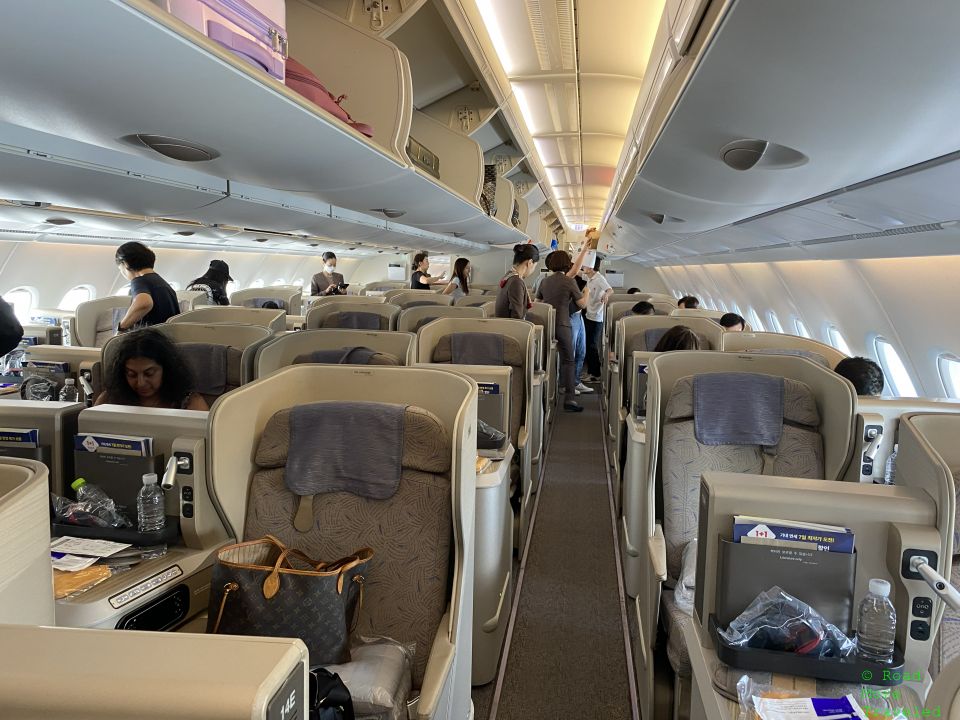
The Solstys seats exceed 10 years of age at this point, making the cabin far from trend setting. Nevertheless, Asiana keeps it well-maintained, and the oversized Business cabin feels airy and spacious. And of course, the upper deck of the A380 is incredibly quiet. The one drawback – the old-style overhead lockers can’t take carry-on suitcases turned on their sides.
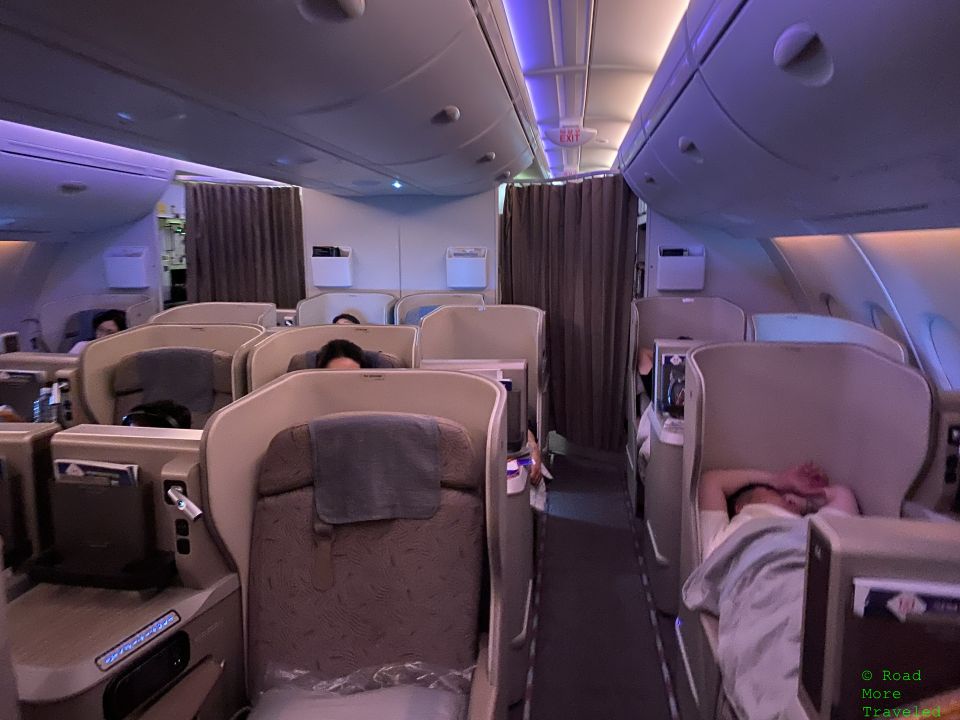
During mid-flight, the soft mood lighting creates a relaxing atmosphere for resting.
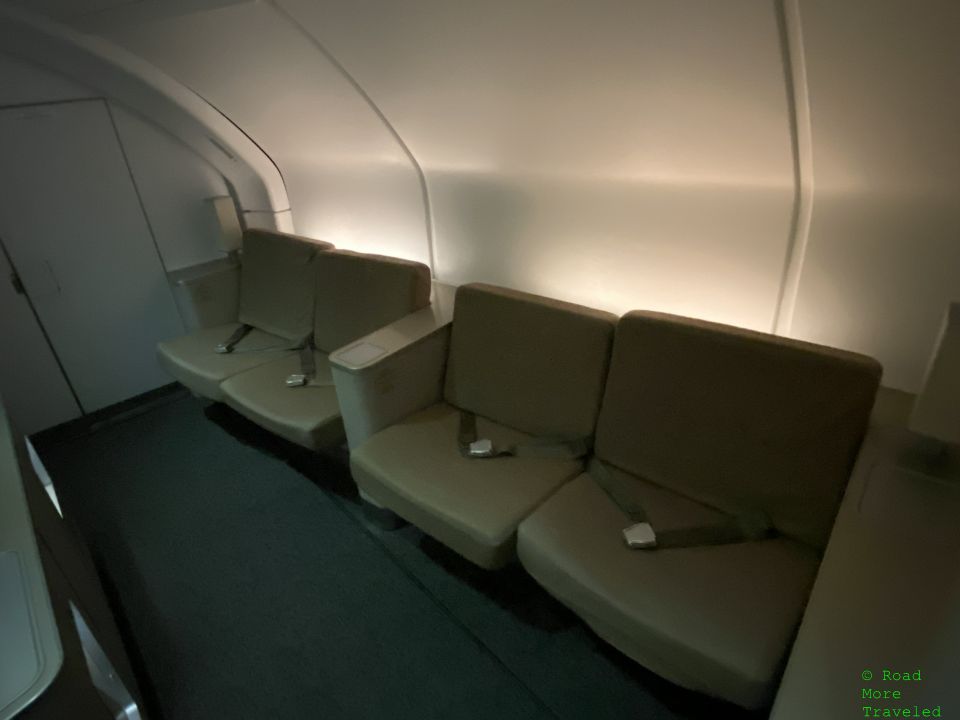
At the pointy end of the upper deck is a sort-of onboard lounge area. It’s just a few communal seats; there’s not a bar or anything like that. I’ll confess, I don’t entirely get the point of a seating bench with no other amenities.
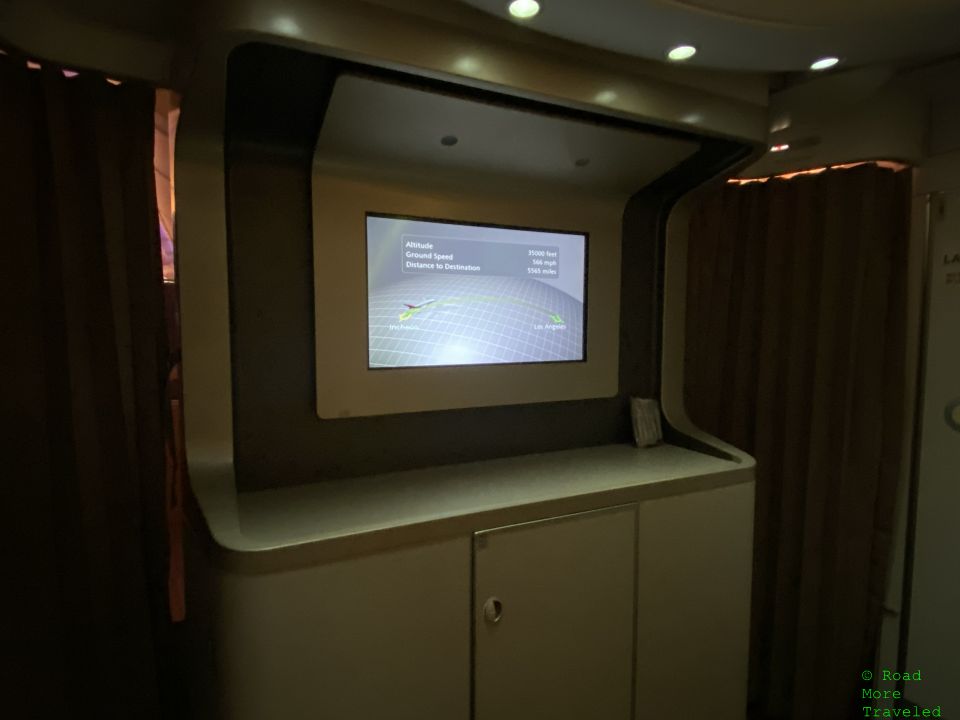
The only thing of note here is a TV screen that displays the moving map.
In any event, my son liked the space, and wanted to hang out here for a while.
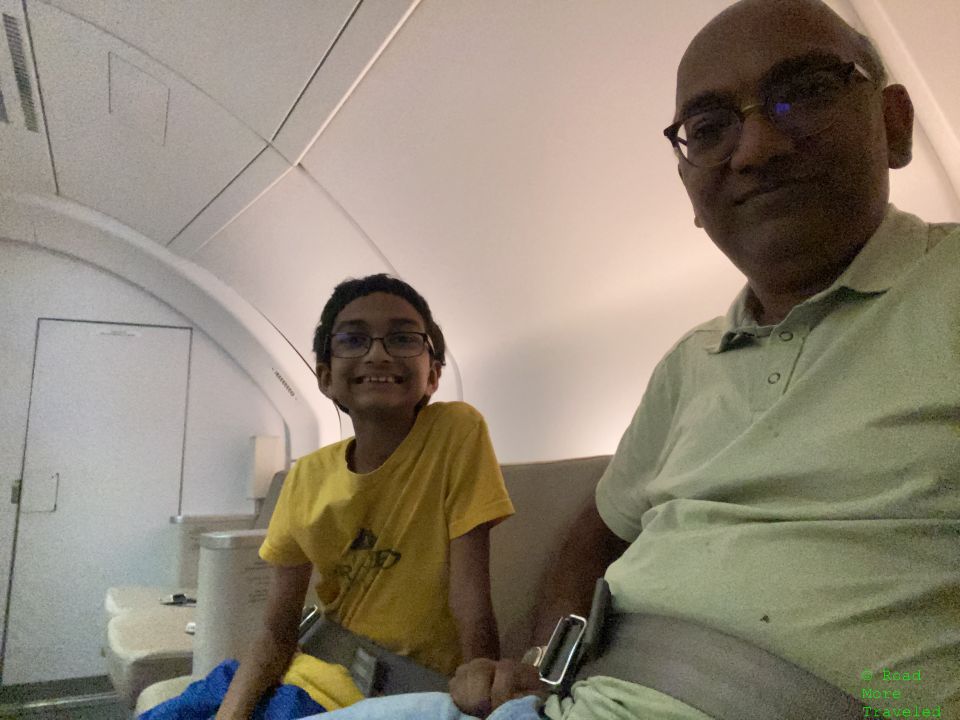
He also spent some time exploring the staircase down to the lower deck. Staircases on airplanes are way cool, I’ll give him that.
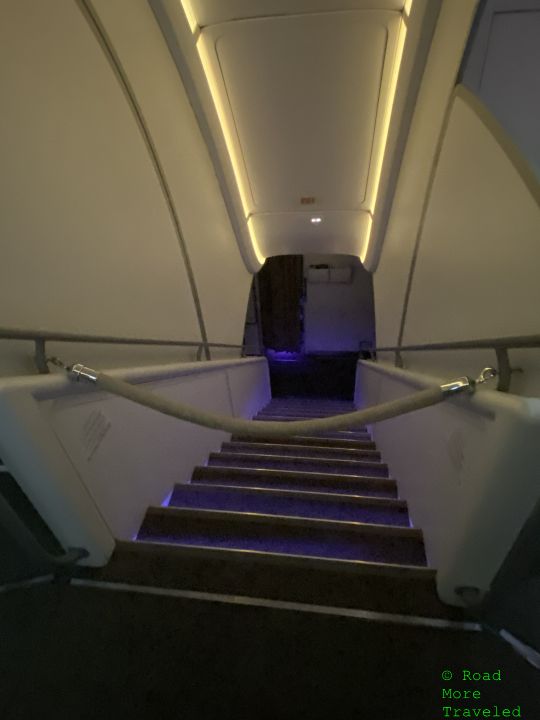
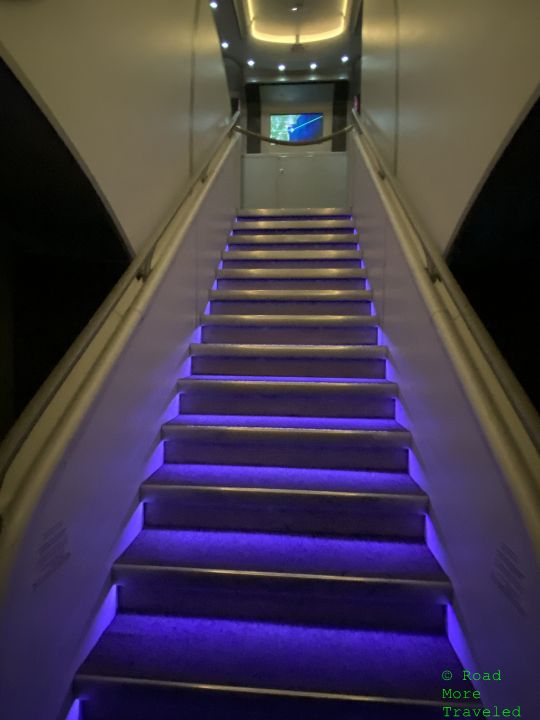
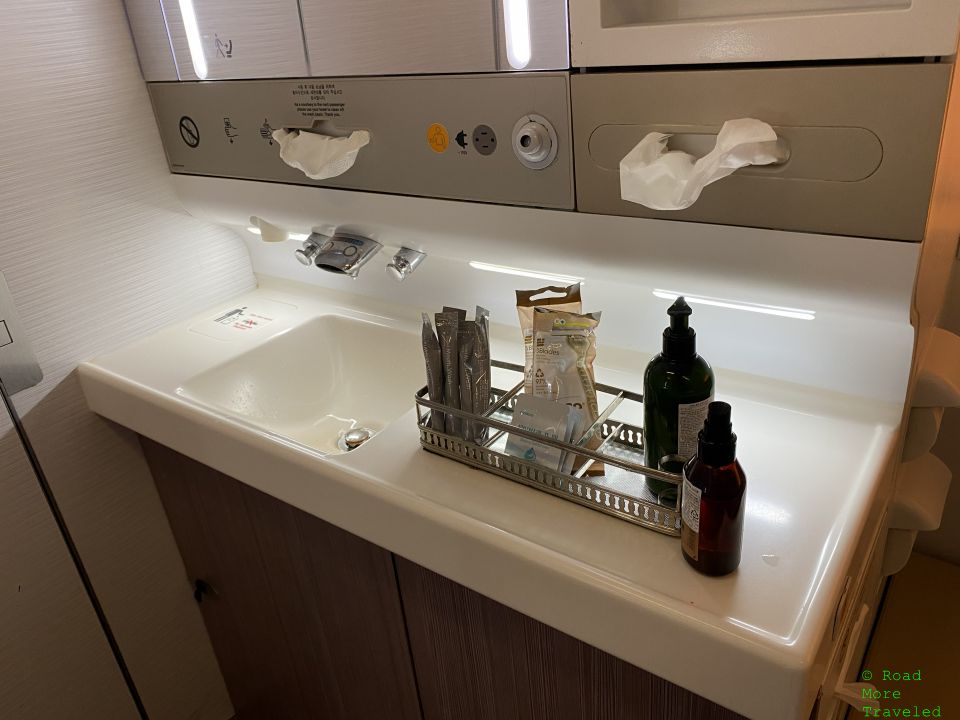
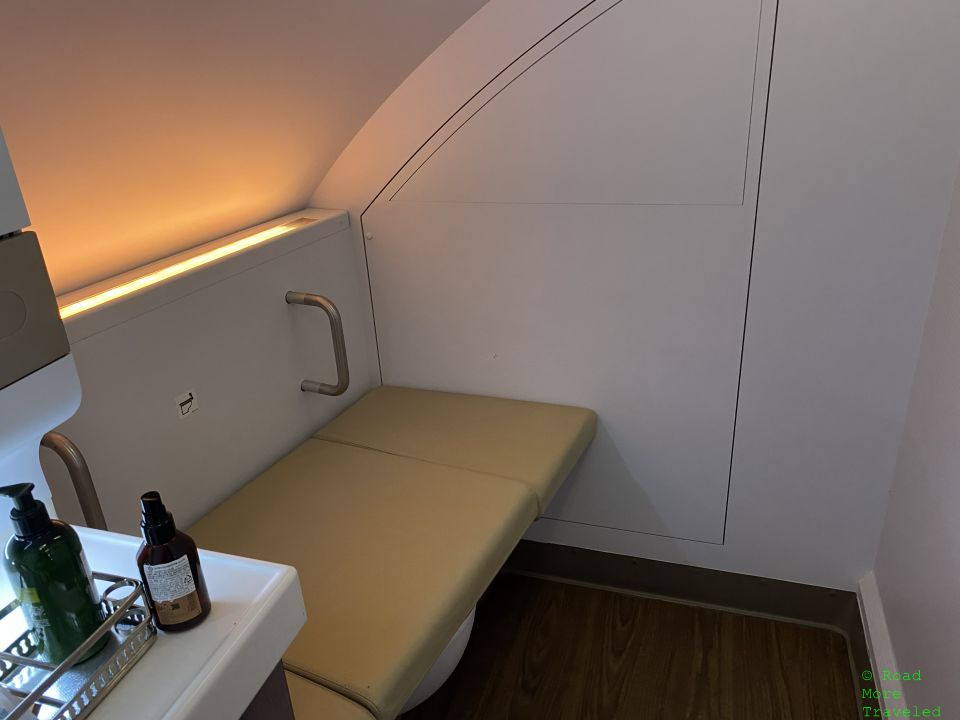
Incidentally, if you find both forward upper deck lavatories occupied, you can head downstairs, and you’ll find two more at the foot of the stairwell. Speaking of lavatories, there is an oversized one next to the top of the staircase. Business Class lavatories come equipped with disposable toothbrushes and razors if you need one. In this particular one, the lavatory seat folds down into a sitting area. And there’s even an air nozzle above the sink.
Overall, though the product is dated at this point, I found the seat perfectly comfortable for a flight of this length. The narrow footwell might prove a problem for taller passengers, however.
In-Flight Entertainment
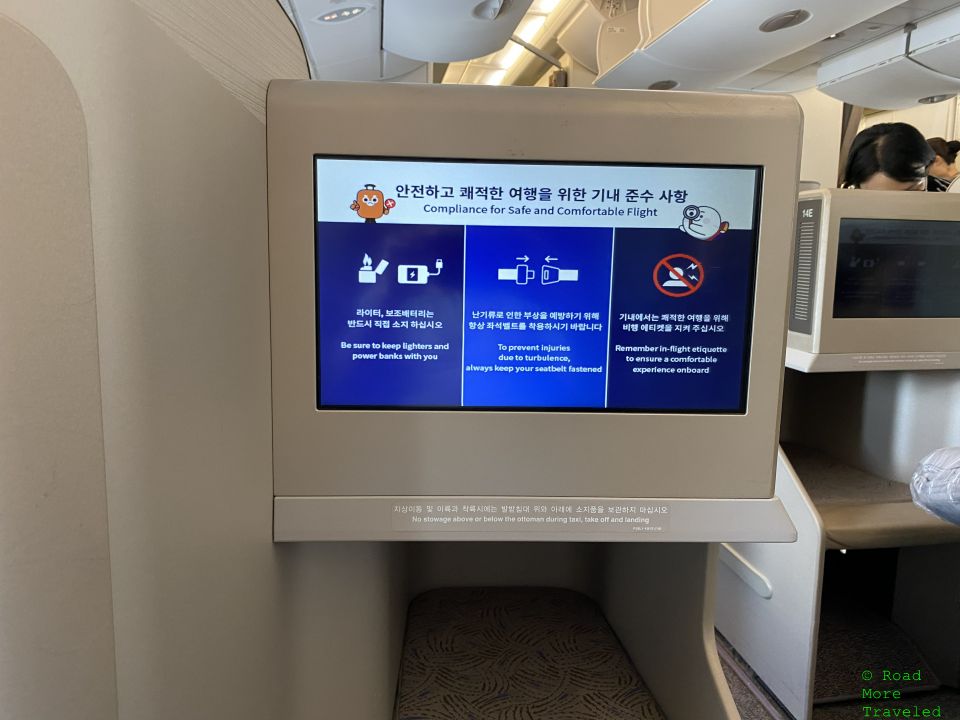
Each Business Smartium seat comes equipped with a 15.4″ touch screen entertainment display. The screen has certainly fallen behind the times, and is decidedly on the small side. Nevertheless, resolution is still decent.
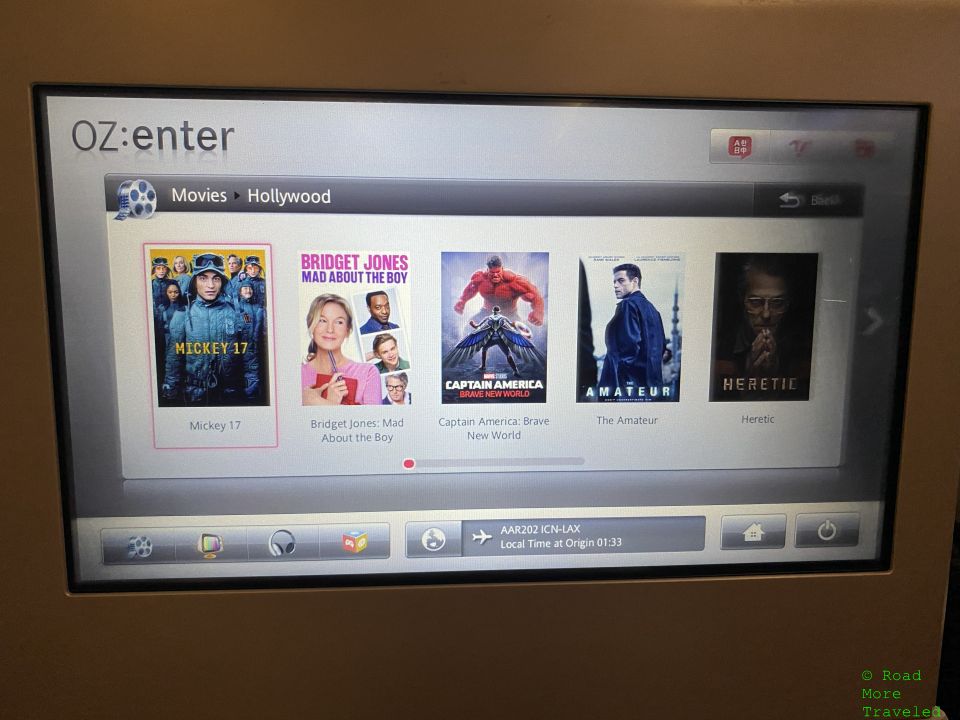
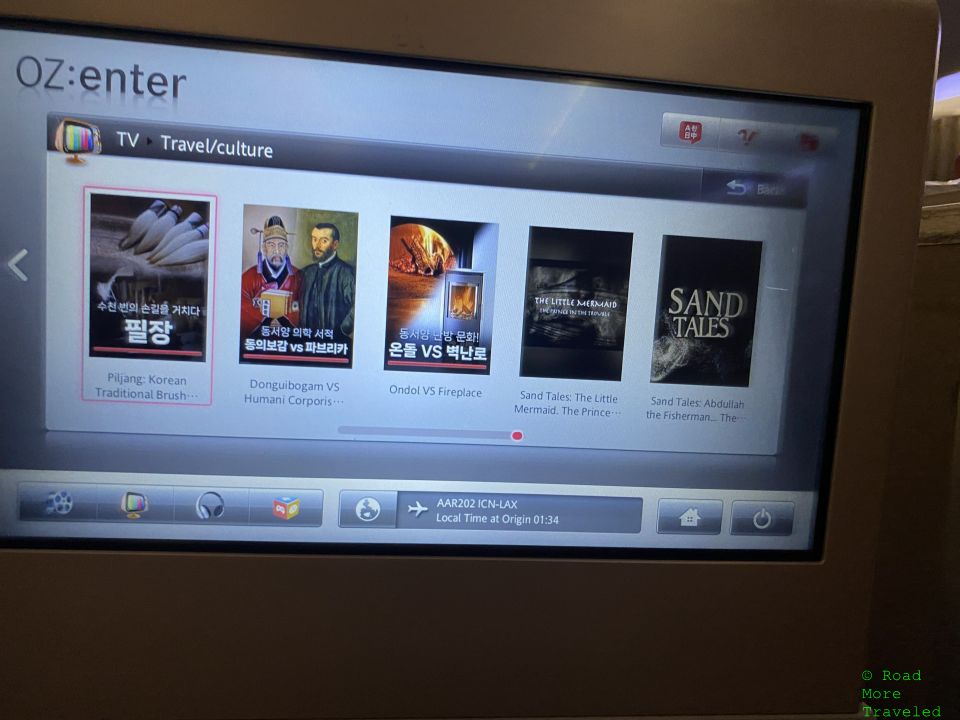
I did find the “OZ: enter” entertainment system fairly robust in terms of selection. Asiana provides a large variety of movies and TV, both western and Asian.
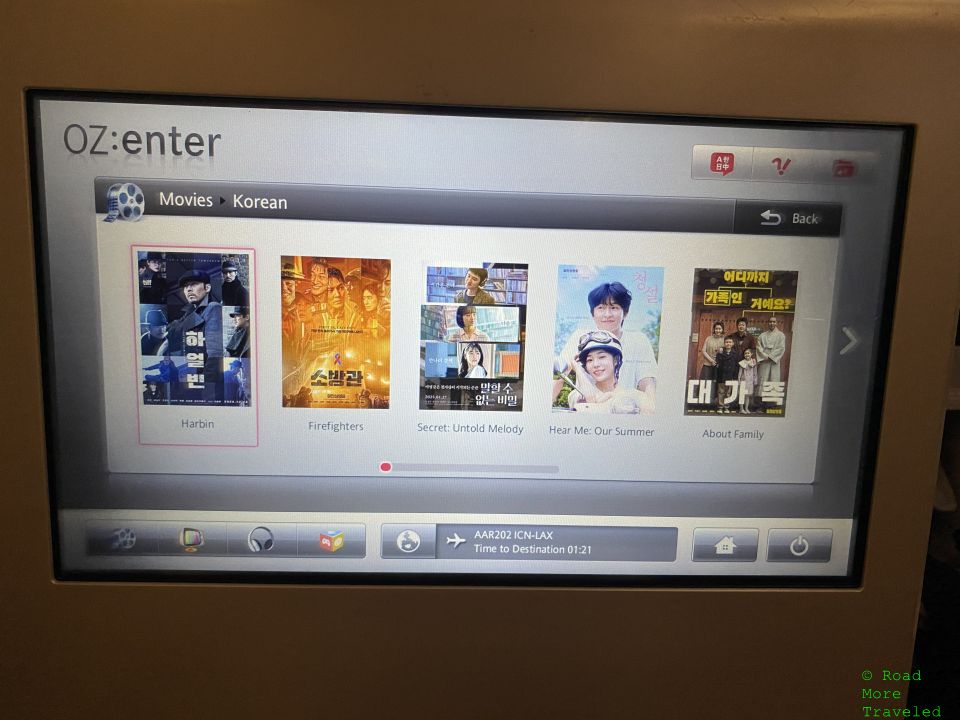
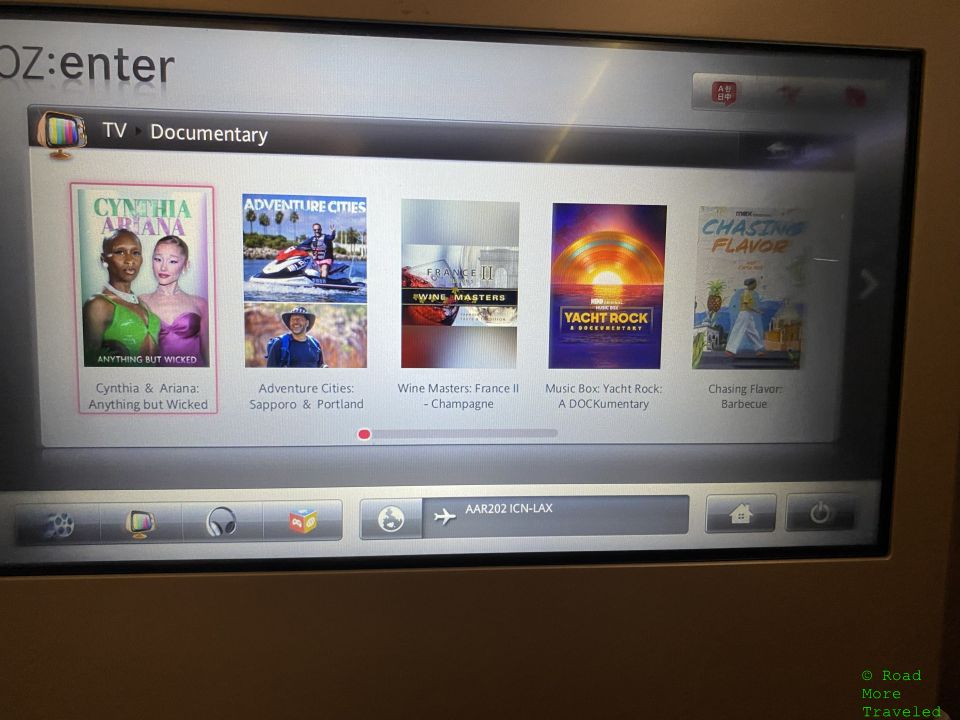
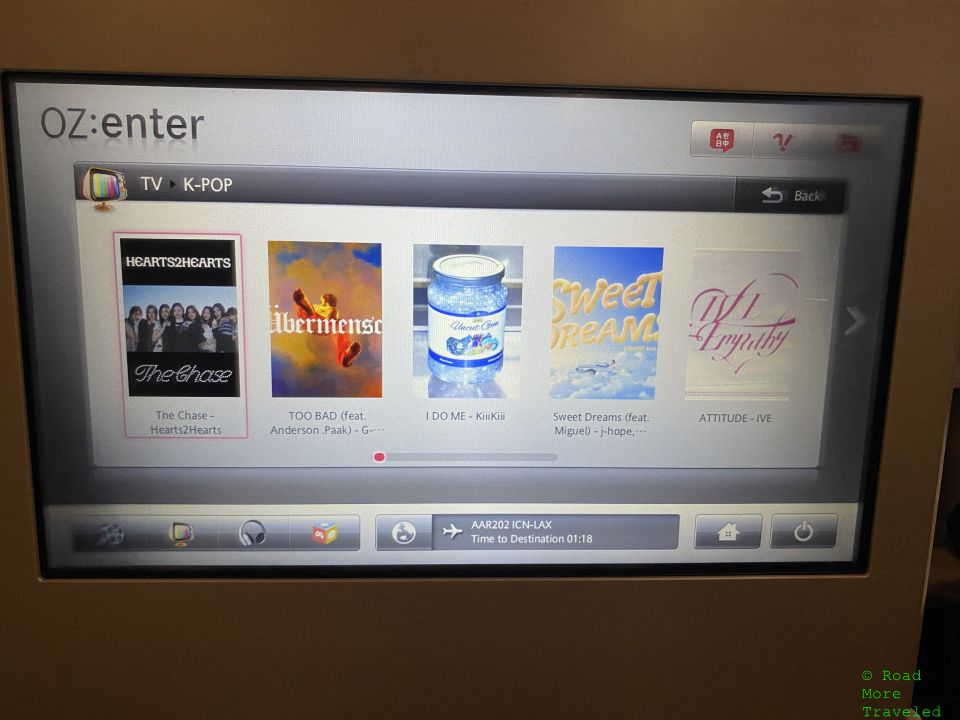
There’s even several channels of K-Pop music videos if you’d like to give it a listen.
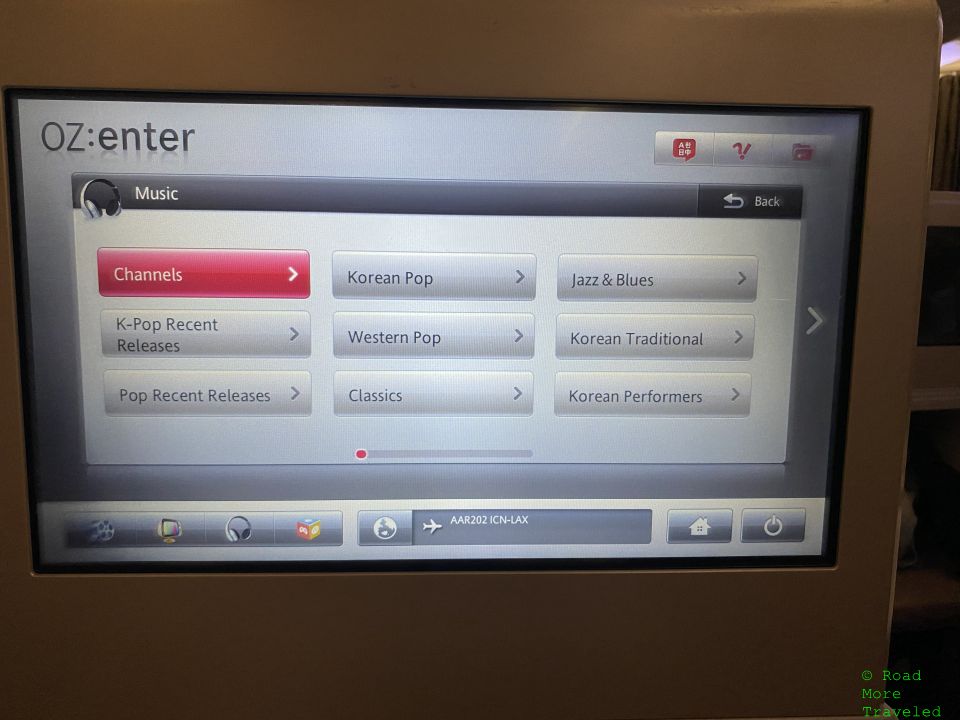
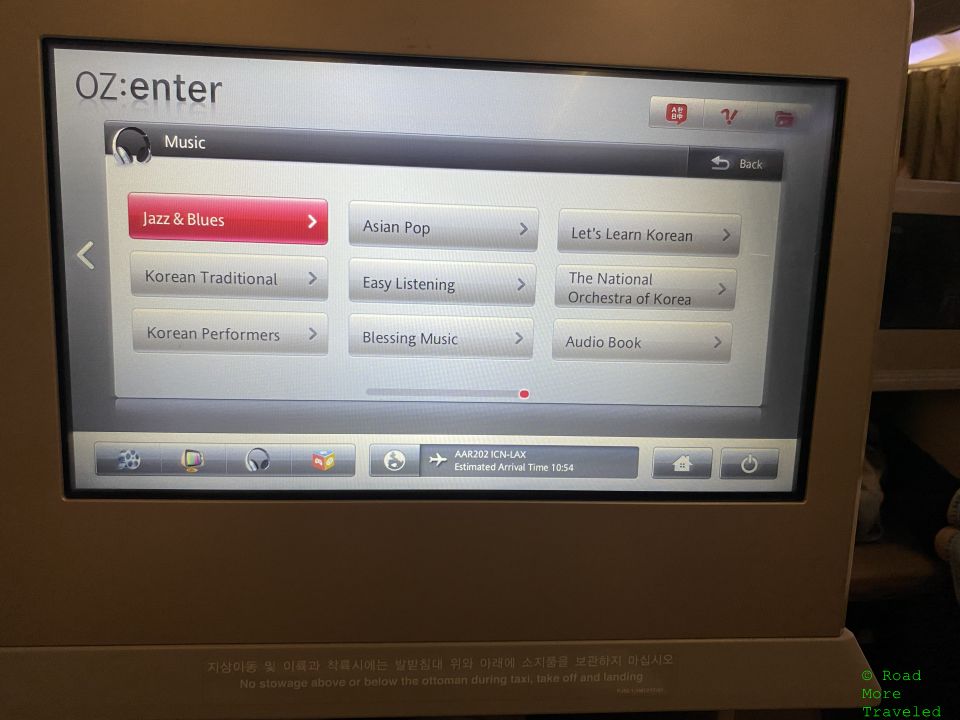
The music selection tilts heavily to Korean options. A couple of the more interesting channels – The National Orchestra of Korea, and a “Let’s Learn Korean” channel if you want to try and learn the language. If only we’d flown Asiana on the way to Korea…
Meanwhile, the game selection isn’t all that big, but they do have my favorite of the in-air games. That’s the “Golf Open” golf simulator.
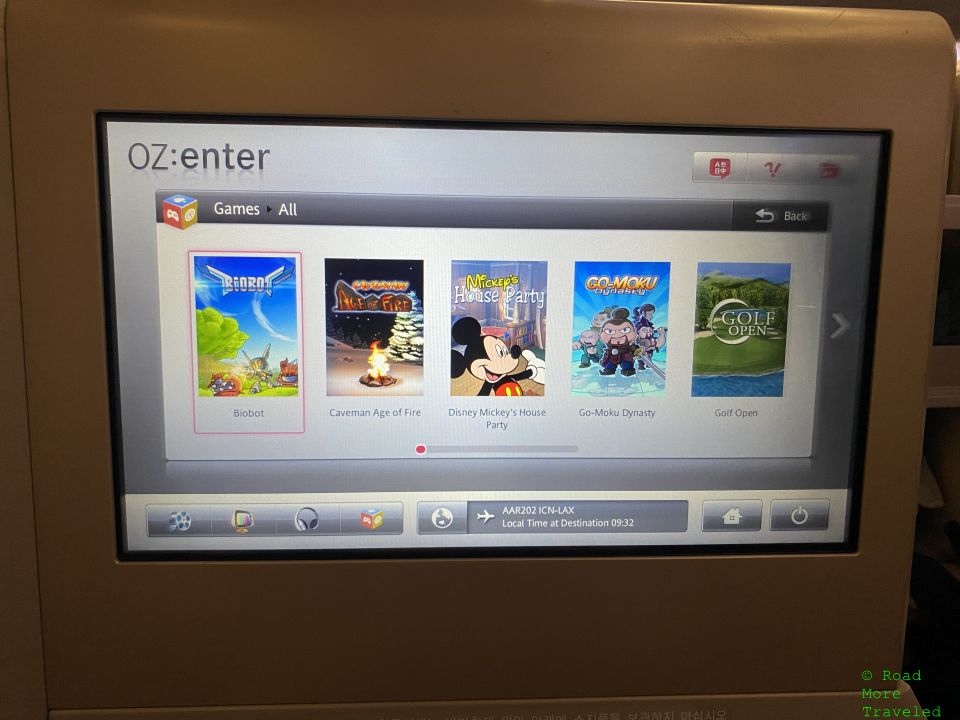
Finally, I failed to notice the nose and tail cameras until nearly the end of our flight. I did play around with the moving map, of course, which is always entertaining for an avgeek.
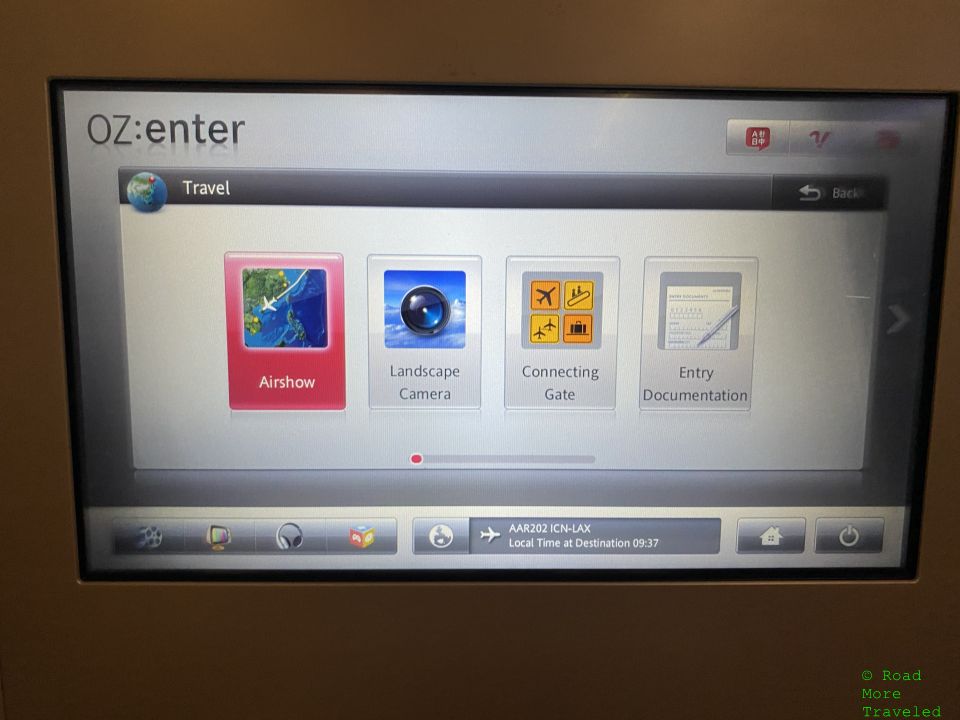
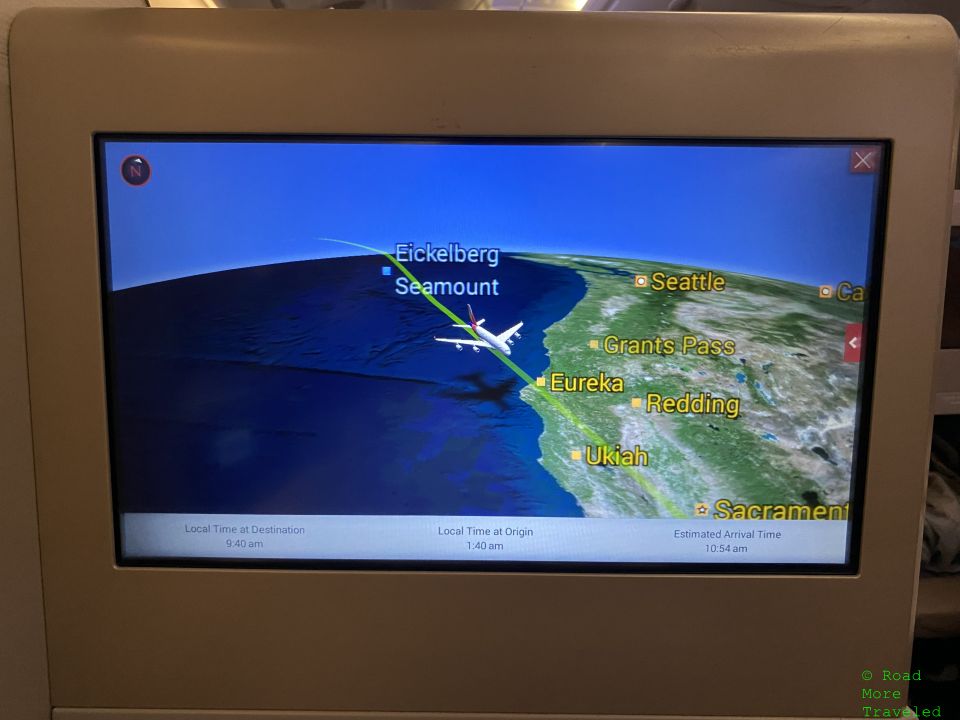
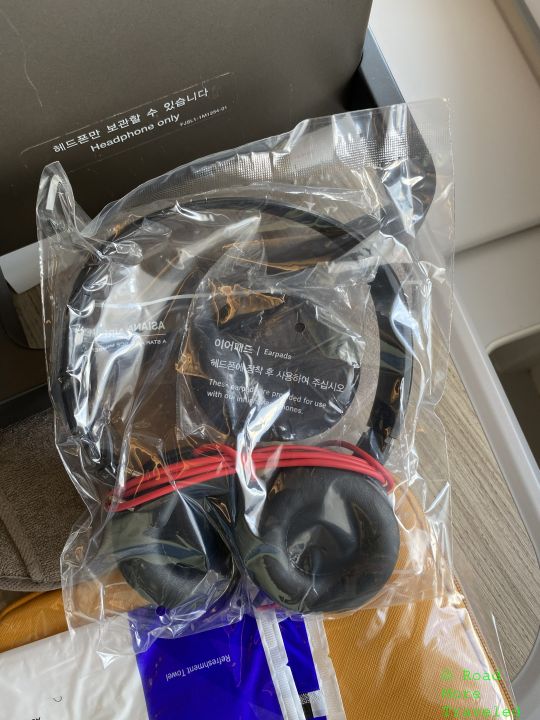
Asiana does provide a complimentary pair of headphones to use with the IFE. The headphones, frankly, just aren’t very good, with a decidedly cheap, tinny sound. Don’t bother with these and bring your on.
Each seat also comes equipped with 110v and USB-A ports. The USB-A port is at armrest level, while the 110v outlet is at foot level. Though I generally don’t prefer plugs at foot level, this one works, since you can easily stick your laptop and charger up on the armrest to store them out of the way temporarily.
Unfortunately (or fortunately, depending on your point of view), Asiana does not offer WiFi on the A380. Only A350 aircraft feature WiFi, offered only on a paid basis even for Business Class passengers. Current rates are $11.95 for one hour, $16.95 for three hours, and $21.95 for a full-flight pass.
Asiana Airlines A380-800 Business Class – Food & Beverage
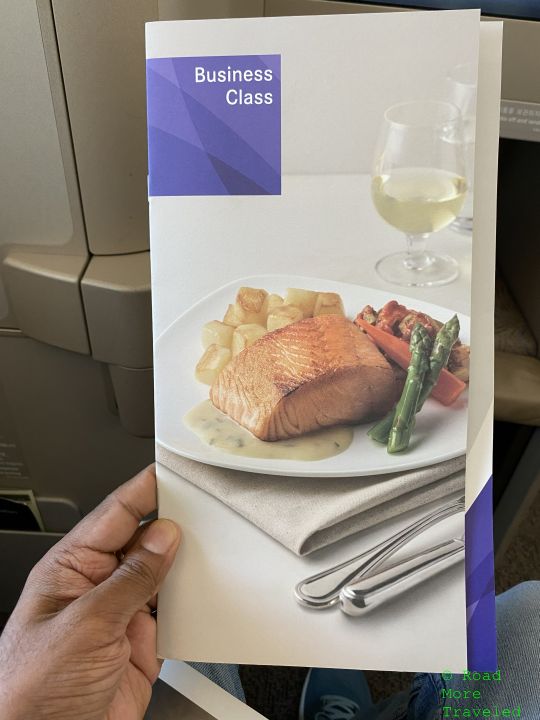
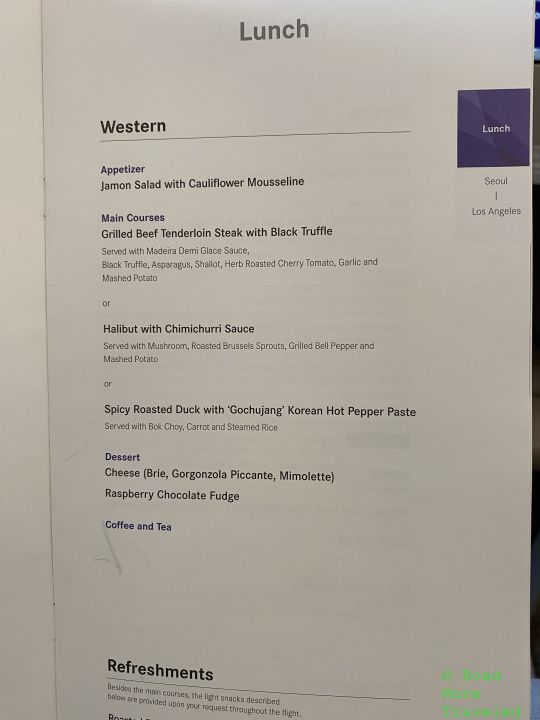
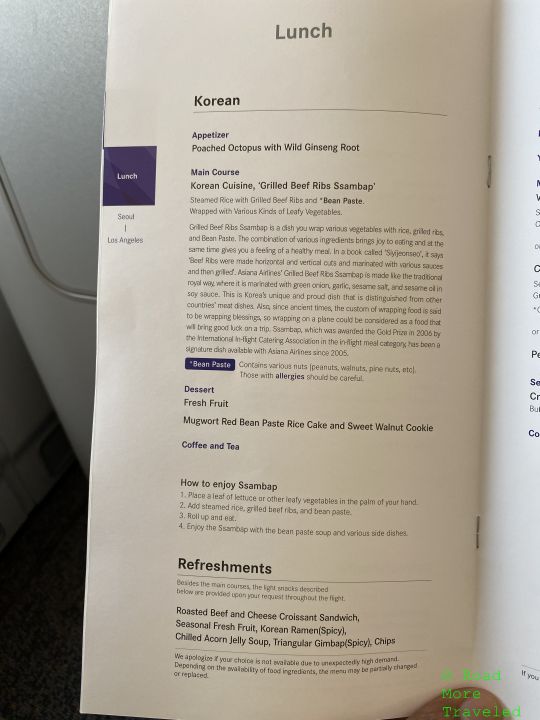
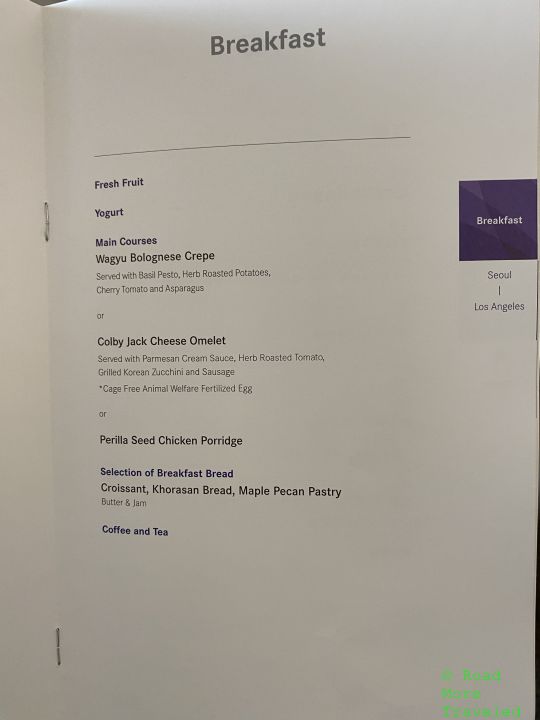
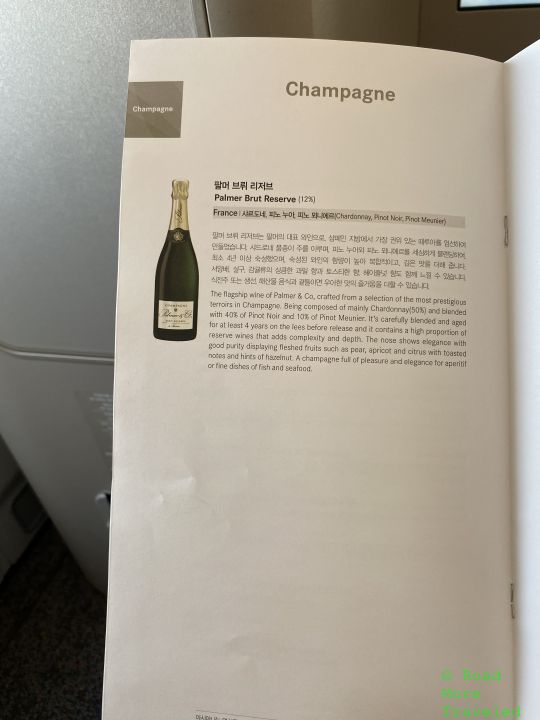
During boarding, FAs handed out menus to peruse, with separate ones for food and drinks.
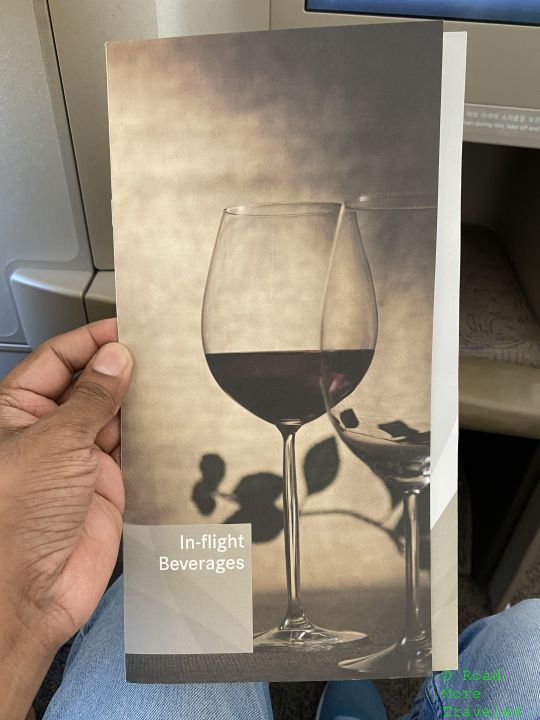
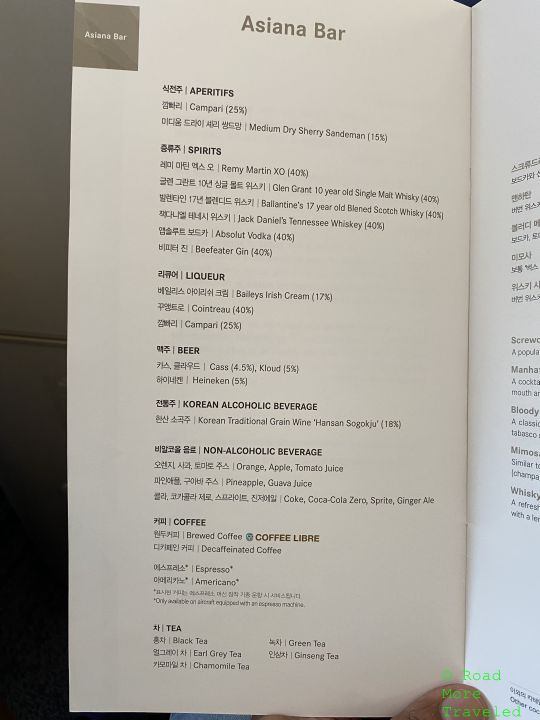
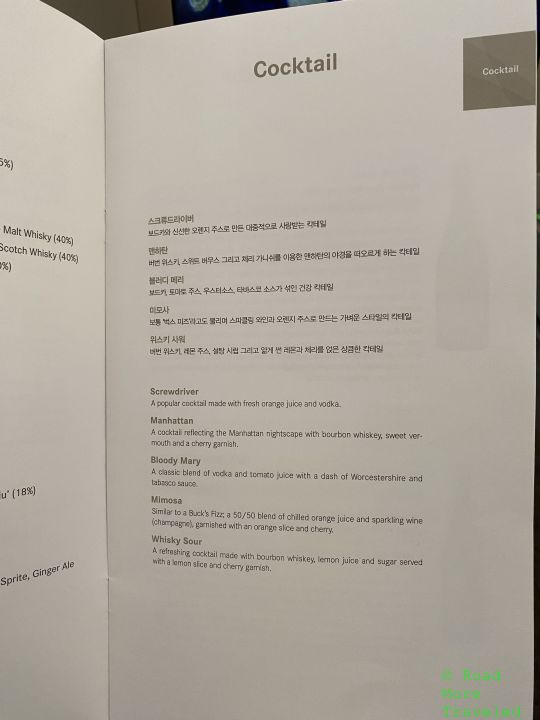
Asiana offers a fair if unspectacular wine selection in Business Class. The champagne offered is Palmer Brut Reserve, a mid-tier varietal that retails for around $50 a bottle. (The “Clos du Bois” here is a French wine from the Gigondas region, not the stuff you find on the discount rack at Kroger.) Perhaps the most interesting offering is the Austrian dessert wine.
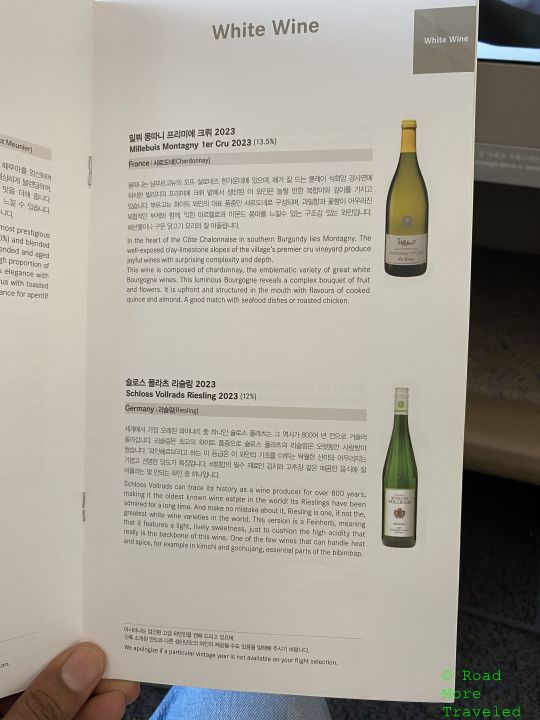
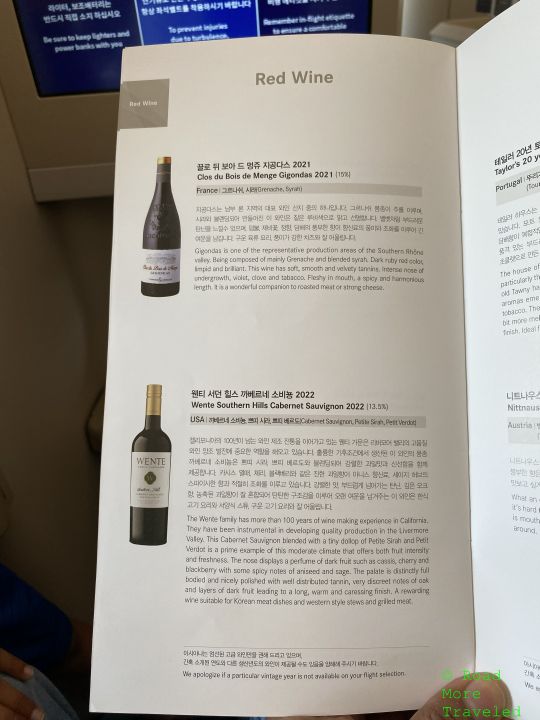
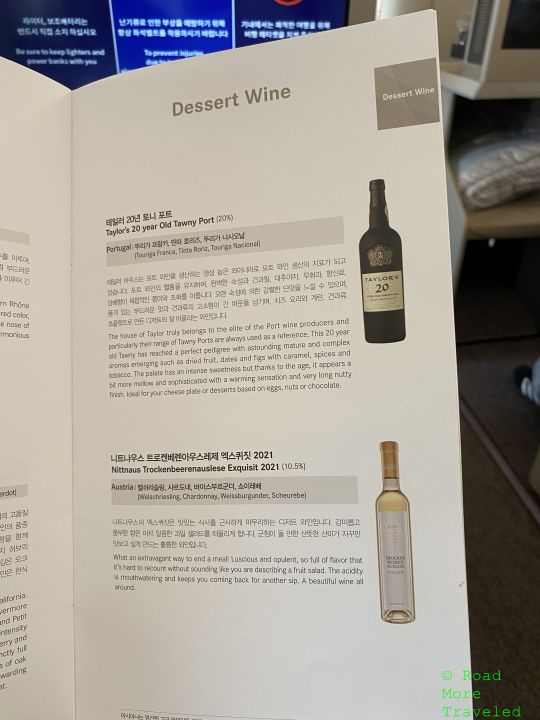
The FAs did come through with pre-departure beverages, but only water or juice.
Service officially commenced about 20 minutes after takeoff, when the FAs made the tray tables for drinks. The tray table on the A380 is quite generously sized, for what that’s worth.
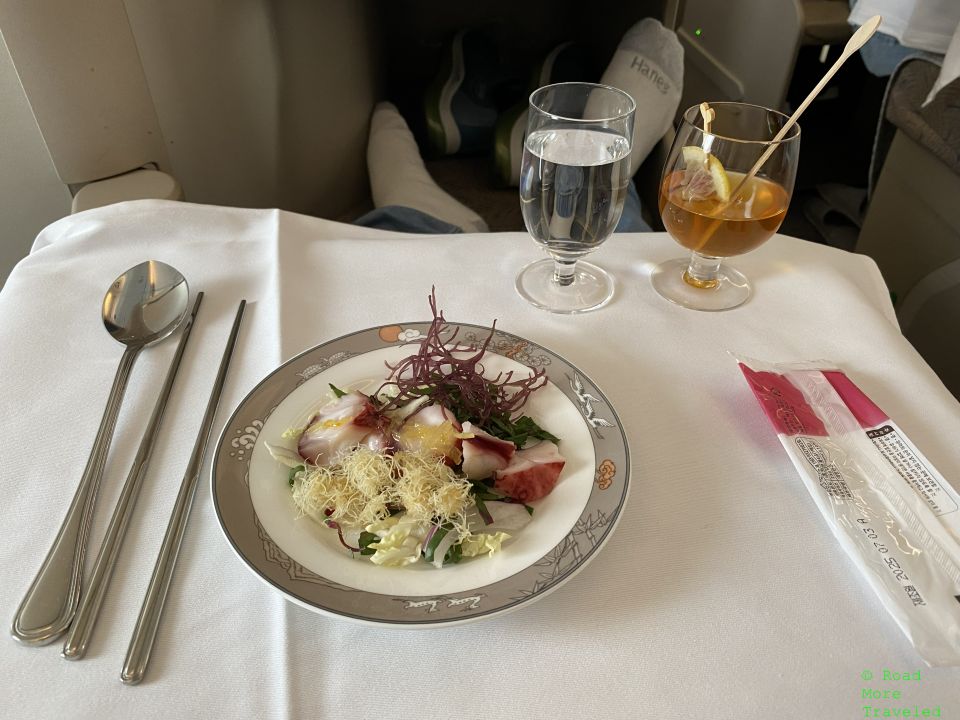
I apparently forgot to take a photo, but the FAs soon delivered aperitifs with a bowl of mixed nuts. I don’t know why I ordered a whisky sour – it’s not a drink I usually order – but it was fine. Thankfully, no episodes of nut rage emerged on this flight. About 10 minutes later, the appetizers arrived. I went with the Korean lunch option, and so I received the poached octopus with ginseng root. Usually, I’m not a fan of octopus or squid – too rubbery for my taste – but this wasn’t bad. Pretty refreshing, actually, like a cold lobster salad.
About 10 minutes later, the main course arrived, which was grilled beef ribs ssambap, served with mushrooms and white rice. Accompanying the meal was red bean paste, bean paste soup, various accompaniments, and green leafy vegetables for wrapping. The dish is intended to be eaten sort of like Korean BBQ, by sticking a little bit of everything on a vegetable leaf and rolling it up. (I did find sticking the vegetables in a plastic bag rather cheap.)
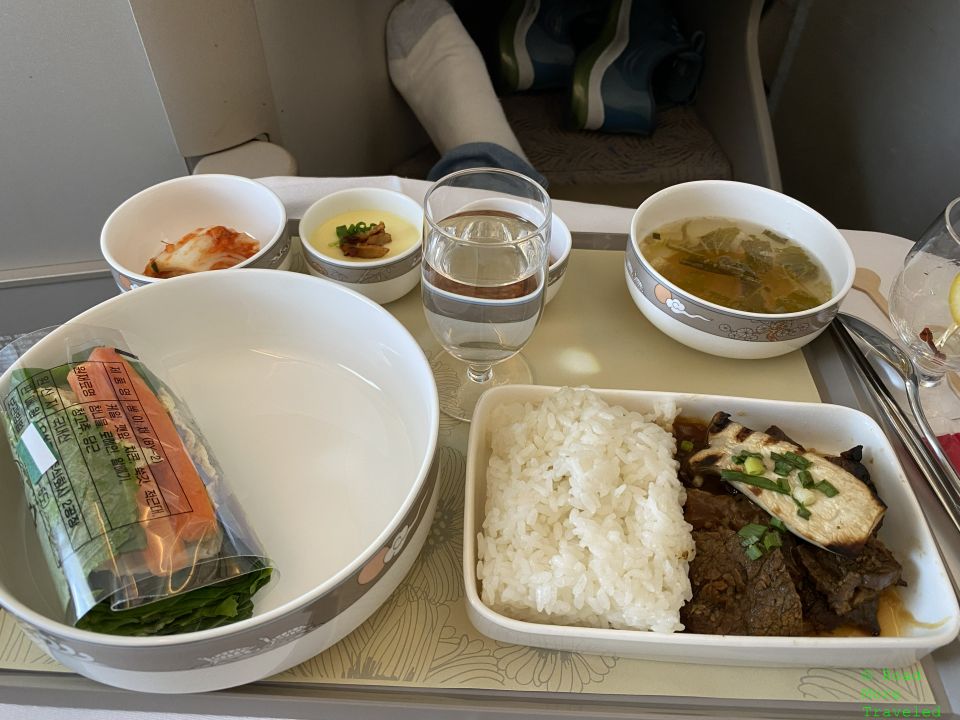
While I’ll give Asiana props for providing something different, I didn’t love this dish. I found the beef over-grilled, and the flavor of the meat off a bit generally. Maybe it was just a poor cut of beef, I don’t know.
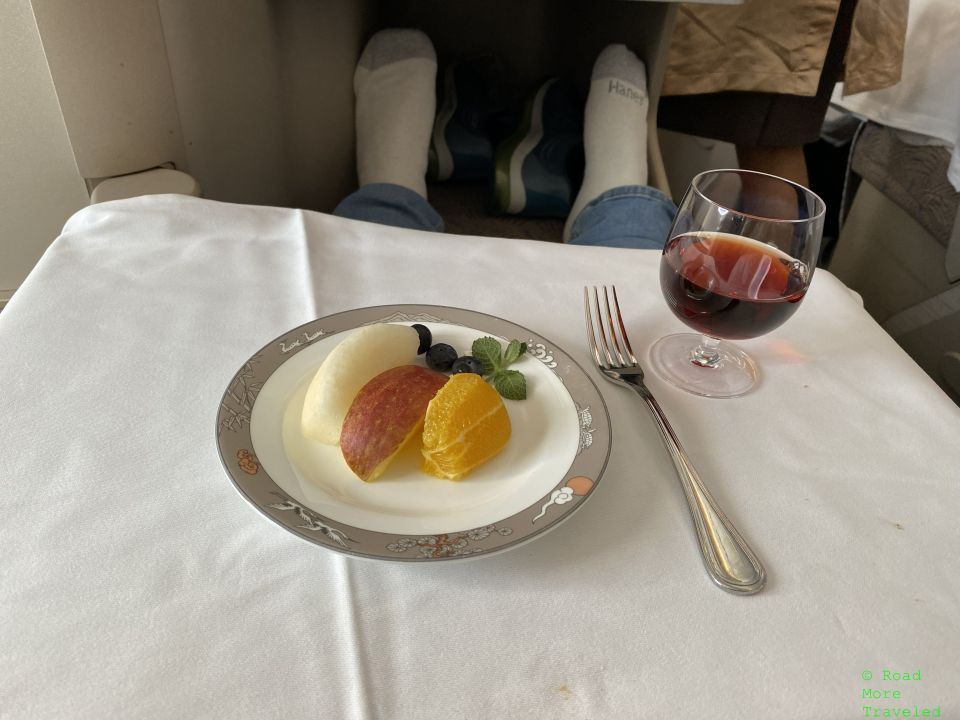
For dessert, I wasn’t all that hungry, so I just ordered the fruit plate, which was…underwhelming. I mean, really, three pieces of fruit? Anyway, I ordered it with a glass of the port, which I did enjoy.
The entire service took about an hour, which is suitably efficient given the length of the flight. Should you find yourself hungry later on, you can order off the “refreshments” menu anytime. About 90 minutes before landing, breakfast was served, with a choice of a beef crepe, cheese omelette, or chicken porridge. I went with the omelette, served with sausage and assorted grilled vegetables. Breakfast came accompanied with a choice of bread (croissant in my case) and a cup of regular coffee. 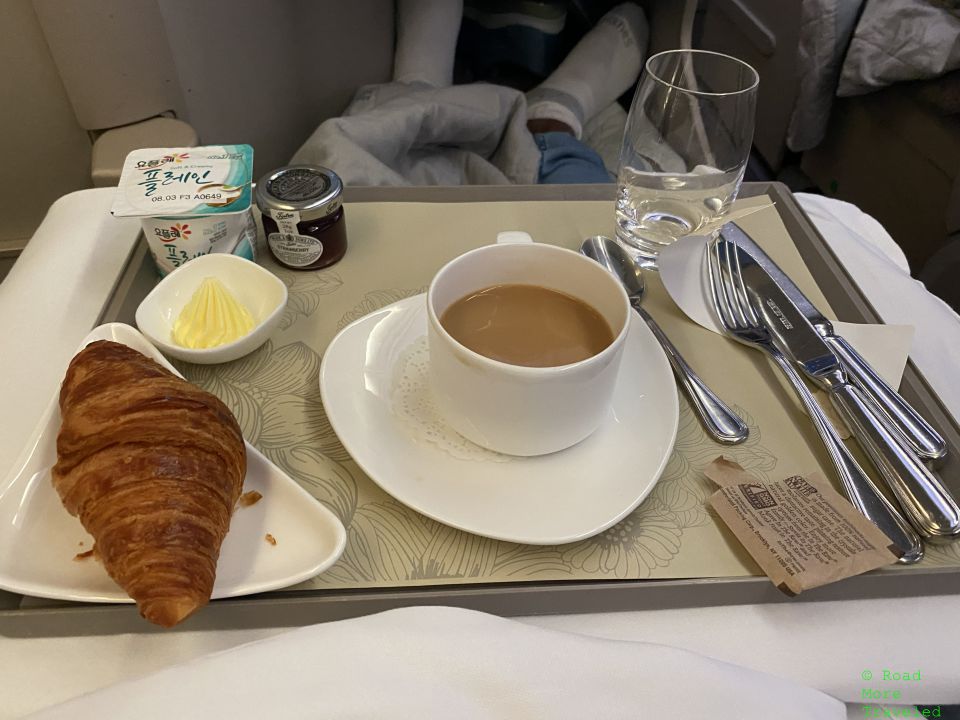
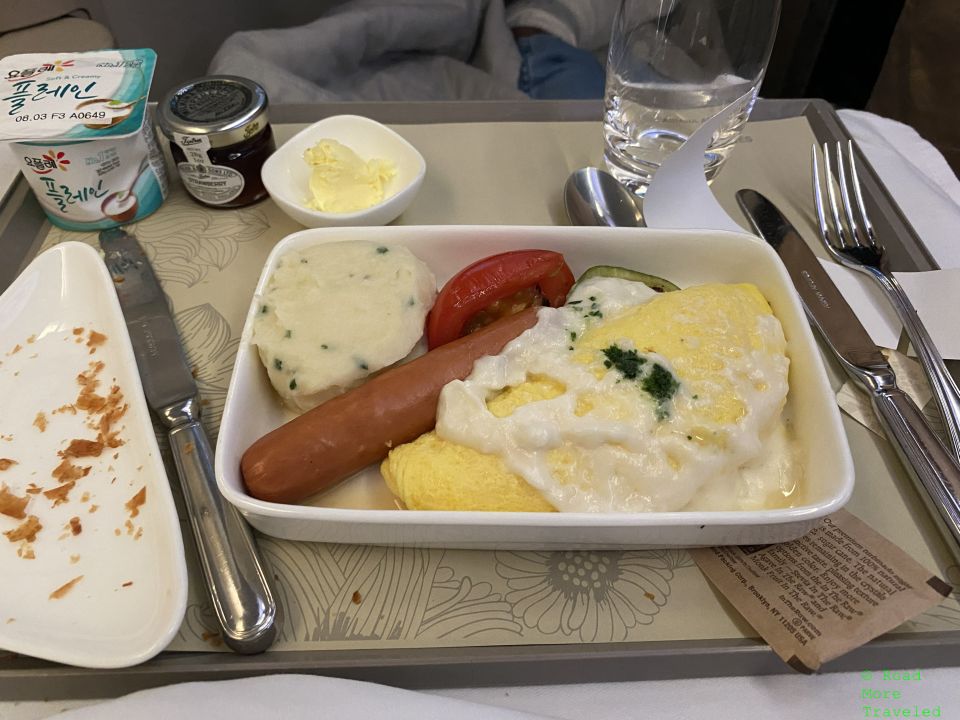
The omelette wasn’t great. Which surprised me, given that I’ll usually eat up anything with cheese overload like this. For starters, the cream sauce didn’t mesh with the eggs, and the eggs themselves were overcooked and rubbery. Just not a good execution at all, which I guess was the issue with the meal service overall.
On-board service also didn’t seem nearly as polished as I previously remembered. During my couple of Delhi-Seoul runs in the mid-2000s, I remember service at “over-the-top” levels. Those FAs had the uncanny ability to anticipate what you needed before you even asked for it. On this flight, it was fine, but felt robotic, even a little rushed at times.
Flightseeing
Though the largely overwater flight left limited time for sightseeing, I did manage to get a little of the good stuff in. Things started with some solid planeporn at Incheon. First, we enjoyed some common but still cool frames, an Asiana A350-900 and a Cathay Pacific 77W.
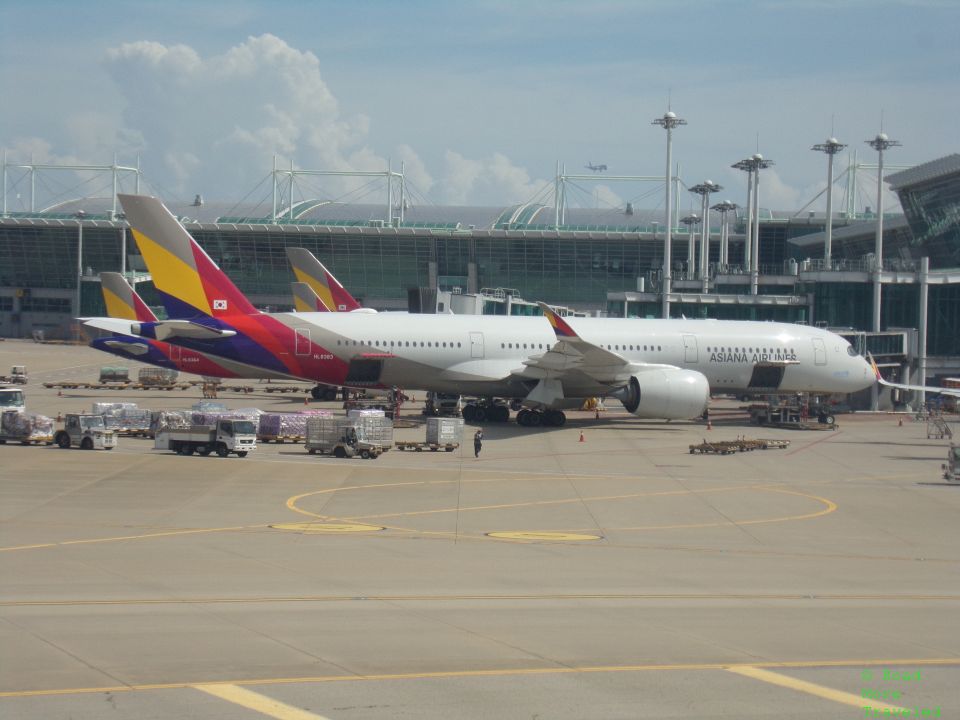
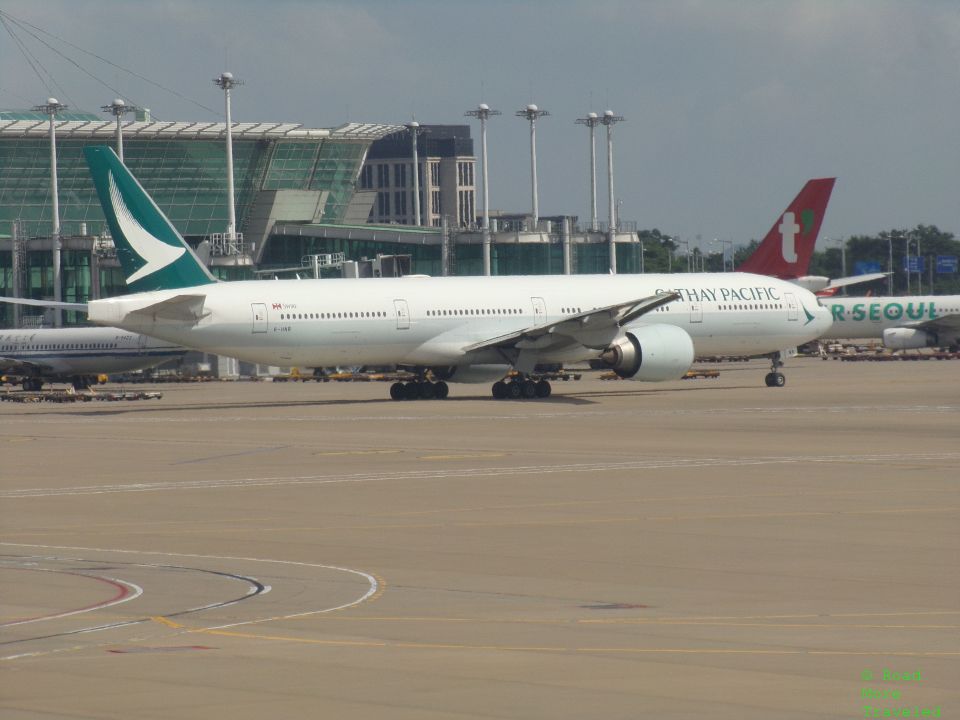
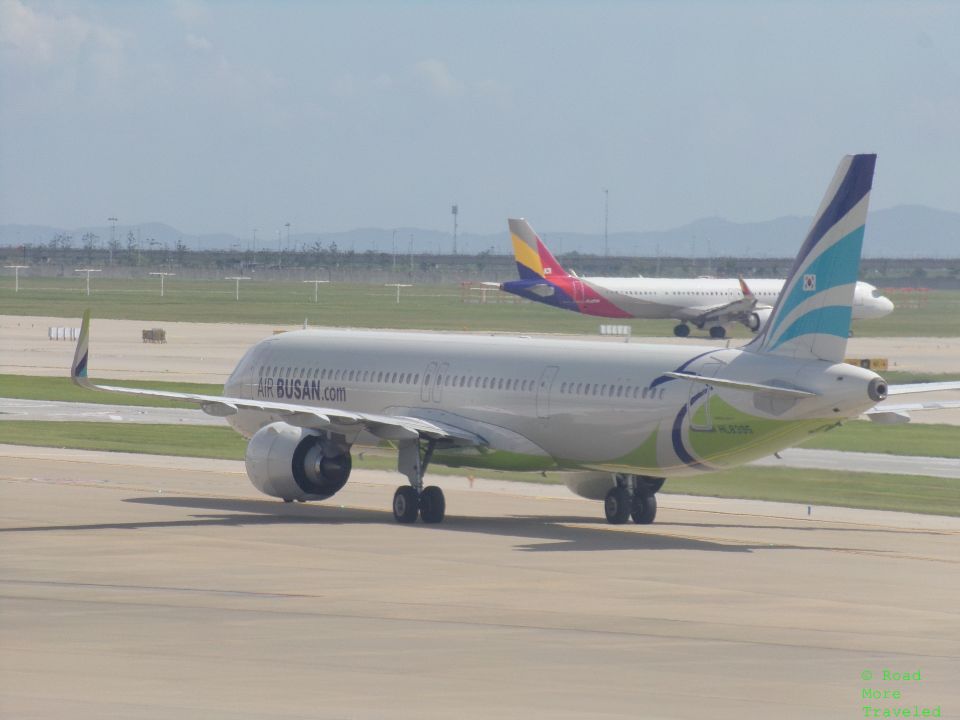
Then, we passed a couple of more exotic examples. First up was an Air Busan A321.
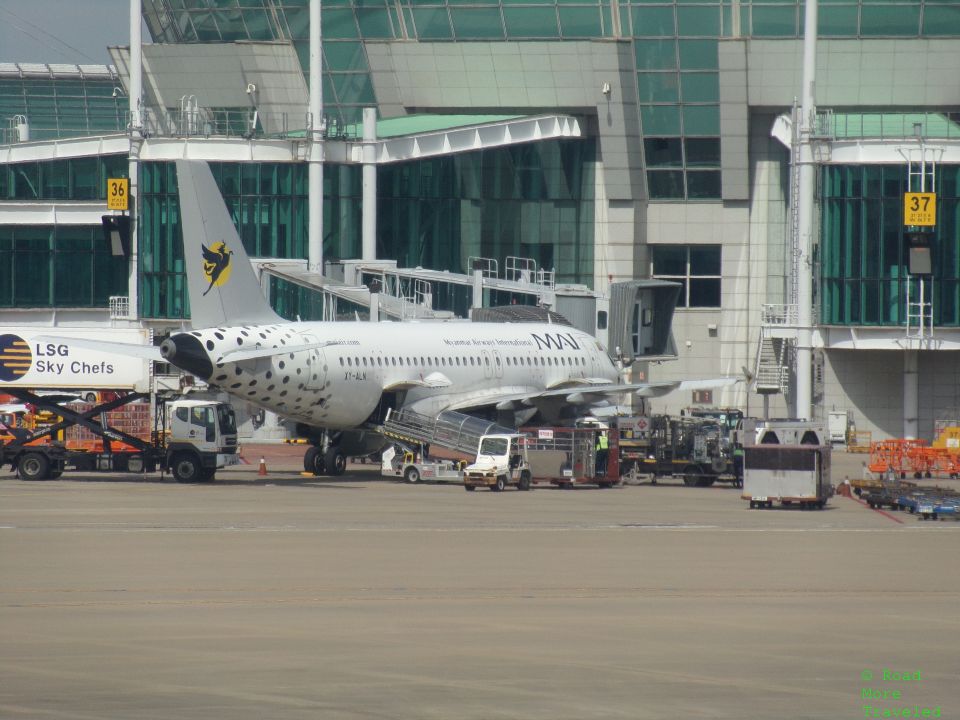
Next up was a plane that ranks up there with the harder to find birds, a Myanmar Airways International A319. At first, I thought the creature on the tail was a Pegasus, but it’s actually a Pyinsarupa, a mythical creature found in Burmese folklore.
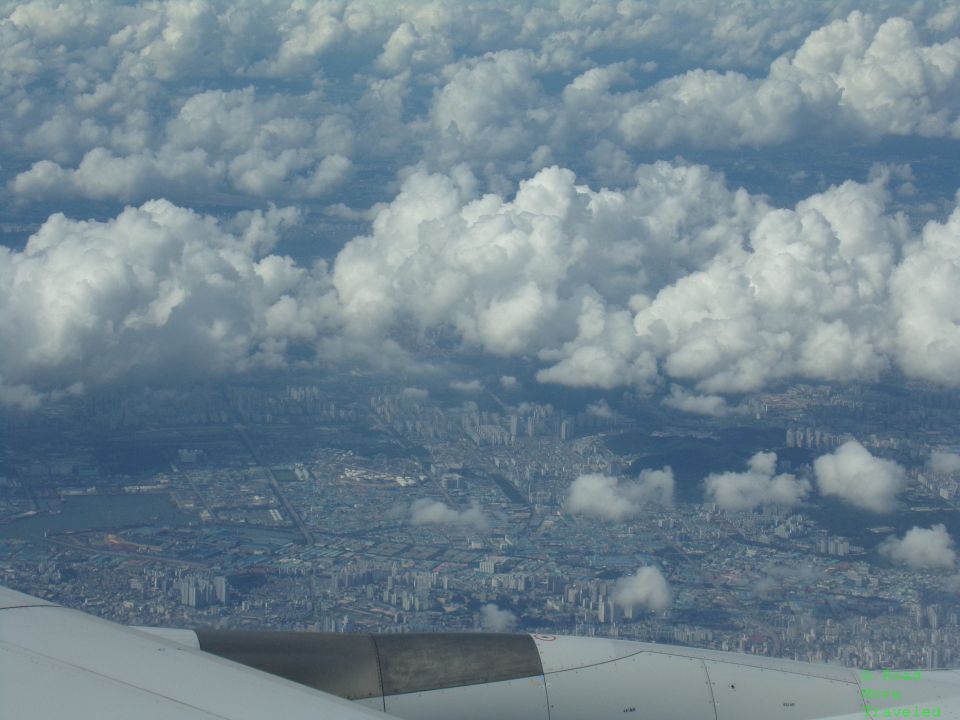
As we took off, we enjoyed a nice view of Seoul as we started heading east.
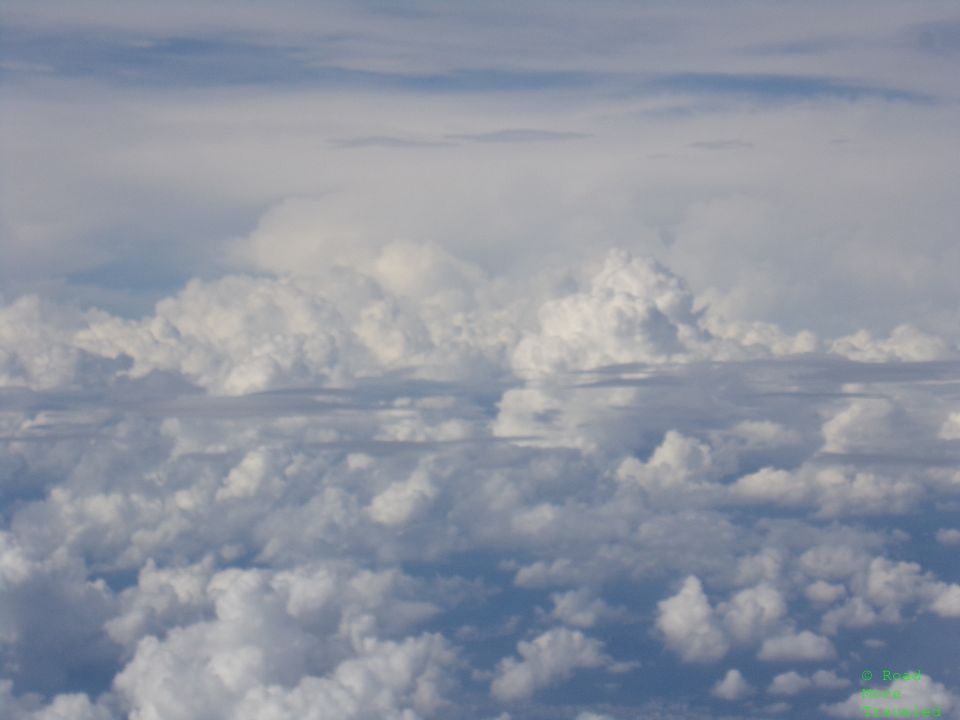
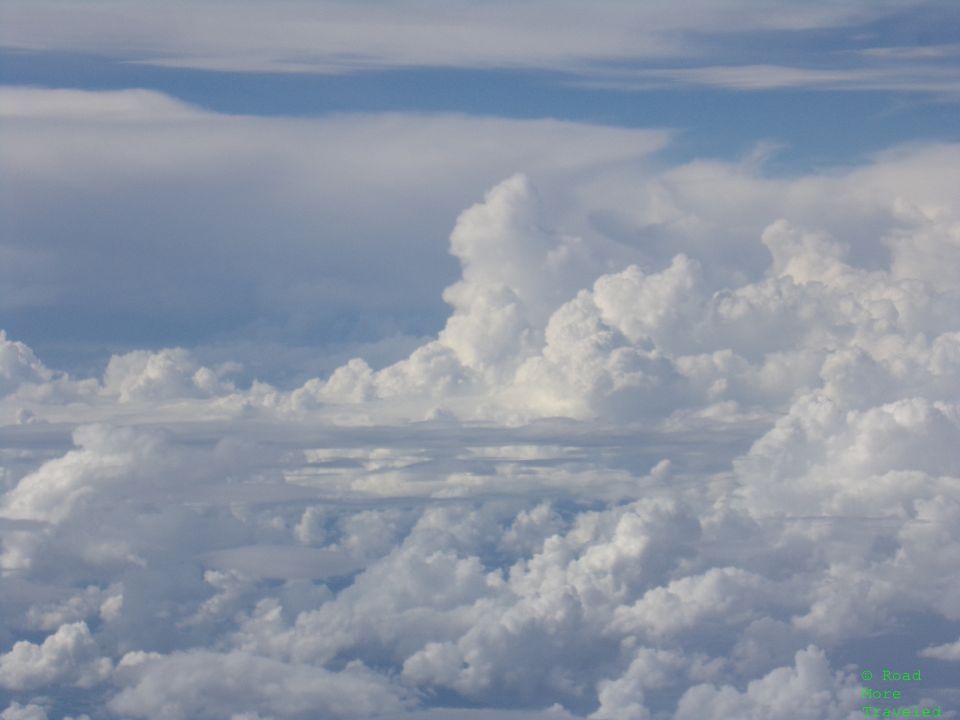
And of course, the weather geek in me thoroughly enjoyed the thunderheads as we headed away from Korea.
Later, after finally reaching the coast of California, we flew along the west side of the Central Valley, with the Sierras in the distance.
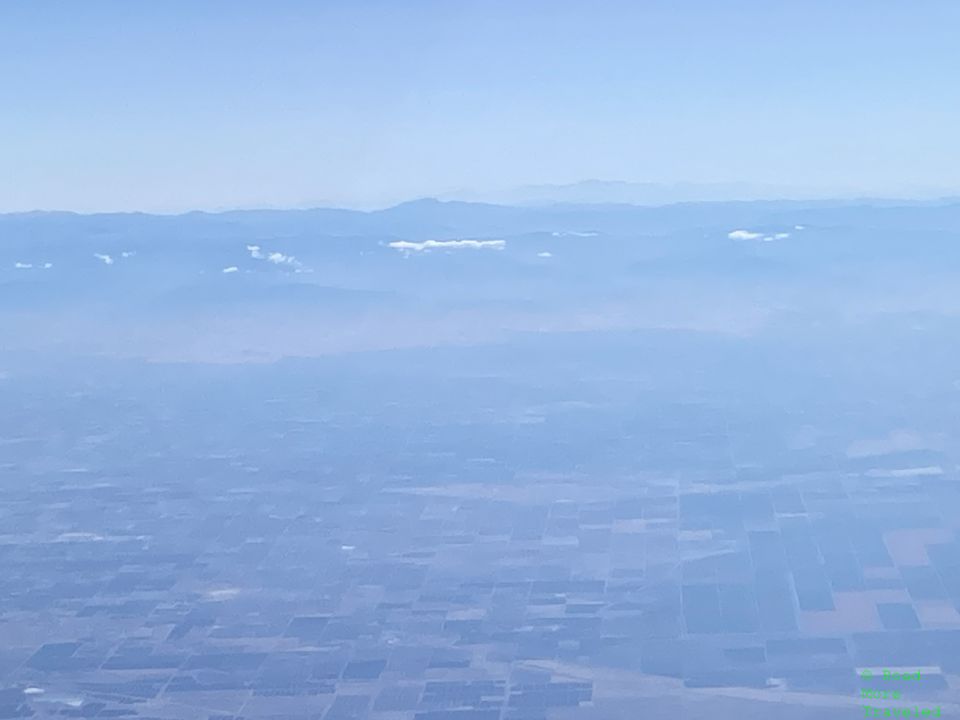
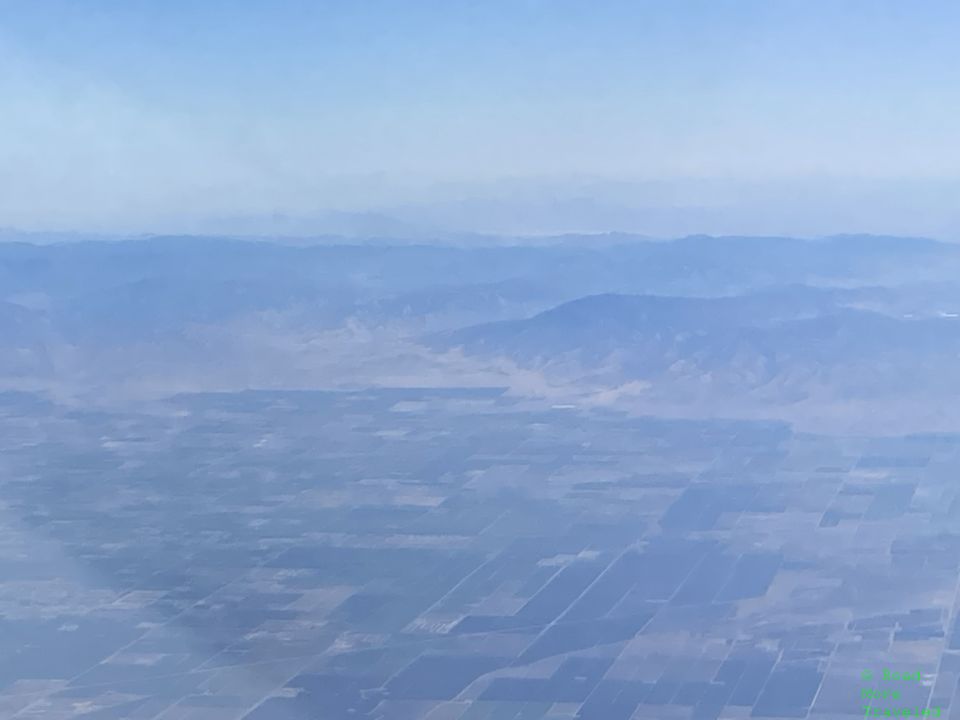
Later, we passed by a really cool geographic feature, the southern end of the Central Valley, with the Grapevine heading across the mountains to Los Angeles.
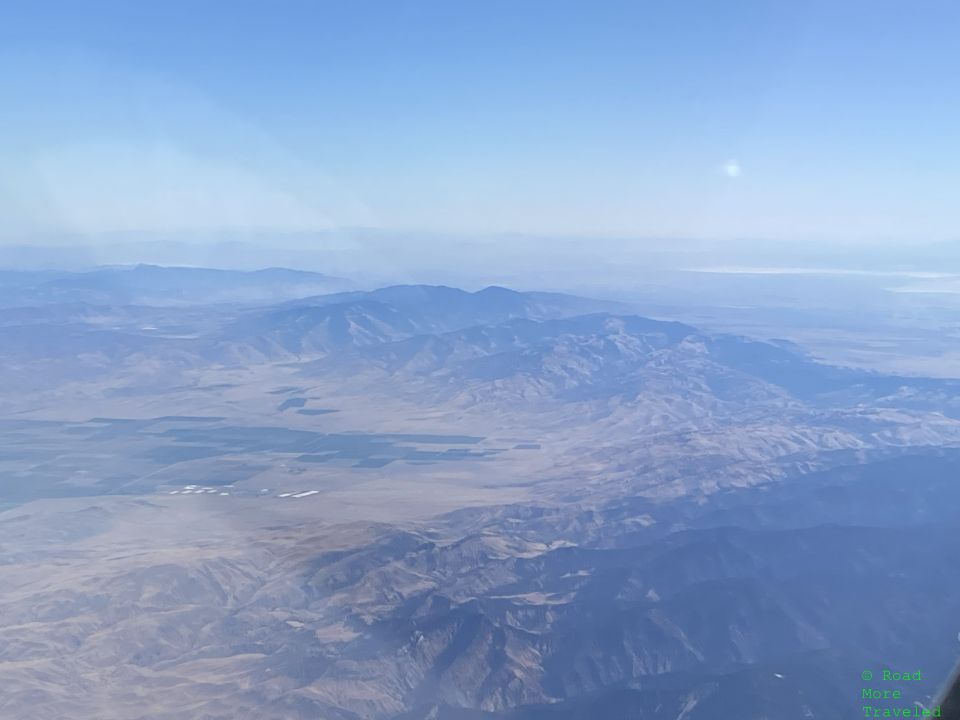
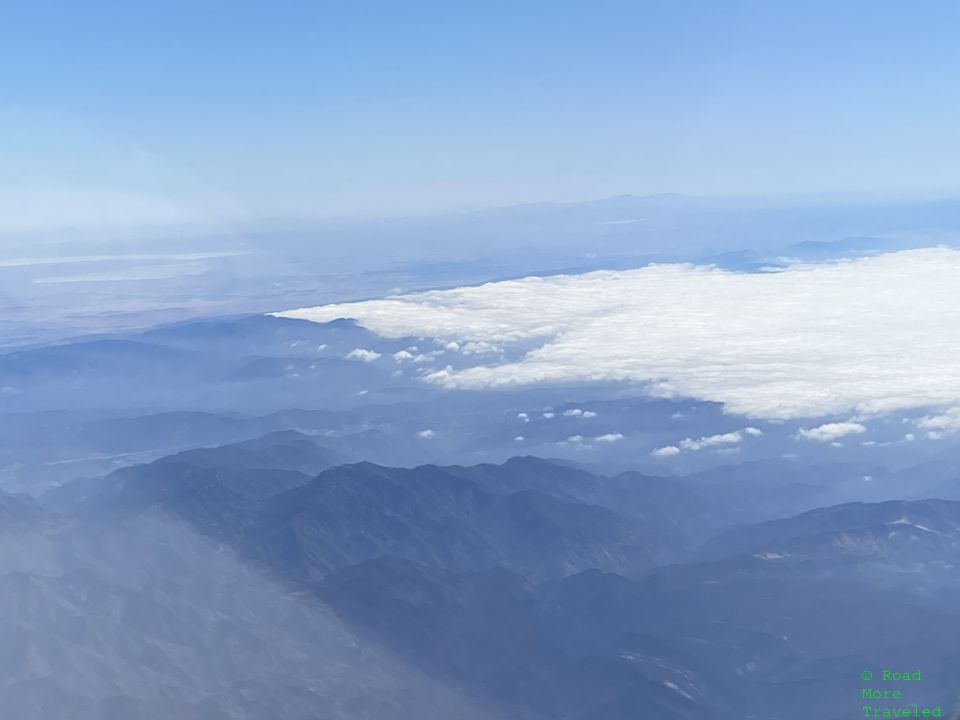
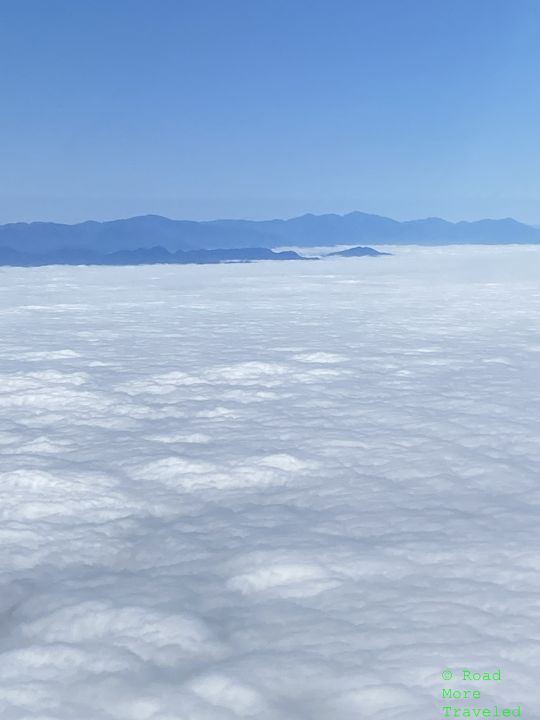
As we headed over the San Gabriels, the marine layer made an abrupt appearance, blanketing the LA Basin below.
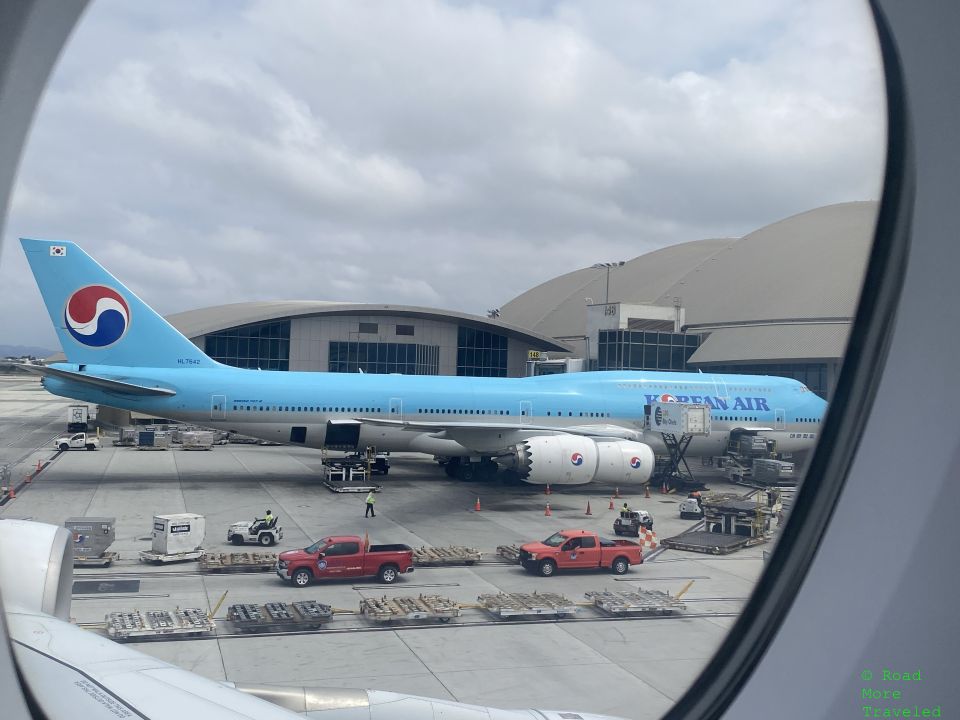
And finally, after landing, it was our lucky day, as we parked next to Korean Air’s gorgeous 747 at TBIT. Long live the Queen…
Final Thoughts
I found this flight on Asiana Airlines A380 Business Class a mixed bag. On the one hand, the seat, while an older design, was comfortable for this long flight, and of course, it’s always fun flying on the upper deck of an airplane. On the other, food was disappointing, lack of privacy is an issue in some seats, and service wasn’t as flawless as I remember from the past. Overall, Asiana isn’t in the same league as some of its competitors, notably EVA Air. In any event, the point becomes moot soon, with Asiana’s merger with Korean Air continuing. I’m curious what KE plans to do long-term with these A380s.