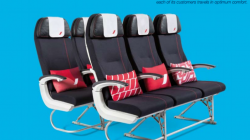
I’m gonna cut to the chase and say that this Air France Premium Economy flight was not my favorite. The seat was extremely uncomfortable and the service onboard was rather basic. There was nothing special about this product and I found the in-flight experience to be very lacking compared to other premium economy products. I wanted to like this product as I think premium economy can be a good compromise between economy and business class but unfortunately, I wouldn’t recommend wasting your money (or miles) to upgrade from economy to Air France’s Premium Economy.
Air France Premium Economy Class Ground Experience
To be fair, Air France does provide their premium economy passengers with plenty of perks on the ground, such as increased luggage allowances (two checked bags, two carry-on bags plus one additional personal item); priority check-in and luggage handling and zone 2 (Sky Priority) boarding. At LAX, premium economy class passengers are allowed to use the Sky Priority business class check-in counters. Check-in was quick and easy and I had my boarding pass in hand within five minutes. I have to give Air France some credit here. These pre-flight benefits are great if you’re short on time, have an extra bag or just want a more seamless check-in experience.
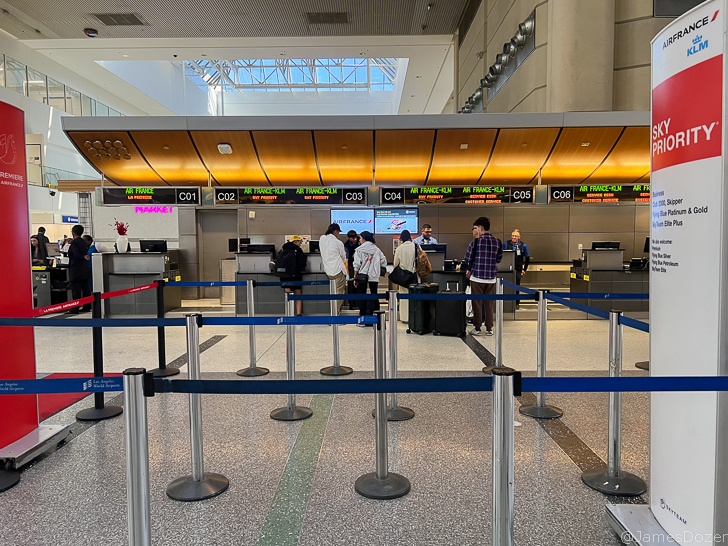
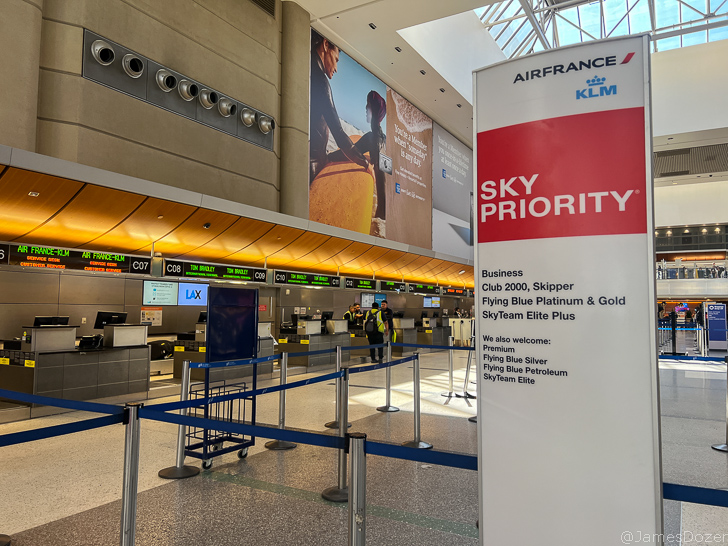
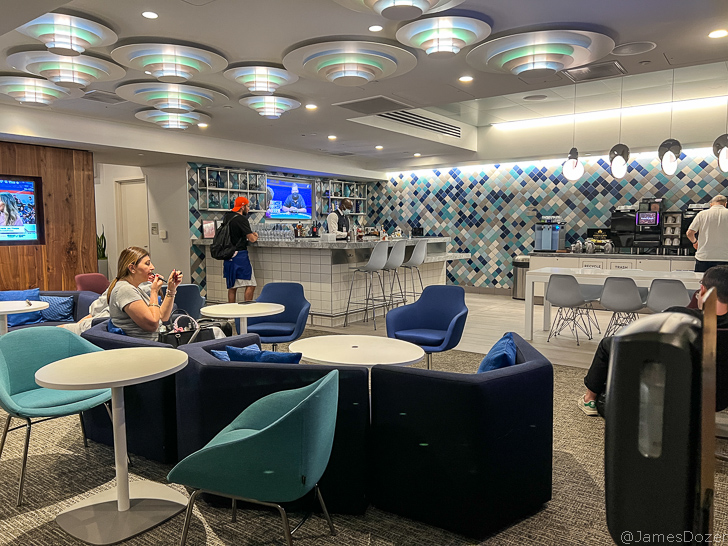
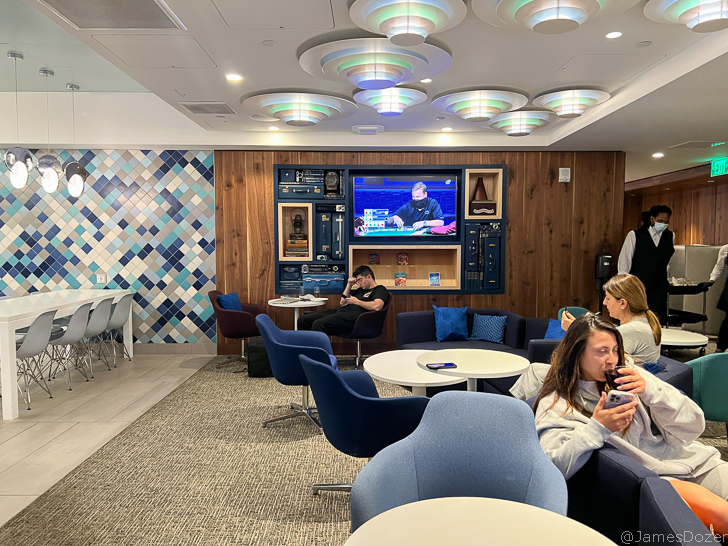
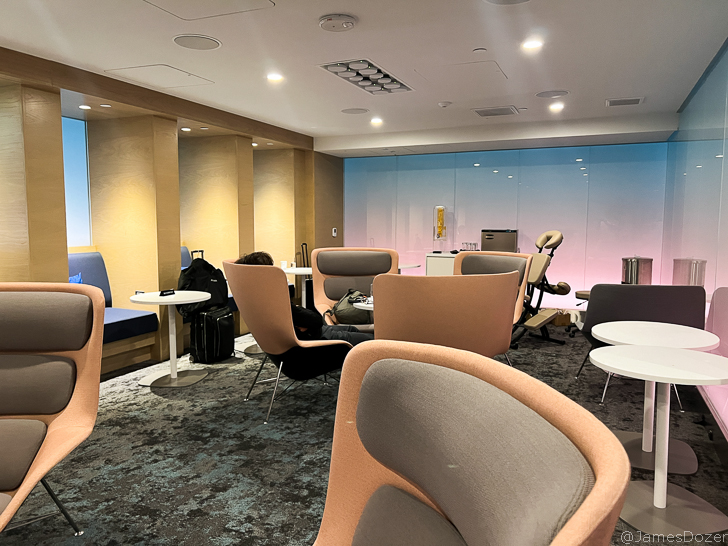
However, Air France does not provide their premium economy passengers with lounge access and unfortunately for us, Priority Pass has a terrible footprint at LAX. There are no real lounges for Priority Pass members to use so there’s no need to get to the airport early. If you have an American Express Platinum or Centurion Card, then you can use the Centurion Lounge in the Tom Bradley International Terminal (Terminal B) but that’s about it. The Centurion Lounge isn’t amazing by any means but it’s not a bad place to grab a drink and meal before boarding your flight.
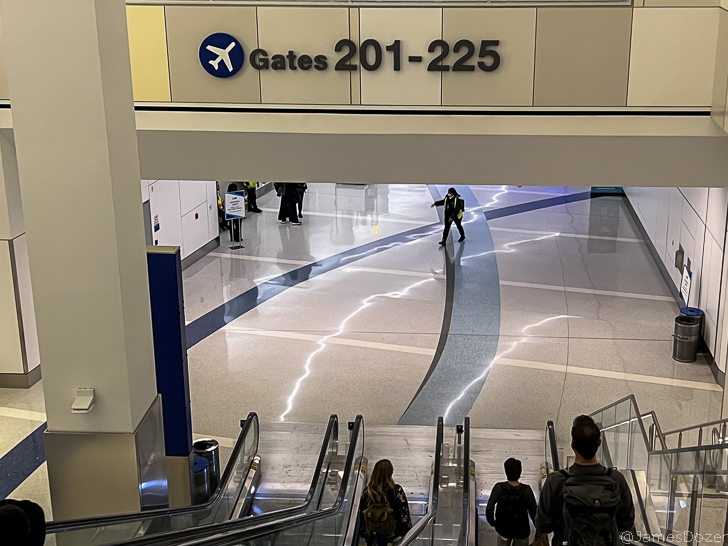
Boarding for my flight was scheduled at 5:25 p.m. from gate 206. If you haven’t departed from LAX’s “West Gates” (201 – 225) yet, just know that you’re in for a hike. The West Gates are still considered part of the international terminal (Terminal B), but it’s about a 15-minute walk from the main building. There are carts available for elderly/disabled passengers, and for those with mobility issues, but you should still give yourself plenty of time to make the walk over there. Air France, KLM, Hawaiian Air and several other airlines have made the West Gates their new home and Air France/KLM is also building their own lounge over there as well.
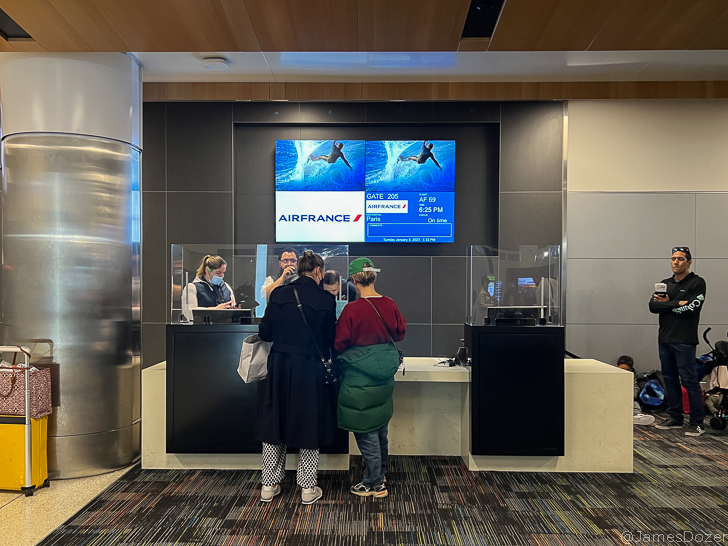
When I got to my gate, queues for the different boarding zones were already set up so I just got in line with the others in zone 2. Boarding was called a few minutes later and all passengers boarded the aircraft through door 2L.
Air France Premium Economy In-Flight Experience
Flight: AF69
Aircraft: Boeing 777-300ER
Los Angeles (LAX) to Paris (CDG)
Depart: 6:20 PM (6:24 PM actual) on Tuesday
Arrive: 2:10 PM (1:53 PM actual) on Wednesday
Duration: 10hrs 29mns
Seat: 23A Premium Economy Class
This flight was operated with a 14-year-old Boeing 777-300ER (registration F-GZND). In premium economy, there is a dedicated cabin with 28 seats arranged in a 2-4-2 layout. I do like that the cabin is separated by walls and not just partitions as it makes the cabin feel more private and exclusive.
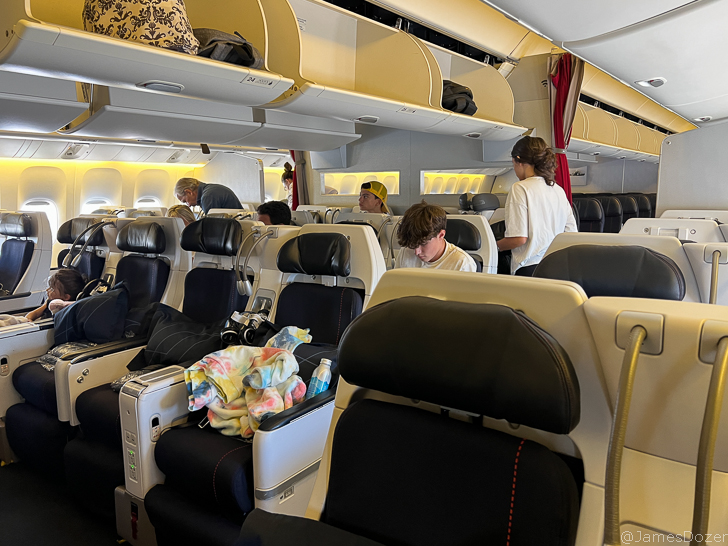
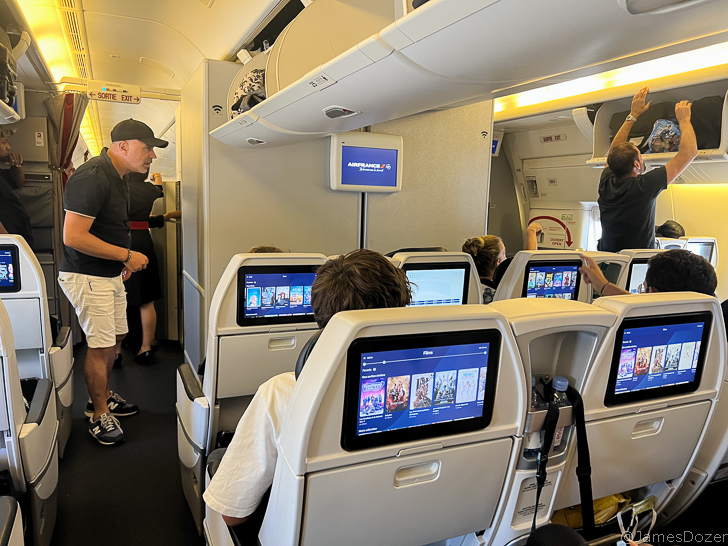
These Collins Aerospace Icon seats are configured with 13’’ personal entertainment systems, USB and universal electrical outlets, personal reading lamps, leg rests and footrests (except for the emergency exit/bulkhead seats).
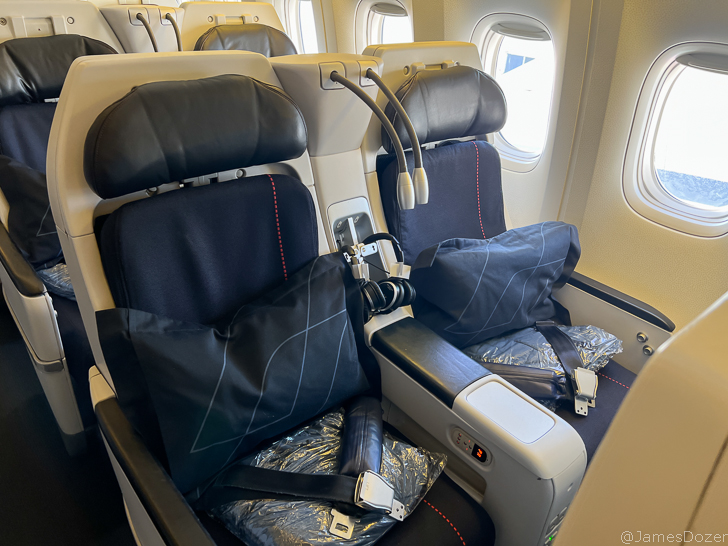
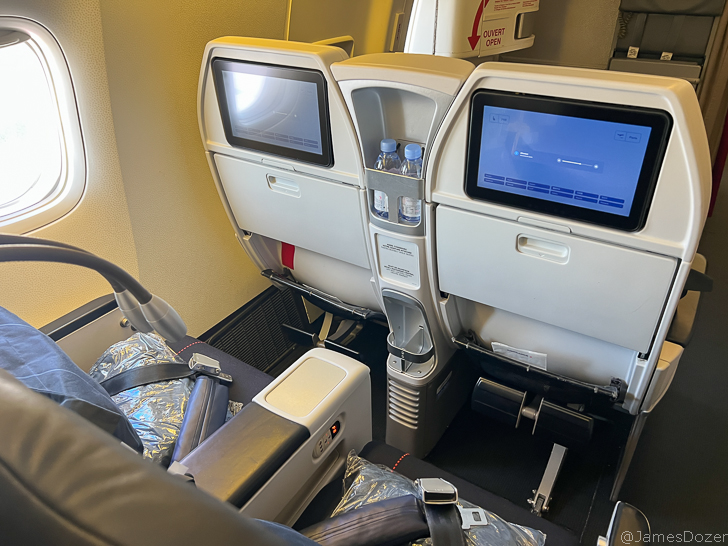
On this flight, I was seated in seat 23A, a “window” seat in the emergency exit row. Waiting at our seats were a pillow, blanket and a bottle of water. Noise-canceling headphones were also provided at the seats but they weren’t great; definitely bring your own.
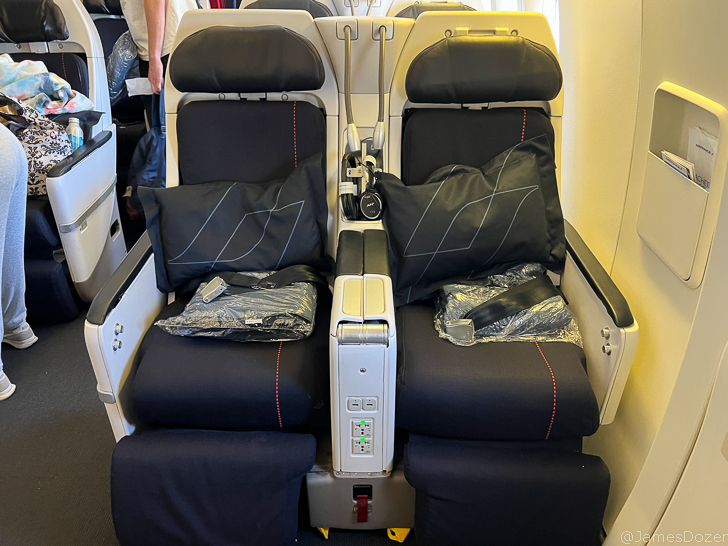
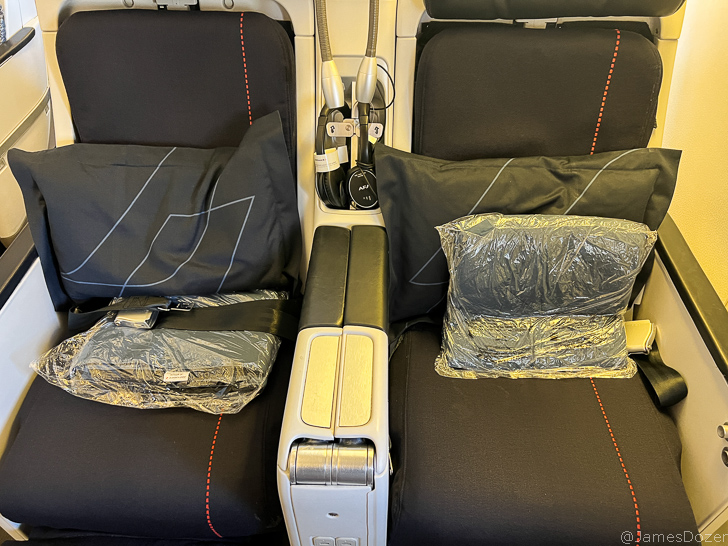
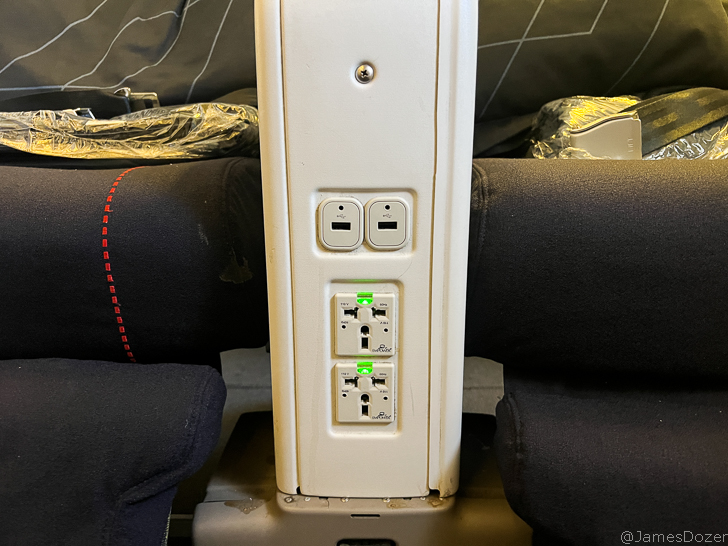
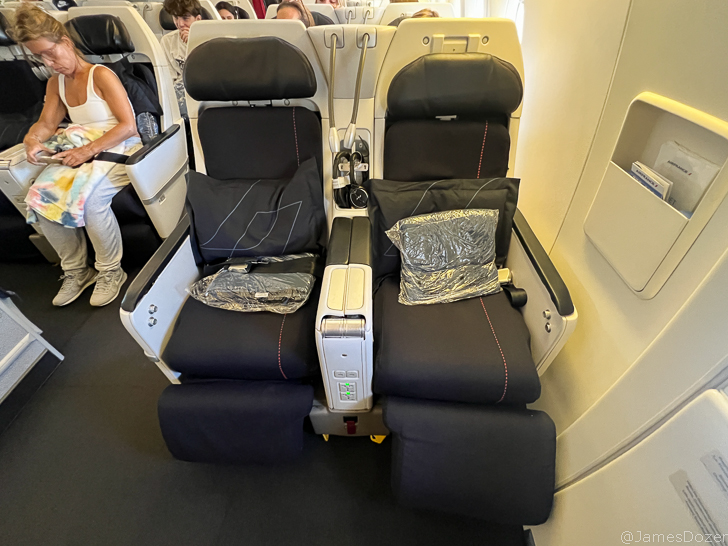
These seats provide 19 inches of width, 38 inches of pitch and a “recline” of 130 degrees. I use the word “recline” very loosely here as the seat doesn’t actually recline. It’s a fixed-shell design so instead of your seat reclining backwards, your seat pan just moves forward for the illusion of a recline. I’ll talk more about this later but it’s such a terrible design. This is what the seat looks like with the legrest extended. It’s very minimal as you can see.
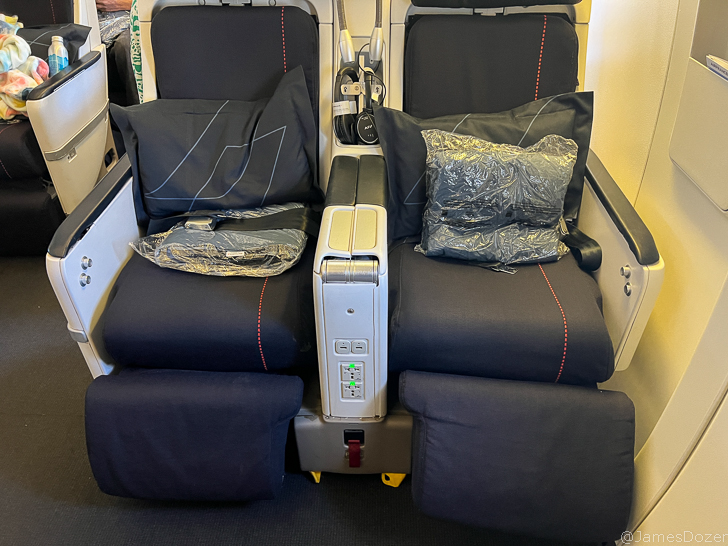
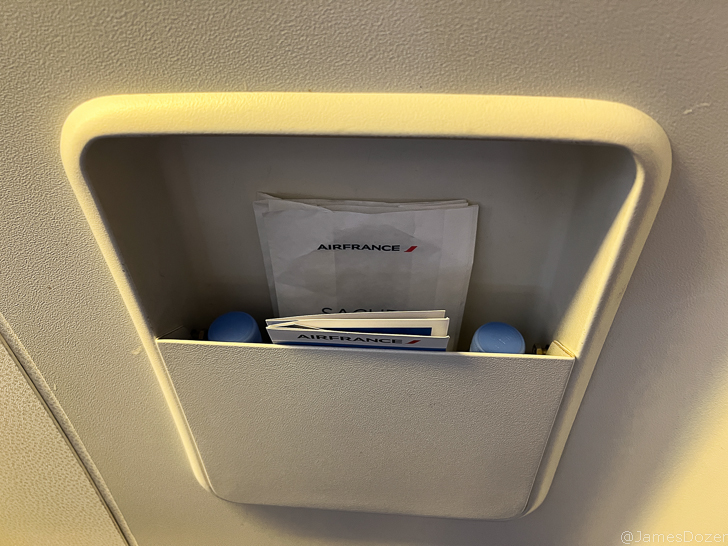
Storage-wise, there is a seat back pocket to secure your personal items and your smaller bags can be stored underneath the seat in front of you. However, storage spaces for the emergency exit row seats are not great. You only get a small pocket on the left side of the seat for both passengers and you’re not allowed to store any bags on the floor in front of you during flight. Everything has to be secured in the overhead lockers.
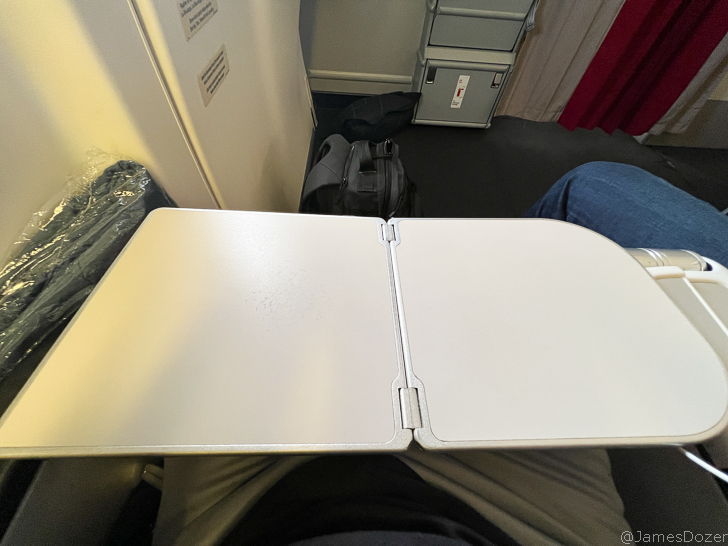
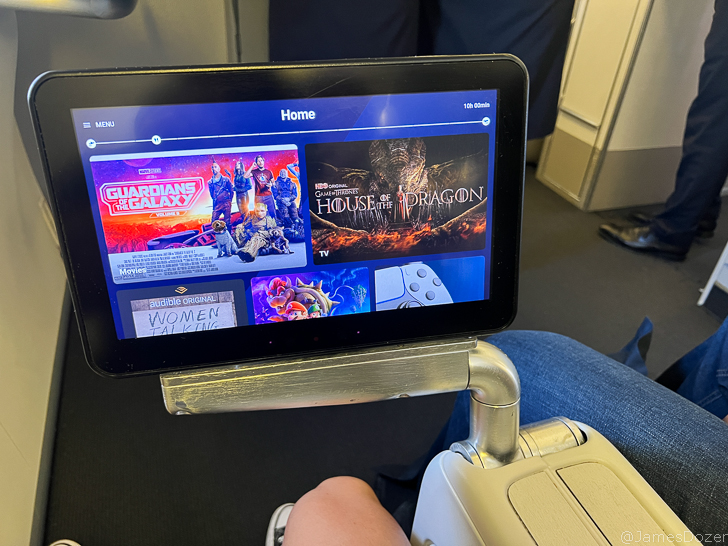
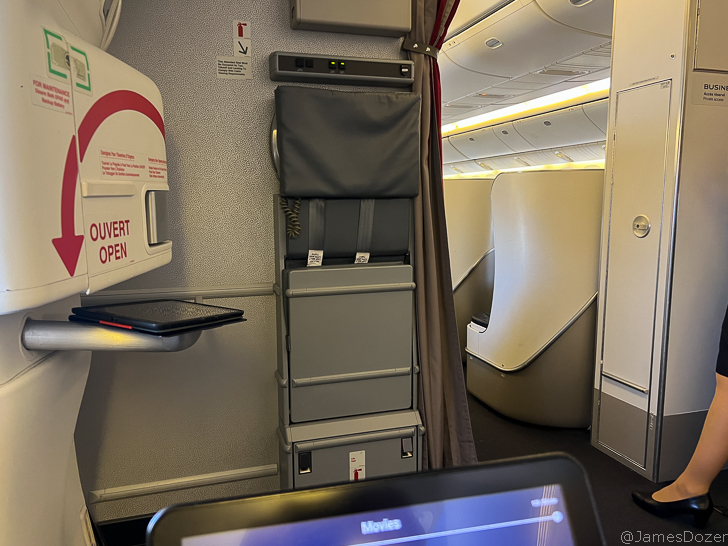
There are pros and cons to the emergency exit and/or bulkhead row seats. First and foremost, the tray tables and personal entertainment monitors are located in the fixed armrests, which further reduce seat width. The tray table is tiny and flimsy, barely fitting the meal tray, and it basically sits on top of your lap when deployed. And the arm for the TV monitor is not very tall so the monitor sits well below your eye level. This causes you to have to look down at an angle to watch the TV screen, which will give you a neckache after a while. I’m really surprised by how poorly this seat was designed.
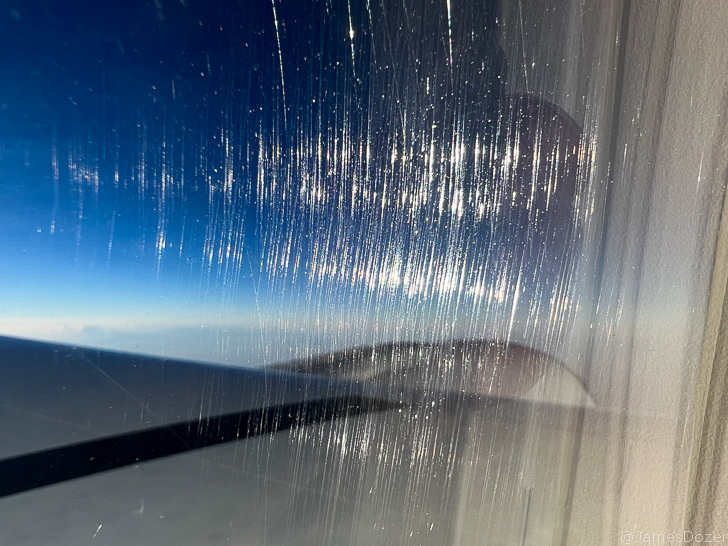
Additionally, there are no windows for the window seat passengers. If you care about having a window seat view, don’t select one of the emergency exit row seats. There is a small window in the emergency exit door itself but you have to move forward from your seat to look out of it. And lastly, there are fewer storage spaces to secure your belongings during flight and there are no footrests for emergency exit/bulkhead seats. Some airlines mitigate this by building the footrest into the leg rests, but Air France did not do this.
That being said, these seats do provide unlimited legroom so if you have really long legs or need to get up and out of your seat often, these seats may be good for you. If you don’t care about that, then I wouldn’t recommend them.
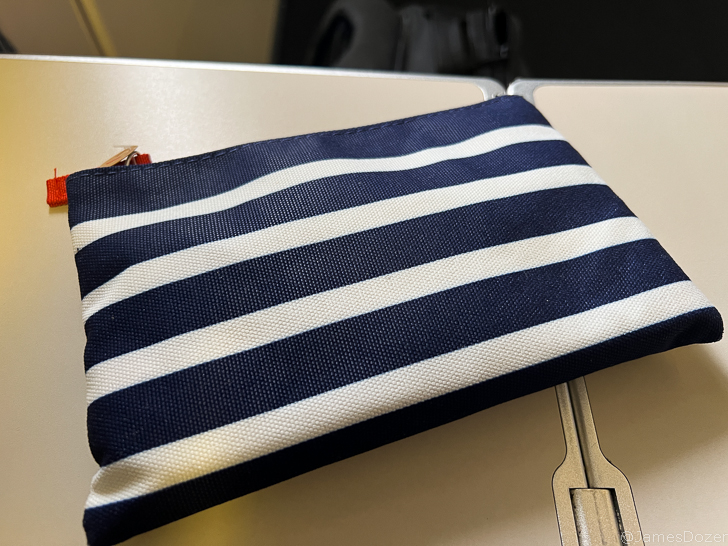
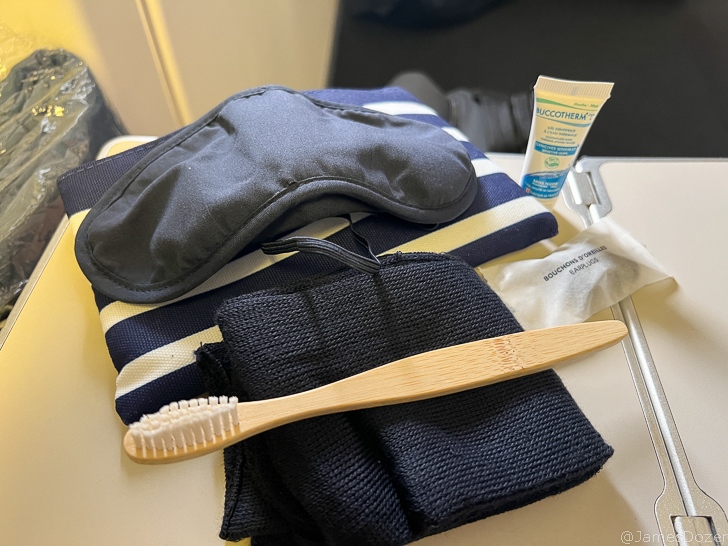
Once all the passengers were boarded, we left the gate and taxied to the runway for our 10.5-hour flight to Paris. No pre-departure beverages, hot towels, or any other amenities were provided before departure. Once we hit our cruising altitude, the flight attendants then came by with a small amenity kit, which included socks, earplugs, an eye mask, and a dental hygiene kit. The amenity kit was very basic, to say the least.
After that, the flight attendants then rolled out a dinner service, which was served all on one tray. Menus were not provided but the menu was listed in the IFE display. For this flight, we had the option of either a veal blanquette with rice and carrots or a pumpkin gratin with seasonal vegetables.
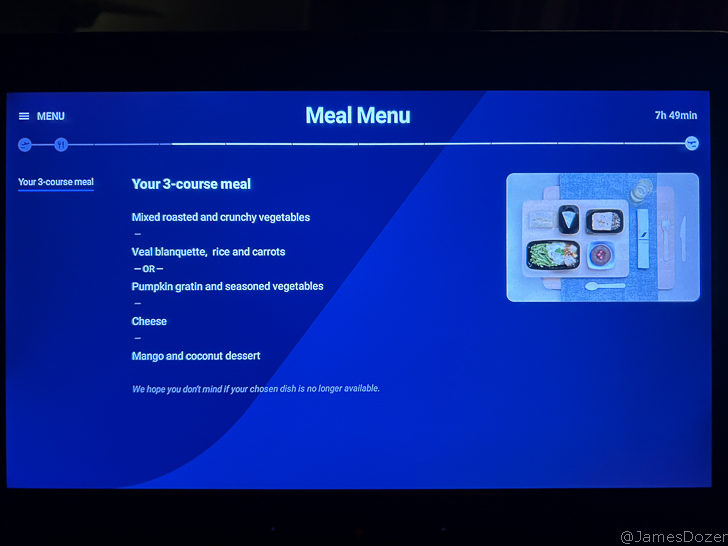
I went with the veal and it wasn’t bad. The meal was served with some cheese crackers, a plate of vegetables, warm bread roll, and a mango cheesecake dessert. Drinks, including a small selection of alcoholic beverages, were provided complimentary during the meal service.
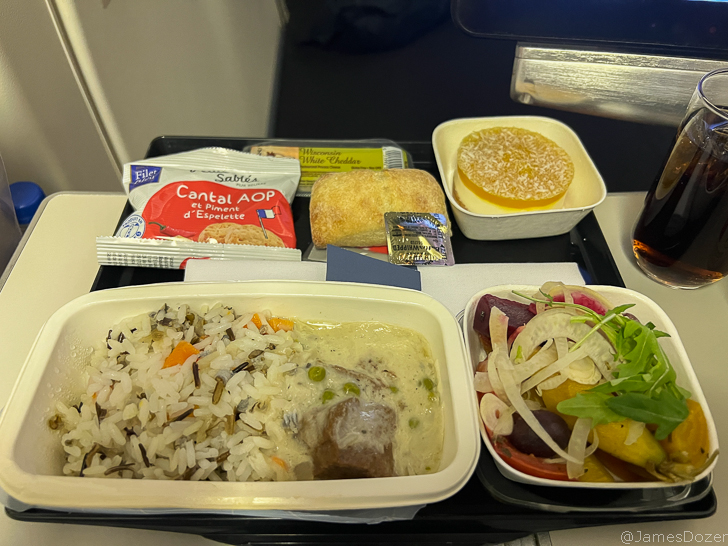
Overall, the meal was pretty tasty but this was a standard economy class meal. There was no catering or presentation upgrade for premium economy class passengers. And service-wise, this was exactly the same level of service and attentiveness you would expect from an economy-class product. The flight attendants were friendly and pleasant but there was nothing special or personalized about this service.
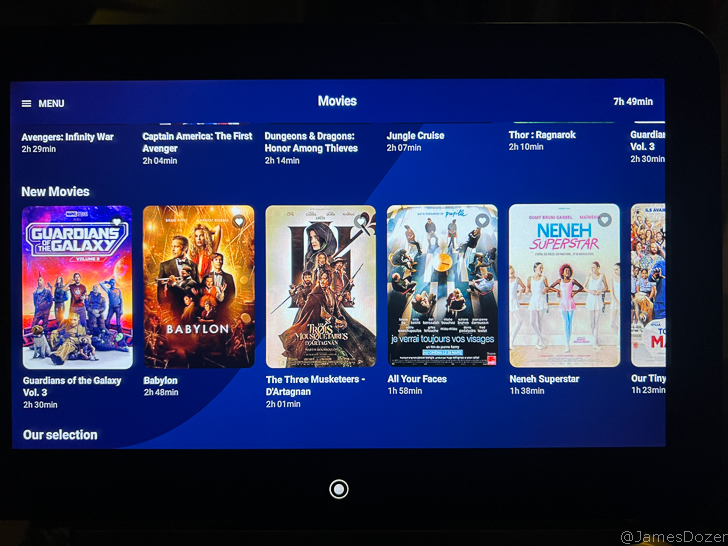
After dinner, I reclined my seat back and settled in for a movie. Entertainment-wise, there was a decent selection of new Hollywood movies, TV shows, music and games to keep you entertained. WiFi was provided on this flight and it was decently priced. One hour of internet costs 8 Euros and a full flight pass costs 18 Euros. I didn’t connect to it so I can’t tell you how fast or reliable it was. In-flight messaging was provided complementary for all passengers and I did connect to that but I found it was very unreliable. I’m hoping the paid internet was better than that. Otherwise, I would have been very disappointed.
After my movie, I tried to get some sleep but honestly, I couldn’t. As I mentioned earlier, this seat was terrible and I felt like I was slouching and sliding down my seat the entire time. I kept having to readjust and move my butt up every so often and it wasn’t comfortable at all. It was so uncomfortable with the seat fully reclined that I ended up putting my seat back into the upright position for the remainder of the flight.
Air France has since discontinued this product and has started transitioning to a new premium economy class product but that retrofit will take years to complete. And in the meantime, we are stuck with this subpar product as it can still be found on a majority of their aircraft. Here’s what the seat looks like fully reclined with the legrest up.
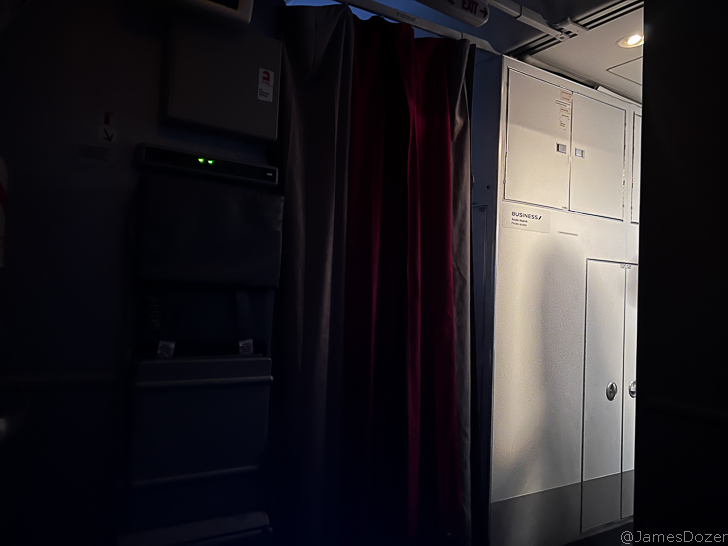
And to add insult to injury, the emergency exit row seats are situated right next to the two lavatories located in the premium economy cabin. The lights in front of the lavatories were kept on all flight and the noise and smell coming from the lavatories could be heard/smelled all flight. I really can’t stress enough how terrible this cabin was designed. With everything going on, I was only able to doze off for a bit and by the time breakfast came around, I was so tired and miserable that I didn’t even eat much.
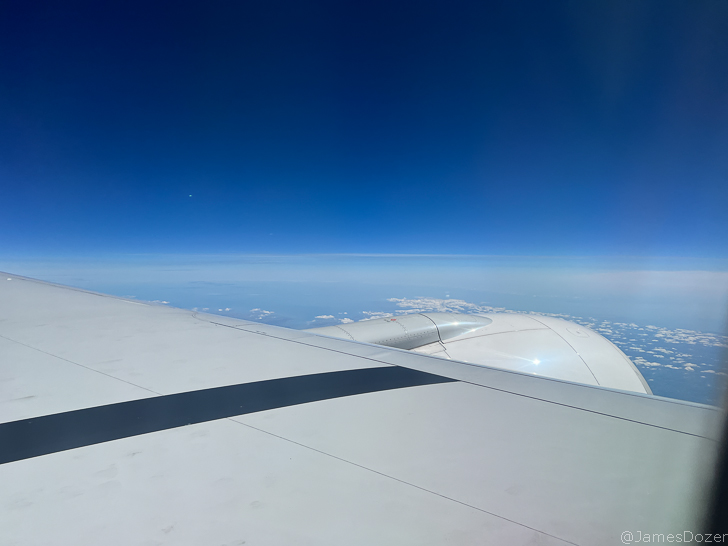
About two hours prior to our arrival, the cabin lights were slowly turned on and a light breakfast box was served. Breakfast consisted of a warm cheese croissant, a packaged fruit cup, and a kefir yogurt drink. It was a good thing I wasn’t hungry because honestly, this was one of the saddest looking breakfast boxes I have ever seen on a mainline carrier.
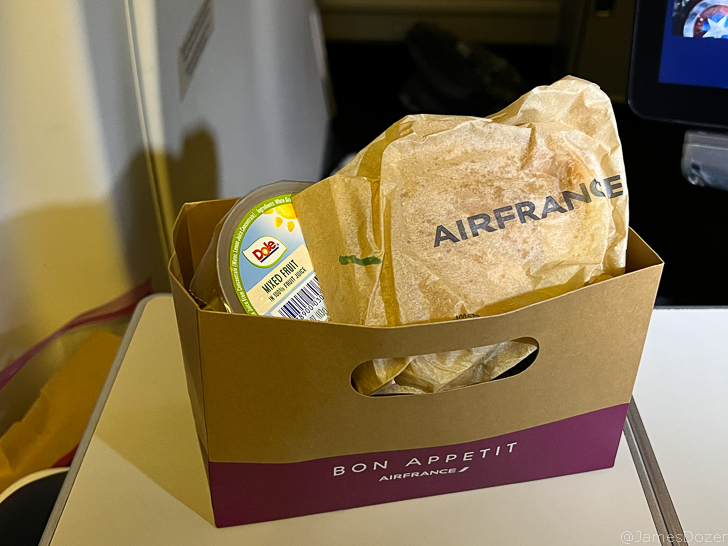
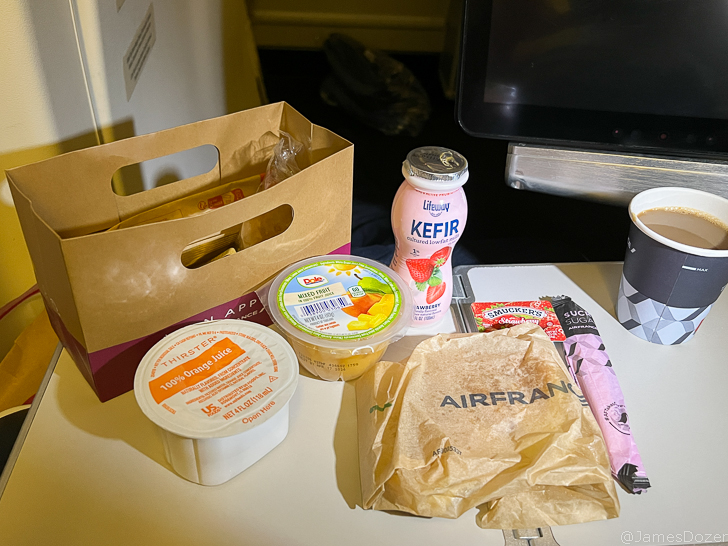
If this were an economy class flight, I would have no complaints about this meal but this was a premium economy class product and it should have been better than what was served in the back. The cheese croissant was fine but this is literally a meal you pack for your kid’s lunchbox. Do better, Air France.
Air France Premium Economy Bottom Line
Overall, this was such a disappointing flight and I wouldn’t recommend this product to anyone. The ground experience and increased luggage allowance were appreciated but everything else was disappointing and subpar. This seat was terrible and I’m glad to see that Air France is in the process of transitioning them out but in the meantime, these crap seats can still be found in over 90% of their aircraft including the Boeing 777-300, 787 Dreamliner and the Airbus A350.
This product is fine for a daytime flight but on a redeye flight when you’re trying to get some sleep, forget about it. And to add insult to injury, the premium economy service and catering were closer to an economy-class product than a true premium product. Don’t get me wrong, I don’t expect business-class level service and catering but I do expect something more than what is provided in economy class.
Would you guys agree with me? Or do you think I am expecting too much here? Please share your thoughts with us in the comments section below. And as always, thanks for reading. I appreciate you guys.
The other posts in this series include:
- American Express Centurion Lounge LAX
- oneworld Lounge LAX
- Air France Premium Economy, LAX to Paris
- YotelAir Paris, a Priority Pass Lounge
- NH Hotel Santa Lucia, Venice
- KLM Economy Class, Amsterdam to Salt Lake City
Air France Premium Economy At A Glance
The table below captures the essential specs for the cabin as it flies on the Boeing 777-300ER. Because Air France is actively retrofitting its fleet, some details will vary depending on which aircraft a given flight operates.
| Spec | Detail |
|---|---|
| Airline / cabin name | Air France Premium (rebranded from Premium Economy in September 2024) |
| Aircraft (this review) | Boeing 777-300ER |
| Cabin layout | 2-4-2, 28 seats |
| Seat type (777-300, older config) | Collins Aerospace Icon fixed-shell recliners |
| Seat width | 19 inches |
| Seat pitch | 38 inches |
| Recline (fixed-shell) | Approximately 130 degrees (seat pan slides forward rather than seat back reclining) |
| Screen | 13-inch personal IFE with touchscreen |
| Power | USB + universal AC outlet at each seat |
| WiFi | 8 euros per hour; 18 euros for a full-flight pass |
| Baggage | Two checked bags, two carry-ons, plus one personal item |
| Lounge access | Not included; purchasable at the counter at most airports |
| SkyPriority | Included (priority check-in, Zone 2 boarding) |
| Newer fleet alternative | Recaro PL3530 or updated recliner seats on select refitted 777s and A350s |
Is Air France Premium Economy Worth It?
The honest answer depends almost entirely on two variables: which aircraft you are on, and what time of day your flight departs. On a daytime transatlantic crossing where sleep is not the mission, the upgrade over economy is reasonable. The wider seat, the extra baggage allowance, the SkyPriority check-in, and the genuinely walled-off cabin all represent real improvements over the main economy cabin. If the cash premium over economy is modest, or if the Flying Blue miles math is favorable, the case for booking Premium is straightforward.
The calculus flips sharply on a redeye, particularly if the aircraft is operating one of the older fixed-shell configurations. The seat’s mechanism means you are effectively sliding forward rather than reclining back, and comfort across a ten-plus-hour overnight is genuinely limited. Travelers whose primary goal is arriving in Paris rested will find the gap between Premium and business class more consequential than the gap between economy and Premium.
Premium also makes sense when the price gap over economy is small. As of recent searches, Air France’s transatlantic Premium fares can range from roughly $1,600 to $4,500 roundtrip depending on the season, route, and how far in advance you book, while business class roundtrips have run from around $2,850 to $10,000 or more. When the spread between Premium and business is wide, Premium is the sensible middle ground. When the spread narrows during low-demand windows, the extra stretch to a lie-flat seat may be worth it.
Who Should Book It (And Who Should Skip It)
Book Air France Premium for a daytime transatlantic flight, when you need extra checked baggage, or when the price difference over economy is genuinely small. It also suits travelers who value a quieter, more private cabin environment and priority airport handling but who do not place a premium on in-flight sleep.
Skip it on an overnight flight when rest is the main objective, especially on an older 777-300 with the fixed-shell seat. Also skip it if lounge access matters, since Premium does not include it. And if the price gap to business class has narrowed on a specific date, the additional spend for a lie-flat bed on a long redeye will likely be the better investment.
How To Book Air France Premium With Cash or Flying Blue Miles
Air France sells Premium (formerly Premium Economy) through its own website, through travel agents, and through partner booking channels. As of recent searches, fares on transatlantic routes from North America to Paris have run from around $1,600 to $4,500 roundtrip, and promotional sales have at times brought one-way fares below $700. Prices vary significantly by season and booking window, with low-demand months such as November and early December often yielding the best cash rates.
For points travelers, Air France Premium is bookable through the Flying Blue loyalty program, which Air France operates jointly with KLM. Flying Blue uses dynamic pricing rather than a fixed award chart, so redemption costs shift based on demand, route, and timing. As of January 2025, one-way Premium awards from North America to Europe start at 40,000 Flying Blue miles, with dynamic pricing often pushing the figure higher. Flying Blue Promo Rewards, published monthly, offer discounts of 25% to 50% on select routes, and promotional rates as low as 30,000 miles one way have appeared for transatlantic Premium awards. Booking well in advance and checking Promo Rewards during the monthly release window are the two most reliable ways to stretch Flying Blue miles on this route.
Flying Blue miles can be earned directly on Air France and KLM flights, through credit card spending with co-branded and transfer-partner cards, and through hotel and car-rental partners. American Express Membership Rewards, Chase Ultimate Rewards, Capital One miles, and Citi ThankYou points all transfer to Flying Blue, often at a 1:1 ratio, making it accessible through a range of credit card strategies.
Fare Families and What Changes With Each
Air France sells Premium seats in multiple fare families (Light, Classic, and Flex), and the differences matter. Light fares typically restrict or eliminate mileage accrual and seat selection flexibility. Classic fares restore standard mileage earning and allow changes for a fee. Flex fares offer full flexibility with no change or cancellation penalties. Before booking on price alone, it is worth confirming which fare family applies, since a restrictive Light fare in Premium can compare unfavorably to a Classic economy fare once flexibility and accrual are factored in.
The Evolving Air France Premium Cabin: What Has Changed and What Is Coming
The fixed-shell seat reviewed here represents the first generation of Air France’s premium economy product. In September 2024, Air France formally rebranded the cabin from “Premium Economy” to simply “Premium,” a name change intended to signal a more elevated positioning. Alongside the rebrand, the airline introduced a genuinely improved seat on select aircraft, featuring a traditional recliner design with up to 124 degrees of recline, 94 to 97 centimeters of legroom with an adjustable footrest, and a 13.3-inch 4K Ultra HD anti-glare touchscreen with Bluetooth connectivity.
The new seat debuted on Air France’s Airbus A350 fleet and has since appeared on a growing number of Boeing 777-300ERs as part of a broader cabin retrofit program. On the A350, the Premium cabin is arranged in a 2-4-2 configuration with 32 seats. The new seat on the 777 uses a Recaro PL3530 platform, the same product found on several other major carriers in their premium economy cabins. Air France’s stated target was for the updated configuration to cover approximately 80% of the fleet by the end of 2025, though the retrofit is ongoing and travelers will continue to encounter the older fixed-shell product on some aircraft through this period.
The clearest practical implication for anyone booking Air France Premium today is to check the aircraft type before booking. Routes operated by A350s or recently refitted 777s will offer a meaningfully different, and more comfortable, experience than the older 777-300 fixed-shell cabin reviewed here. Air France’s fleet disclosure at booking and tools such as ExpertFlyer can help identify which configuration a specific flight operates.
The airline has also introduced enhanced catering under the Premium rebrand, with meal service designed by Michelin-starred chef Frédéric Simonin and a wine selection curated by head sommelier Xavier Thuizat. These improvements apply to the service program across the fleet, though the physical product passengers experience will still vary by aircraft until the retrofit is complete.
Air France Premium vs. Business Class: How They Actually Compare
The most important distinction between Air France Premium and Air France business class is the seat at night. Business class on Air France’s long-haul 777-300ER fleet offers a lie-flat bed with direct aisle access from every seat, which changes the calculus of a ten-hour overnight flight entirely. Premium, even with the newer recliner seat, does not achieve lie-flat, and the difference is felt on any redeye where sleep is the priority.
The dining gap is real but narrower than the seat gap. Premium passengers now receive a meal course designed by the same Michelin-starred chef as business class, with a choice of two hot entrees, appetizer, and dessert. Business class adds a broader selection (typically four entree options including a vegetarian choice), a cheese course, premium starters such as smoked salmon, all beverages served in glassware, and a second meal service. The premium cabin’s service level and pace remain closer to economy than to the attentive, personalized rhythm of business class.
On the ground, business class includes full lounge access at most major airports, larger baggage allowances (typically two bags up to 32 kilograms each versus two bags up to 23 kilograms in Premium), and a dedicated check-in experience. Premium includes SkyPriority access, which provides priority check-in and Zone 2 boarding, but no lounge. Travelers who value pre-flight time in an airport lounge will need either a paid day pass, a credit card benefit, or status to access one in Premium.
For more detail on what the business class experience looks like on the same aircraft, the Air France business class review on the LAX to Paris route and the Paris to San Francisco business class review cover both the older and current products on the 777-300.
| Feature | Air France Premium | Air France Business (La Business) |
|---|---|---|
| Seat type | Recliner (fixed-shell on older 777s; up to 124-degree recliner on newer aircraft) | Lie-flat, direct aisle access on 777 and A350 |
| Seat width | 19 inches (777) | Wider, varies by configuration |
| Cabin layout | 2-4-2 | 1-2-1 (most long-haul aircraft) |
| Lounge access | Not included | Included |
| Checked baggage | Two bags up to 23 kg each | Two bags up to 32 kg each |
| Dining | Two entree choices; Michelin-starred chef program | Four entree choices; full cheese course; glassware throughout |
| Cash price (roundtrip, US-Paris) | Roughly $1,600 to $4,500 | Roughly $2,850 to $10,000+ |
| Flying Blue award (one-way, standard) | Starting at 40,000 miles, often higher with dynamic pricing | Higher; varies by demand and date |
Frequently Asked Questions
Does Air France Premium Economy Include Lounge Access?
No. A Premium ticket (formerly Premium Economy) does not include lounge access. That benefit is reserved for business class, first class, and Flying Blue elite status holders. Premium passengers can usually purchase lounge access at the counter, though availability and pricing vary by airport and are not guaranteed in advance. Travelers holding certain premium credit cards, such as the American Express Platinum card, may be able to use partner lounges such as the Centurion Lounge through a card benefit instead.
Can You Sleep in Air France Premium Economy?
It depends on the aircraft. On the older Boeing 777-300 with the Collins Aerospace Icon fixed-shell seat, sleep is genuinely difficult. The seat does not recline in a traditional sense; the seat pan slides forward, which many travelers find uncomfortable for sustained rest over a long redeye. On newer aircraft equipped with the updated recliner seat (found on the Airbus A350 and select refitted 777s), the experience is better, with up to 124 degrees of recline and a proper footrest. Neither configuration is lie-flat, so travelers for whom sleep is the primary priority on a transatlantic overnight should compare Premium against business class rather than economy.
Is Air France Premium Economy Worth It?
On a daytime flight, or when the upgrade over economy is modest in cost, Air France Premium is generally worth it. The extra space, generous baggage allowance, SkyPriority ground services, and walled-off cabin all represent genuine improvements. On a long redeye on an older 777, where the fixed-shell seat makes quality sleep difficult, the value proposition weakens considerably. The answer also depends on the aircraft: the newer recliner seat on A350s and refitted 777s is a meaningfully better product than the fixed-shell version reviewed here.
What Is the Difference Between Air France Premium and Business Class?
The most significant difference is the seat. Business class on Air France long-haul routes offers a lie-flat bed with direct aisle access from every seat; Premium offers a recliner. Business class also includes full lounge access, larger baggage allowances, a more expansive dining program with more entree choices and a cheese course, and a more attentive cabin crew ratio. Cash prices for business class typically start considerably higher than Premium, though the gap narrows on select dates and routes. For overnight flights, the lie-flat bed in business class is the clearest justification for the additional cost.
How Many Miles Does Air France Premium Cost With Flying Blue?
Flying Blue uses dynamic pricing, so award costs vary by route, date, and demand. As of January 2025, transatlantic one-way redemptions in the Premium cabin start at 40,000 Flying Blue miles from North America to Europe, with dynamic pricing frequently running higher. Flying Blue Promo Rewards, which are published monthly and offer discounts of 25% to 50%, can bring that figure lower on select routes and dates. Miles can be transferred into Flying Blue from American Express Membership Rewards, Chase Ultimate Rewards, Capital One, and Citi ThankYou Points, among other programs.
Which Air France Aircraft Have the New Premium Seat?
As of mid-2026, the updated recliner seat with up to 124 degrees of recline and a 13.3-inch 4K Ultra HD touchscreen is available on Air France’s Airbus A350 fleet and on a growing number of refitted Boeing 777-300ERs. The rollout is ongoing, and a meaningful portion of the 777 fleet still operates the older fixed-shell product reviewed here. Before booking, it is worth verifying the specific aircraft configuration for a given flight, as the in-flight experience differs significantly between the two seat generations.